Numeracy skills Adding up to 100 Worksheets for Ages 7-9
4 filtered results
-
From - To
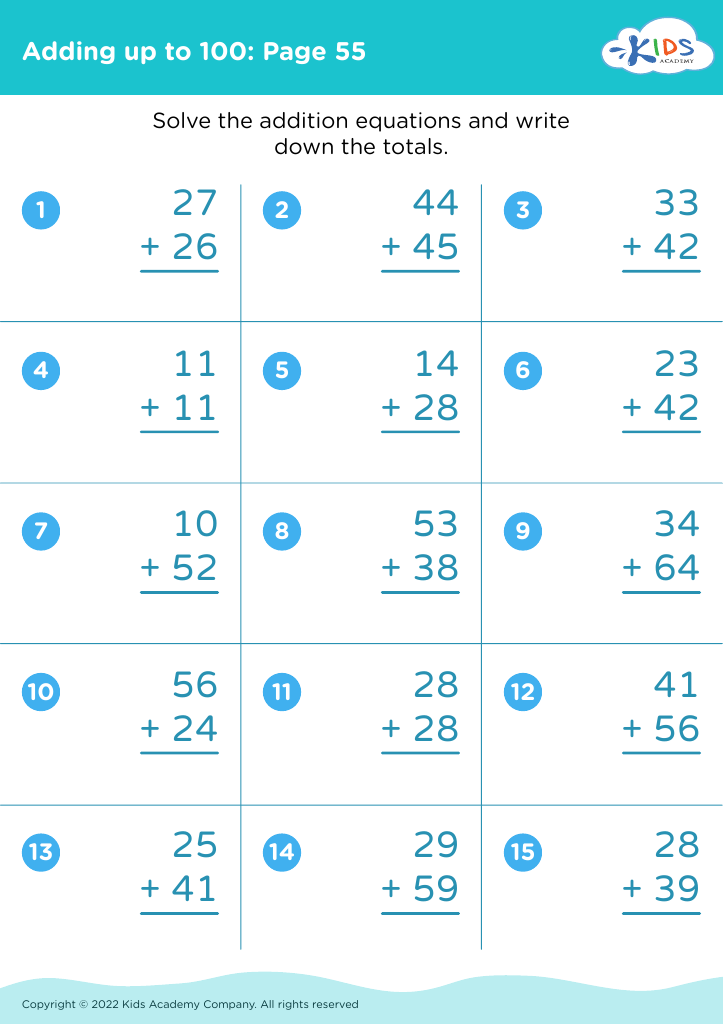
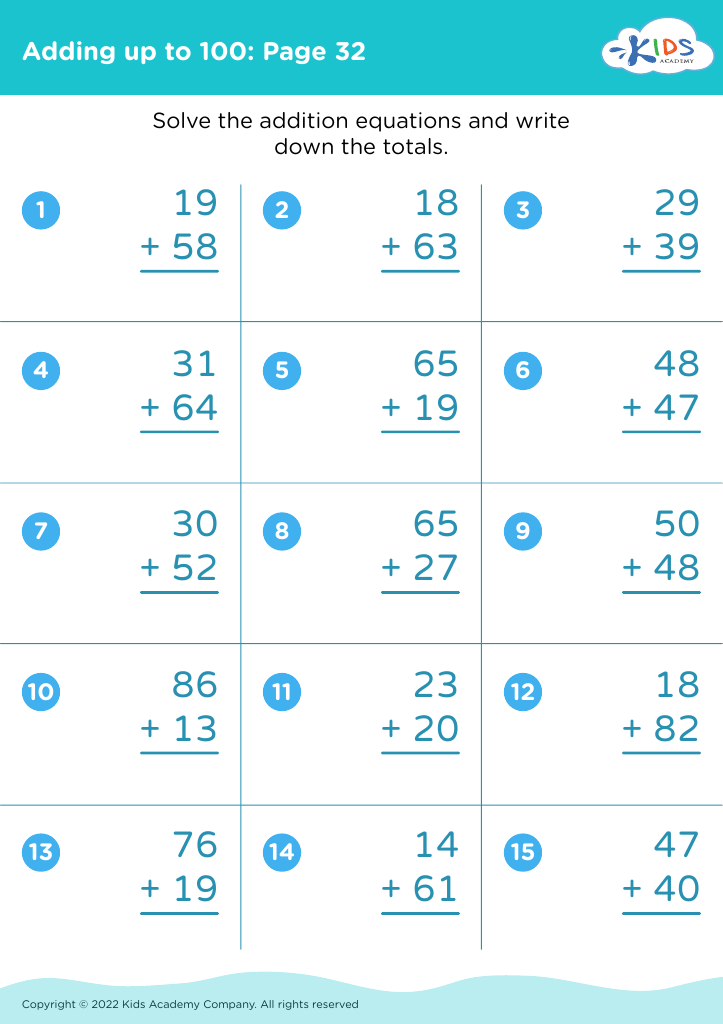
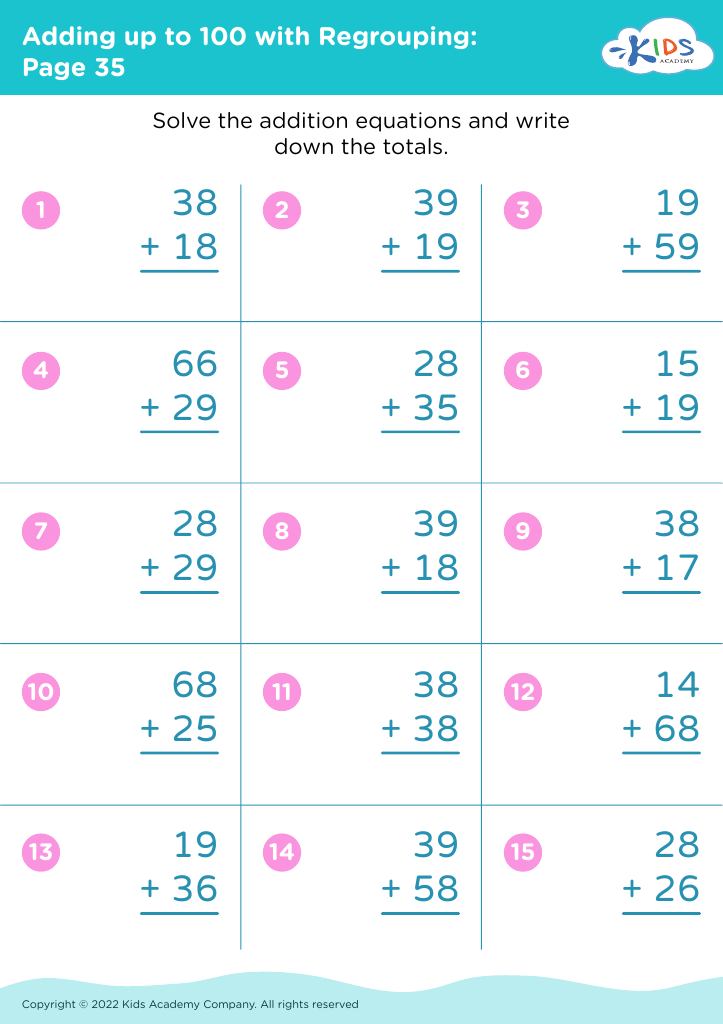
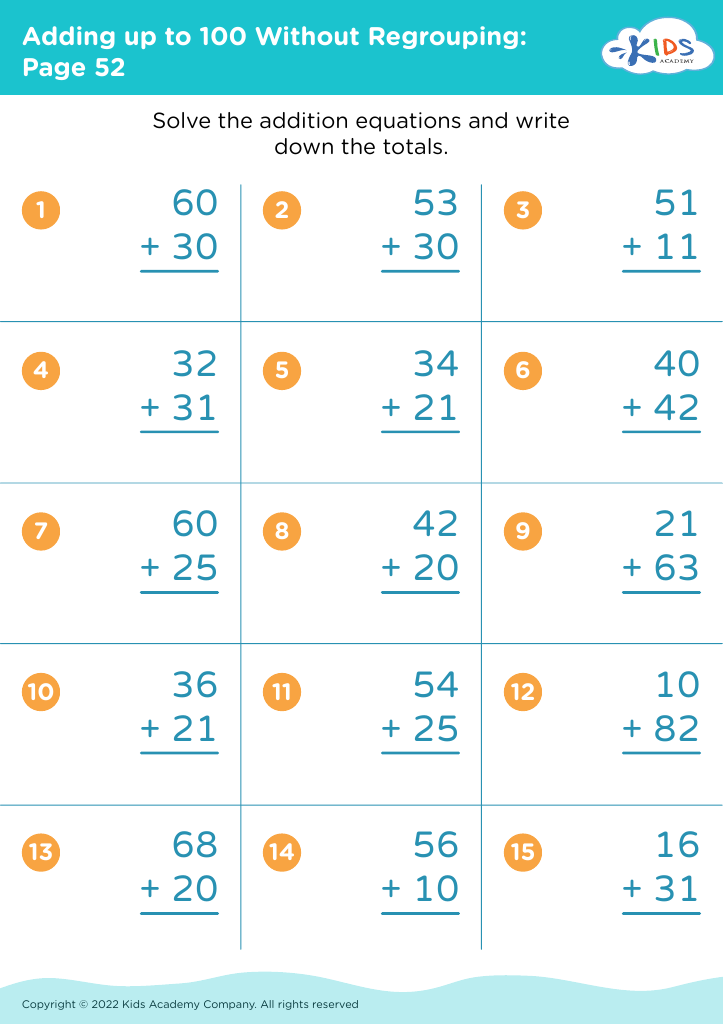
Boost your child's math skills with our expertly designed "Numeracy Skills: Adding up to 100 Worksheets for Ages 7-9". These engaging exercises focus on enhancing addition proficiency within 100, tailored specifically for young learners. Each worksheet is crafted to make learning fun and effective by combining colorful visuals with interactive elements. Your child will develop confidence in their math abilities through consistent practice and clear guidance. Excellent for both classroom and home use, our worksheets support foundational numeracy skills critical for subsequent mathematical concepts. Equip your 7-9-year-olds with the tools they need to excel in math today!





%20(1).jpg)

Numeracy skills, particularly the ability to add up to 100, are fundamental for children aged 7-9 due to their broad impact on cognitive development and daily life. Mastery of basic addition within this range provides a cornerstone for higher-grade arithmetic, including subtraction, multiplication, and early algebra. When children are proficient in adding numbers up to 100, they cultivate critical thinking and problem-solving abilities essential for academic success.
In this age group, acquiring steady numeracy skills fosters confidence. Experiencing success in math boosts self-esteem and encourages a positive attitude towards more complex mathematical concepts, which many children encounter in higher grades. Moreover, these skills are practical in real-life situations, such as making purchases, understanding time, and managing simple budgets. Children who are comfortable with such everyday calculations are better equipped to handle tasks independently, promoting a sense of responsibility.
From an educational standpoint, emphasizing numeracy ensures that no child lags in foundational skills, thus closing the learning gap and fostering inclusive education. For parents and teachers, recognizing the significance of these skills means providing children with the tools and support they need to excel now and in the future, establishing a lifelong competency in math.








