Practicing multiplication Adding up to 100 Worksheets for Ages 7-9
4 filtered results
-
From - To
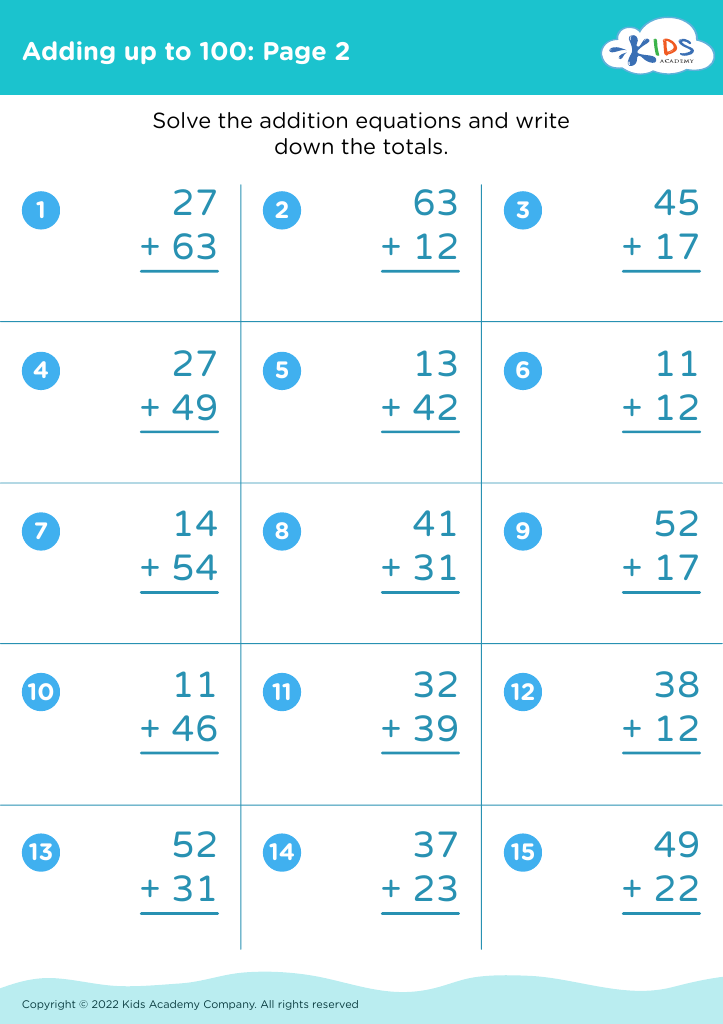
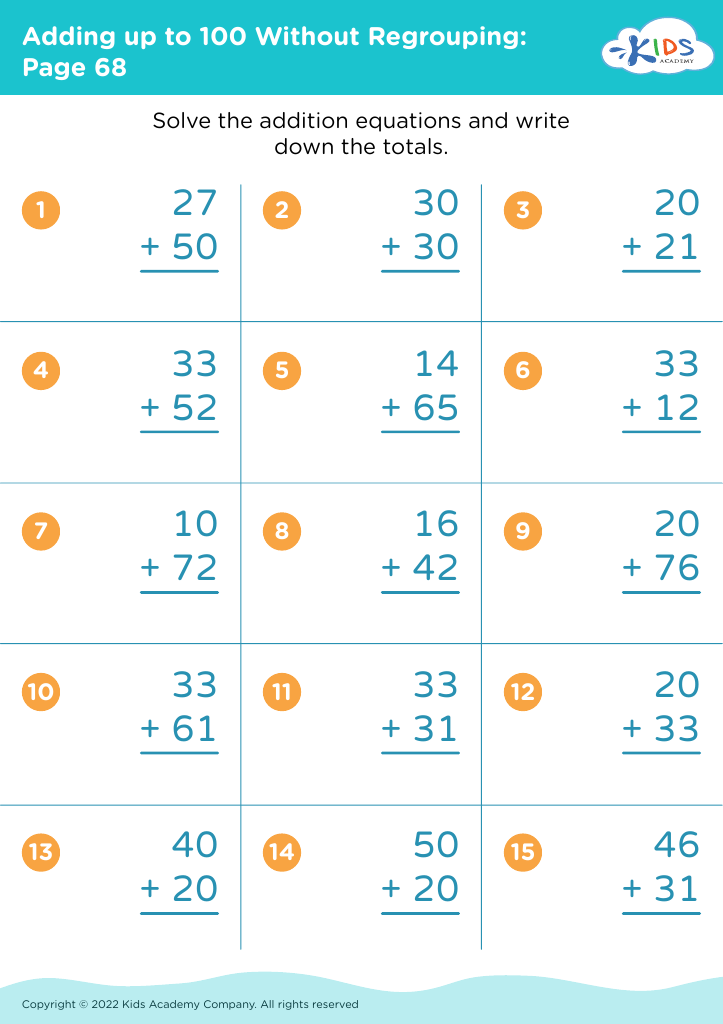
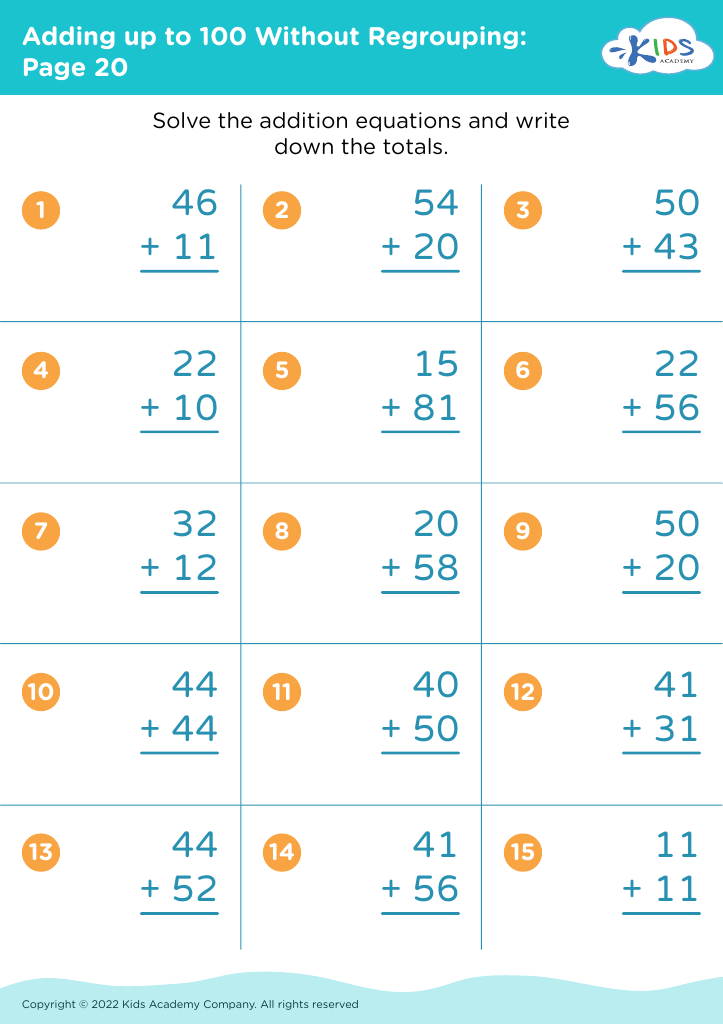
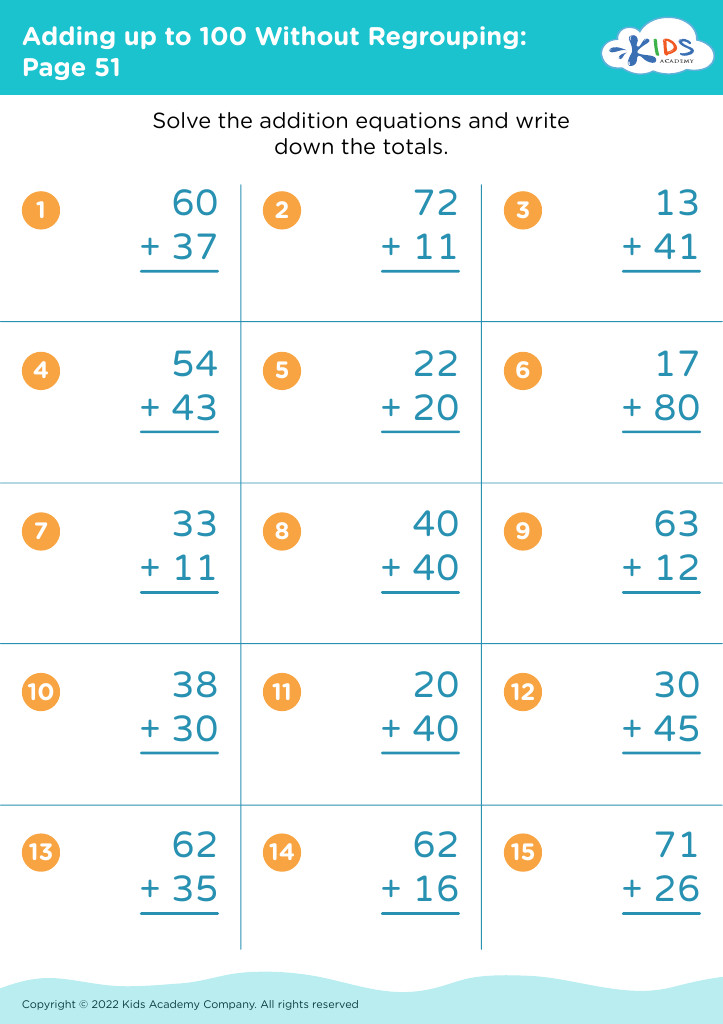
Elevate your child's math skills with our "Practicing Multiplication Adding Up to 100 Worksheets," designed specifically for ages 7-9. These engaging exercises help students master multiplication concepts while learning to add numbers together that total 100. By combining fun activities with essential math practice, your child will build confidence and retain knowledge as they solve a variety of stimulating problems. Ideal for classroom use or at-home learning, our worksheets support key skills in multiplication and addition, ensuring a well-rounded foundation. Watch your child's mathematical abilities flourish as they enjoy learning through our carefully crafted resources!






%20(1).jpg)
Practicing multiplication that adds up to 100 is crucial for children aged 7-9 as it builds essential mathematical skills foundational to their academic success. At this age, kids are transitioning from basic arithmetic to more complex concepts. Multiplication is not only an integral part of math but also enhances their problem-solving abilities and logical reasoning.
Mastering these multiplication facts equips children with the confidence to tackle word problems and understand concepts like area and volume, which will be encountered in later grades. Furthermore, competency in multiplication supports their fluency in math, making it easier for them to grasp more advanced topics like fractions, decimals, and algebra as they progress in school.
For parents and teachers, fostering these skills means helping children gain a crucial tool for daily life, as multiplication is frequently used in budgeting, cooking, and time management. Regular practice through fun games or interactive activities can make learning enjoyable, reducing math anxiety. Ultimately, encouraging practices that bolster multiplication skills helps create a strong mathematical foundation so that children can thrive academically and develop a love for learning mathematics.








