Problem-solving practice Adding up to 100 Worksheets for Ages 7-9
5 filtered results
-
From - To
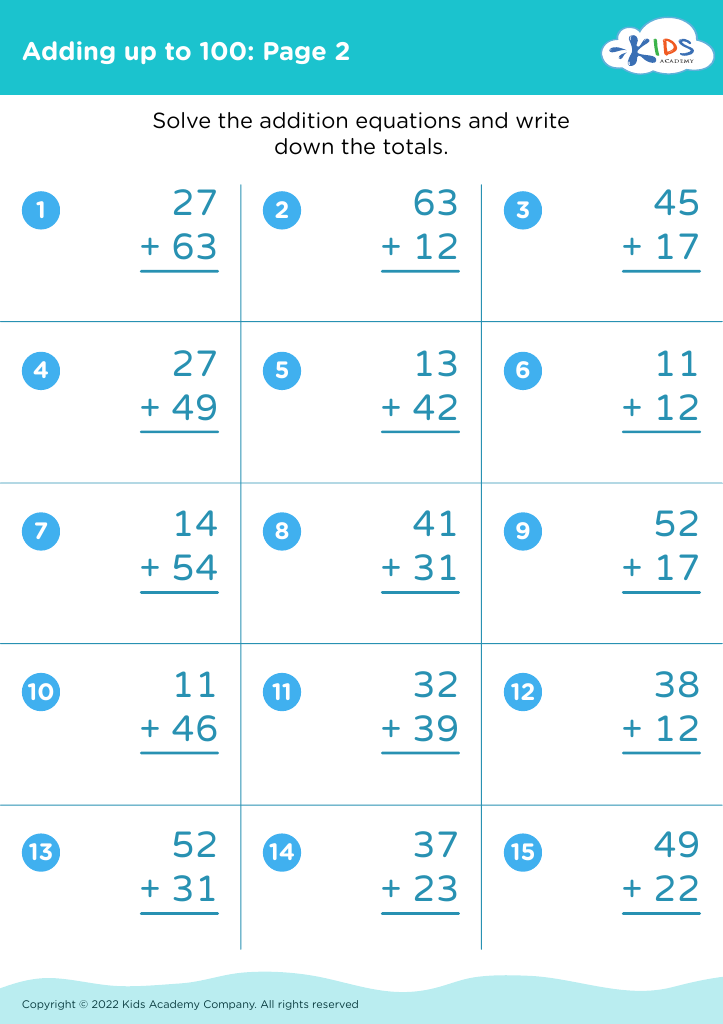
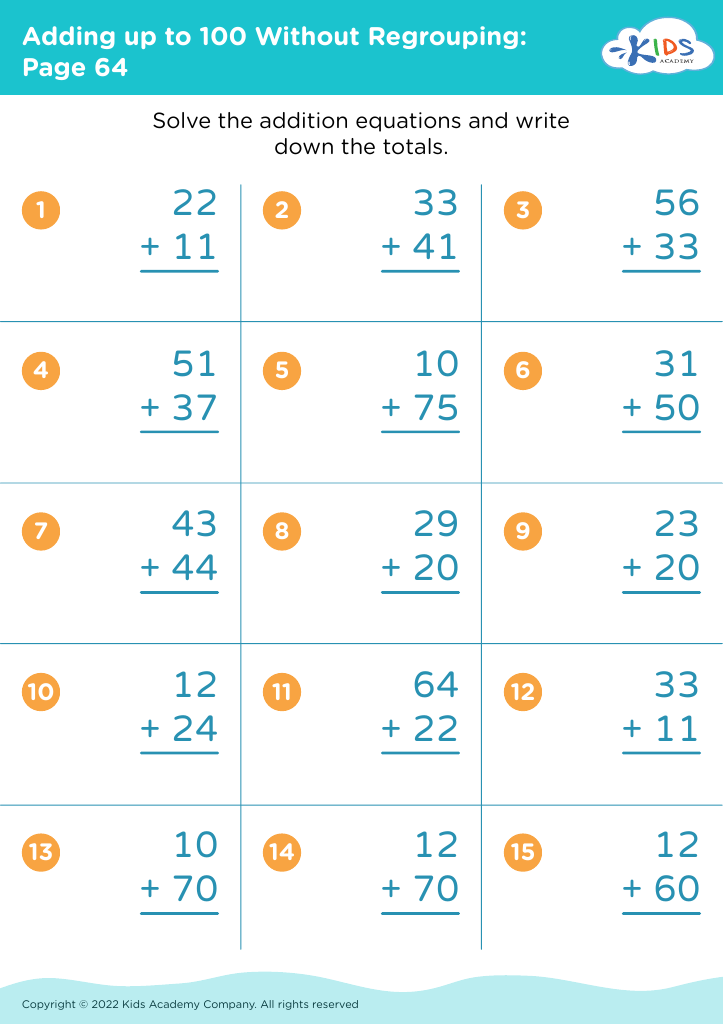
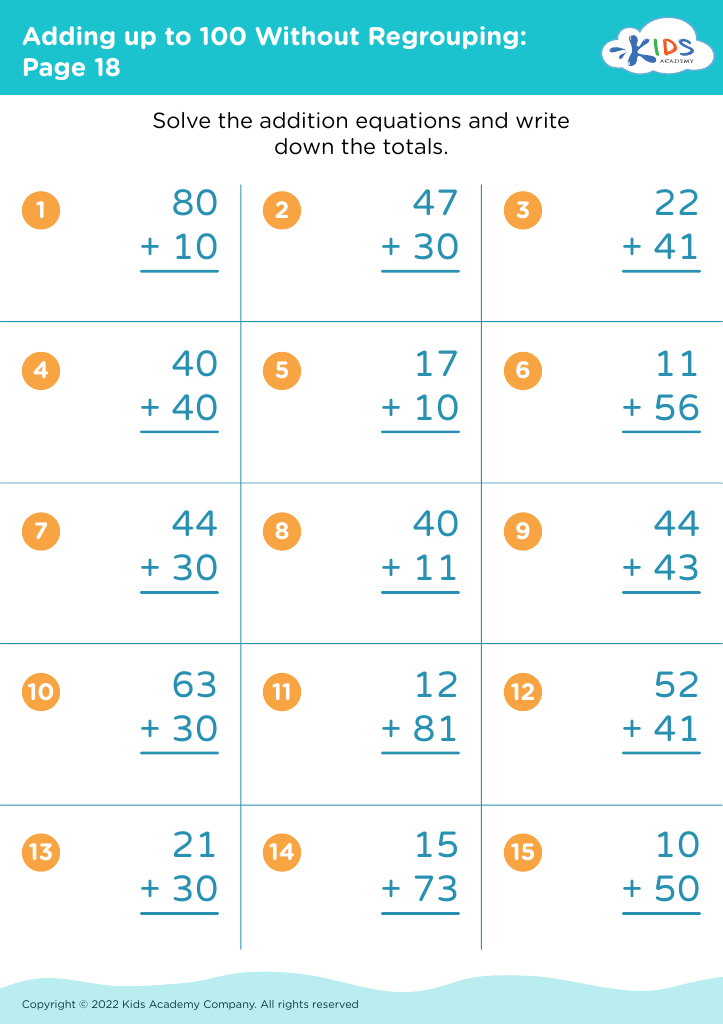
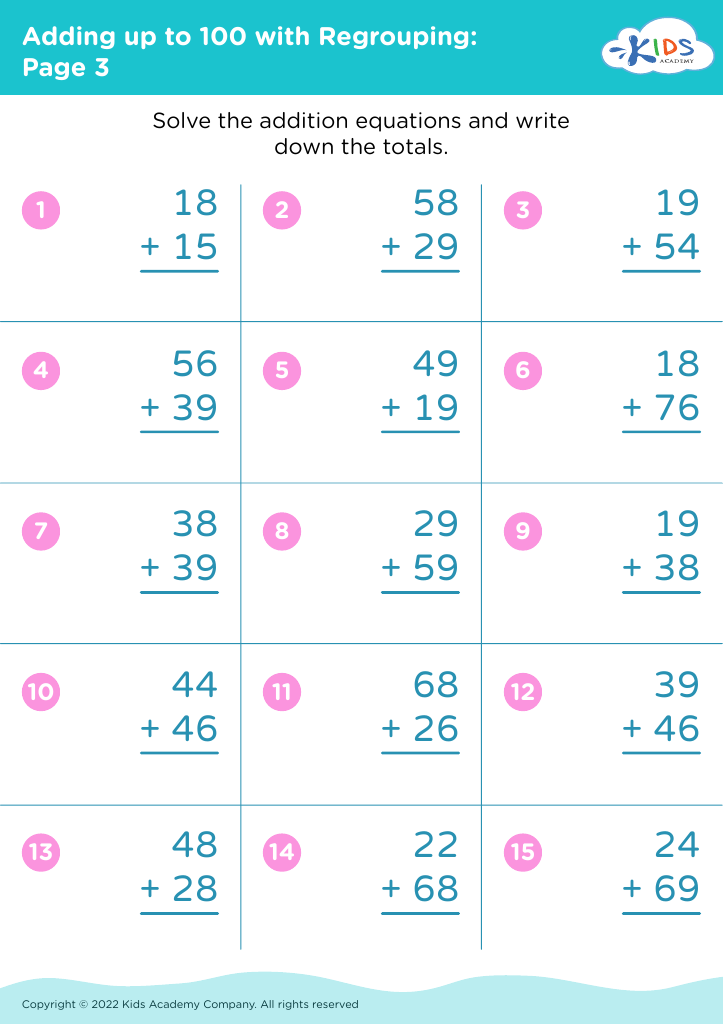
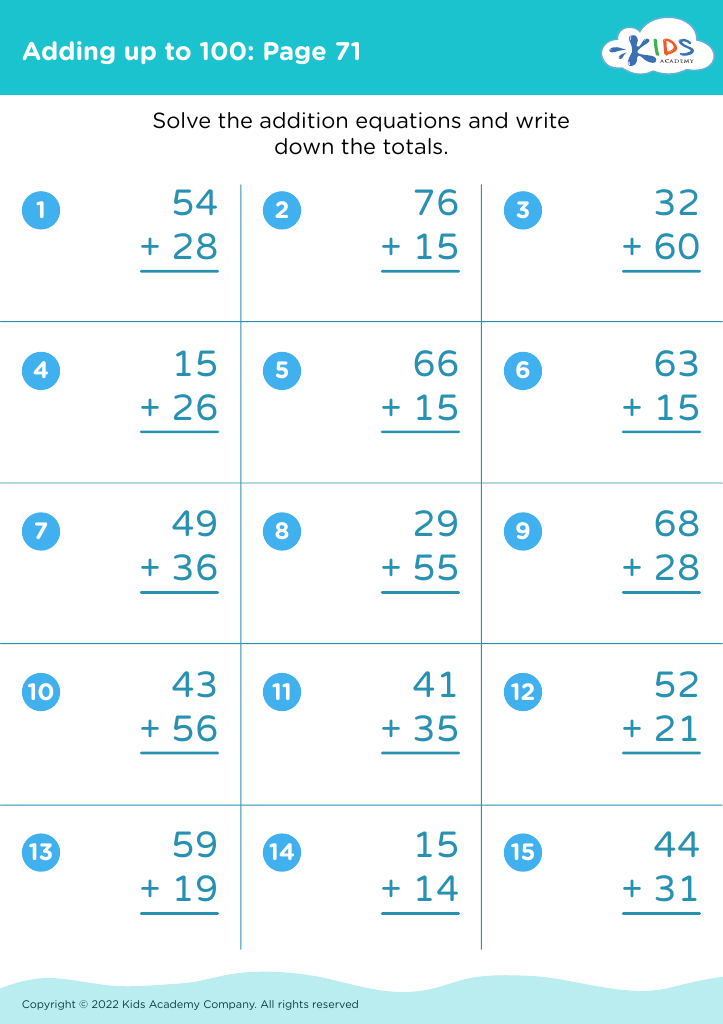
Enhance your child's math skills with our "Problem-Solving Practice: Adding Up to 100 Worksheets" designed for ages 7-9. This collection of engaging worksheets helps young learners build essential problem-solving abilities while practicing addition and number sense. Featuring a variety of challenging scenarios, these worksheets encourage critical thinking and incorporate real-life math applications, making learning both fun and relevant. Perfect for classroom use or at-home practice, these resources facilitate independent learning and reinforce classroom concepts. Watch your child's confidence and competence grow as they tackle addition problems and develop valuable skills for their academic journey! Start exploring today!




%20(1).jpg)


Problem-solving practice, especially in the context of adding up to 100, is essential for children aged 7 to 9 as it builds foundational skills that are critical for their mathematical development. At this age, children are transitioning from concrete concepts to more abstract thinking, making it a prime time to enhance their problem-solving abilities.
First, practicing addition up to 100 helps children improve their numerical fluency, allowing them to perform calculations more efficiently and accurately. This competency lays the groundwork for more advanced mathematical procedures they will encounter in later grades.
Additionally, engaging in problem-solving activities encourages critical thinking and encourages a growth mindset. Children learn to analyze different ways to approach a problem, fostering resilience when they face challenges. They begin to understand that mistakes are a part of learning, which is vital for academic success.
Moreover, effectively using real-world scenarios in problem-solving fosters a deeper understanding of math concepts, linking them to everyday situations. By valuing problem-solving practice, parents and teachers not only help children become confident mathematicians but also equip them with essential life skills, such as perseverance, creativity, and logical reasoning, that extend beyond the classroom.








