Recognizing Patterns Adding up to 100 Worksheets for Ages 7-9
5 filtered results
-
From - To
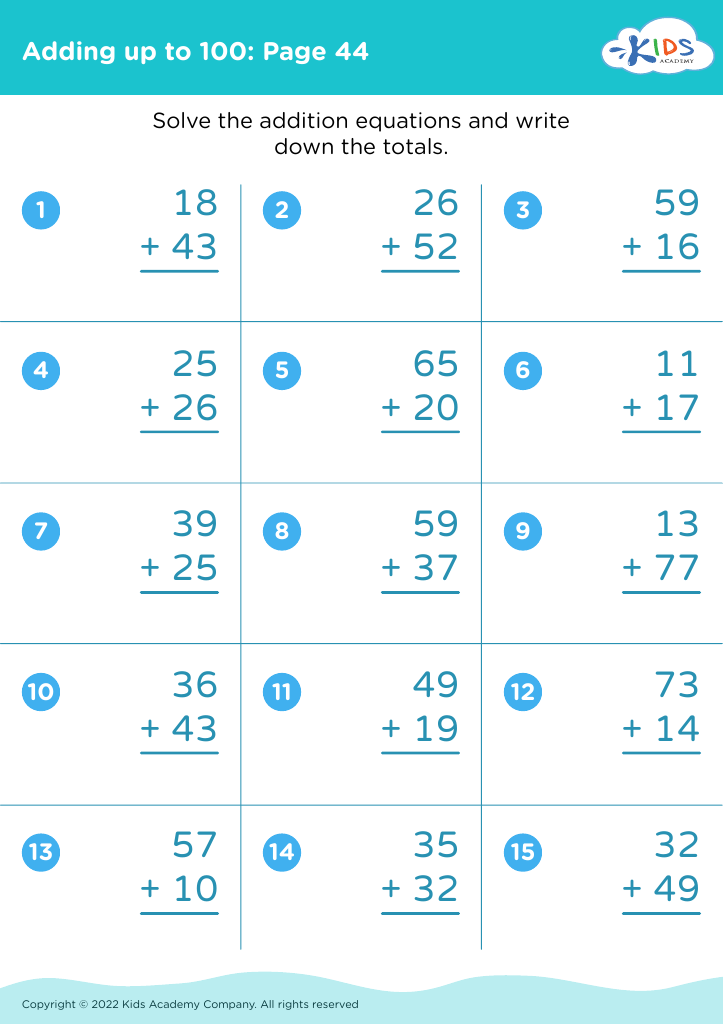
Discover engaging "Recognizing Patterns Adding up to 100" worksheets designed for children ages 7-9. These resources enhance math skills by encouraging young learners to identify patterns in numbers while mastering addition up to 100. Our carefully crafted worksheets feature a variety of exercises that make learning fun and interactive, guiding students through recognition of numeric patterns essential for developing strong mathematical foundations. Ideal for classroom or home use, these worksheets promote critical thinking and problem-solving, ensuring your child gains confidence in their math abilities. Download now and empower your child’s learning experience with our comprehensive, easy-to-use materials!
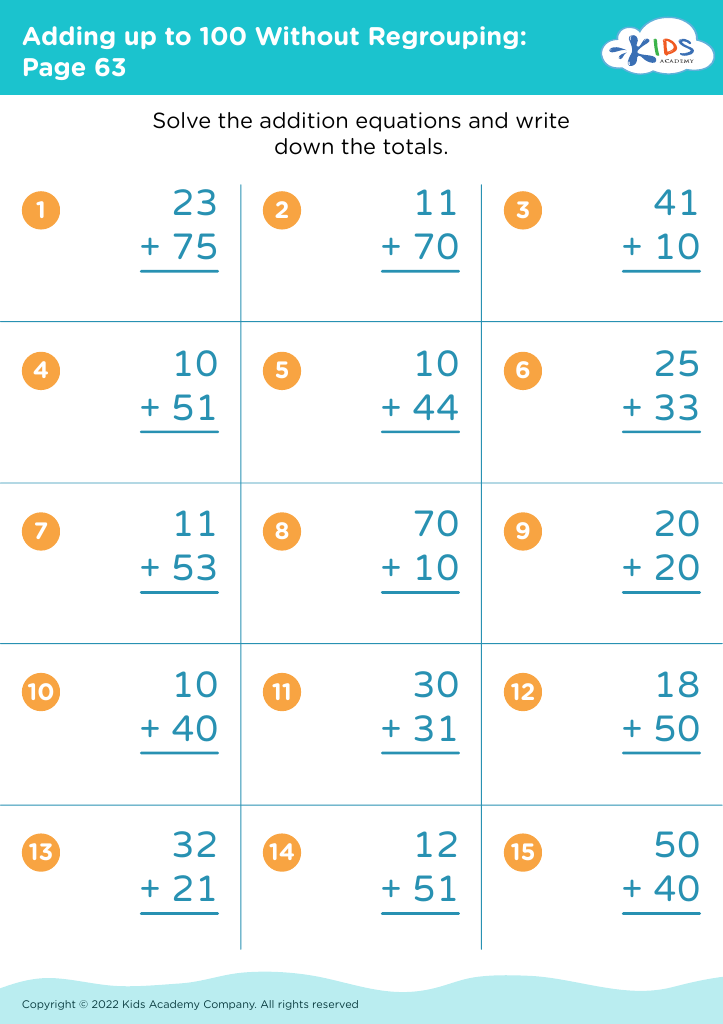
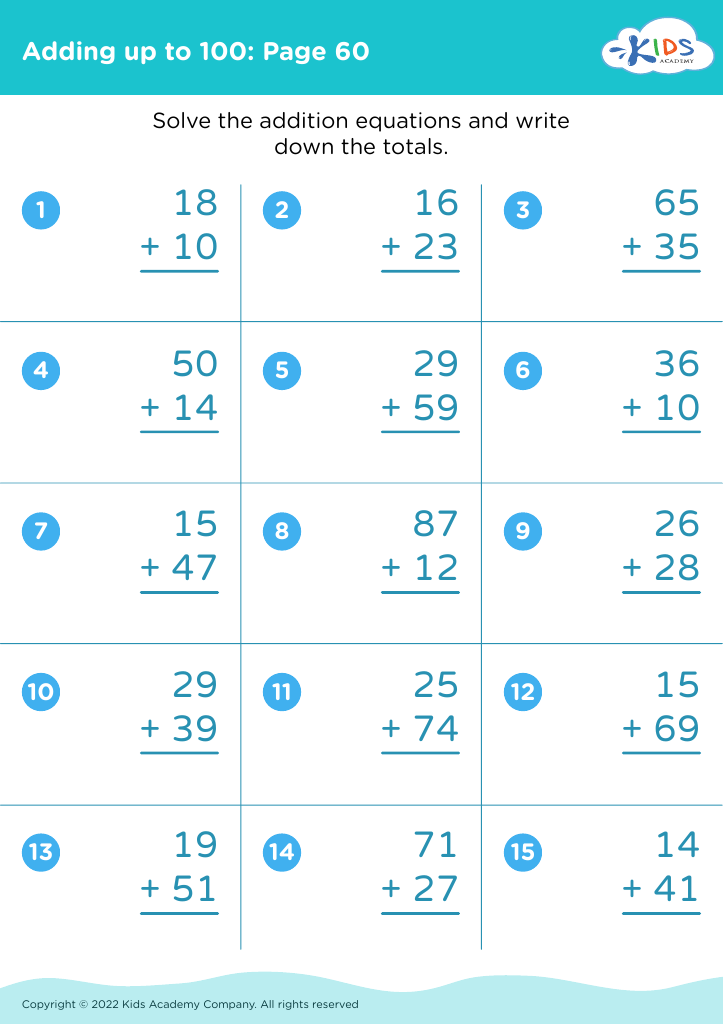
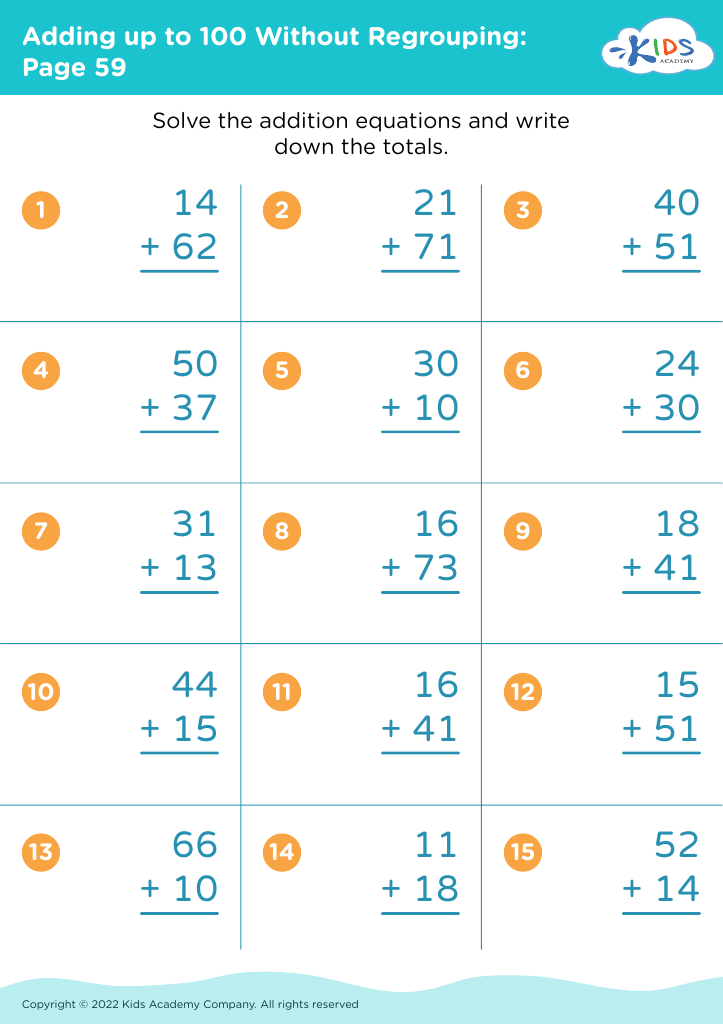
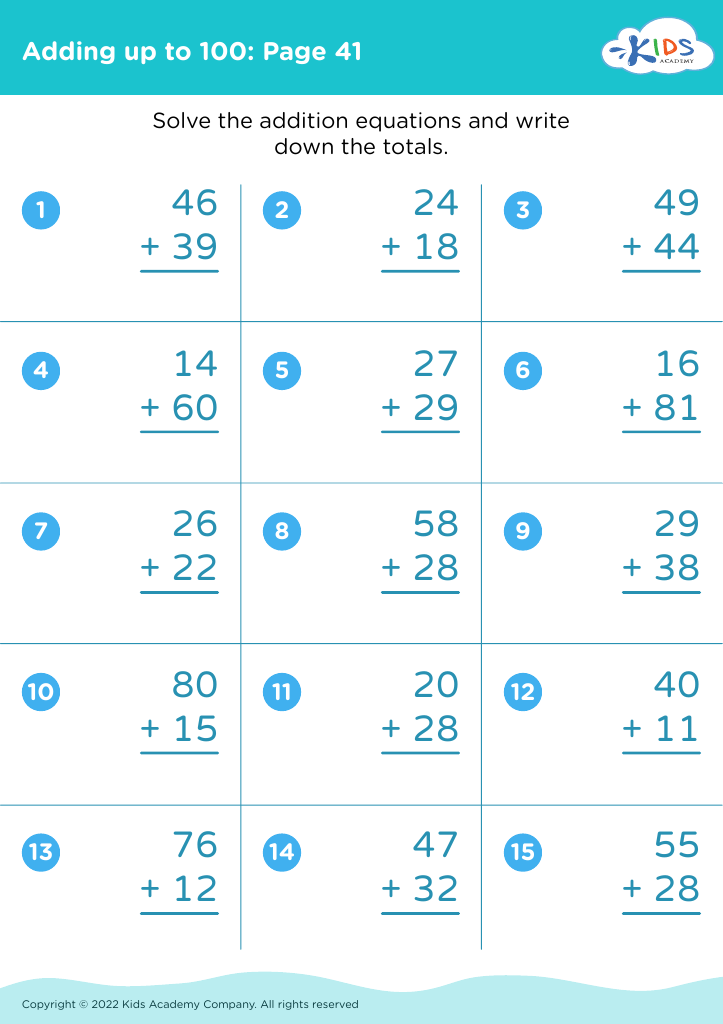





%20(1).jpg)

Recognizing patterns, particularly in math, serves as a foundational skill for children ages 7-9, especially when it comes to concepts like adding up to 100. This age group is critical for cognitive development, as children begin to grasp abstract mathematical concepts. Patterns simplify learning, making it easier for kids to understand relationships between numbers and identify sequences. By recognizing that 100 can be achieved through various combinations—like 50 + 50, 60 + 40, or 70 + 30—they enhance their problem-solving skills and develop number sense.
Moreover, understanding these patterns fosters a sense of confidence and enjoyment in math, which is crucial for lifelong learning. Parents and teachers play pivotal roles in this process by creating engaging activities that encourage exploration of these ideas, thus making math both accessible and fun. Recognizing patterns not only contributes to academic success but also cultivates critical thinking skills and adaptive reasoning in real-world situations. This foundation prepares children for more complex mathematical concepts in the future and nurtures their overall cognitive growth. Ultimately, investing time in this skill can yield long-term benefits, like improved academic performance and increased self-esteem in their mathematical abilities.








