Shape identification Adding up to 100 Worksheets for Ages 7-9
3 filtered results
-
From - To
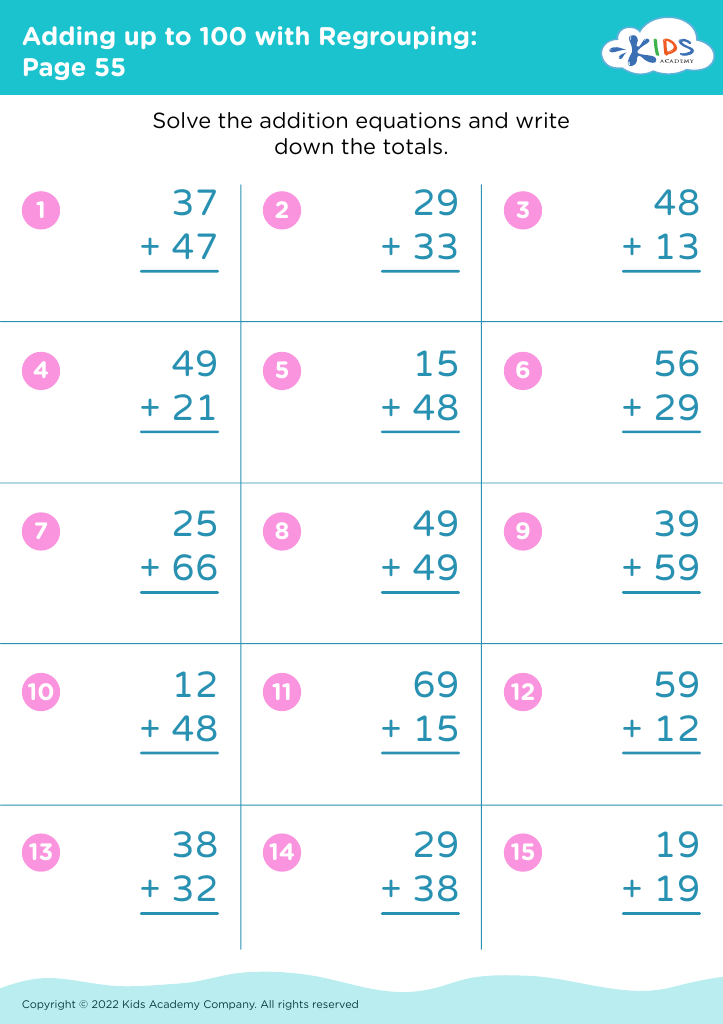
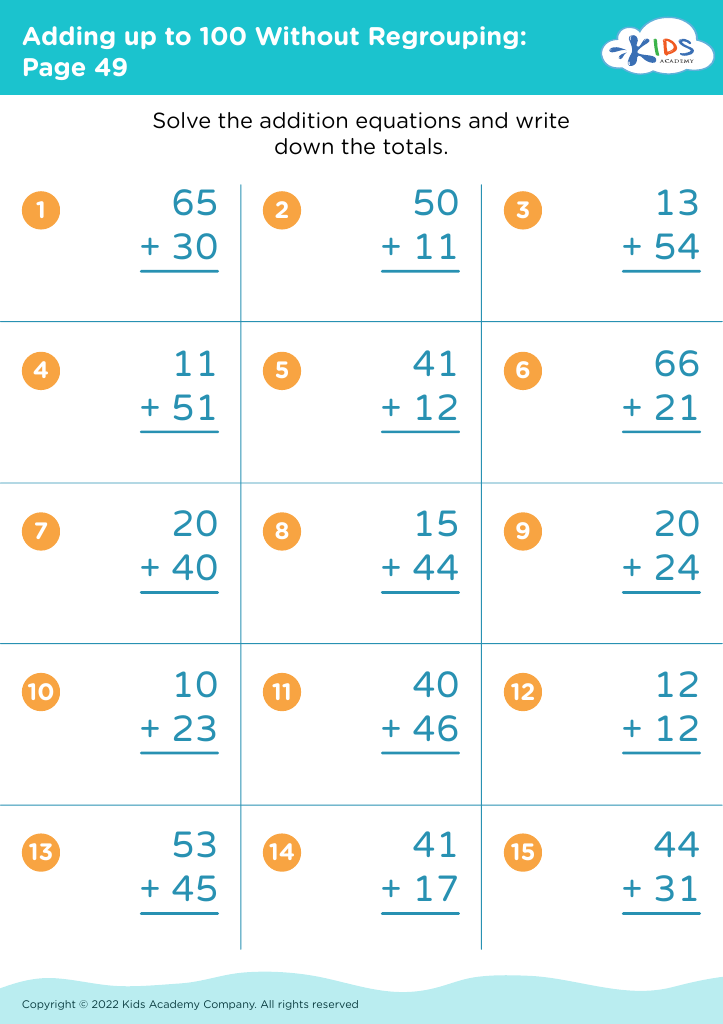
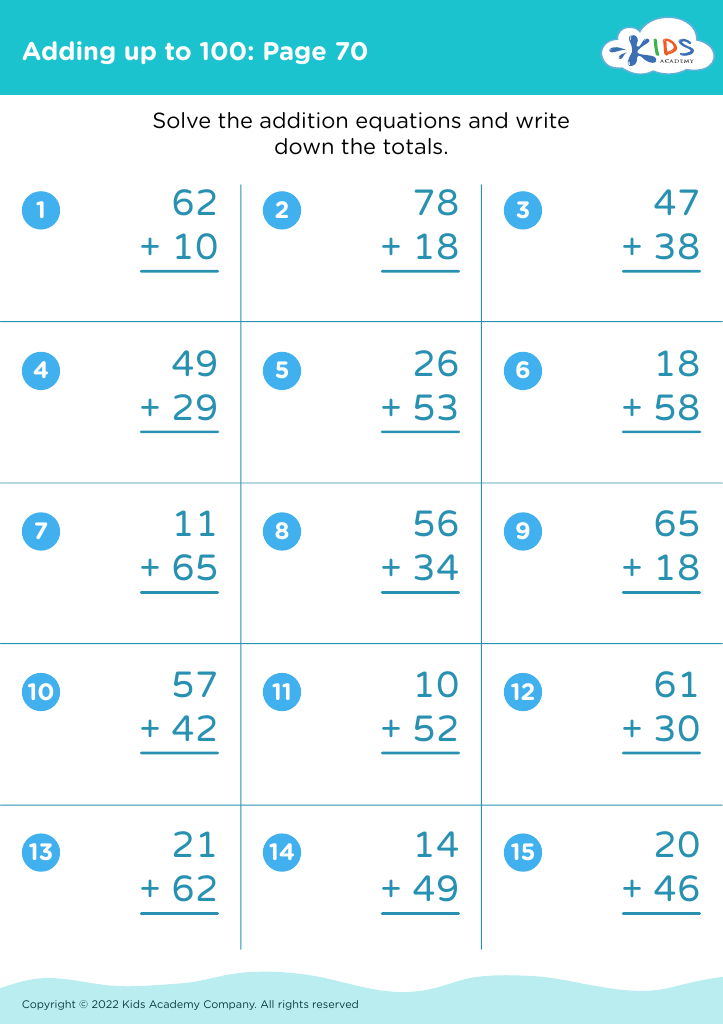
Our "Shape Identification Adding up to 100 Worksheets for Ages 7-9" seamlessly blend geometry and arithmetic to boost critical thinking and math skills. Each engaging activity challenges young learners to identify various shapes while practicing addition up to 100, providing a dual focus on shape recognition and numerical fluency. These fun, colorful worksheets are specifically designed to captivate kids and build their confidence in math. Perfect for both classroom and at-home learning, they encourage independent practice and offer a solid foundation in early geometry and arithmetic development.
Find out more ways to challenge your child or students: Kids Academy






%20(1).jpg)
Shape identification and learning to add up to 100 are crucial skills for children aged 7-9, as they form foundational mathematical and cognitive abilities that are important for their overall development.
Shape identification improves spatial awareness and helps children understand the properties and relationships between different geometric objects. This not only aids in their ability to recognize and reproduce shapes but also enhances their problem-solving and critical-thinking skills, which are vital in many other areas of study and daily life activities. Understanding shapes also translates into better comprehension when they approach more complex geometry later on in their education.
On the other hand, the ability to add numbers up to 100 builds a solid foundation for arithmetic skills. Mastery of this serves as a stepping-stone to more advanced mathematical concepts, such as multiplication, division, and fractions. Developing proficiency in basic addition boosts a child's confidence in handling numbers and tackle problems more effectively. Additionally, it improves their number sense, making it easier for them to estimate and measure, skills which are invaluable not just academically but also in real-life situations.
Incorporating shape identification and adding up to 100 in early education equips children with critical-thinking and analytical skills, giving them the confidence and ability to excel in future learning endeavors. Therefore, active encouragement and support from parents and teachers in these areas are essential for a well-rounded mathematical foundation.








