Shape Recognition Adding up to 100 Worksheets for Ages 7-9
8 filtered results
-
From - To
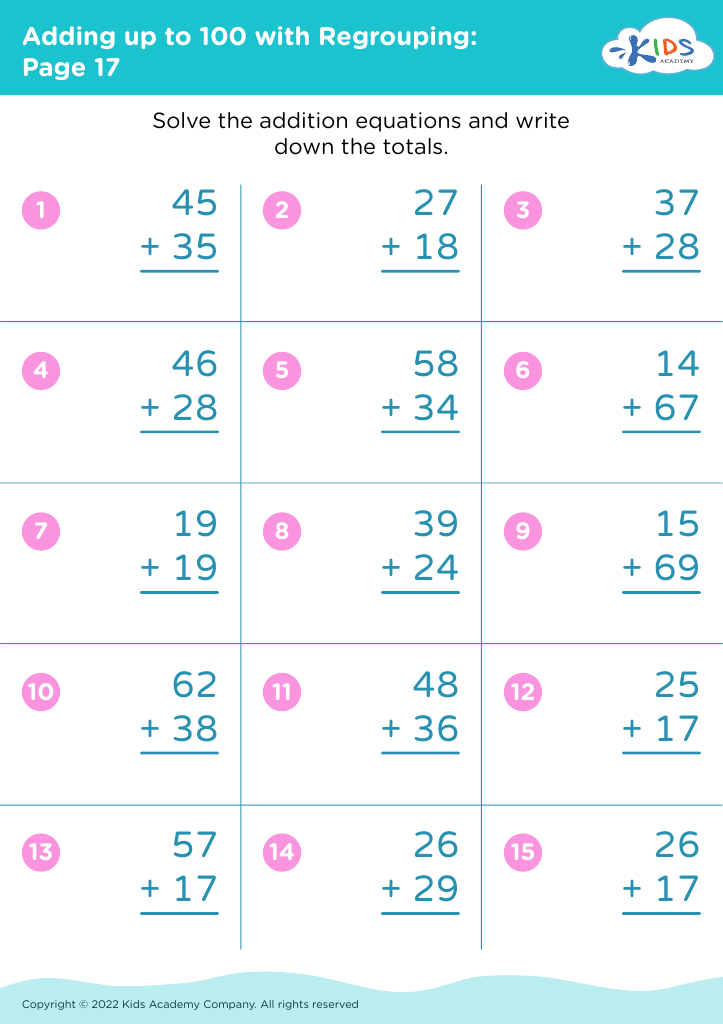
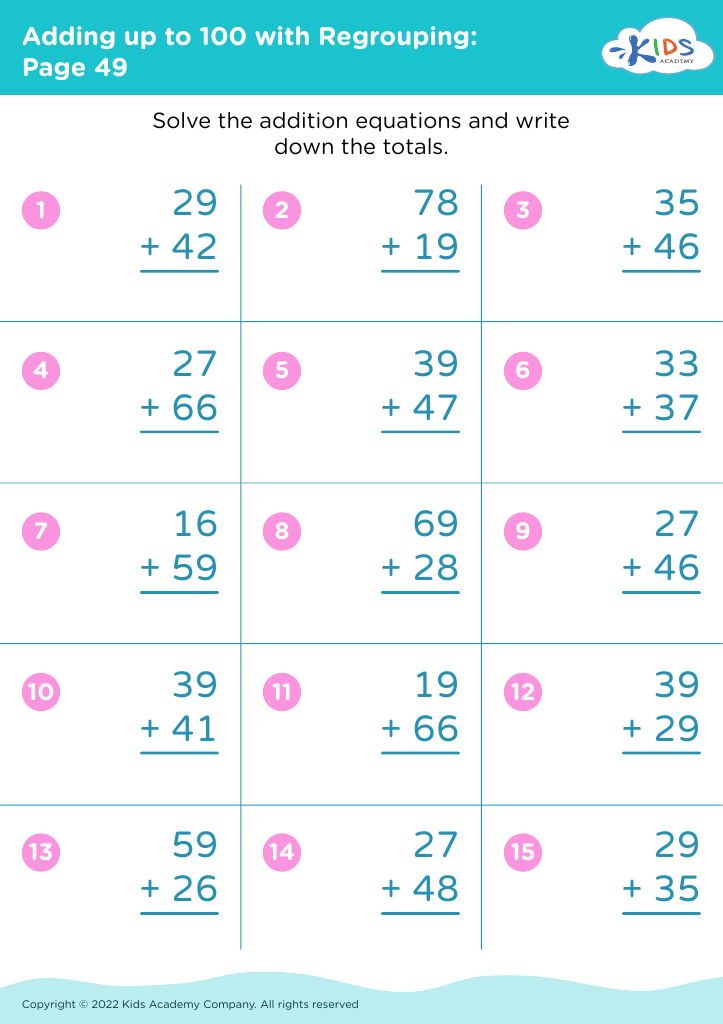
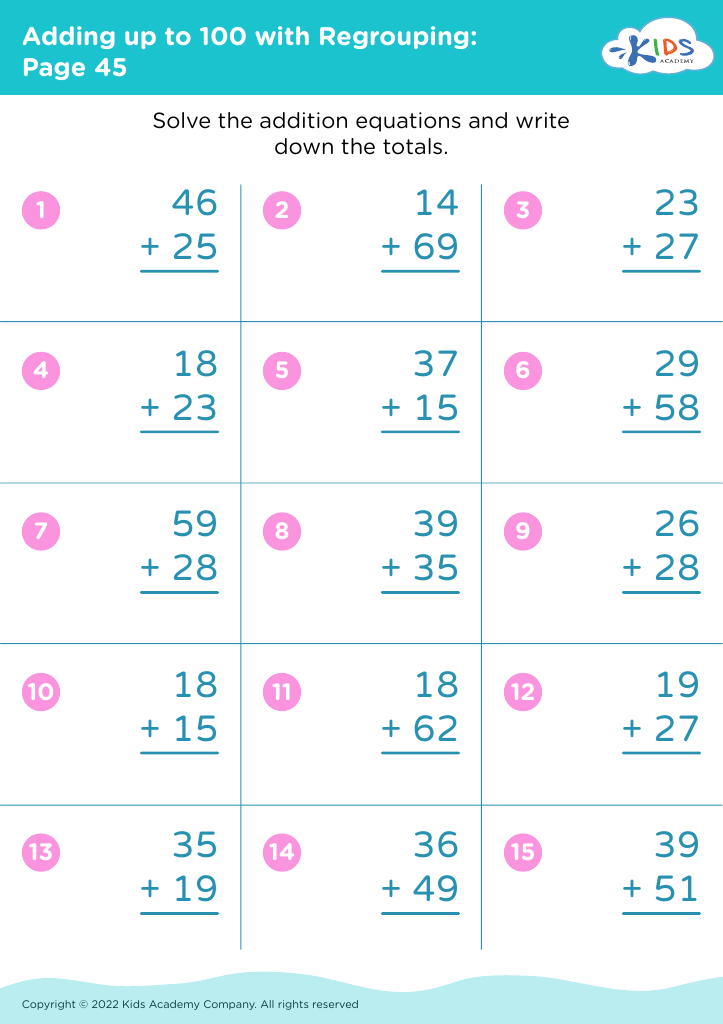
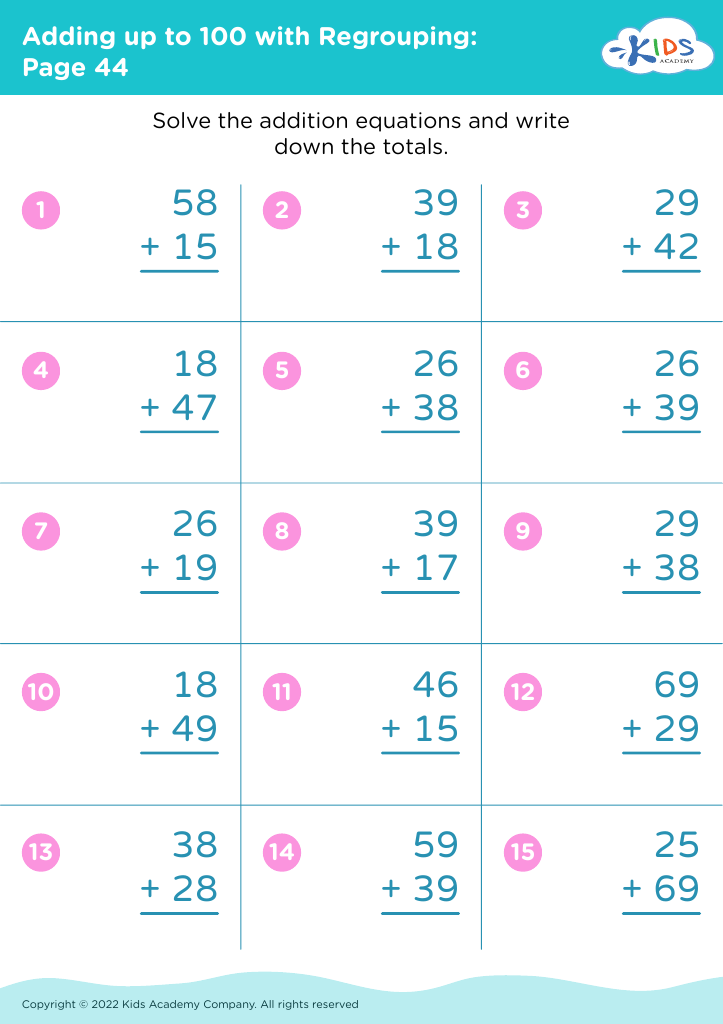
Enhance your child's learning experience with our "Shape Recognition Adding Up to 100 Worksheets" designed for children aged 7-9. These engaging worksheets seamlessly integrate essential math skills with fun shape recognition exercises, helping young learners develop a strong foundation in both geometry and addition. Each worksheet is thoughtfully crafted to challenge students' understanding and encourage critical thinking, making math enjoyable and effective. Perfect for home or classroom use, these resources are ideal for reinforcing shape identification while practicing addition skills up to 100. Download now and watch your child build confidence and competence in math through playful learning!






%20(1).jpg)
Shape recognition and the ability to add up to 100 are foundational skills for children aged 7-9, forming a critical part of their cognitive development. Understanding shapes enhances spatial awareness, allowing children to discern patterns, compare and contrast, and develop geometry skills. These skills translate into real-world applications, such as recognizing shapes in their environment and understanding the concept of design.
Adding up to 100 is equally vital, as it reinforces fundamental arithmetic concepts like addition, subtraction, and place value. Mastering this benchmark allows children to work confidently with larger numbers, sets the stage for more complex mathematical operations, and fosters problem-solving skills essential for academic success.
Both skills also promote critical thinking and cognitive flexibility, as children learn to perceive and manipulate different forms and numbers. When parents and teachers emphasize shape recognition and basic arithmetic through engaging activities and practical applications, they significantly contribute to a child’s readiness for future learning challenges. Furthermore, fostering these skills creates a positive and motivating learning environment, bolstering children's confidence in mathematics and help them build the essential academic foundations required for later learning and everyday problem-solving. Prioritizing these abilities accelerates overall school performance and enhances lifelong learning.








