Understanding Sequences Adding up to 100 Worksheets for Ages 7-9
5 filtered results
-
From - To
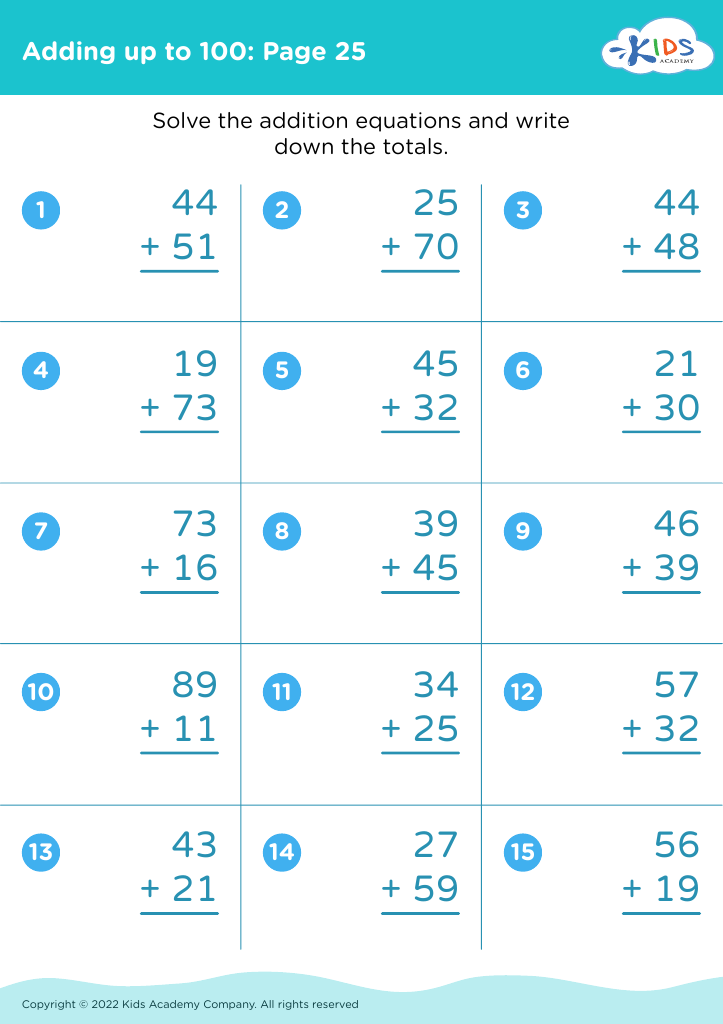
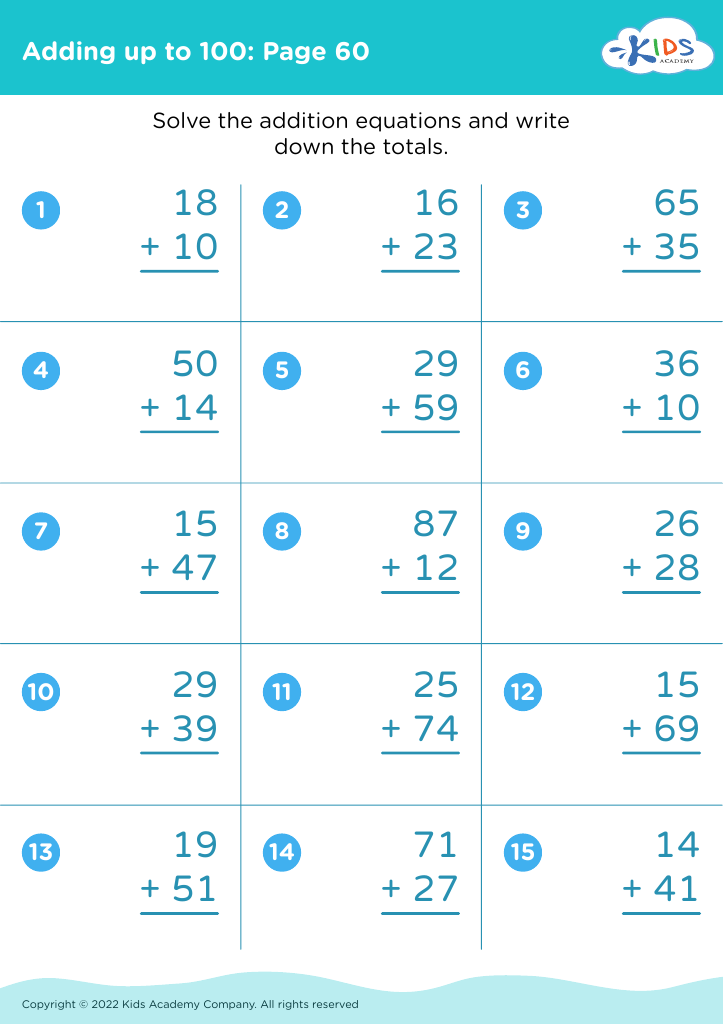
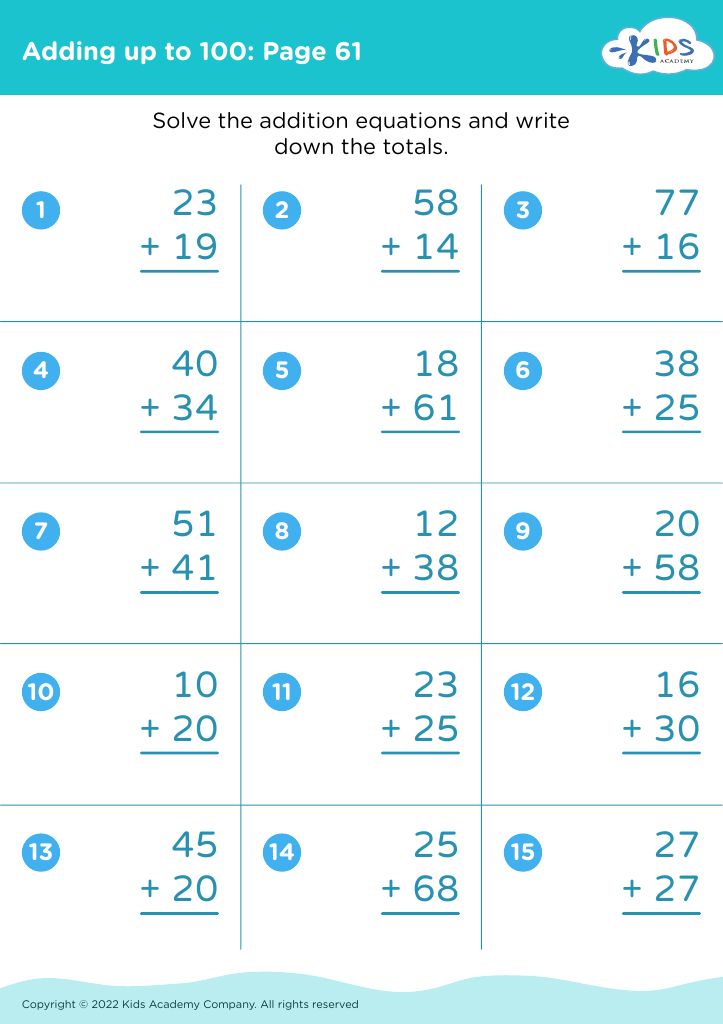
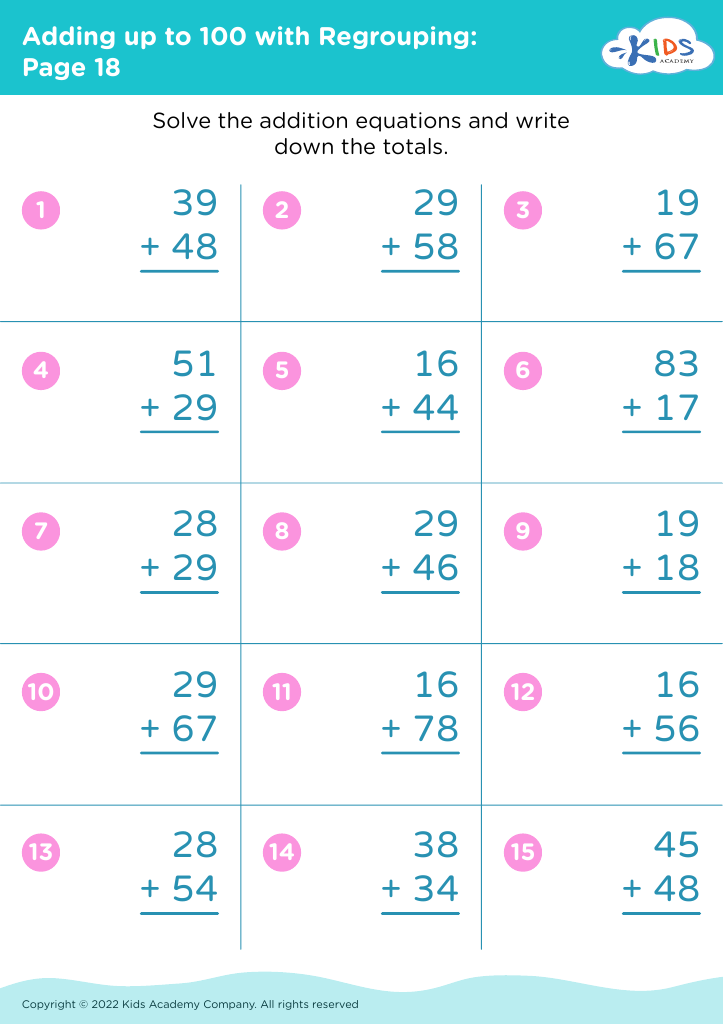
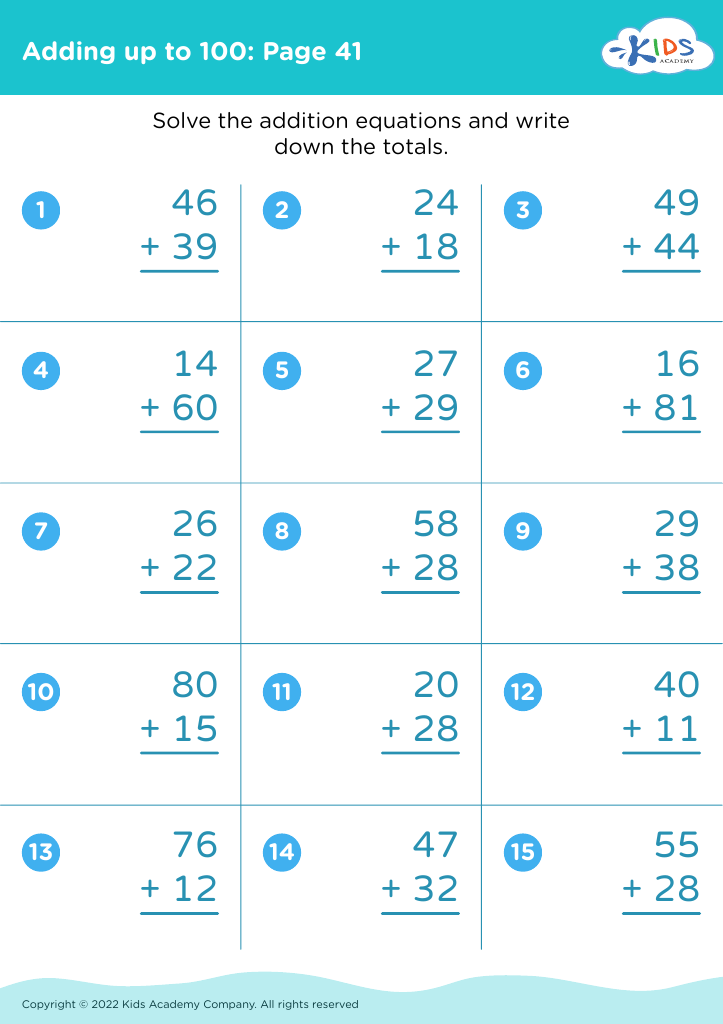
Explore our “Understanding Sequences Adding up to 100 Worksheets” designed for children aged 7-9. These engaging and colorful worksheets help young learners grasp the concept of sequences while mastering addition up to 100. Through a variety of fun activities, students will enhance their problem-solving skills and boost their confidence in math. Our carefully crafted exercises encourage pattern recognition and logical thinking, making math enjoyable and accessible. Perfect for classroom use or at-home learning, these worksheets cater to different learning styles and ensure a comprehensive understanding of sequences. Equip your child with essential math skills today!


%20(1).jpg)




Understanding sequences that add up to 100 is crucial for students aged 7-9 as it forms a foundational skill in mathematics that has far-reaching implications. At this age, children are transitioning from simple arithmetic to more complex mathematical concepts, and grasping sequences empowers them to solve problems more efficiently.
Teaching children to recognize and create sequences helps develop their critical thinking and pattern recognition skills. This understanding lays the groundwork for later topics, such as algebra and number patterns, aiding in their overall mathematical fluency. Moreover, by mastering sequences that total 100, students improve their ability to manage larger numbers, fostering confidence in their math skills.
For parents and teachers, emphasizing this concept means they are preparing children for future academic success. It encourages engagement with numbers in a fun and relevant manner, enabling children to see the practical applications of math in everyday life, such as budgeting or even simple cooking measurements. Ultimately, fostering an understanding of sequences enhances children’s problem-solving abilities and nurtures a positive attitude toward mathematics, making it an essential focus in early education.








