Vocabulary enhancement Adding up to 100 Worksheets for Ages 7-9
3 filtered results
-
From - To
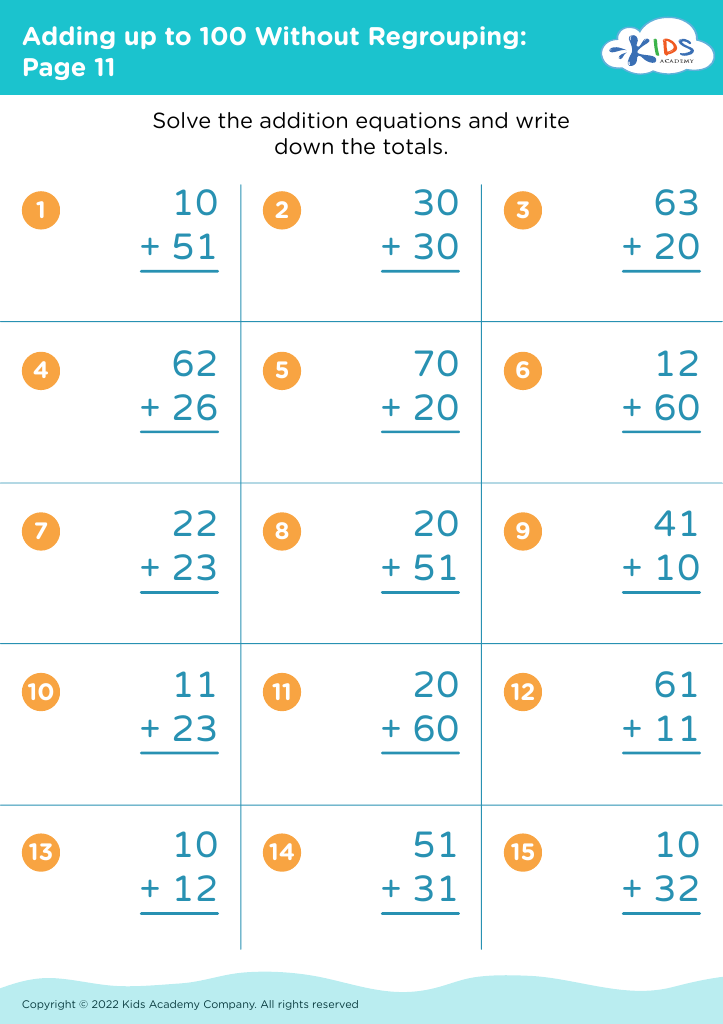
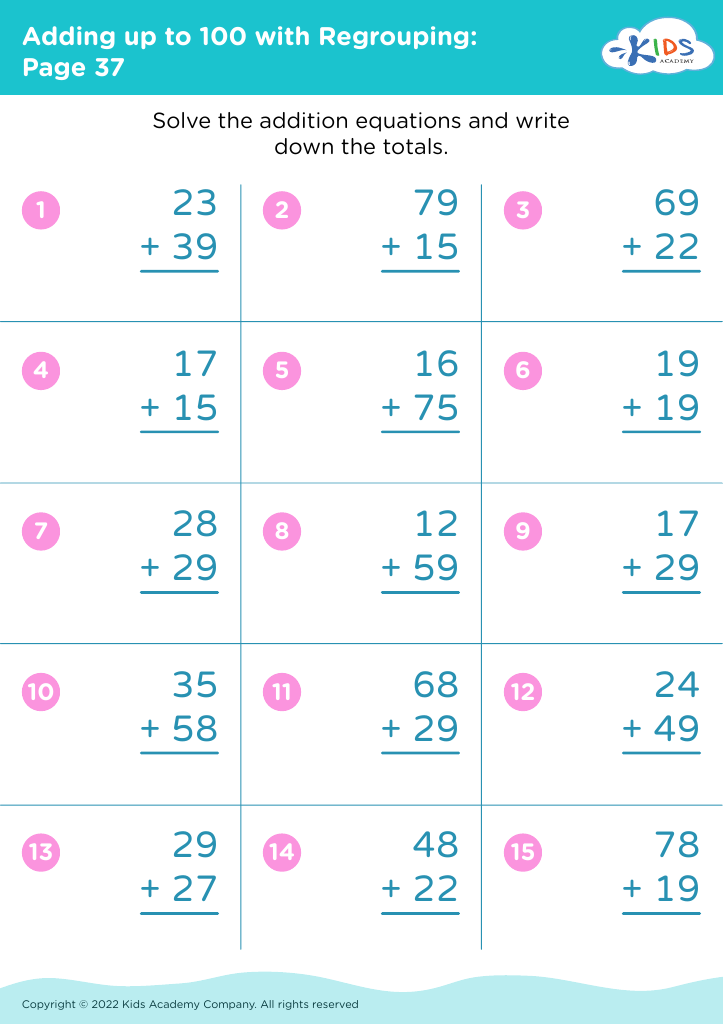
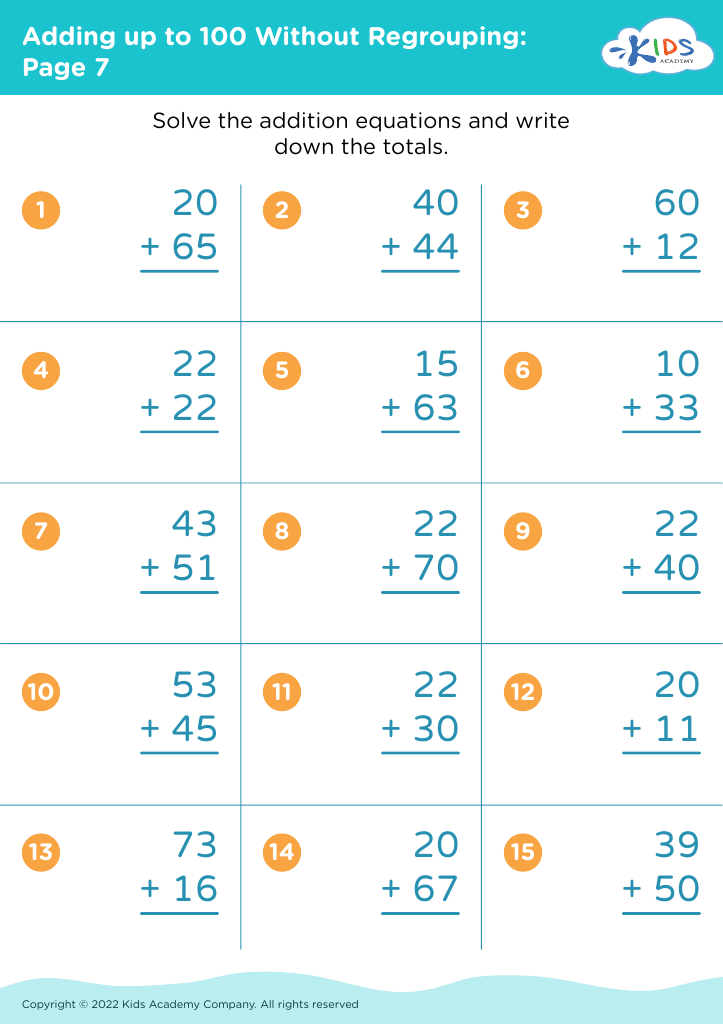
Enhance your child's vocabulary while mastering addition with our "Vocabulary Enhancement: Adding Up to 100 Worksheets for Ages 7-9." These engaging and educational worksheets are designed to strengthen math skills and vocabulary knowledge simultaneously. Your child will enjoy solving addition problems up to 100, while also learning new words and concepts. Perfectly tailored for ages 7 to 9, these worksheets provide a stimulating and interactive approach to learning. Help your child build a solid foundation in both math and language skills with our expertly crafted resources. Ideal for enriching homeschool curriculum or as supplementary classroom material.


%20(1).jpg)




Vocabulary enhancement for children aged 7-9 is crucial because this period represents a significant phase in cognitive and linguistic development. During these formative years, kids are highly receptive to learning new words and concepts, which builds the foundation for future academic achievement and effective communication.
Enhanced vocabulary enables children to articulate thoughts and emotions more clearly, paving the way for better interpersonal skills. In an educational context, a rich vocabulary contributes to improved comprehension and expression in reading and writing tasks. When children understand and use a broader range of words, they perform better in all subjects, including math and science, because they can grasp complex instructions and concepts more easily.
Furthermore, vocabulary development supports critical thinking and problem-solving skills. When children can label and categorize their experiences and observations precisely, they are better equipped to analyze and synthesize information.
Adding vocabulary exercises to everyday activities can also make learning fun and engaging. For example, integrating math with vocabulary practice, such as learning words like "sum," "difference," and "quotient,” while solving problems related to adding up to 100, keeps students stimulated and offers practical, cross-disciplinary skills.
In summary, focusing on vocabulary enhancement for young children enriches their language skills, bolsters academic performance, fosters social interactions, and cultivates an overall love for learning. Parents and teachers, paying attention to this area, invest in the holistic development of their kids.








