Shape Recognition Adding up to 50 Worksheets for Ages 7-9
9 filtered results
-
From - To
Shape Recognition Adding up to 50 Worksheets for Ages 7-9 offer an engaging way for children to enhance their mathematical skills while improving their ability to recognize various shapes. Specifically designed for young learners, these printable worksheets combine the fun of identifying different shapes with the challenge of addition problems, all totaling up to 50. Perfect for both classroom and at-home practice, these activities align with essential learning objectives, ensuring that children will not only advance their math skills but also develop critical thinking and visual perception. Utilize these worksheets to foster a love for math and shapes in your child.
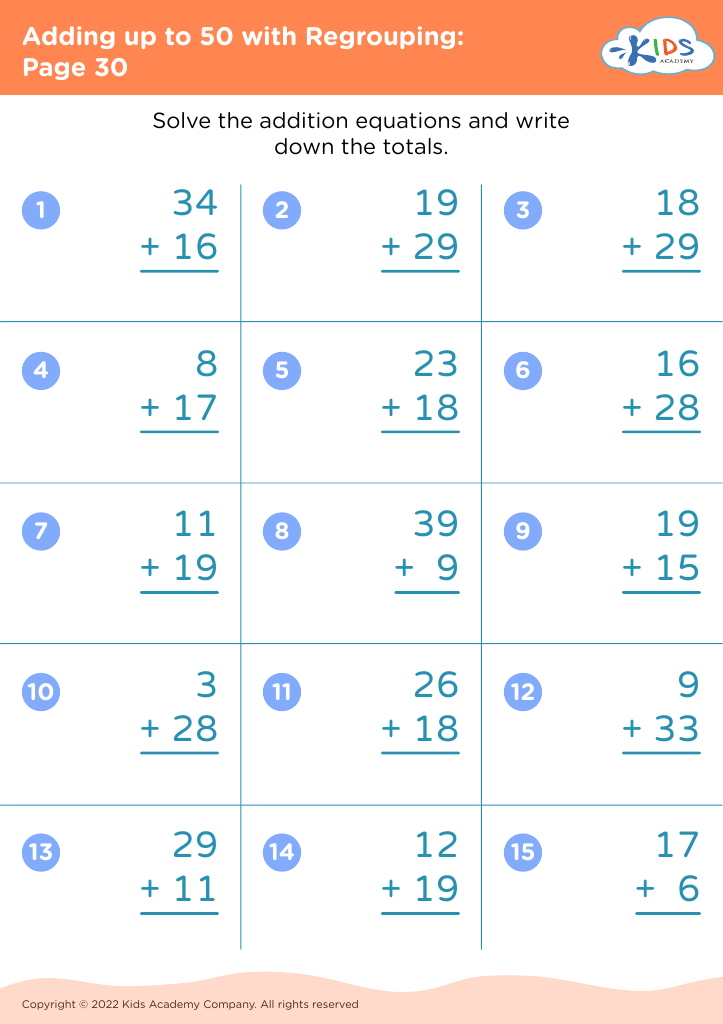
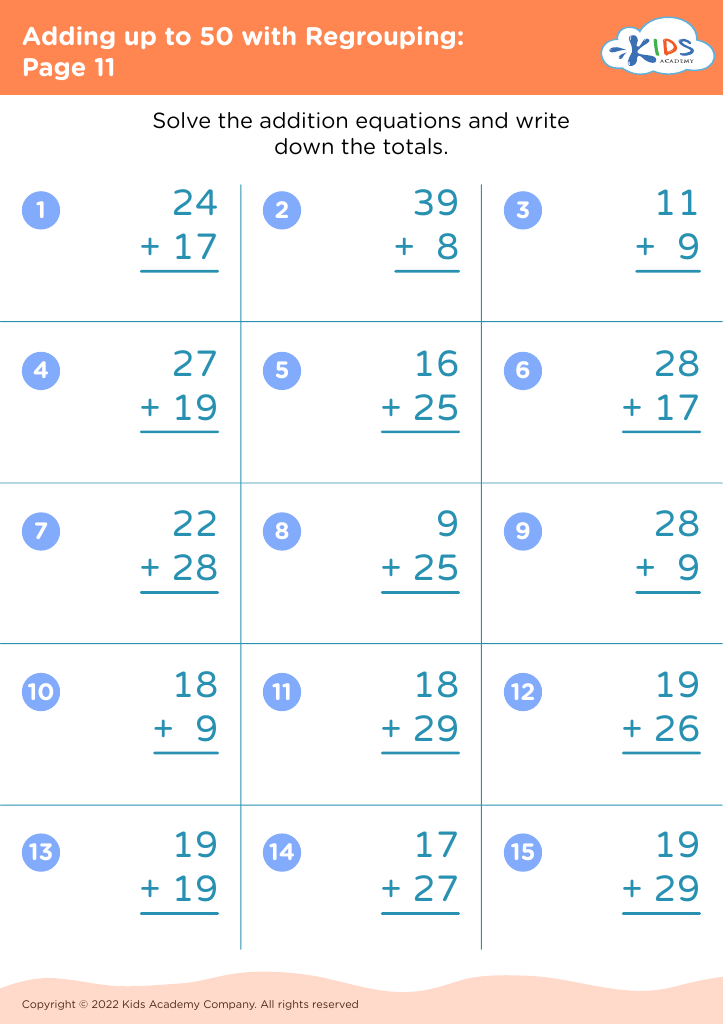
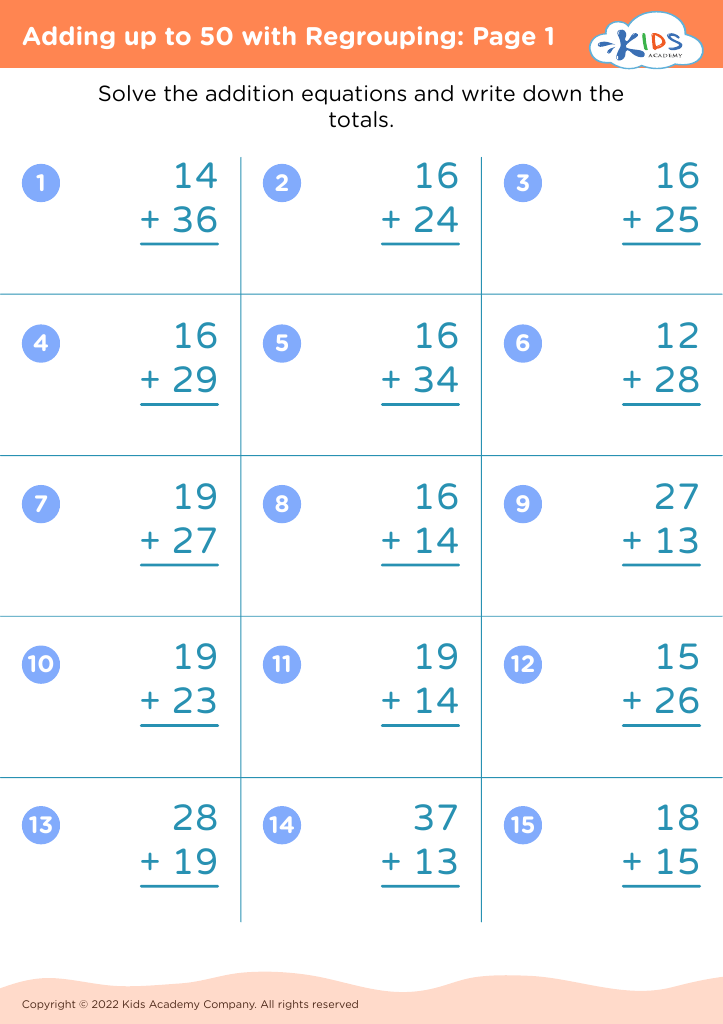
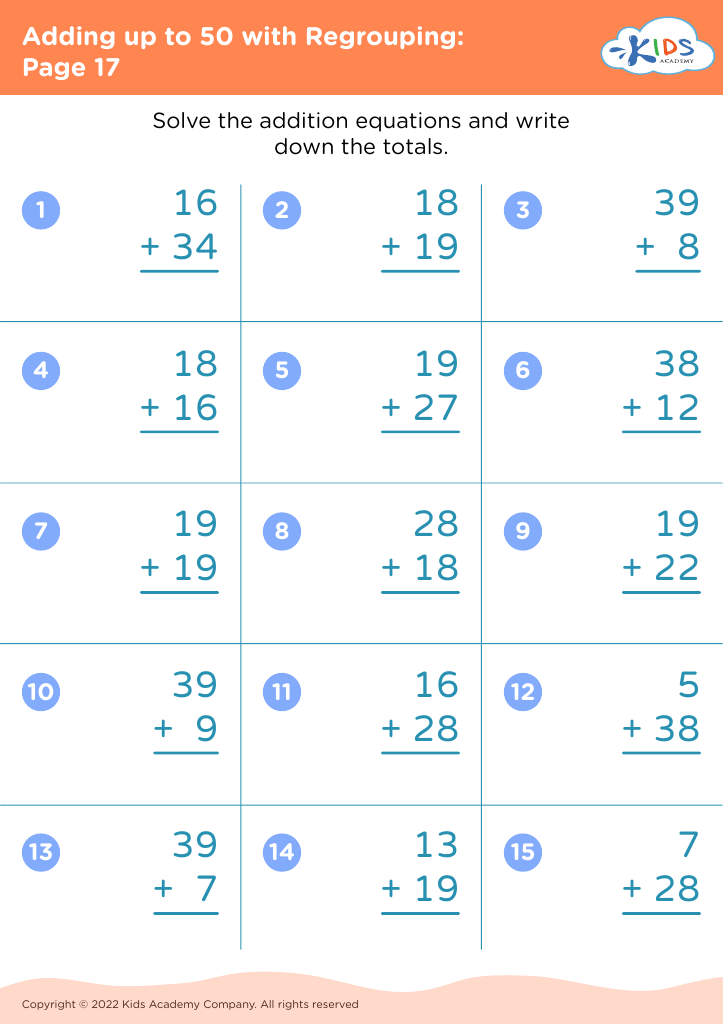
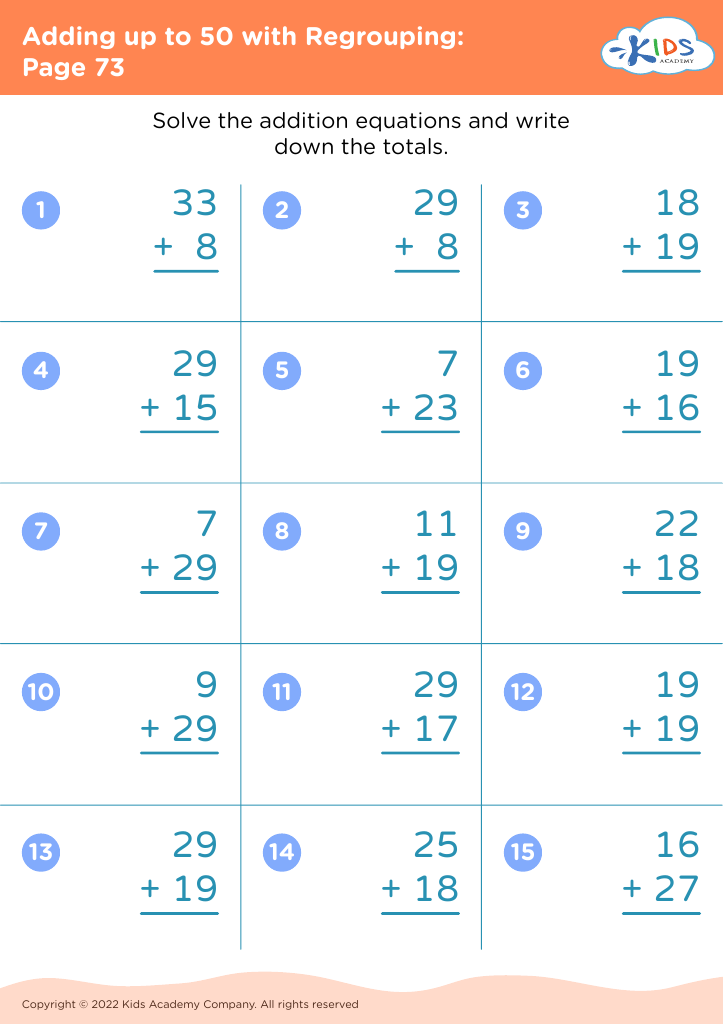
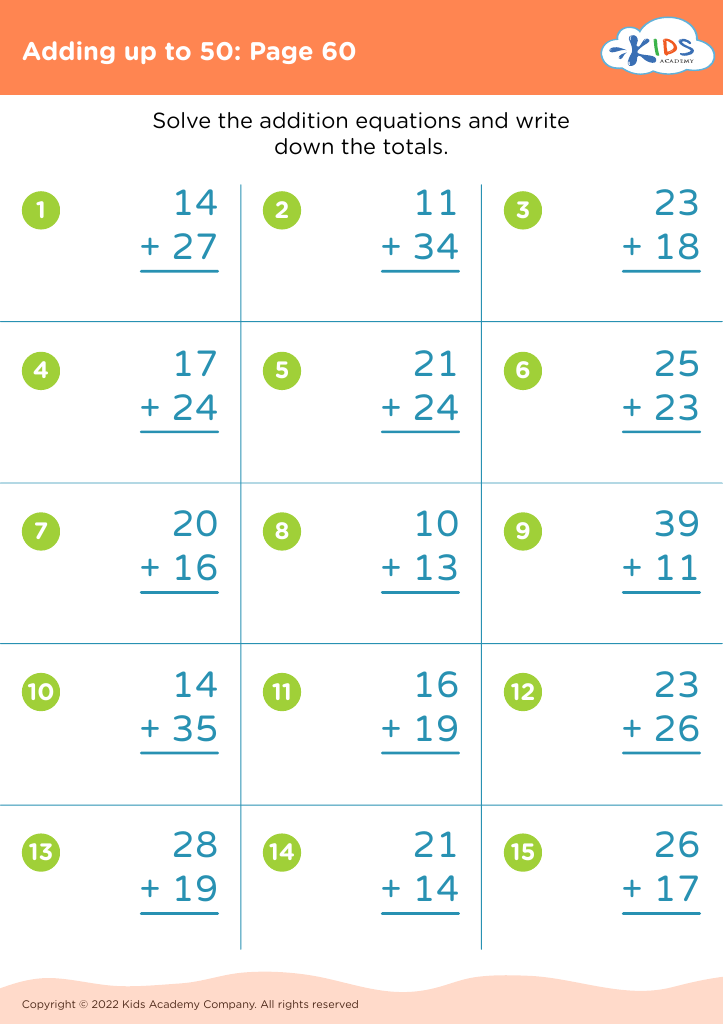
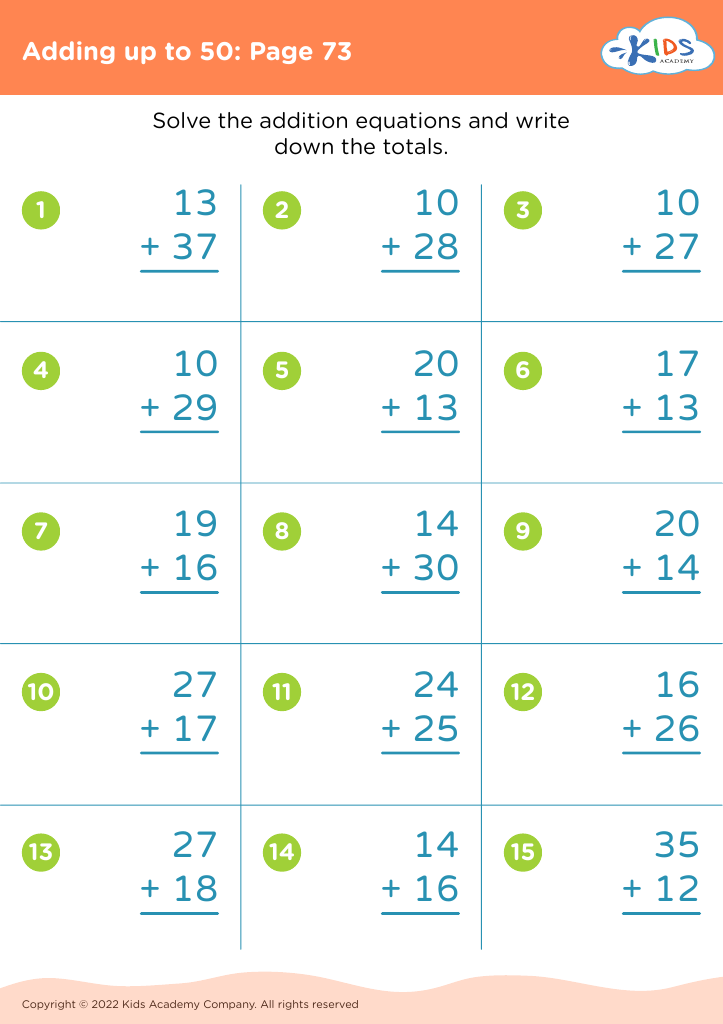
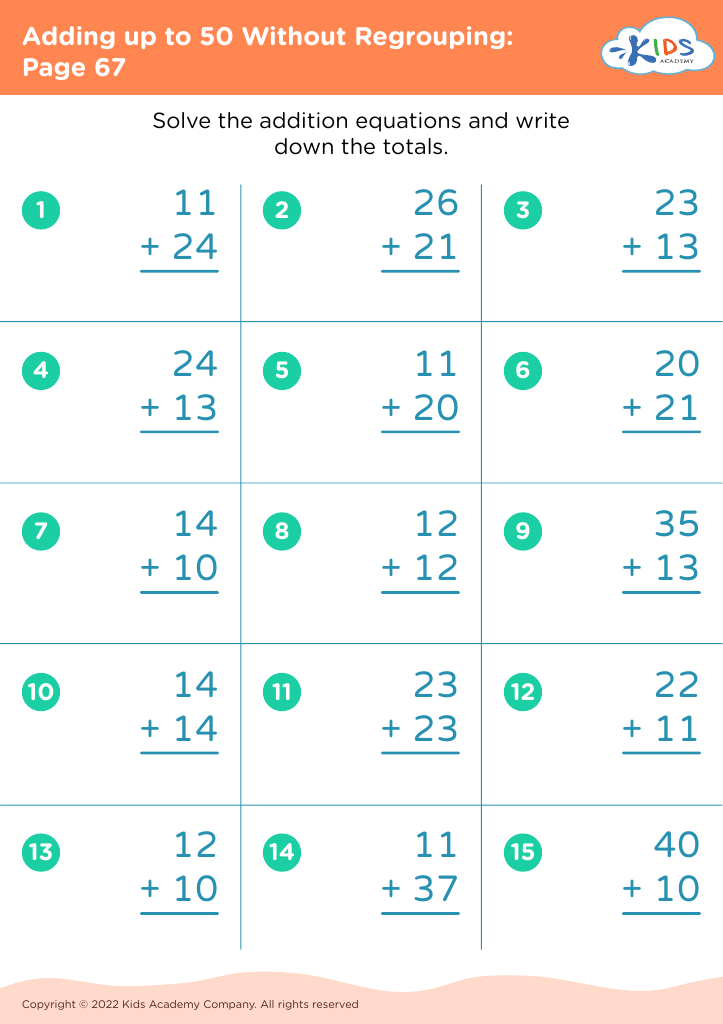
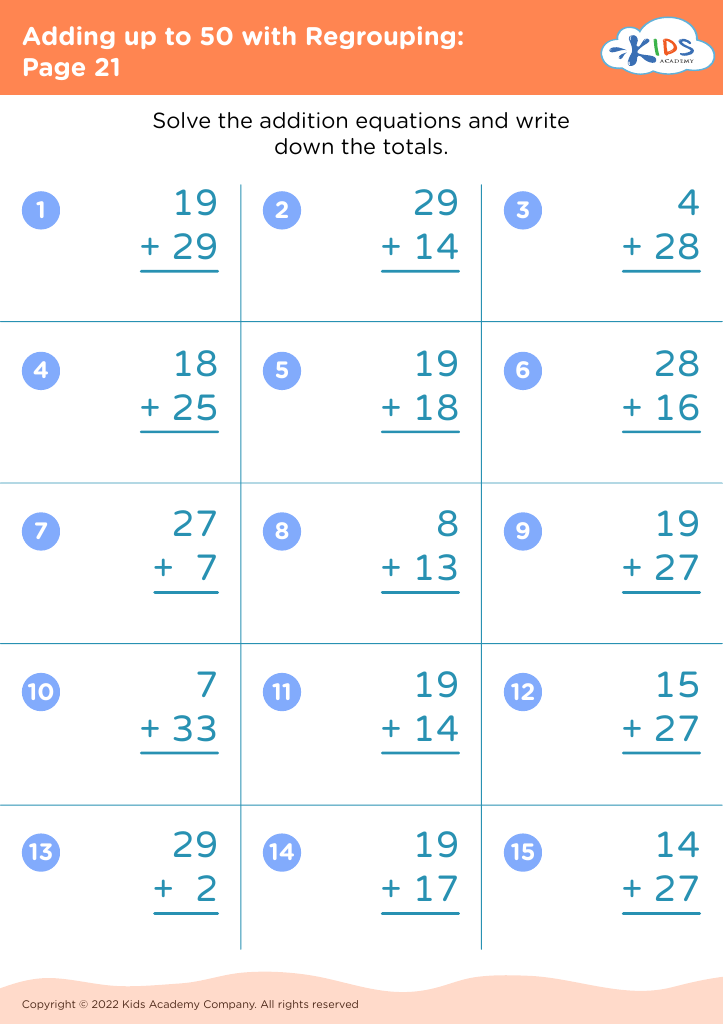




Shape recognition coupled with early addition – adding numbers that sum up to 50 – plays a crucial role in cognitive and mathematical development for children aged 7-9. At this developmental stage, integrating geometric concepts with basic arithmetic broadens a child’s spatial reasoning and numerical understanding. Recognizing shapes such as triangles, squares, and circles helps improve visual and perceptual skills, which are essential for problem-solving and logical reasoning in everyday life, as well as in advanced mathematics.
Simultaneously, practicing addition up to 50 fortifies foundational arithmetic skills, aiding in computational fluency and number sense. When these elements are combined in educational activities, children gain the capability to articulate and quantify spatial relationships intuitively, bridging concrete visual experiences with abstract numeric concepts. This holistic approach in early education reinforces confidence and engagement as learners can see practical applications of their skills. For parents and teachers, the significance lies in establishing a robust mathematical framework which supports future learning. Encouraging this dual-focus at an early age can spark curiosity and a lasting interest in mathematics, promoting a lifelong aptitude for analytical thinking and overcome hurdles in more complex topics later on.
By fostering an environment where shape recognition and addition to 50 are regularly practiced, educators and parents can prepare children not only for higher-level math but for broader academic success.








