Filters

47 filtered results

Clear all filters
Favorites
With answer key
Interactive

47 filtered results

Difficulty Level

Grade


Check out this FREE Trial Lesson on Adding up to 50 for age 7-9!

Sorting Objects into 3 Categories

Favorites
With answer key
Interactive
  • 7-9
  • Understanding fractions
  • Adding up to 50
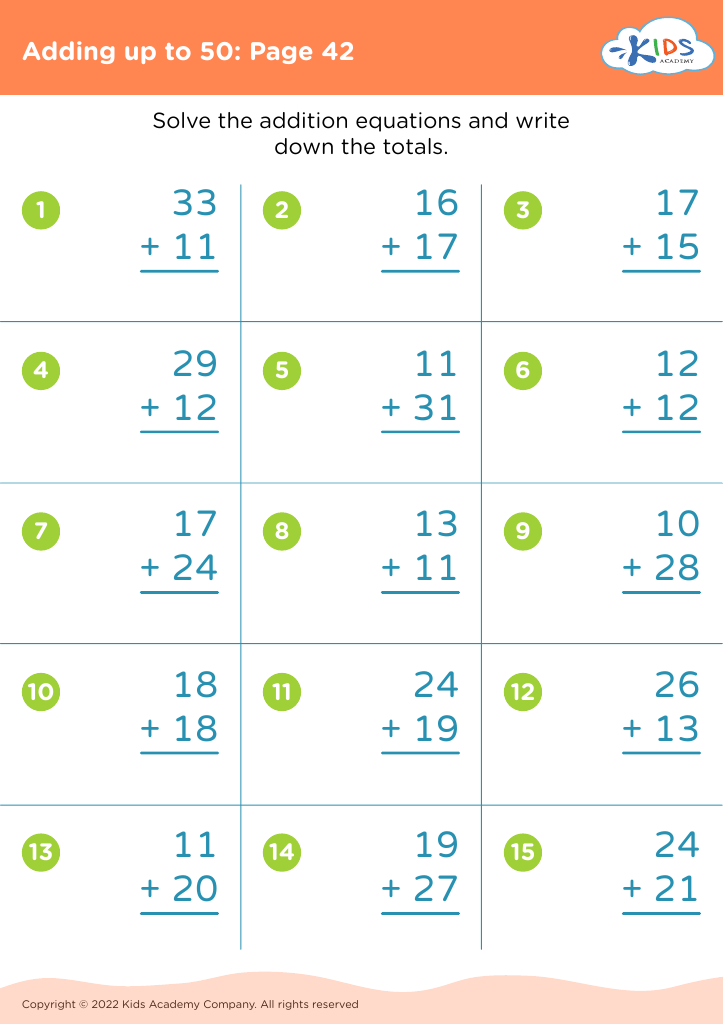
Adding up to 50: Page 42

Adding up to 50: Page 42

Adding up to 50: Page 42
Worksheet
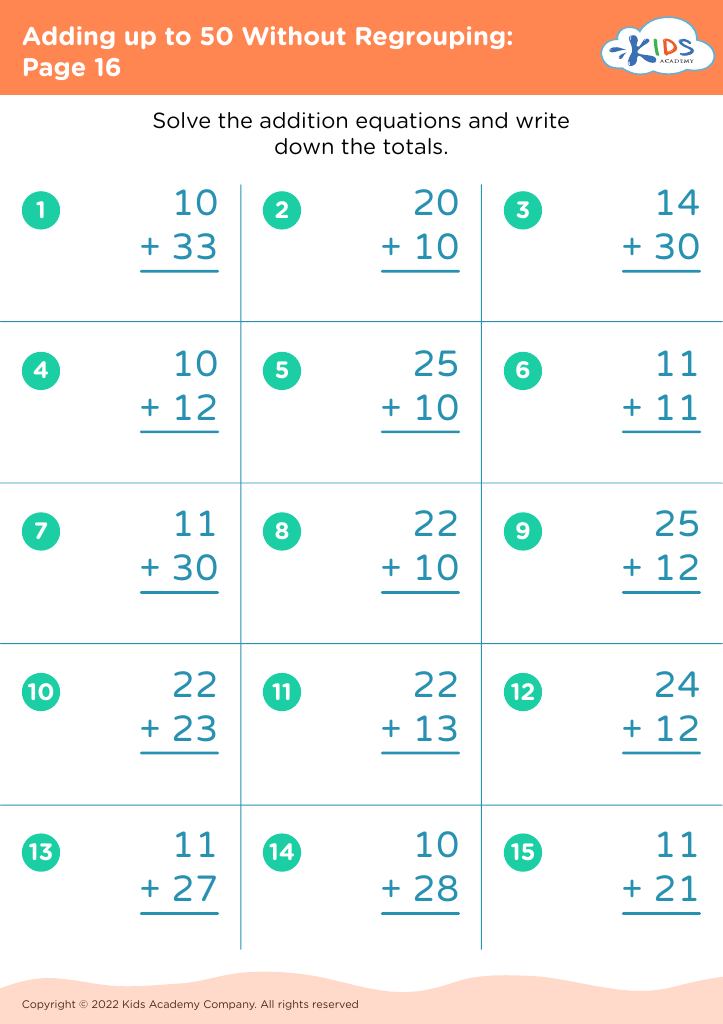
Adding up to 50 Without Regrouping: Page 16
Worksheet
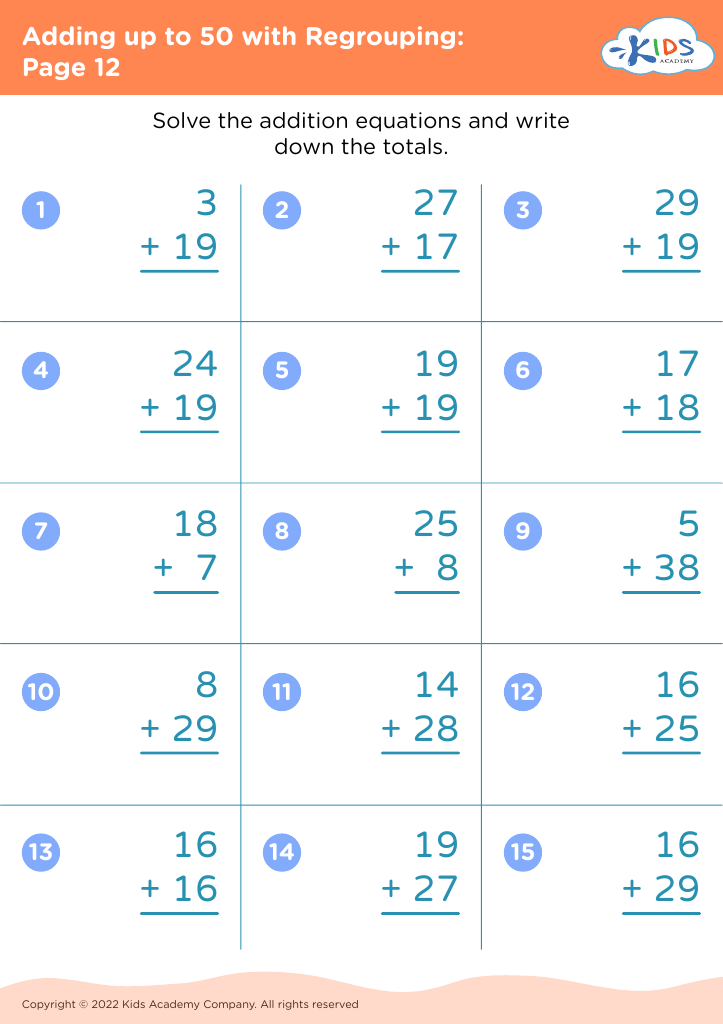
Adding up to 50 with Regrouping: Page 12
Worksheet
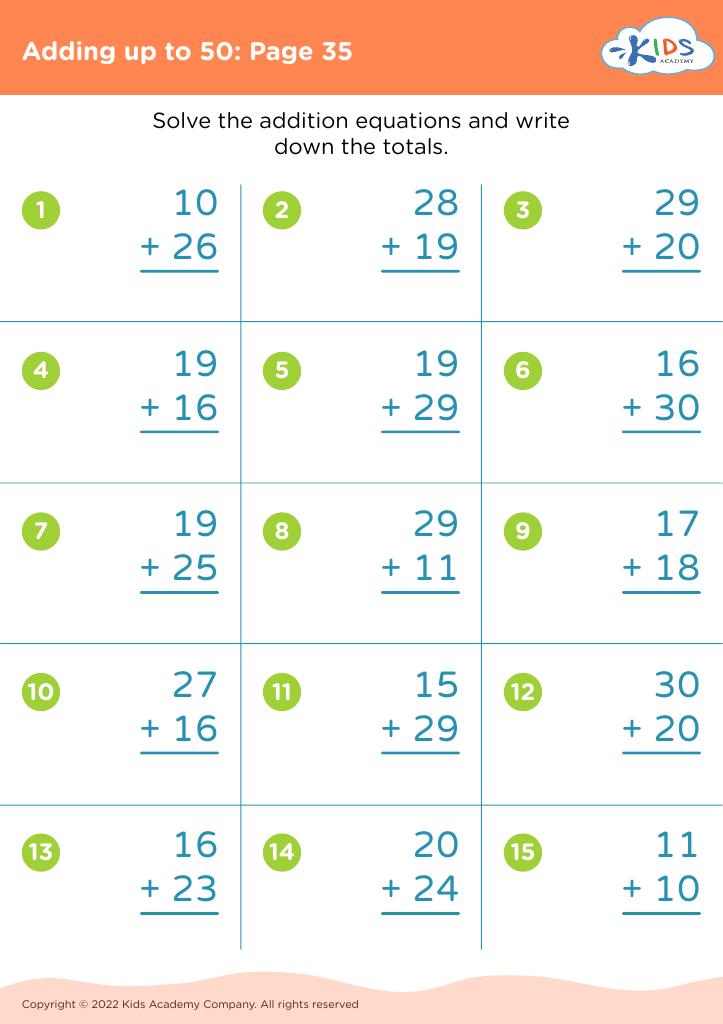
Adding up to 50: Page 35

Adding up to 50: Page 35

Adding up to 50: Page 35
Worksheet
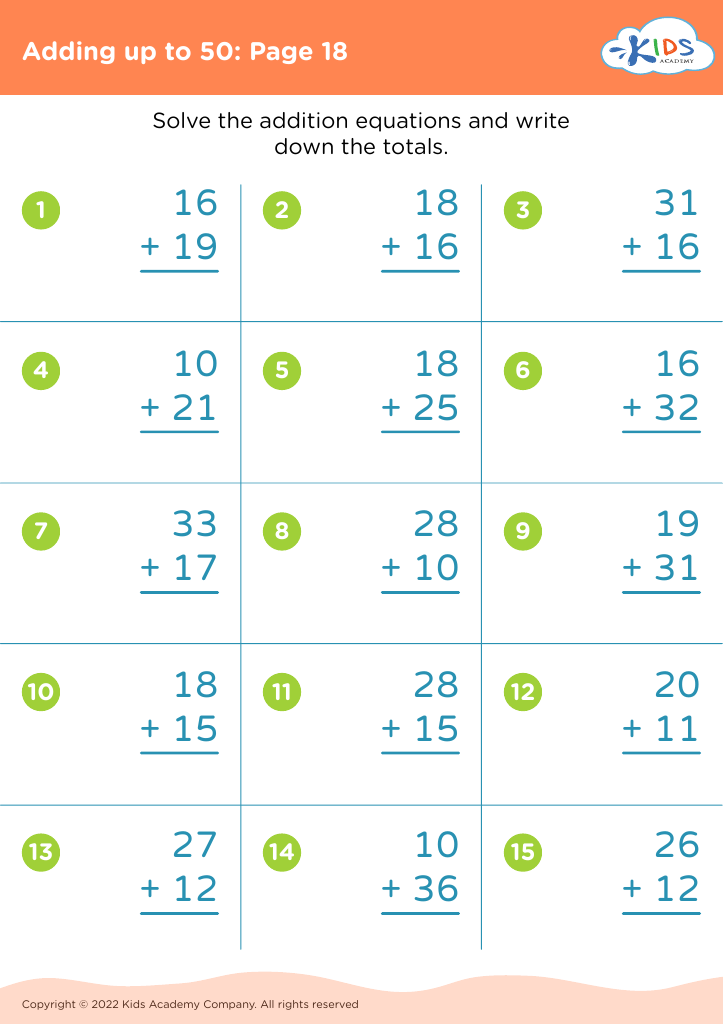
Adding up to 50: Page 18

Adding up to 50: Page 18

Adding up to 50: Page 18
Worksheet
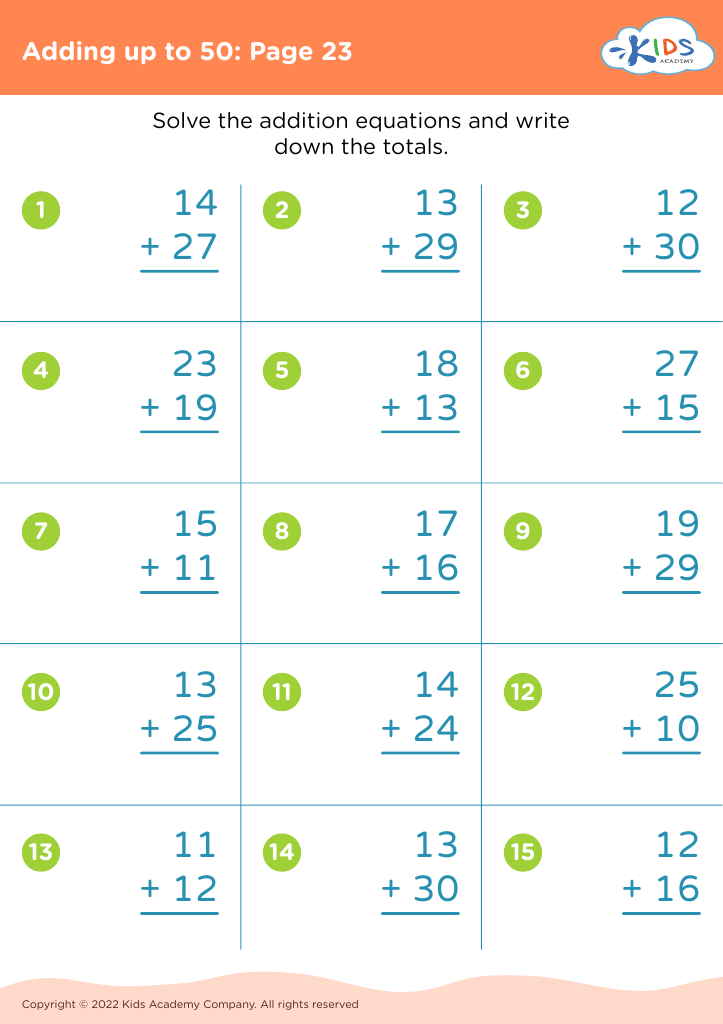
Adding up to 50: Page 23

Adding up to 50: Page 23

Adding up to 50: Page 23
Worksheet
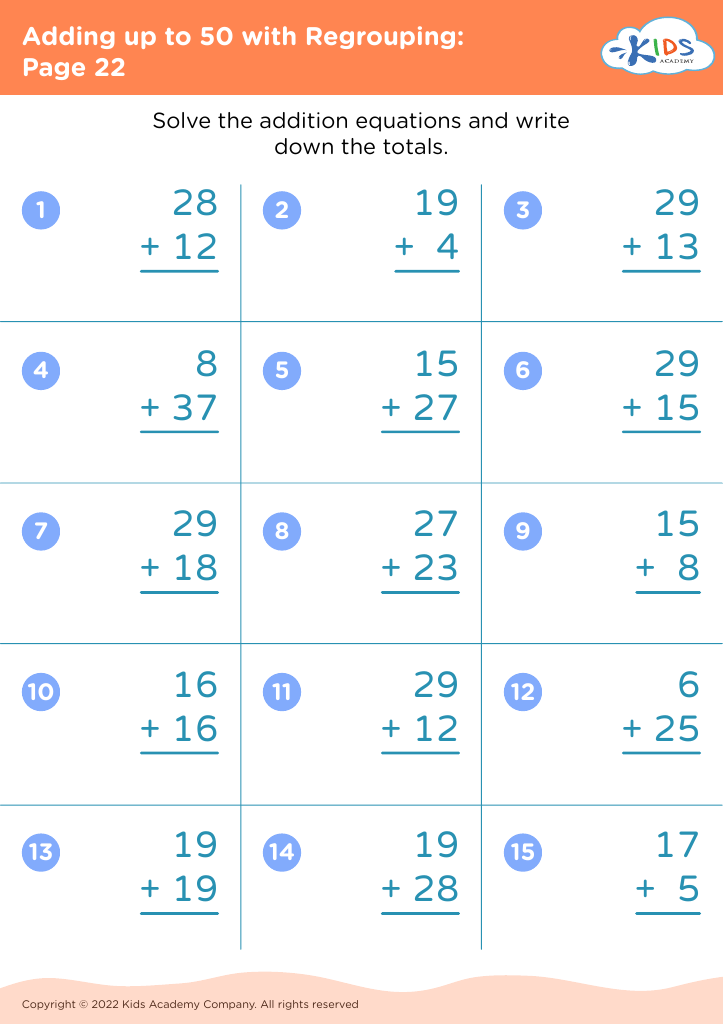
Adding up to 50 with Regrouping: Page 22
Worksheet
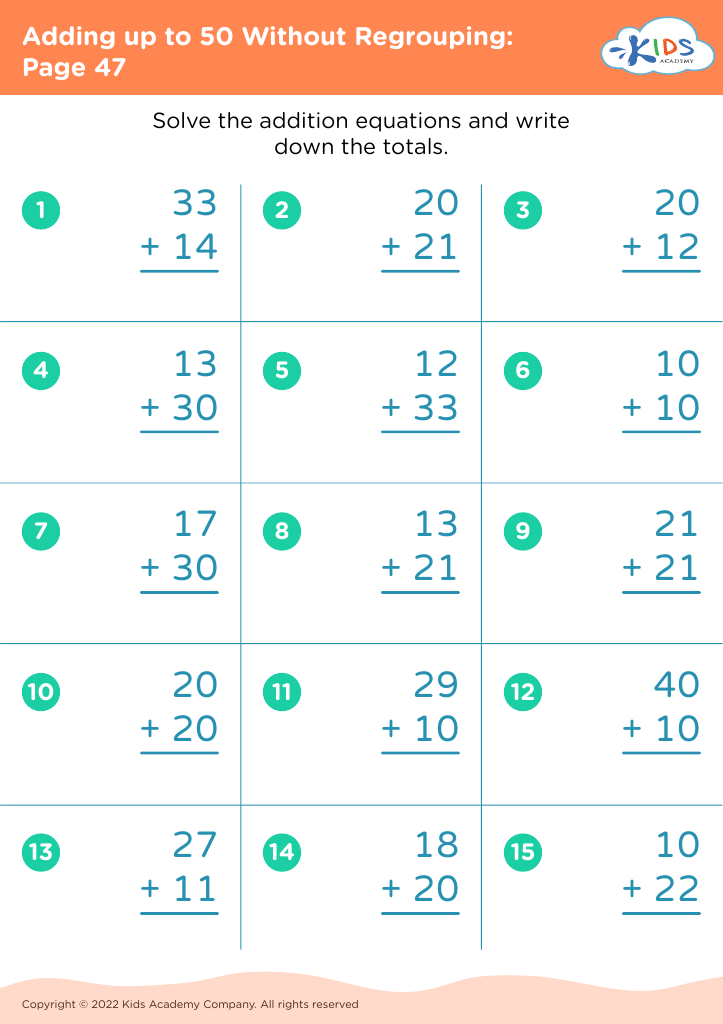
Adding up to 50 Without Regrouping: Page 47
Worksheet
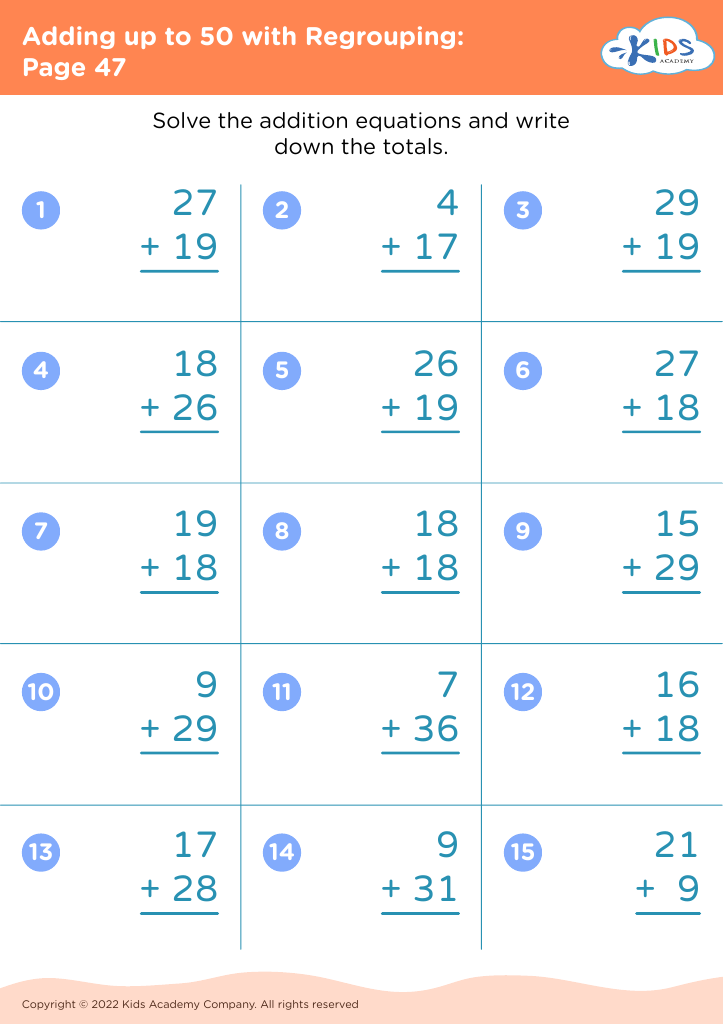
Adding up to 50 with Regrouping: Page 47
Worksheet
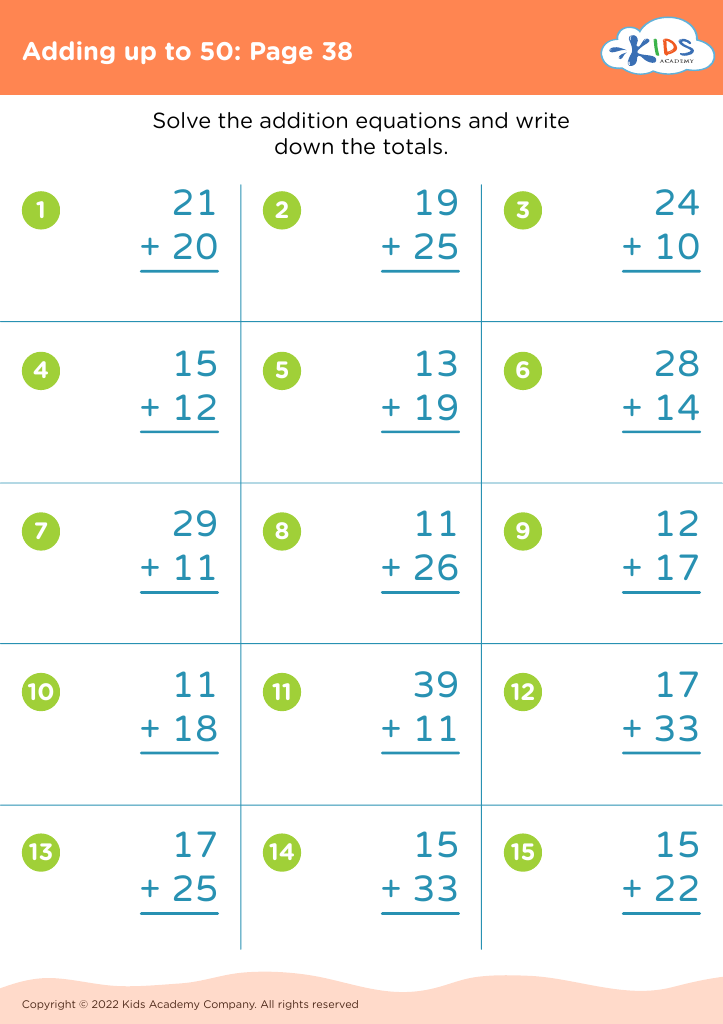
Adding up to 50: Page 38

Adding up to 50: Page 38

Adding up to 50: Page 38
Worksheet
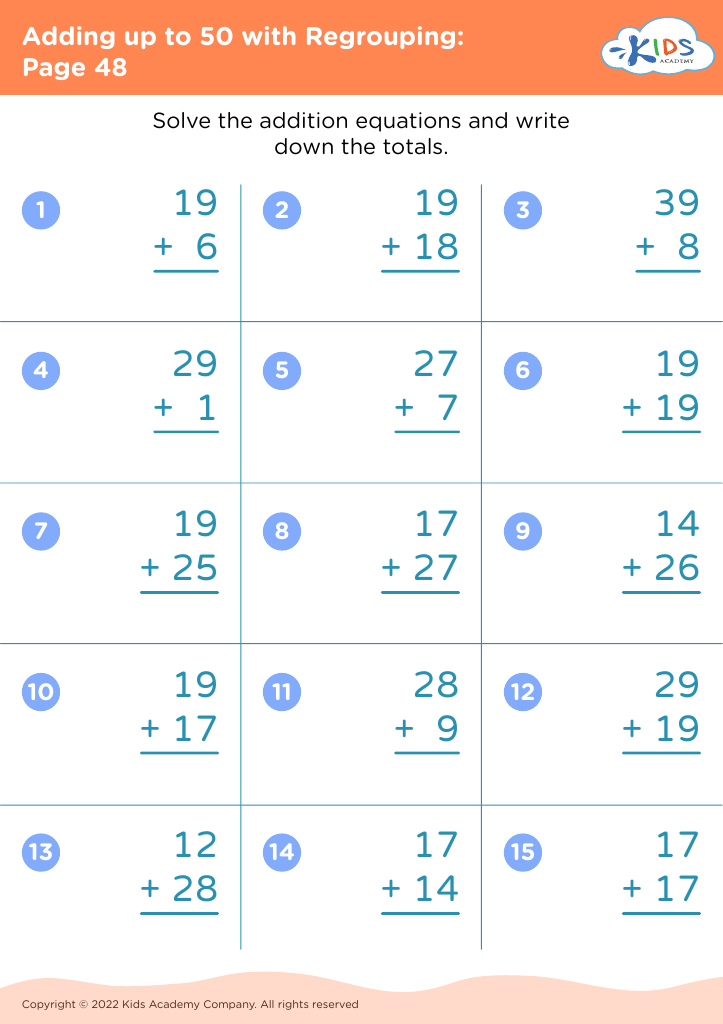
Adding up to 50 with Regrouping: Page 48
Worksheet
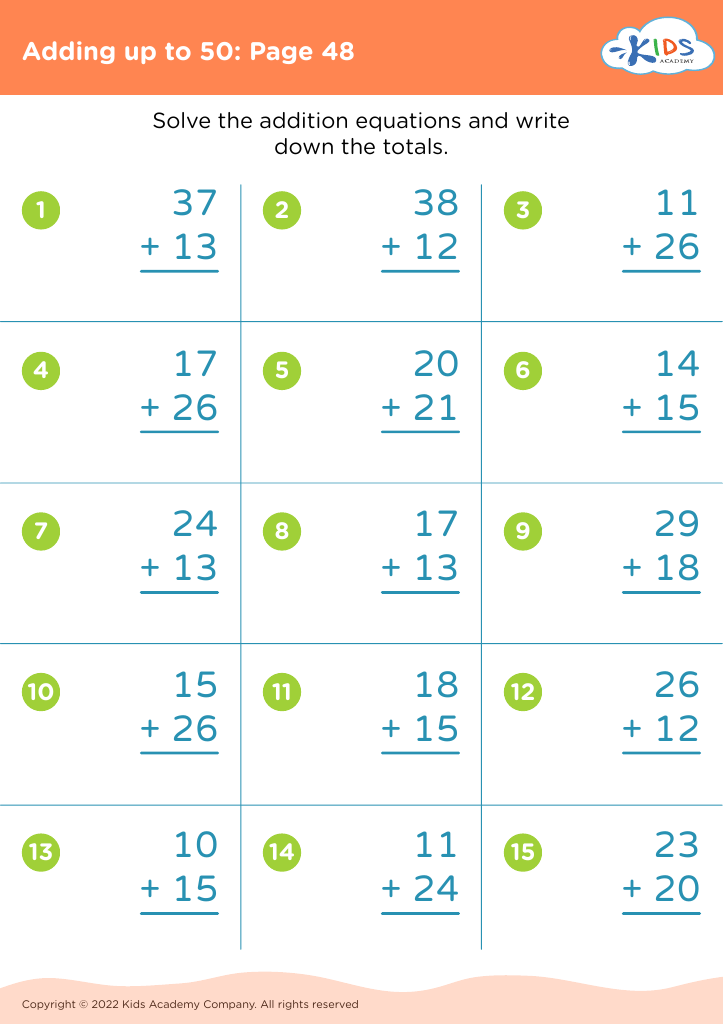
Adding up to 50: Page 48

Adding up to 50: Page 48

Adding up to 50: Page 48
Worksheet
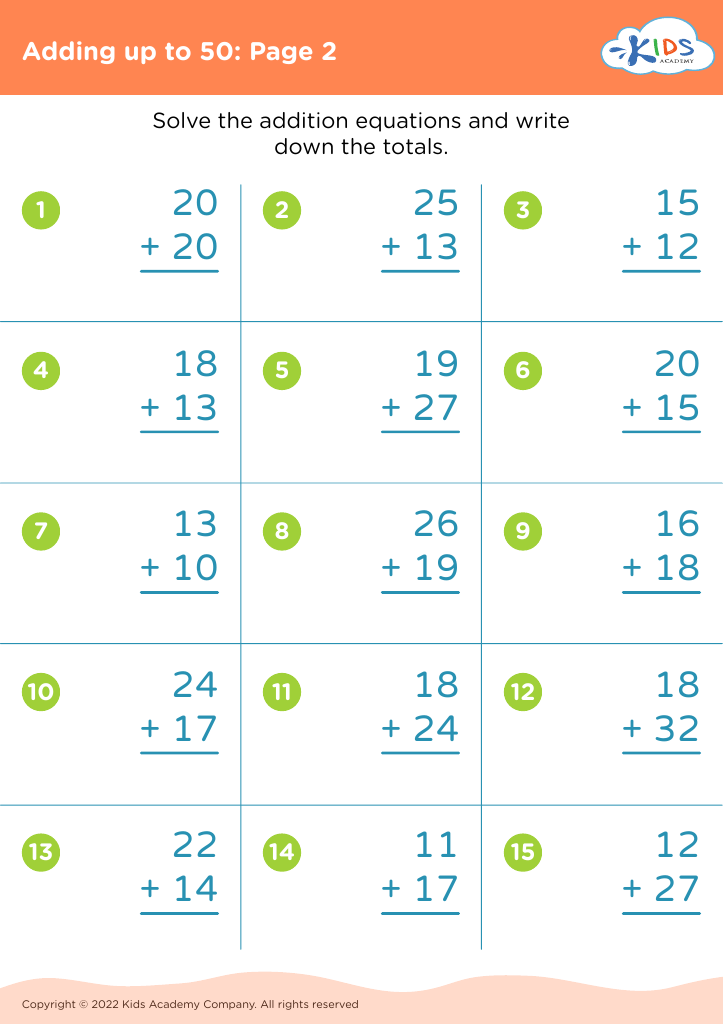
Adding up to 50: Page 2

Adding up to 50: Page 2

Adding up to 50: Page 2
Worksheet
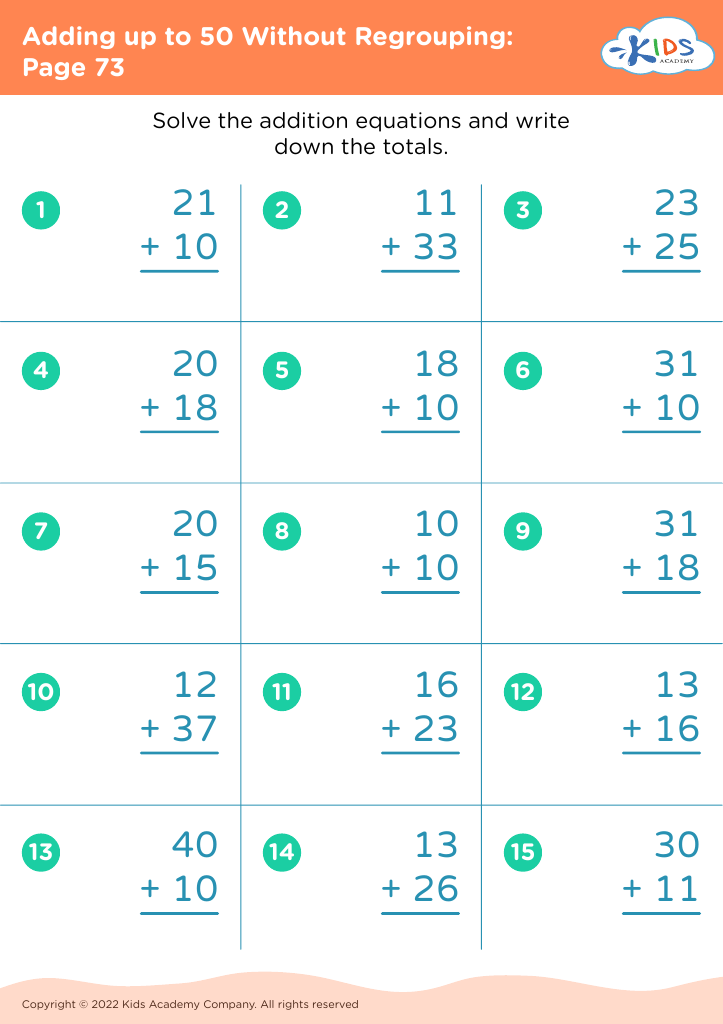
Adding up to 50 Without Regrouping: Page 73
Worksheet
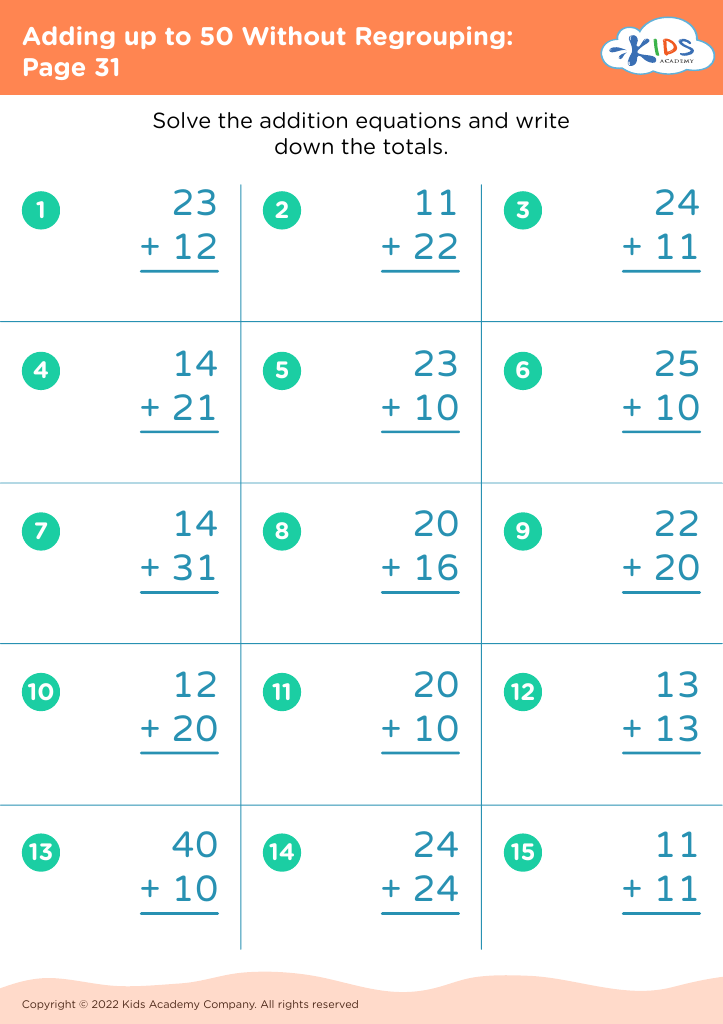
Adding up to 50 Without Regrouping: Page 31
Worksheet
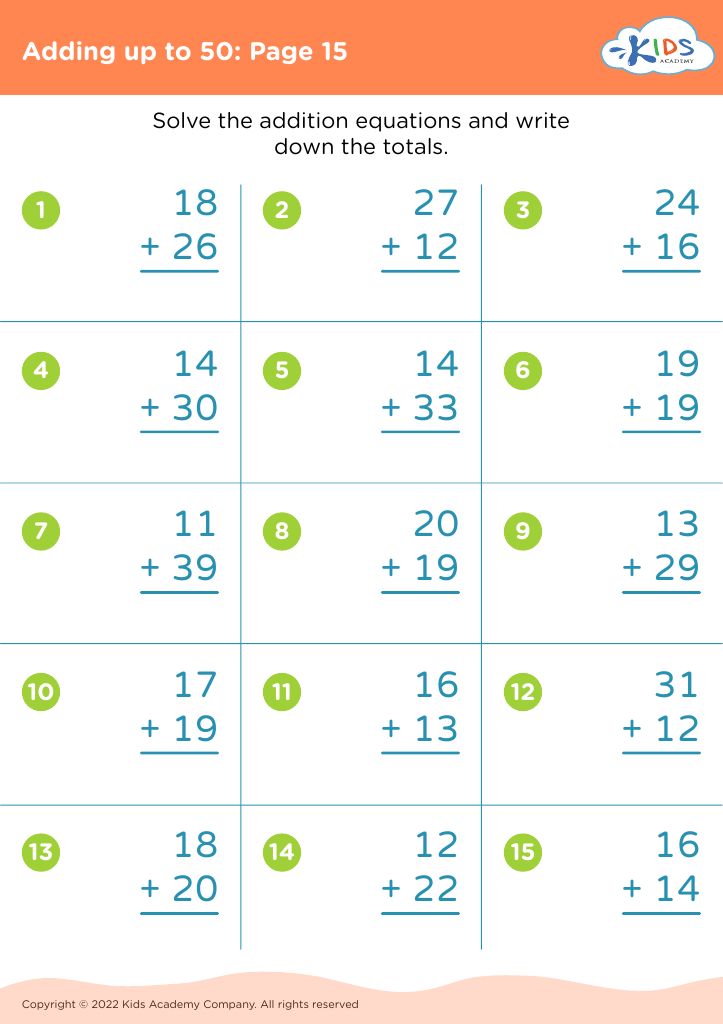
Adding up to 50: Page 15

Adding up to 50: Page 15

Adding up to 50: Page 15
Worksheet
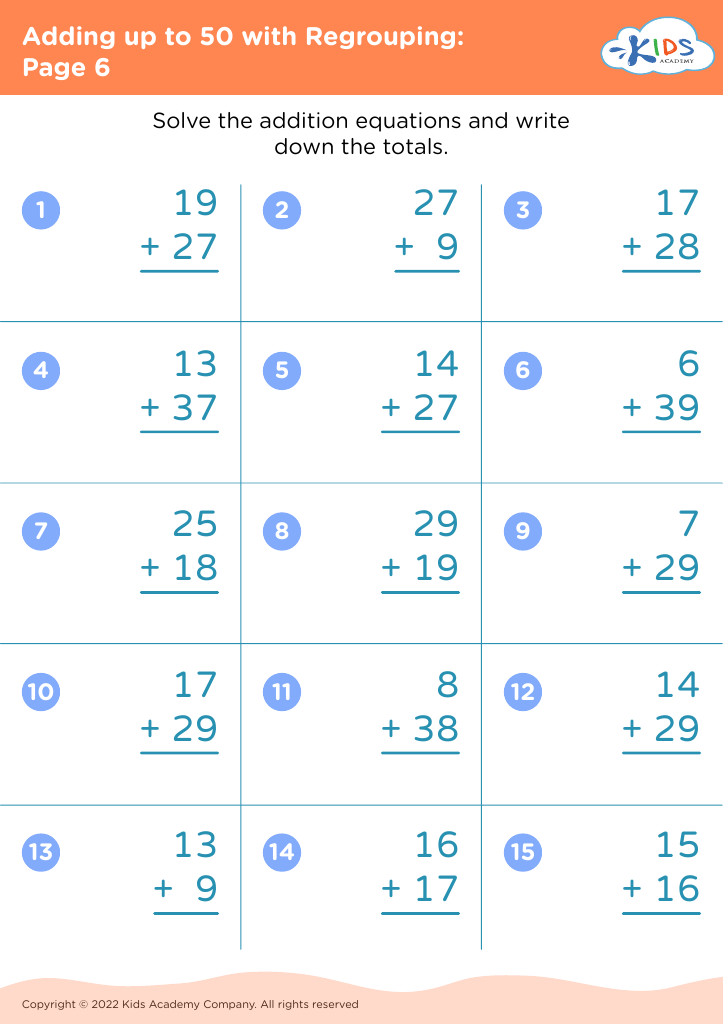
Adding up to 50 with Regrouping: Page 6
Worksheet
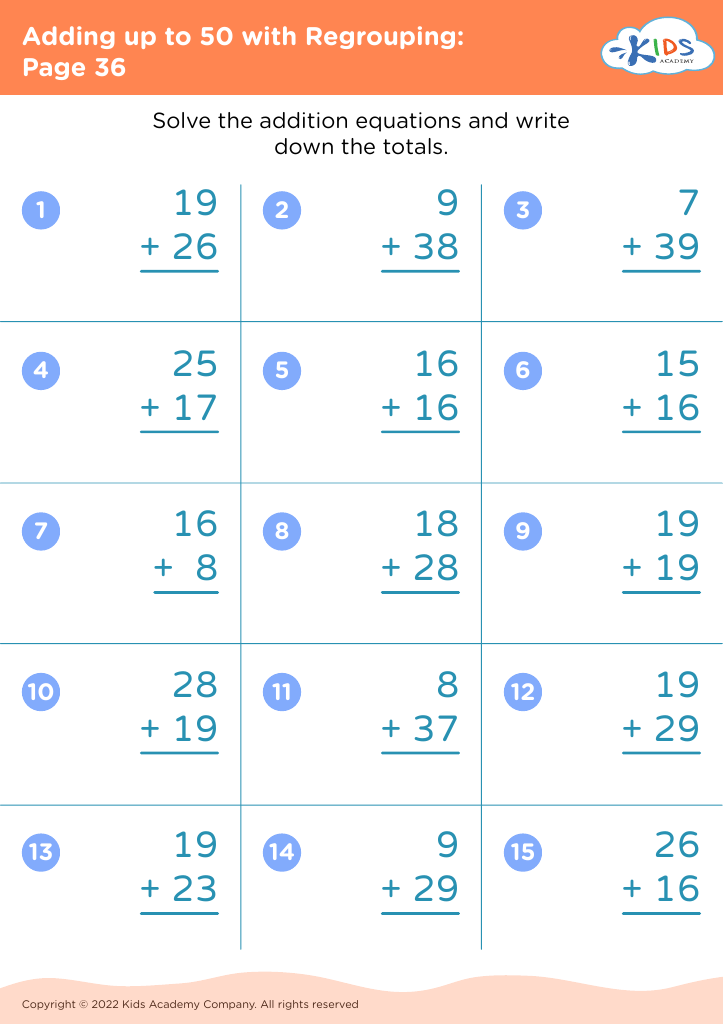
Adding up to 50 with Regrouping: Page 36
Worksheet
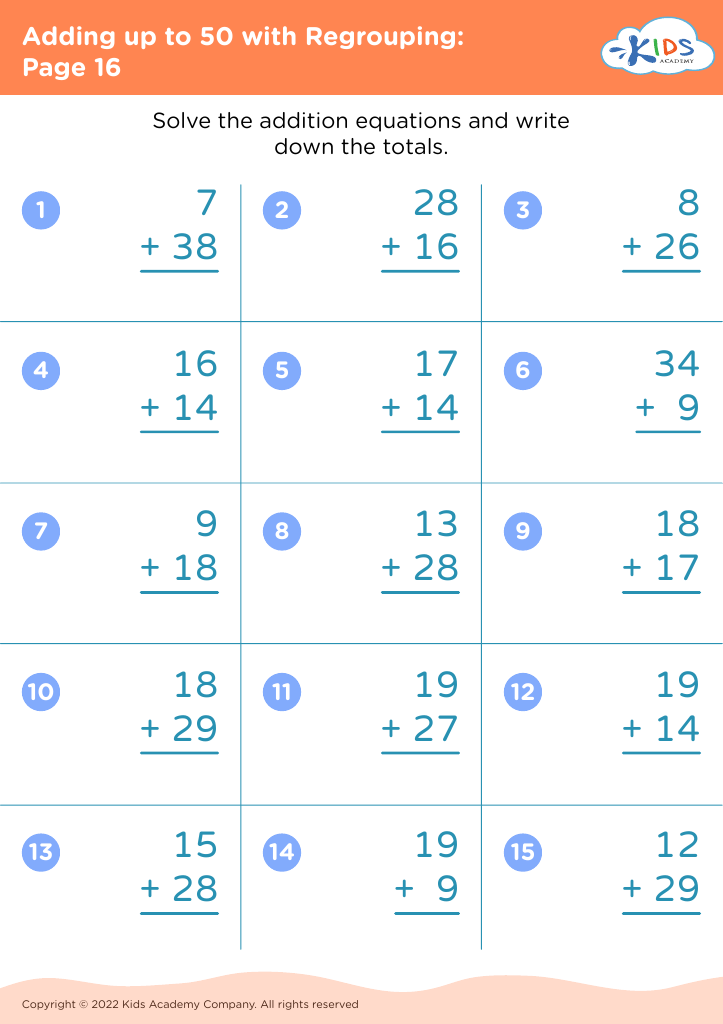
Adding up to 50 with Regrouping: Page 16
Worksheet
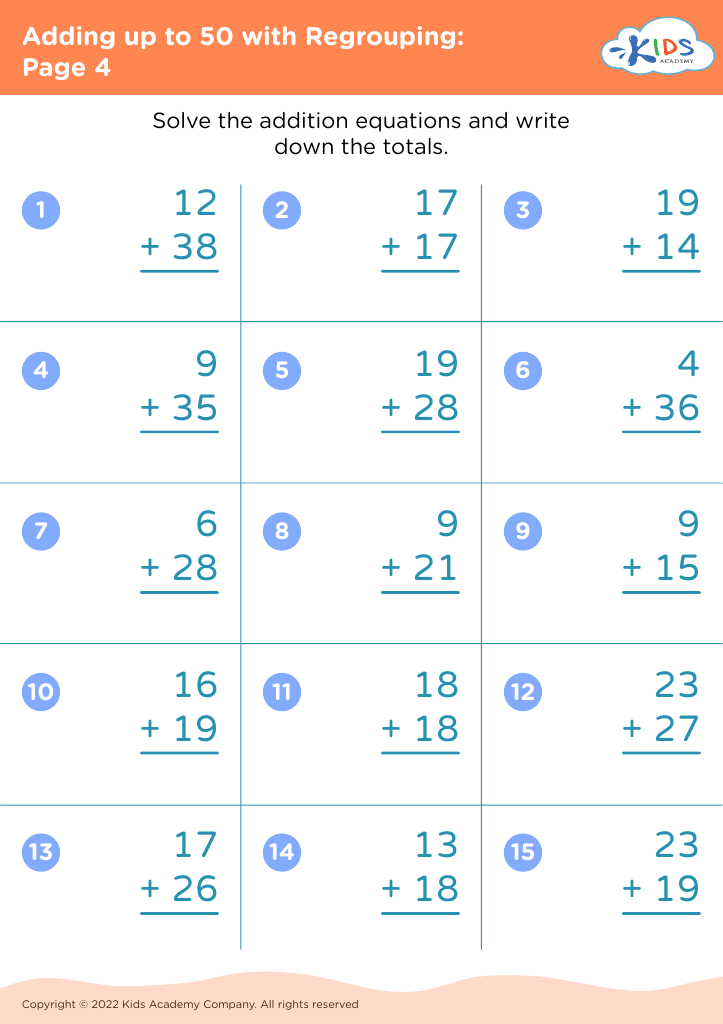
Adding up to 50 with Regrouping: Page 4
Worksheet
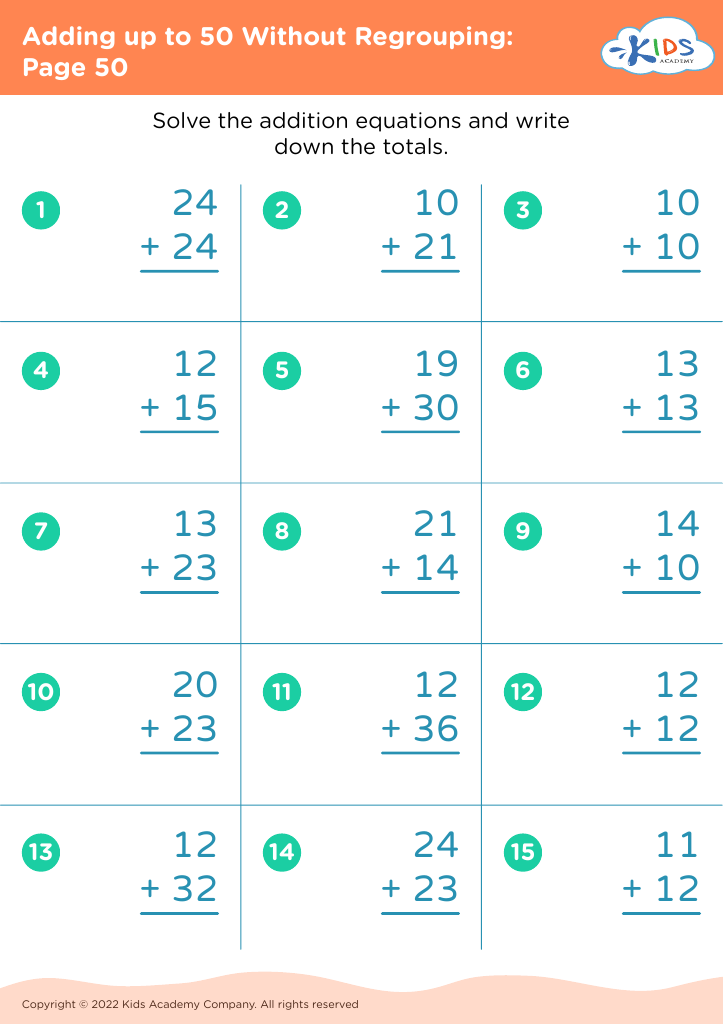
Adding up to 50 Without Regrouping: Page 50
Worksheet
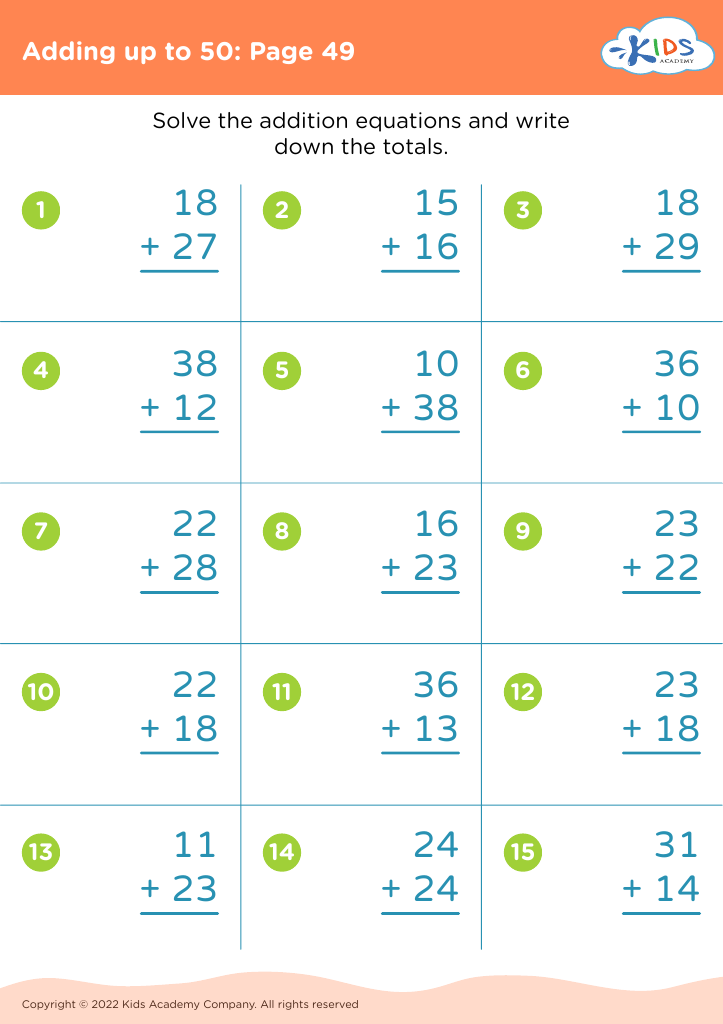
Adding up to 50: Page 49

Adding up to 50: Page 49

Adding up to 50: Page 49
Worksheet
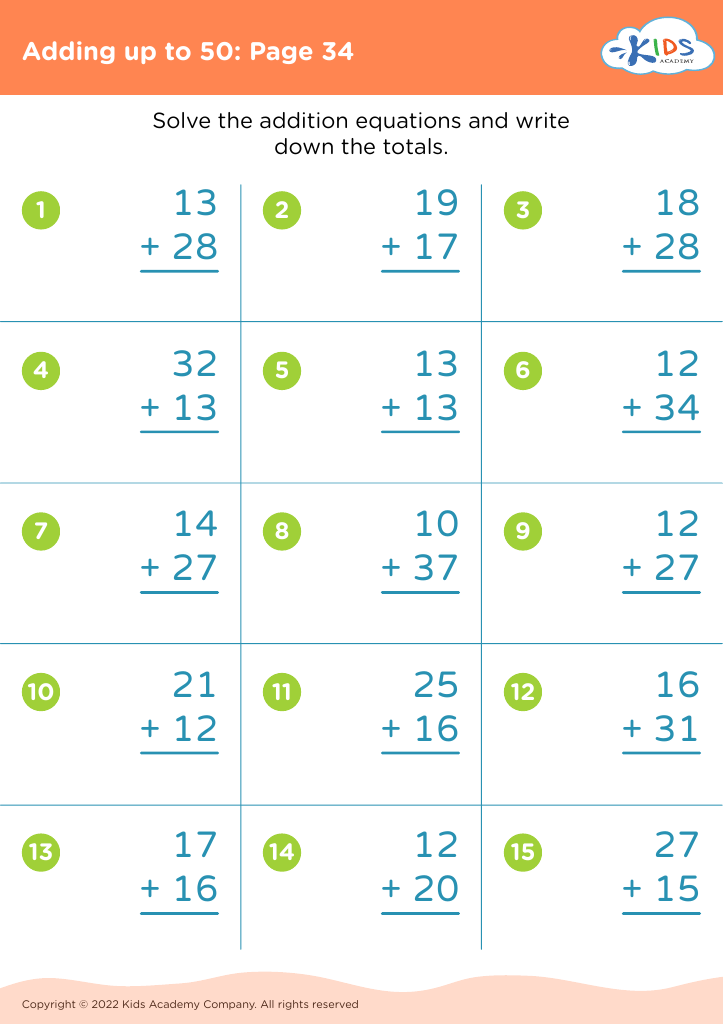
Adding up to 50: Page 34

Adding up to 50: Page 34

Adding up to 50: Page 34
Worksheet


Understanding fractions at an early age is foundational for children's mathematical development, particularly for ages 7-9. During these formative years, children are building the skills they’ll need for higher-level math concepts. Fractions introduce them to the idea that numbers can represent parts of a whole, which is crucial for comprehending more advanced math.

By grasping the idea that fractions can be added to make a whole or specific total, like 50, children develop strong number sense and improved problem-solving abilities. This lays the groundwork for future topics such as ratios, proportions, and algebra. Understanding fractions also applies to everyday life—be it cooking, dividing objects fairly, or understanding time and distances.

Encouraging children to master adding fractions to sums up to 50 reinforces the important concept of equivalencies (e.g., 1/2 is the same as 2/4) and introduces the addition of like and unlike fractions in a friendly, approachable manner. This focus boosts confidence as learners tackle progressively more challenging problems, ensuring they are better equipped for educational success.

Moreover, early exposure to fractions fosters a positive attitude towards mathematics, showcasing it as logical, engaging, and widely applicable. Teachers and parents who prioritize this understanding are setting children up for academic achievement and daily competence in dealing with various quantitative tasks.