Understanding symmetry Adding up to 50 Worksheets for Ages 7-9
9 filtered results
-
From - To
Unlock the power of symmetry and enhance mathematical skills with our "Understanding Symmetry: Adding Up to 50 Worksheets" designed for ages 7-9. These engaging worksheets help young learners explore the concept of symmetry while mastering addition. Each activity is crafted to encourage creativity and critical thinking, making math fun and interactive. Perfect for both classroom and at-home learning, these resources foster a deeper understanding of mathematical patterns and relationships. Foster your child's confidence in math and symmetry today with our easy-to-use worksheets that support skill development while keeping them entertained and engaged! Start their math adventure now!
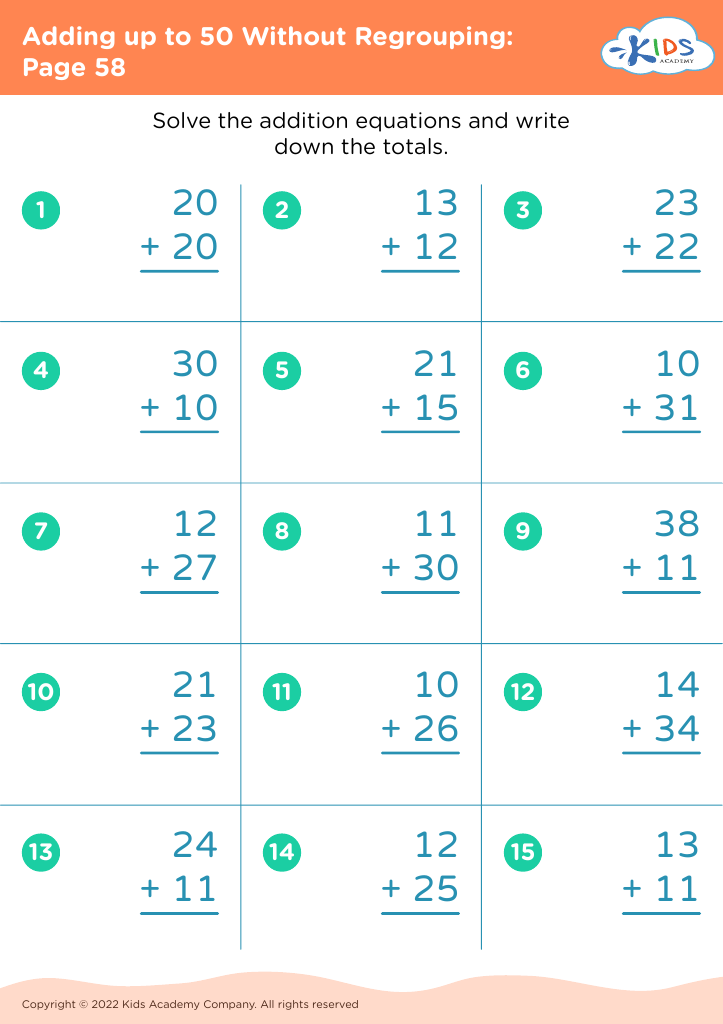
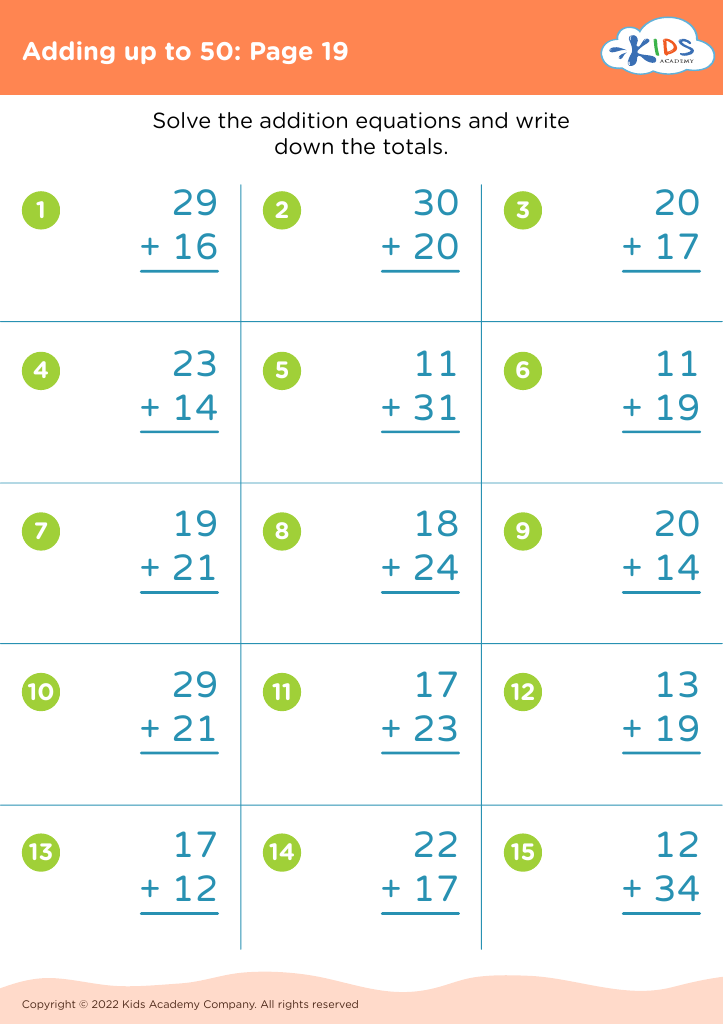
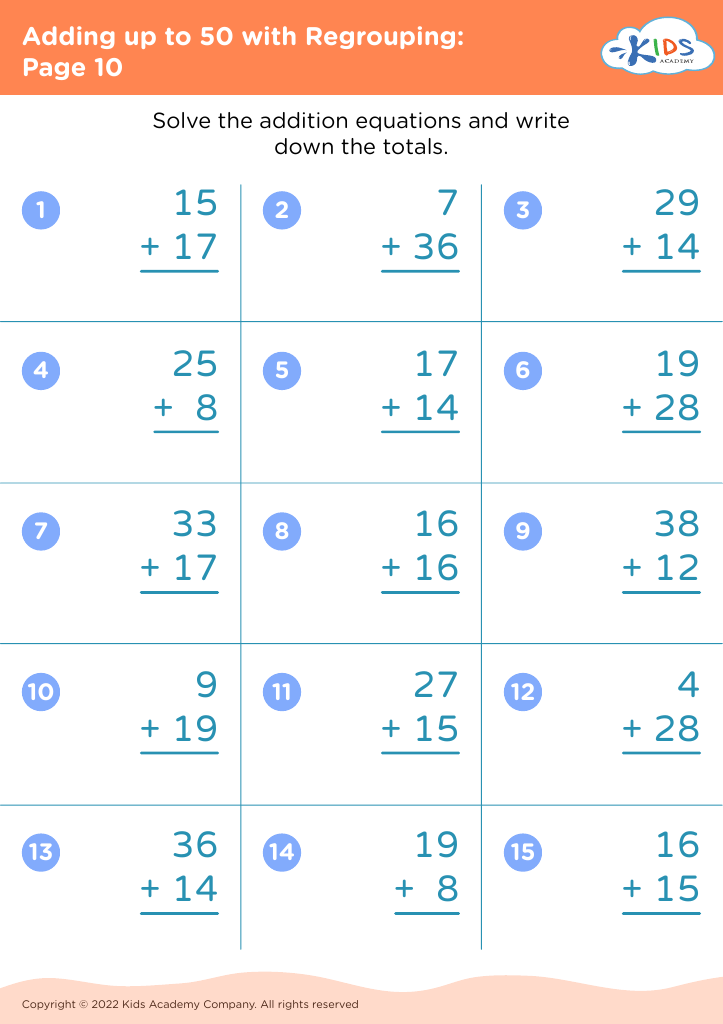
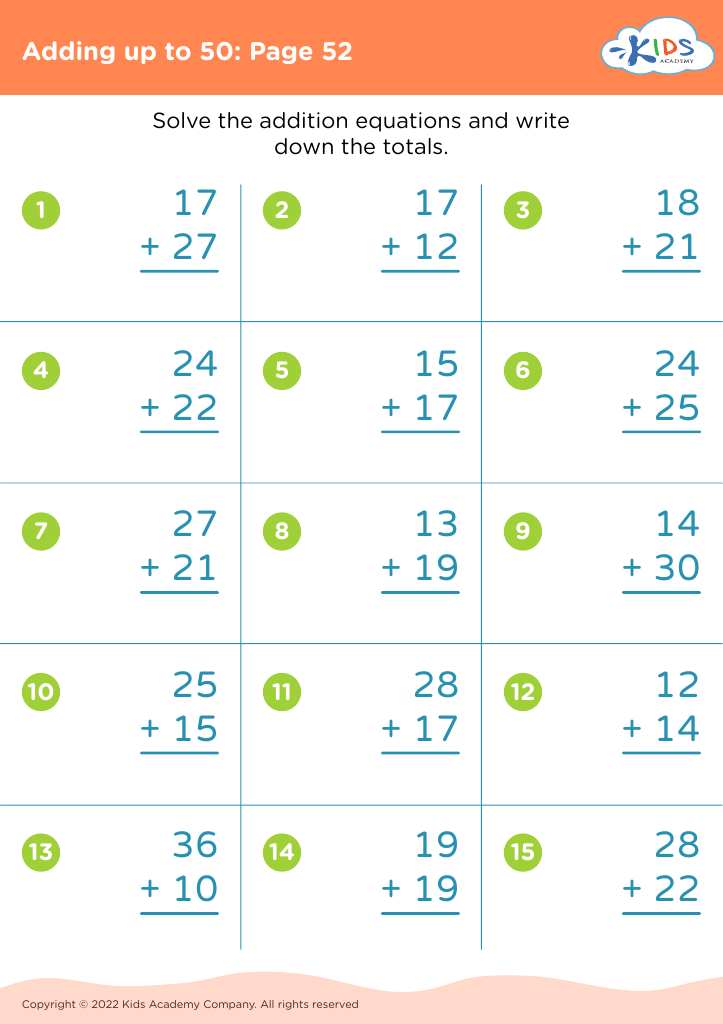
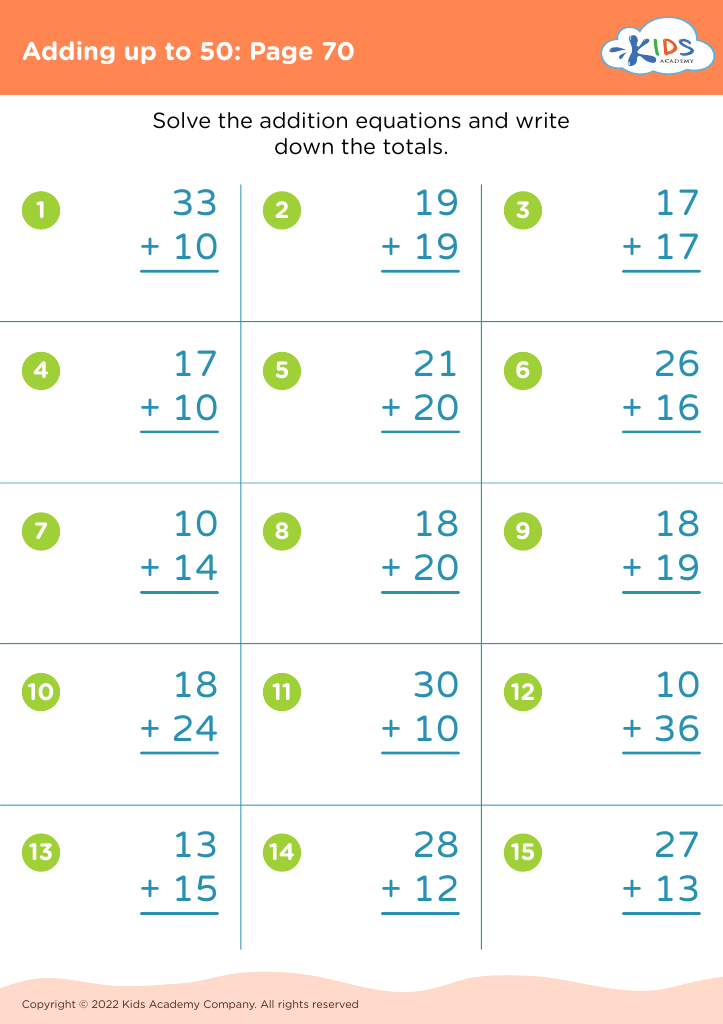
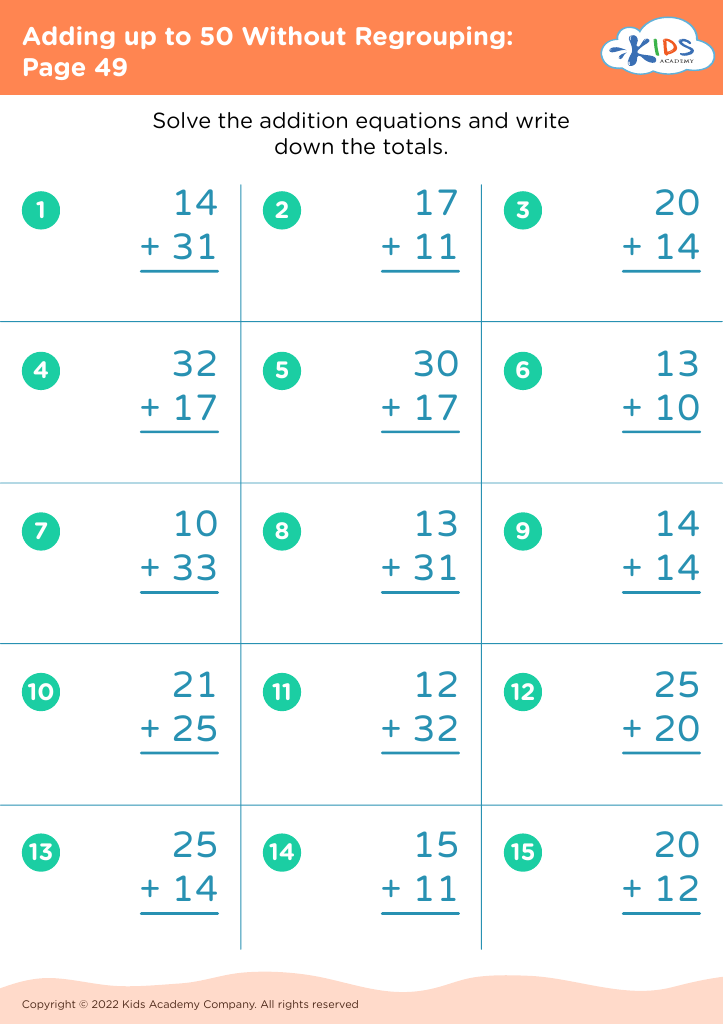
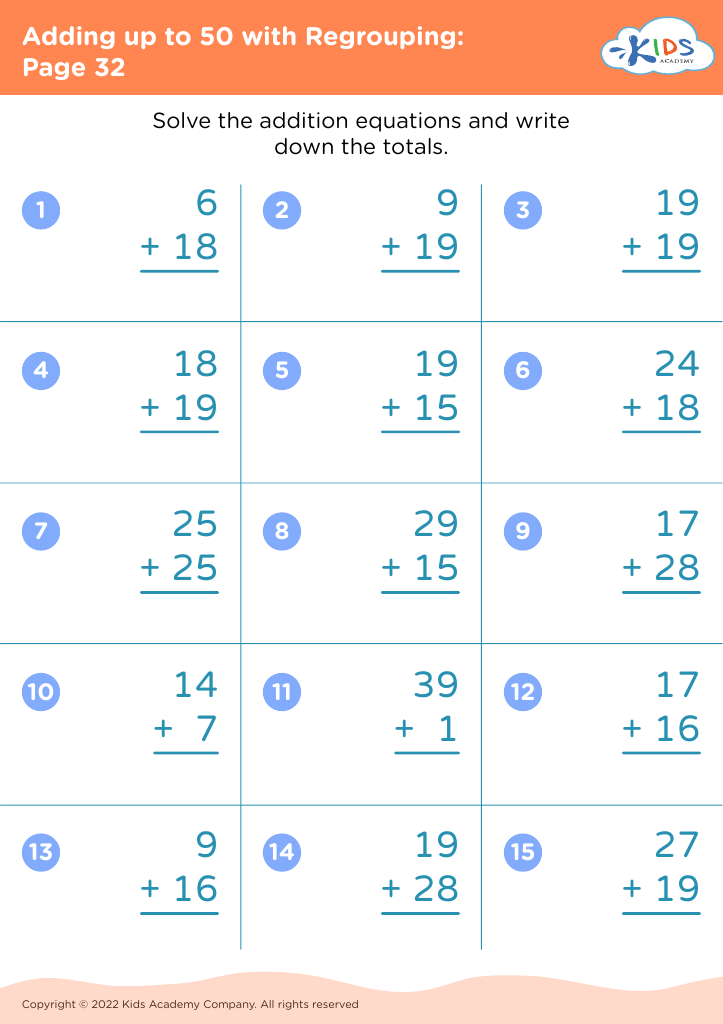
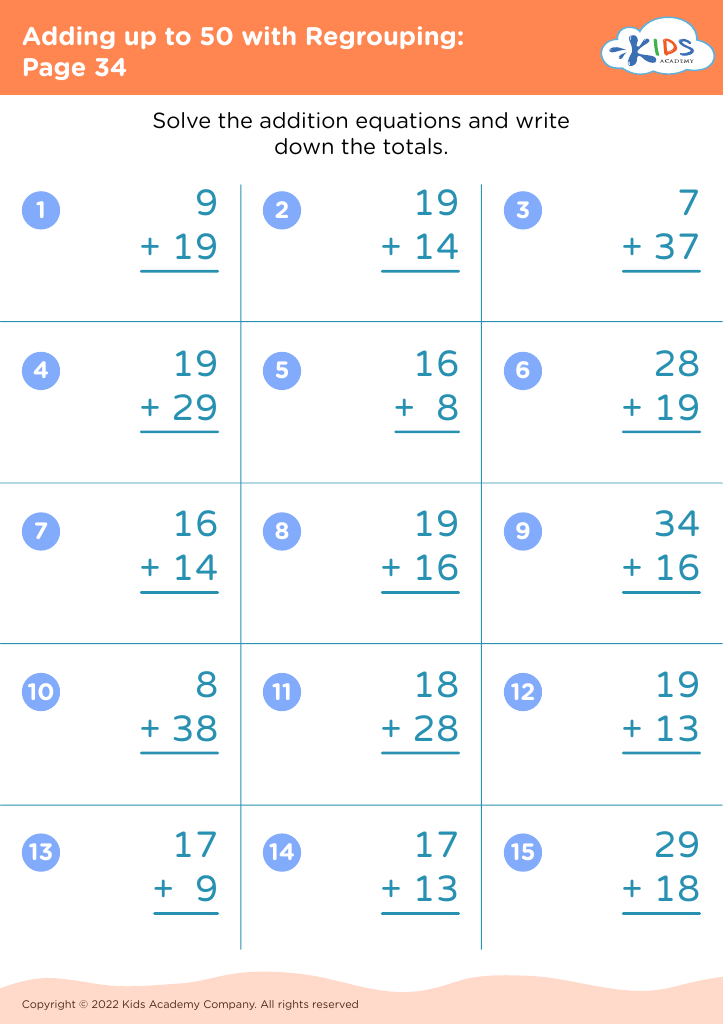
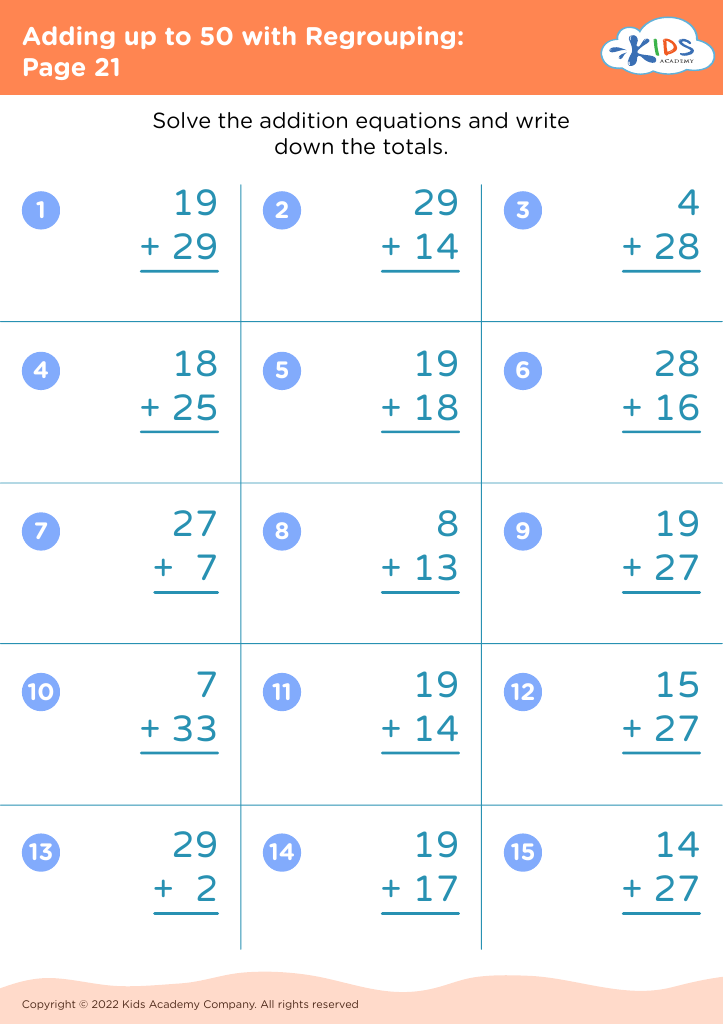




Understanding symmetry and the concept of adding up to 50 are crucial skills for children ages 7-9, and parents or teachers should prioritize these areas due to their foundational importance in mathematics and problem-solving.
Symmetry provides an essential understanding of balance and shape recognition. By exploring symmetrical patterns, children cultivate spatial awareness and critical thinking skills. Engaging with symmetry in real-world contexts—like nature and art—enhances their observational abilities and creativity, fostering a deeper appreciation for mathematics beyond mere numbers.
On the other hand, mastering addition up to 50 develops arithmetic fluency, which is vital for more complex mathematical concepts encountered later on. This skill enhances a child's ability to solve word problems, tackle subtraction, and understand fractions. It also strengthens their confidence in mathematics, reducing anxiety around numbers as they progress.
Ultimately, fostering these skills at an early age lays a sturdy foundation for advanced mathematical comprehension. By understanding symmetry and honing addition skills, children will not only excel in math but also apply these principles to various everyday situations, empowering them for future academic challenges and fostering a genuine interest in mathematics. Engaging in these areas now prepares children for lifelong learning and problem-solving in an increasingly mathematical world.








