
Basic math operations Addition & Subtraction Worksheets for Ages 7-9
4 filtered results
Difficulty Level
Grade
Age
-
From - To
Subject
Activity
Standards
Boost your child's math skills with our expertly designed Addition & Subtraction Worksheets for Ages 7-9. Created by educational professionals, these engaging worksheets focus on enhancing basic math operations. Perfect for home or classroom use, each worksheet promotes practice in a fun, interactive way. Our collection includes diverse exercises to gradually build confidence and proficiency in adding and subtracting. Suitable for young learners at different skill levels, these worksheets support learning through step-by-step methods and problem-solving activities. Equip your child with the necessary tools to excel in math with our effective, curriculum-aligned resources. Keep learning enjoyable and rewarding with us!
Favorites
With answer key
Interactive
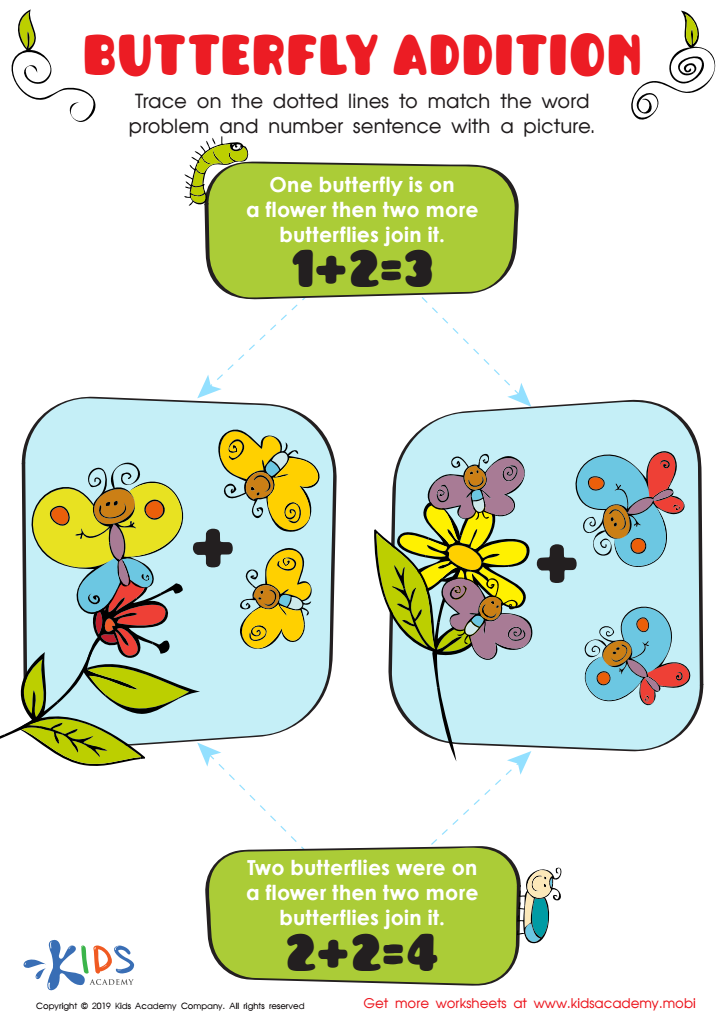
Butterfly Addition Worksheet
This tracing sheet is great for kids to work on math skills and have fun too. Read the word problems to them, then help them trace the dotted lines to match the problem and number sentence to a picture. Not only is it educational, it's beautiful too - your kids will love learning about butterflies!
 Assign to My Students
Butterfly Addition Worksheet
Worksheet
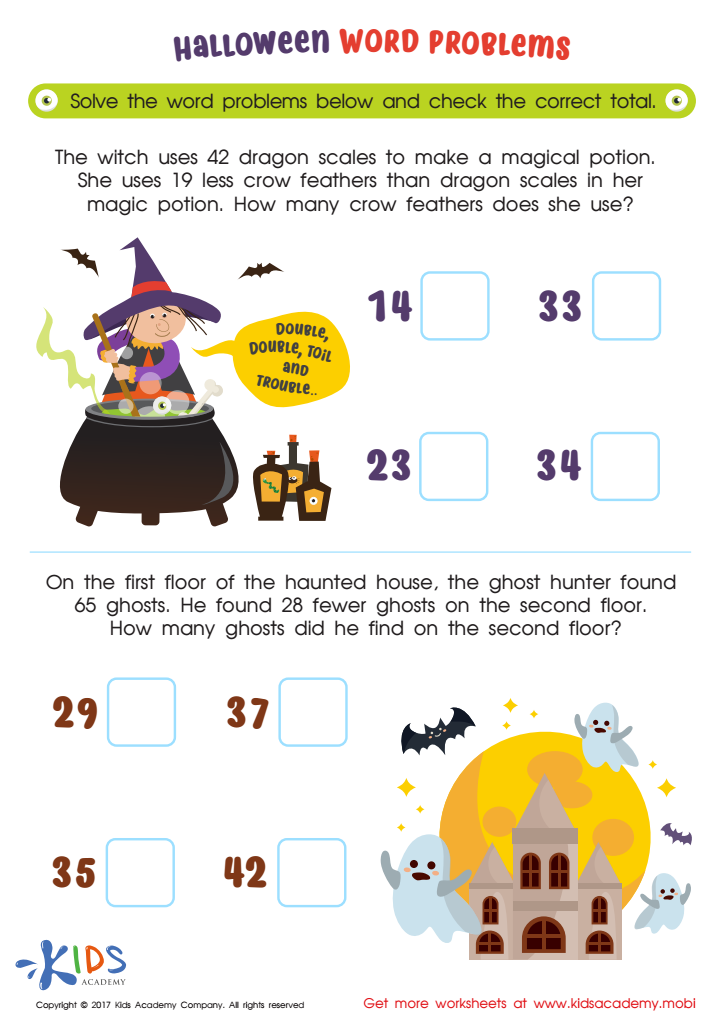
Halloween Word Problems Printable
Ghosts, witches, and other spooky characters make these problems exciting and interactive. Get ready to have some math fun!
Halloween Word Problems Printable
Worksheet
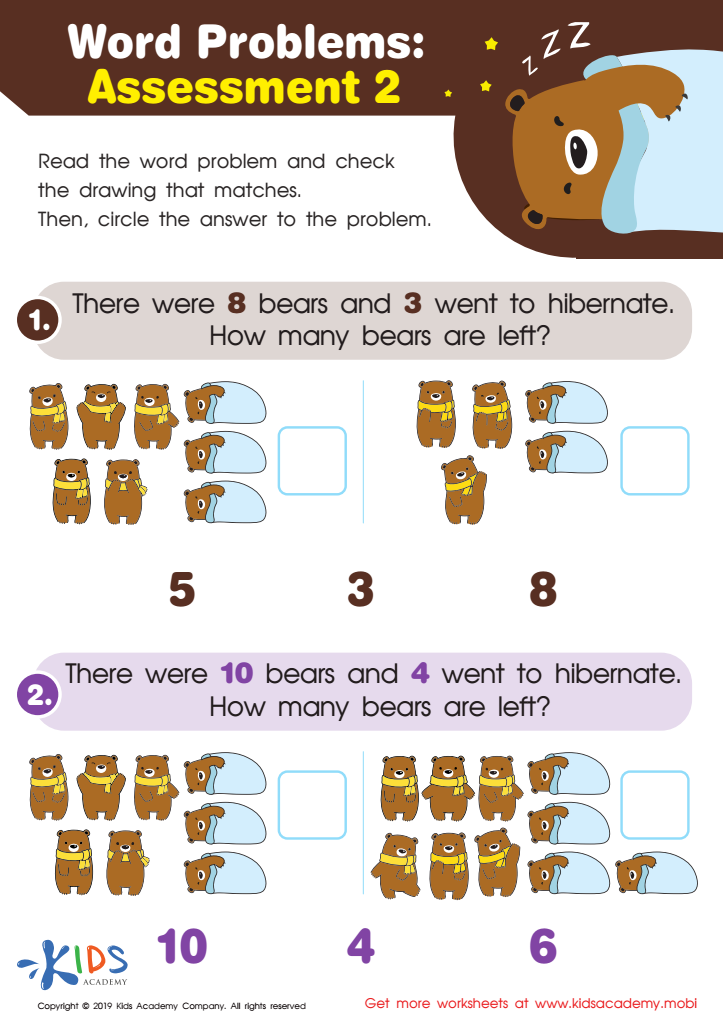
Word Problems: Assessment 2 Worksheet
This bear-themed worksheet is a great way to test subtraction skills. Have your child read the word problems and match the correct drawing with the answer. It's a fun way to quiz them without them even knowing. Enjoy counting cute snoozing bears! (80 words)
Word Problems: Assessment 2 Worksheet
Worksheet
Join Kids Academy for Free
Who is primarily going to use this learning content?








Parents and teachers should emphasize the importance of basic math operations, specifically addition and subtraction, for children aged 7-9 because these skills form the foundation of all higher-level math concepts. At this age, children are developing cognitive skills that allow them to understand and internalize these fundamental operations, which are essential for everyday problem-solving and practical activities, such as handling money, telling time, and measuring ingredients.
Mastering addition and subtraction early not only boosts a child’s confidence in their mathematical abilities but also enhances their logical thinking and reasoning skills. These operations teach children how to identify patterns, make predictions, and understand the relationships between numbers, which are crucial abilities required for more complex mathematical concepts like multiplication, division, fractions, and algebra later on.
Furthermore, developing proficiency in addition and subtraction at a young age can positively influence a child's academic performance across various subjects. Often, math is interconnected with science, economics, and even art. Fostering a strong base in these areas may contribute to a lifelong affinity toward math-related disciplines, promoting better academic and career opportunities in the future.
Engaging children with plenty of practice, interactive tools, and real-life scenarios can make learning these basic operations enjoyable, thereby setting them up for ongoing success in both academics and everyday life.








