Comparing numbers Addition & Subtraction Worksheets for Ages 7-9
4 filtered results
-
From - To
Enhance your child's math skills with our engaging Comparing Numbers Addition & Subtraction Worksheets, specifically designed for ages 7-9. These worksheets provide fun and interactive exercises to help young learners develop their understanding of comparing numbers, a fundamental math concept. By practicing addition and subtraction with various number sets, children will strengthen their problem-solving abilities and boost their confidence in tackling math challenges. Our thoughtfully designed worksheets cater to different learning styles, ensuring each child stays motivated and engaged. Perfect for classroom use or at-home learning, these resources create a solid foundation for future mathematical success. Start your child's math journey today!
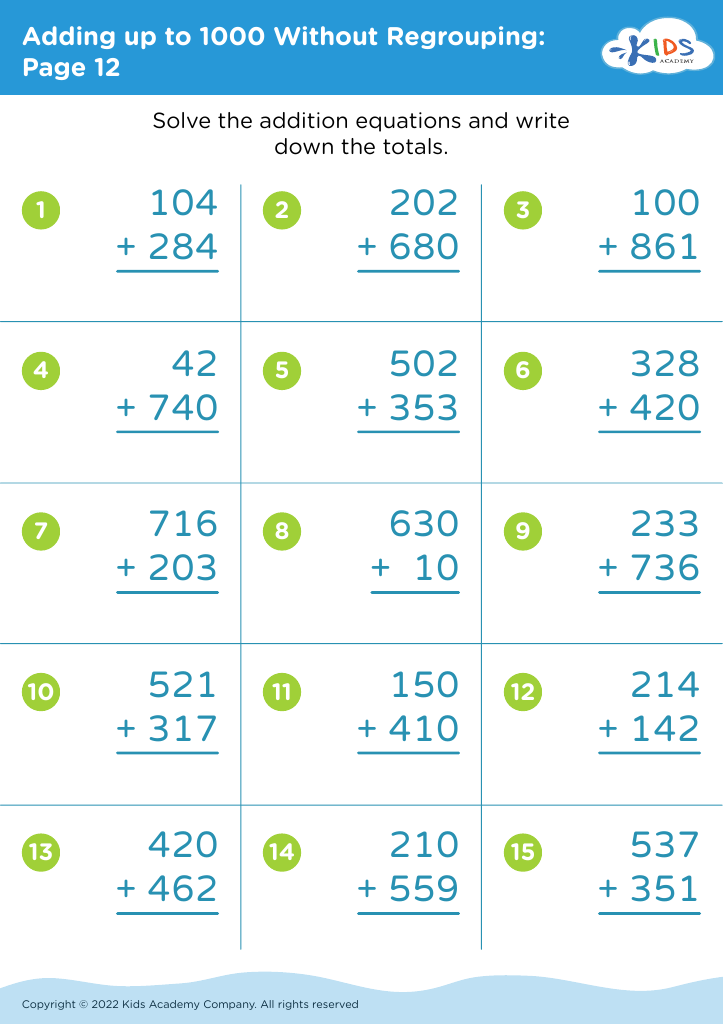
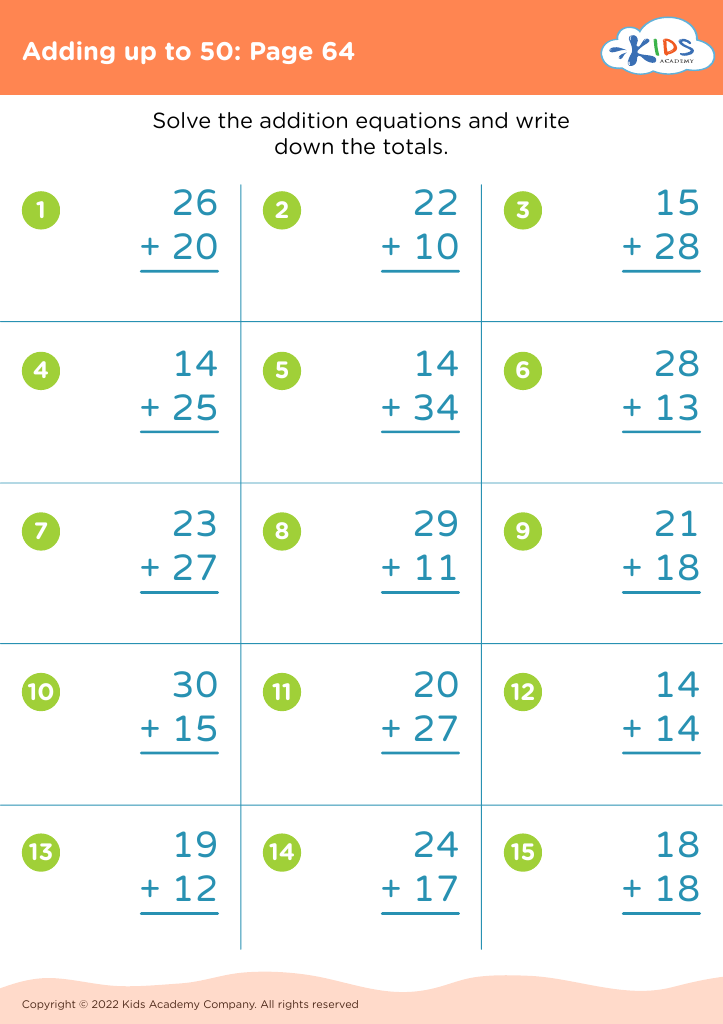
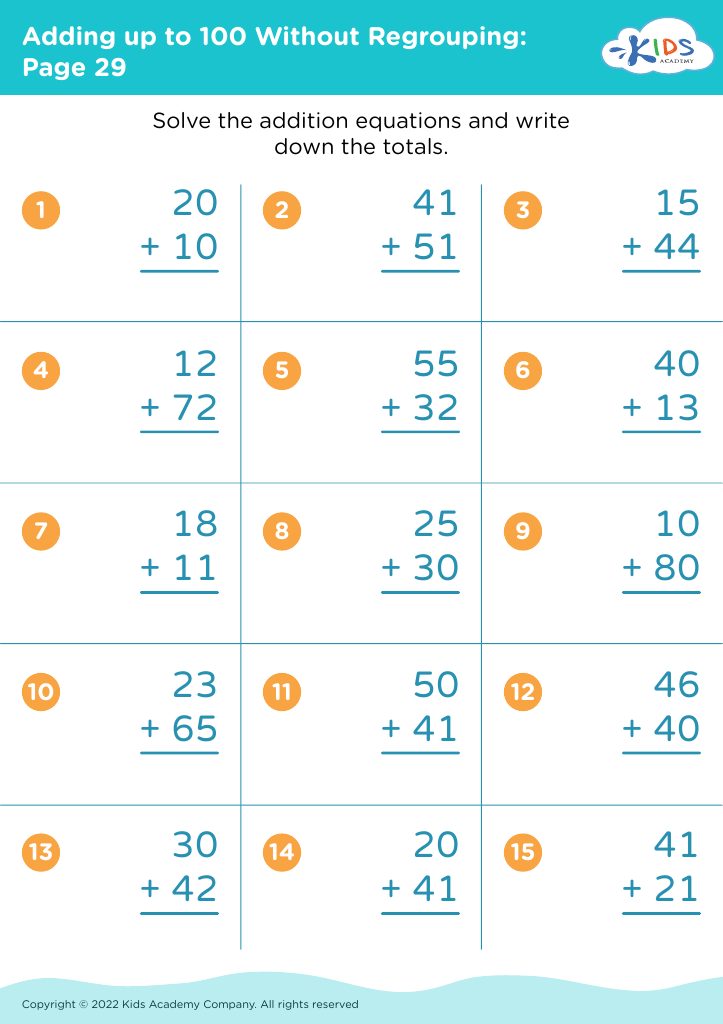
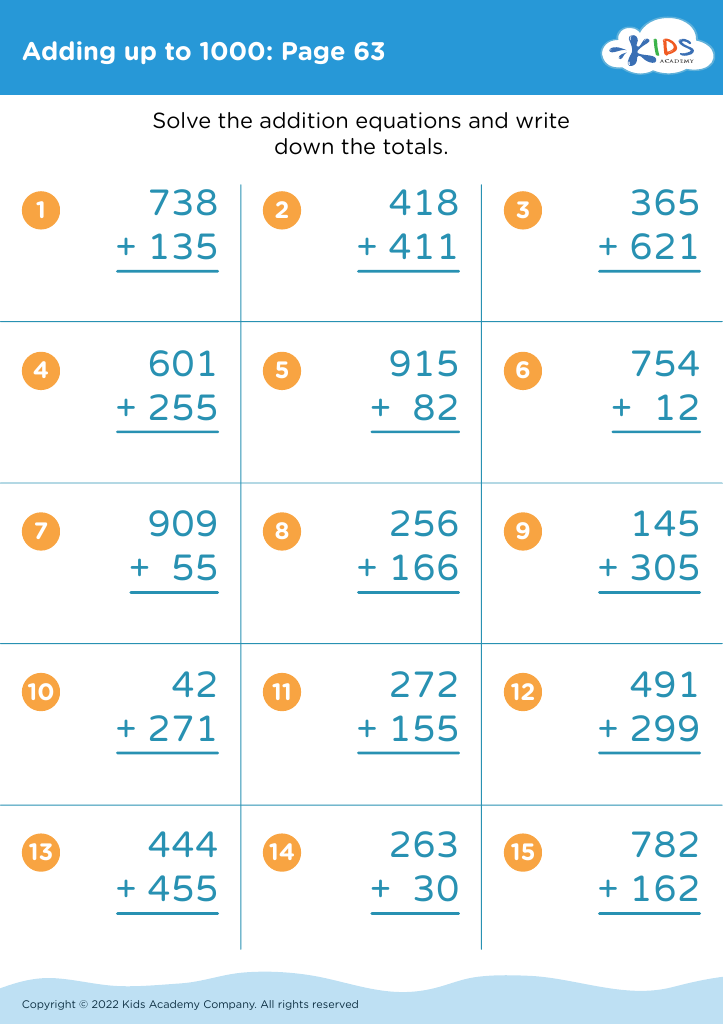








Parents and teachers should care about teaching children to compare numbers and perform addition and subtraction because these skills are foundational for further mathematical understanding. At ages 7-9, children are transitioning from simple arithmetic to more complex concepts, such as multi-digit operations and problem-solving. Comparison skills help children develop number sense, enabling them to understand the value of numbers and make informed decisions when faced with numerical challenges.
By mastering addition and subtraction, children gain confidence and accuracy in their mathematical capabilities, which is crucial for their academic success. These skills also teach them how to solve real-life problems, from budgeting their allowance to measuring ingredients in recipes. Furthermore, comparing numbers fosters critical thinking, as children learn to evaluate and reason with quantities.
Parents and teachers play a pivotal role in nurturing these skills through interactive, fun activities that reinforce learning. This collaborative effort not only helps children achieve academic benchmarks but also lays the groundwork for proficiency in math, affecting their overall performance in school and future careers. In essence, supporting children in comparing numbers, as well as addition and subtraction, paves the way for enhanced numeric literacy, confidence, and critical thinking—skills essential for their lifelong journey in learning.








