Counting skills Addition & Subtraction Worksheets for Ages 7-9 - Page 6
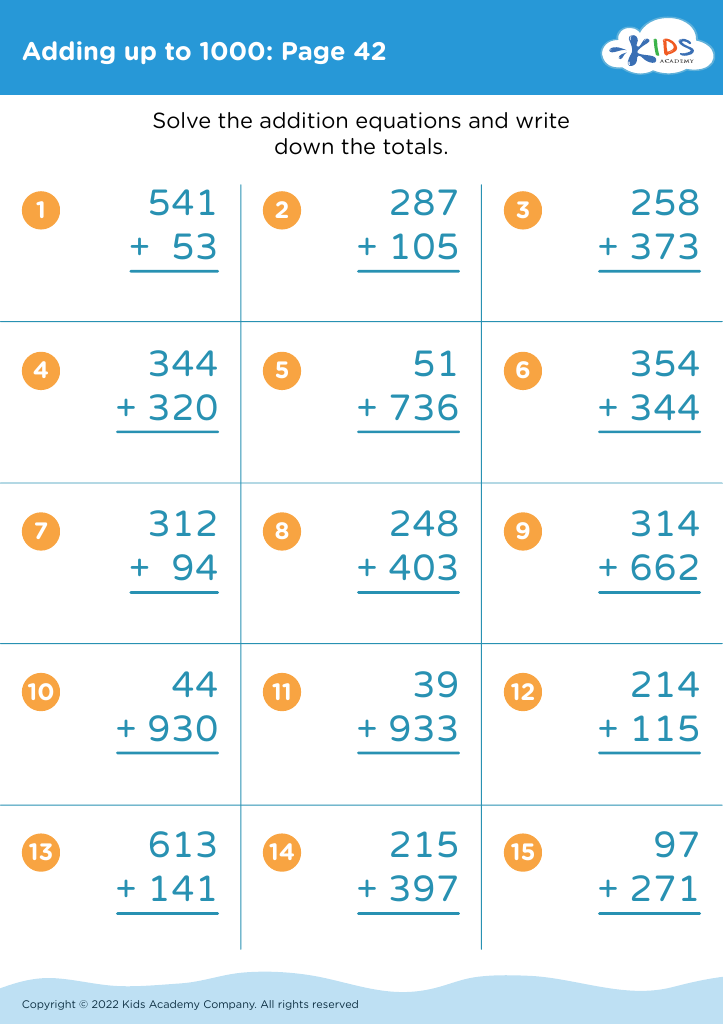
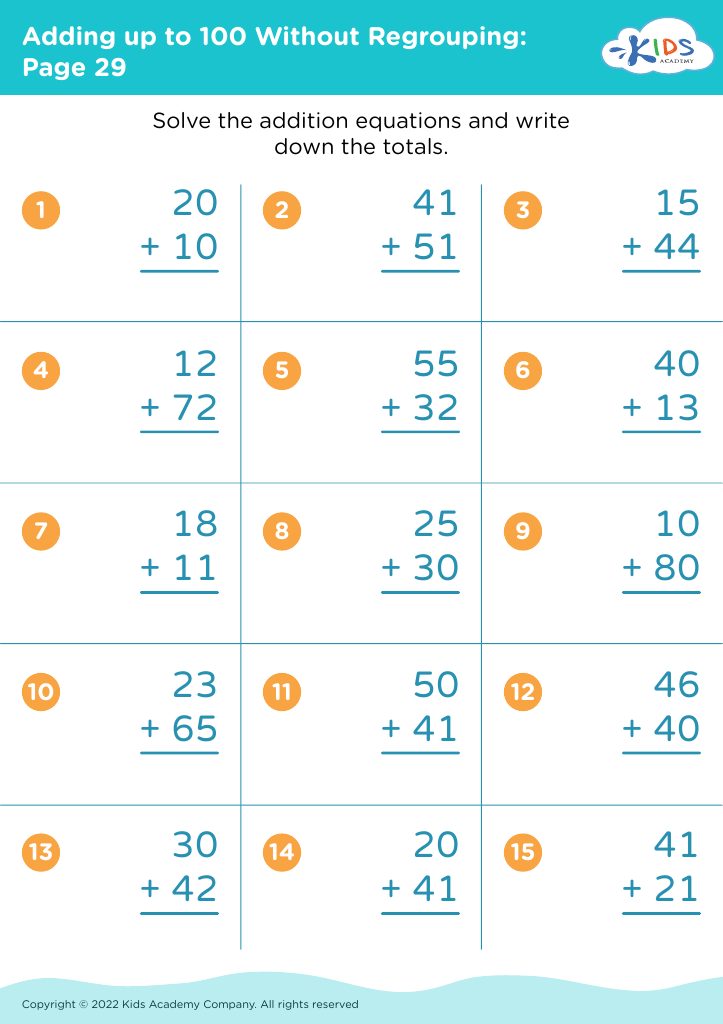
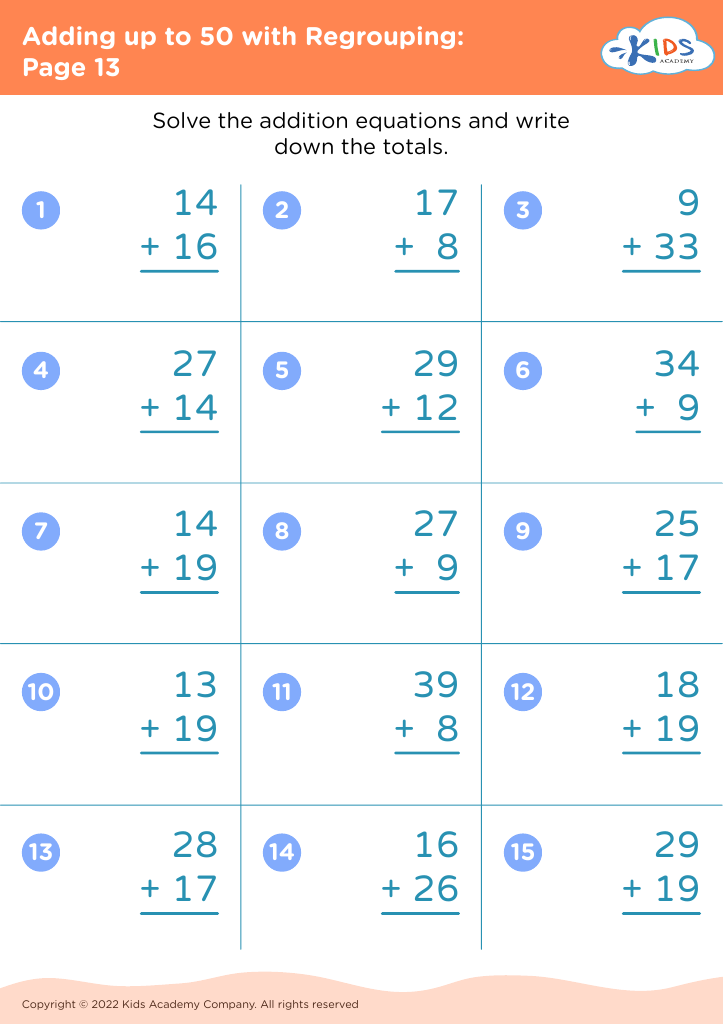
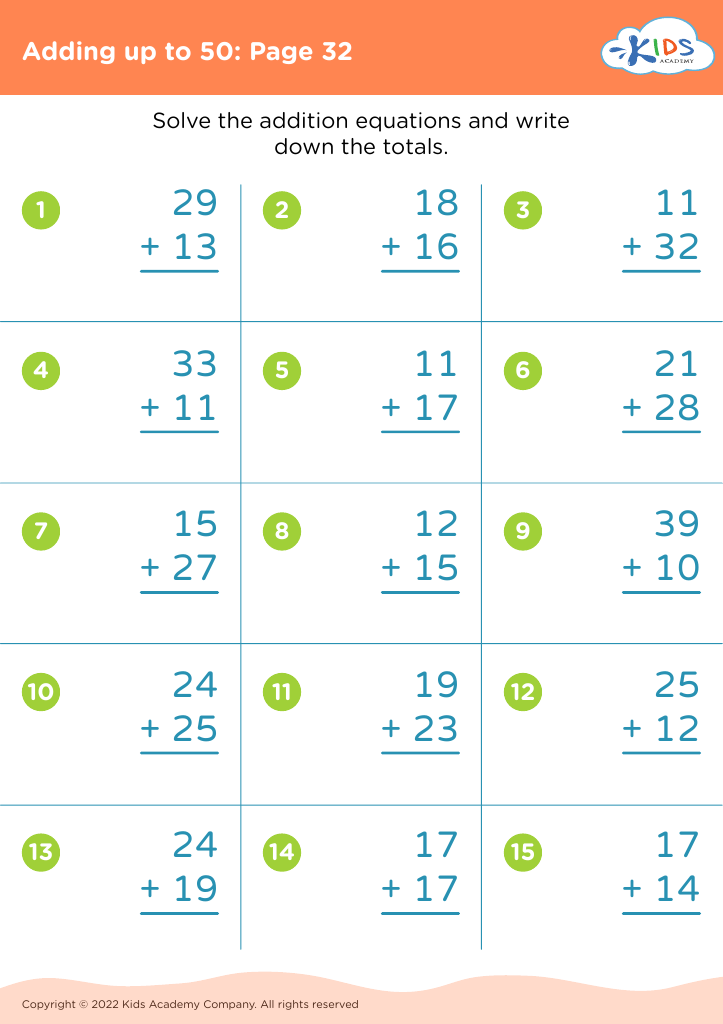








Parents and teachers should prioritize developing counting skills, addition, and subtraction for children aged 7-9 because these foundational arithmetic skills set the stage for advanced math concepts and everyday practical problem-solving. At this critical developmental stage, children begin to transition from concrete operational thinking to more abstract reasoning. Mastery of basic counting not only helps in number recognition but also enhances their ability to sequence events and understand patterns.
Addition and subtraction are crucial as they form the basis for more complex mathematical operations such as multiplication, division, and fractions. These skills boost cognitive development and logical thinking, allowing children to tackle various challenges in and out of the classroom setting. For example, counting money, measuring ingredients in cooking, or determining the time it takes to travel certain distances are everyday activities where these skills are applied.
Furthermore, fostering a strong math foundation at an early age boosts children’s confidence and interest in the subject, reducing math anxiety and setting a positive trajectory for future learning. Engaging and supporting children through interactive experiences, games, and practical examples make learning math fun and relevant, ensuring they develop a strong, lasting affinity for the subject.








