
Critical thinking development Addition & Subtraction Worksheets for Ages 7-9
3 filtered results
Difficulty Level
Grade
Age
-
From - To
Subject
Activity
Standards
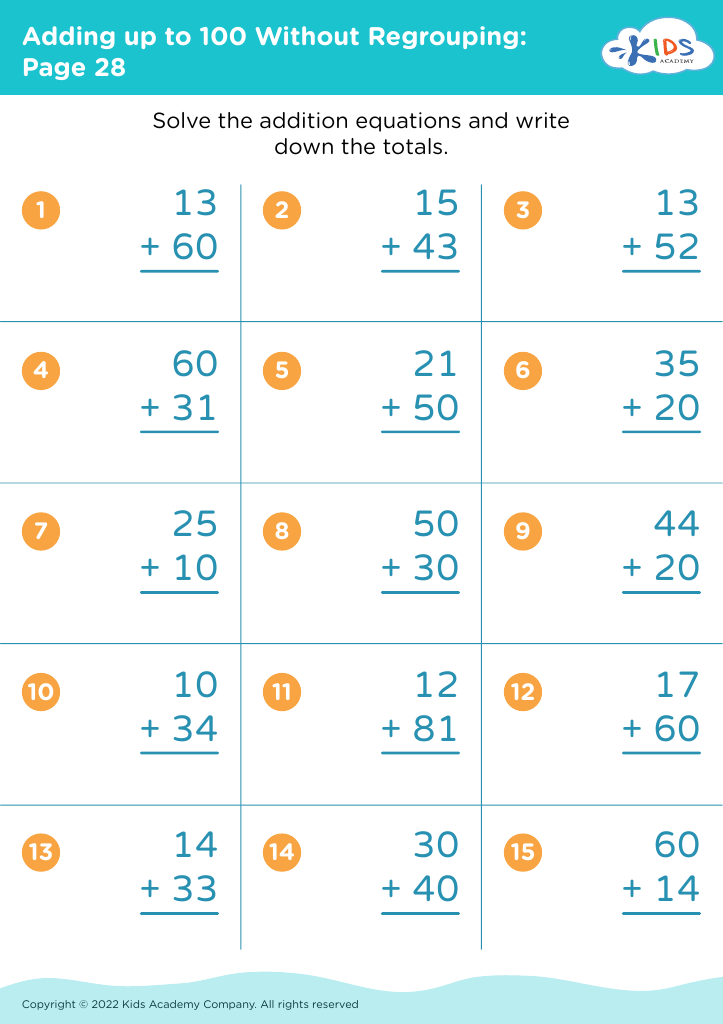
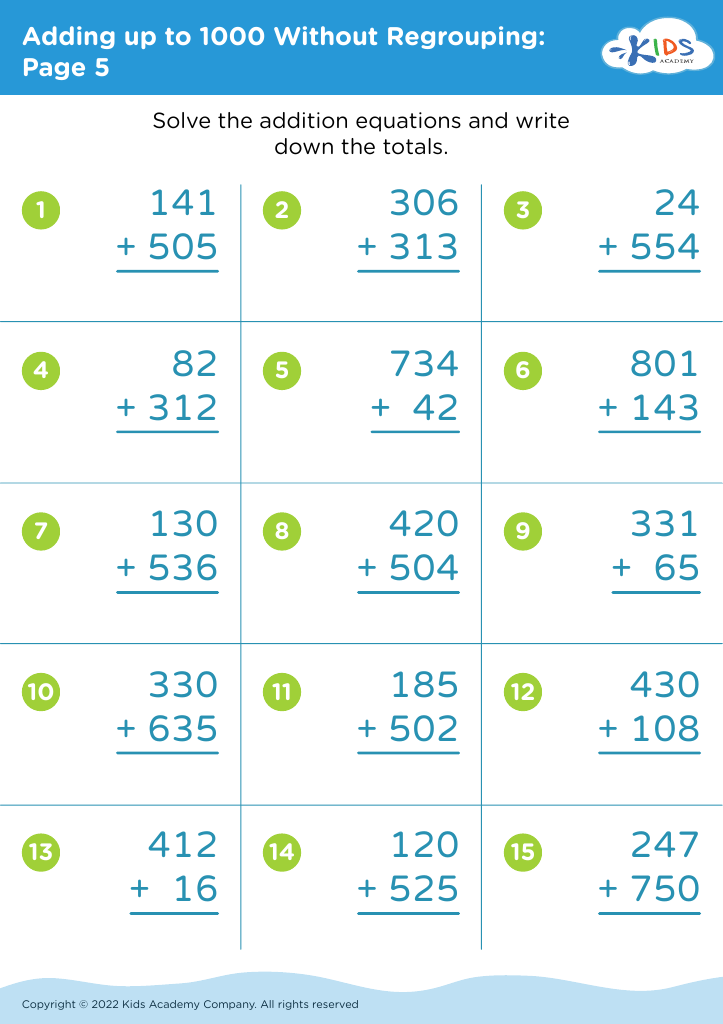
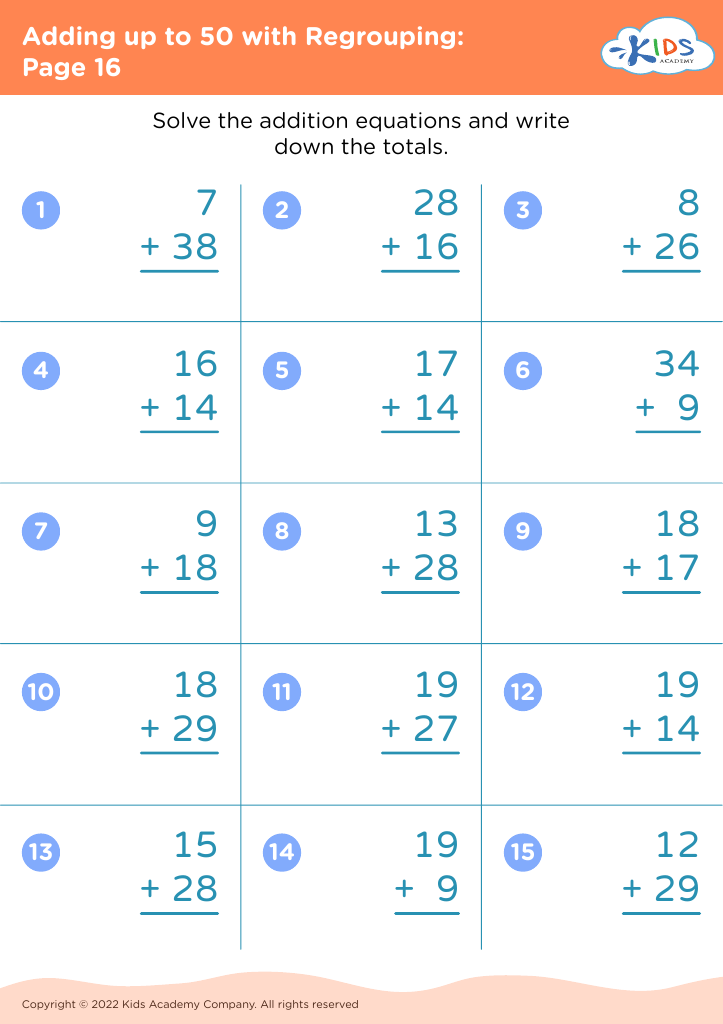
Unlock your child's potential with our Critical Thinking Development Addition and Subtraction Worksheets, specially designed for ages 7-9! These engaging resources offer a fun and interactive way for children to enhance their math skills while nurturing their critical thinking abilities. Our thoughtfully crafted worksheets challenge kids to apply logical reasoning, solve problems, and think creatively when approaching addition and subtraction exercises. As they progress, they’ll develop confidence and proficiency in math, laying a strong foundation for future learning. Dive into our collection of worksheets today and watch your child transform into a confident problem solver and critical thinker!
Favorites
With answer key
Interactive
Join Kids Academy for Free
Who is primarily going to use this learning content?








Critical thinking development in addition and subtraction for ages 7-9 is crucial as it lays a foundational bedrock for more advanced mathematical concepts and real-life problem-solving skills. At this stage, children begin to move beyond rote memorization of facts and procedures; they start to understand the 'why' and 'how' behind mathematical operations. This deeper comprehension fosters several skills, including analytical reasoning, problem-solving, and the ability to evaluate situations logically.
When parents and teachers promote critical thinking in arithmetic, they encourage students to explore different strategies and approaches when faced with mathematical challenges. This creates a more engaging learning experience, making mathematics more than just number crunching. By linking addition and subtraction to real-world scenarios, educators can help children understand their practical significance, which enhances retention and boosts confidence.
Furthermore, fostering critical thinking helps students become independent learners, preparing them for more complex subjects in the future. It equips them with the skills needed to tackle challenges not just in math, but across all disciplines, thereby promoting a holistic educational experience. Ultimately, investing time and resources to enhance critical thinking in early math creates resilient learners who are better prepared for academic success and life beyond school.








