Developing logical thinking Addition & Subtraction Worksheets for Ages 7-9
4 filtered results
-
From - To
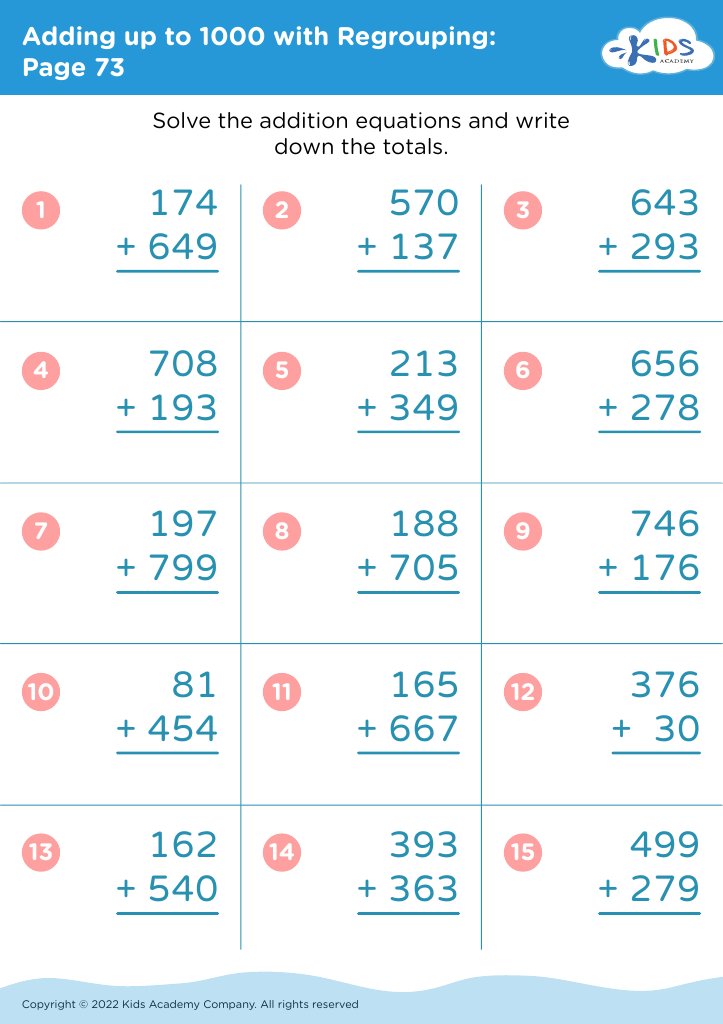
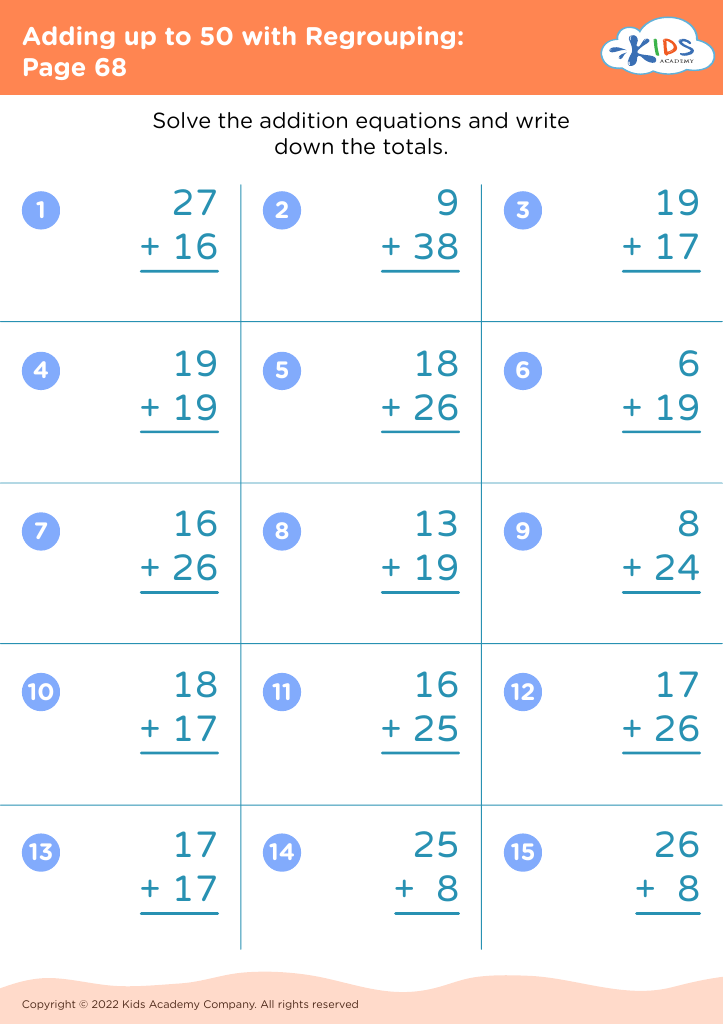
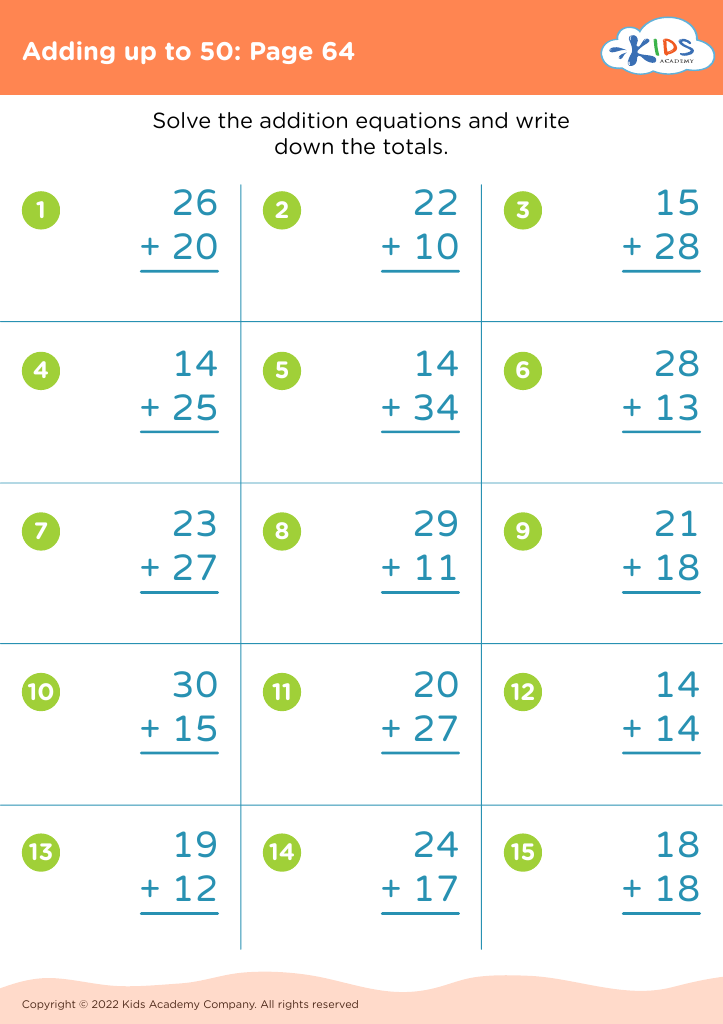
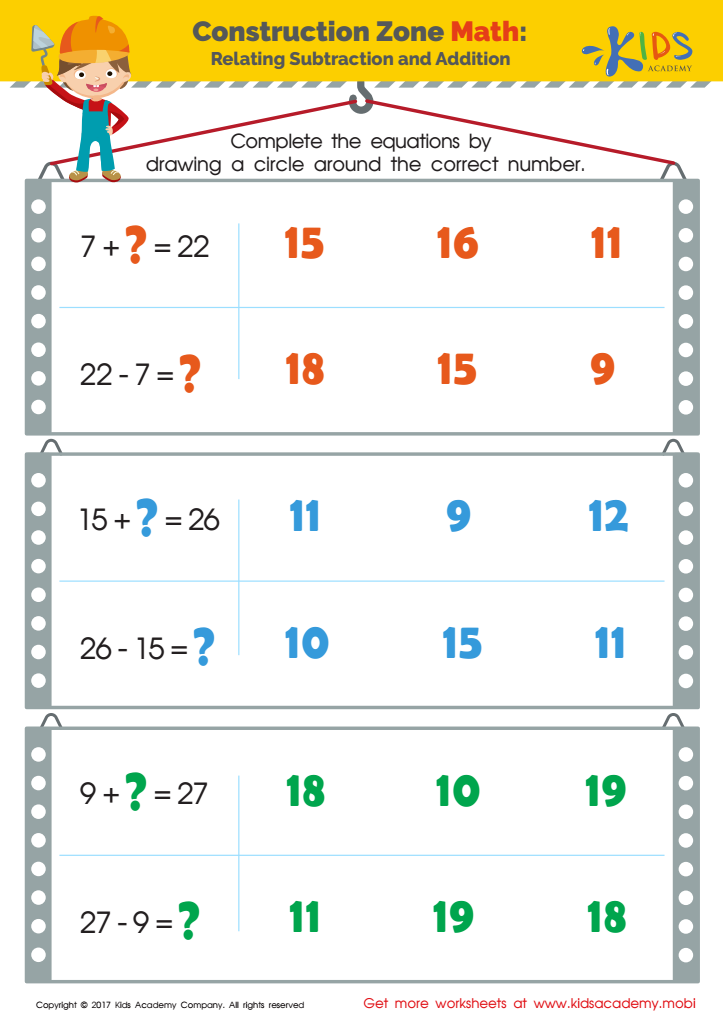
Enhance your child's logical thinking skills with our Addition & Subtraction Worksheets designed for ages 7-9. Our expertly crafted worksheets focus on boosting mathematical reasoning while solidifying foundational math concepts. Children will encounter a variety of problems that require critical thinking and problem-solving strategies, fostering a deeper understanding of addition and subtraction. These engaging activities not only help in mastering arithmetic but also raise confidence and promote independent thinking. Perfect for classroom use or at-home practice, our printable worksheets are a valuable tool for any young learner eager to improve their math skills in a fun and challenging way.
Related Addition and Subtraction Facts Worksheet
 Assign to My Students








Developing logical thinking in addition and subtraction for ages 7-9 lays a crucial foundation for a child's overall cognitive development and future academic success. At this stage, children transition from counting by rote to understanding the principles behind mathematical operations. By fostering logical thinking, parents and teachers help kids move beyond memorization, enabling them to understand why and how addition and subtraction work, which is critical for higher-level math and problem-solving skills.
Logical thinking aids children in grasping concepts like number sense, the ability to see relationships between numbers, and the use of different strategies to solve problems effectively. This understanding enhances their ability to approach complex problems systematically, develop reasoning skills, and think critically—competencies valuable in all life areas.
Instilling these skills early not only boosts academic confidence and performance but also develops a child's ability to handle real-life situations, such as budgeting, time management, and decision-making. Teachers and parents play a crucial role by providing activities that challenge and engage children, such as practical problems, puzzles, and games that reinforce these concepts. Ultimately, nurturing logical thinking in mathematical contexts equips children with lifelong cognitive tools that support continuous learning and adaptability.








