Enhance Vocabulary Addition & Subtraction Worksheets for Ages 7-9
4 filtered results
-
From - To
Discover our "Enhance Vocabulary Addition & Subtraction Worksheets" designed specifically for children ages 7-9! These engaging worksheets help young learners master essential math skills while simultaneously expanding their vocabulary. By integrating language and arithmetic, kids will not only practice addition and subtraction but also learn key math-related terms. Our fun and interactive activities encourage critical thinking and problem-solving, all within a captivating learning environment. Ideal for home or classroom use, these worksheets support early grade teachers in providing a comprehensive math education. Ensure your students build a strong foundation in both numeracy and language through these dynamic educational resources!
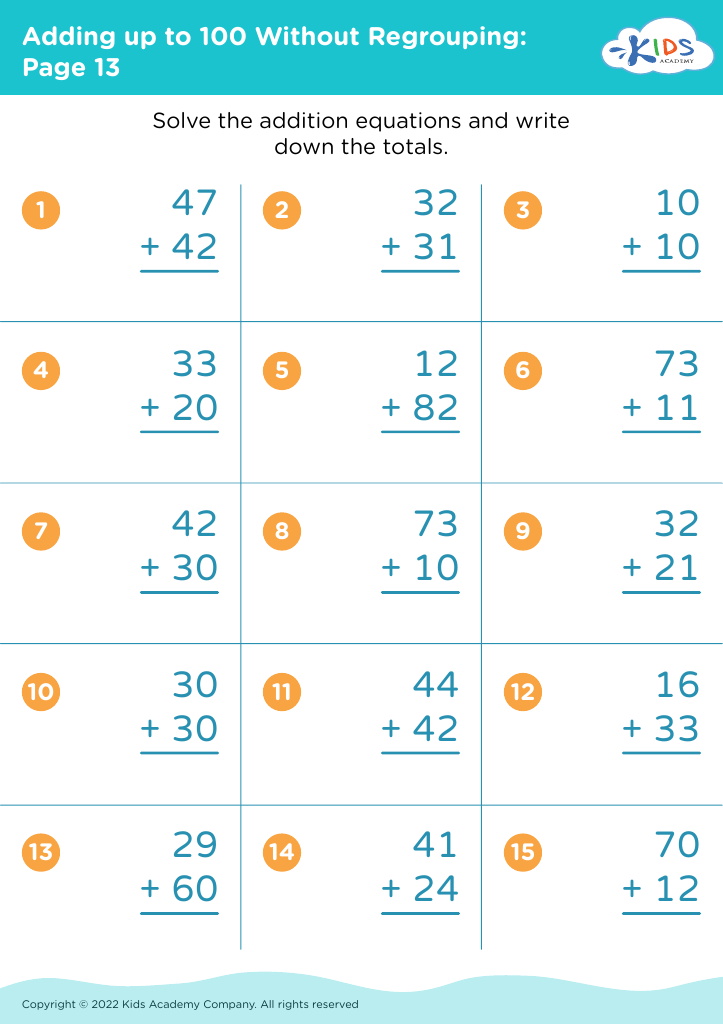
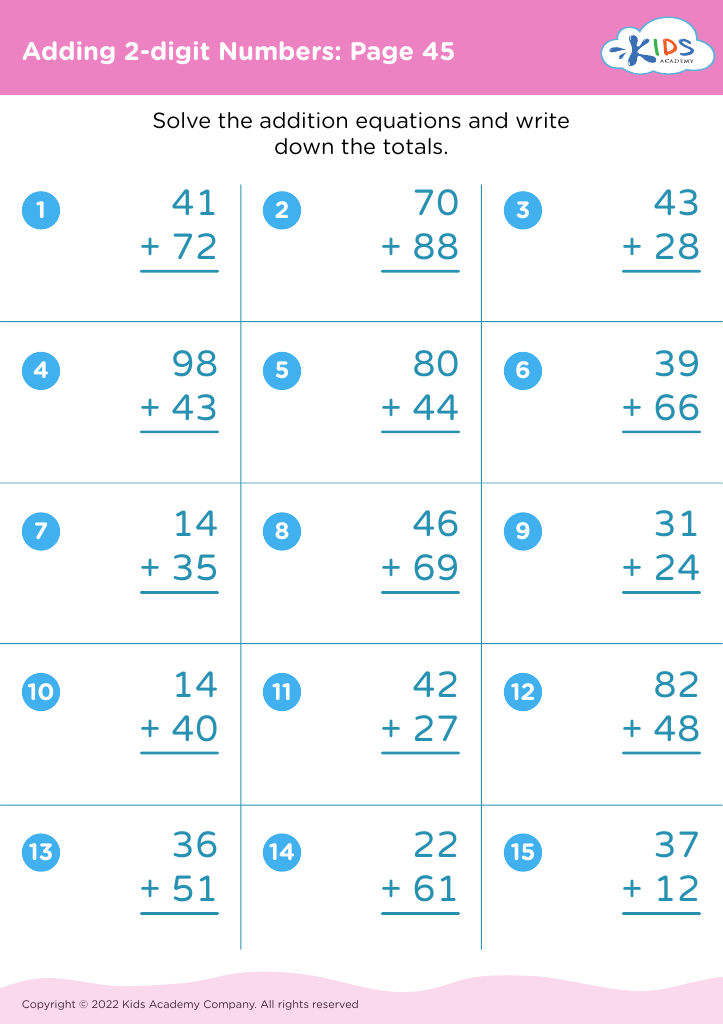
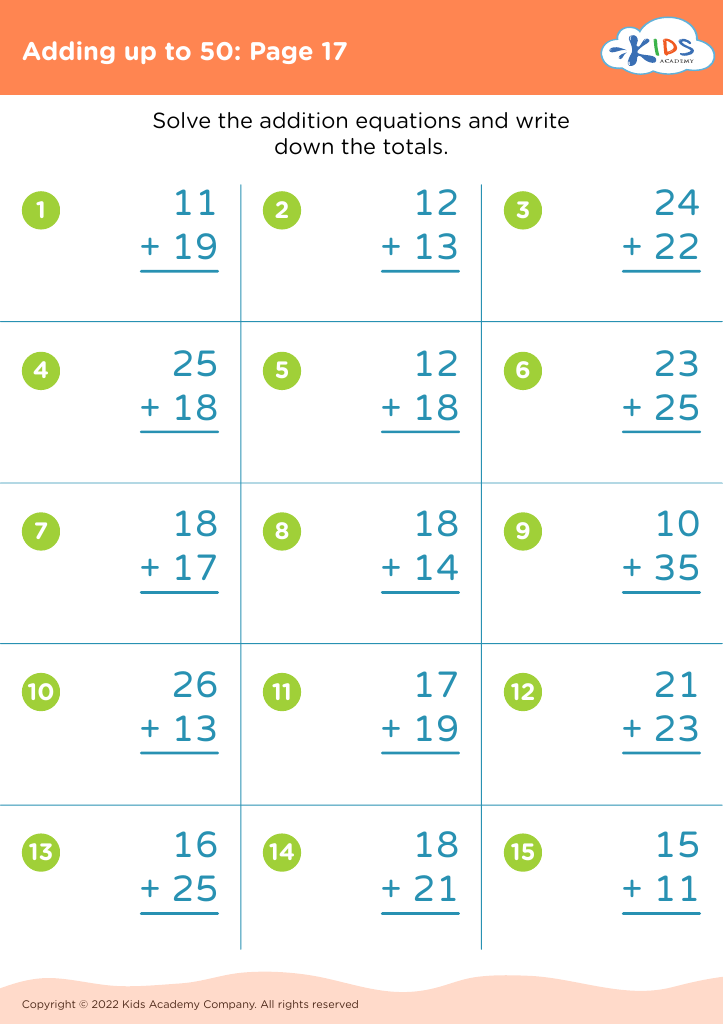
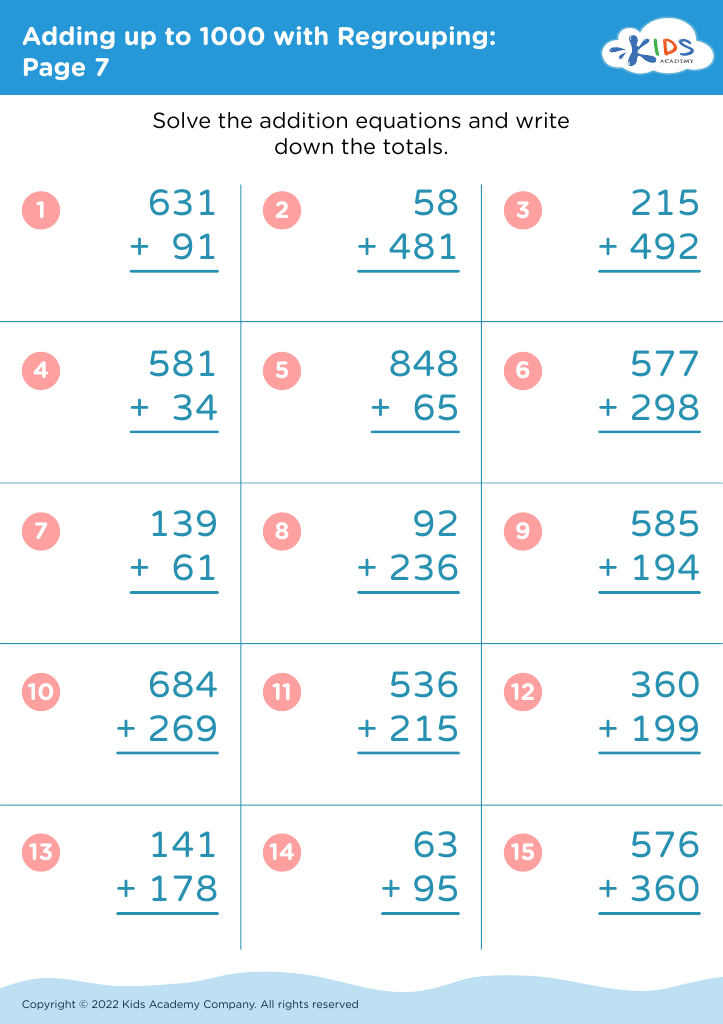








Enhancing vocabulary in the context of addition and subtraction for children aged 7-9 is critical for multiple reasons. At this age, children are transitioning from foundational math concepts to more advanced problem-solving skills. A rich vocabulary allows them to comprehend instructions and mathematical terms, which in turn supports their ability to engage with complex problems. For instance, understanding terms like "sum," "difference," and "more than" enables kids to accurately follow queries and articulate their reasoning.
Moreover, a strong mathematical vocabulary fosters confidence. When children can express their thoughts clearly, they are more likely to share ideas in group settings, participate in discussions, and ultimately develop a positive attitude toward math. Teachers and parents can incorporate vocabulary building by using everyday examples and encouraging questions.
Additionally, research suggests that linguistic proficiency is closely linked to mathematical understanding. By prioritizing vocabulary development alongside arithmetic skills, both educators and parents can create a more holistic learning experience. This integration not only improves mathematical fluency but also cultivates critical thinking skills and enhances overall academic performance. Hence, fostering a robust mathematical vocabulary becomes paramount for young learners, setting the foundation for more complex math concepts in the future.








