Enhances number recognition Addition & Subtraction Worksheets for Ages 7-9
4 filtered results
-
From - To
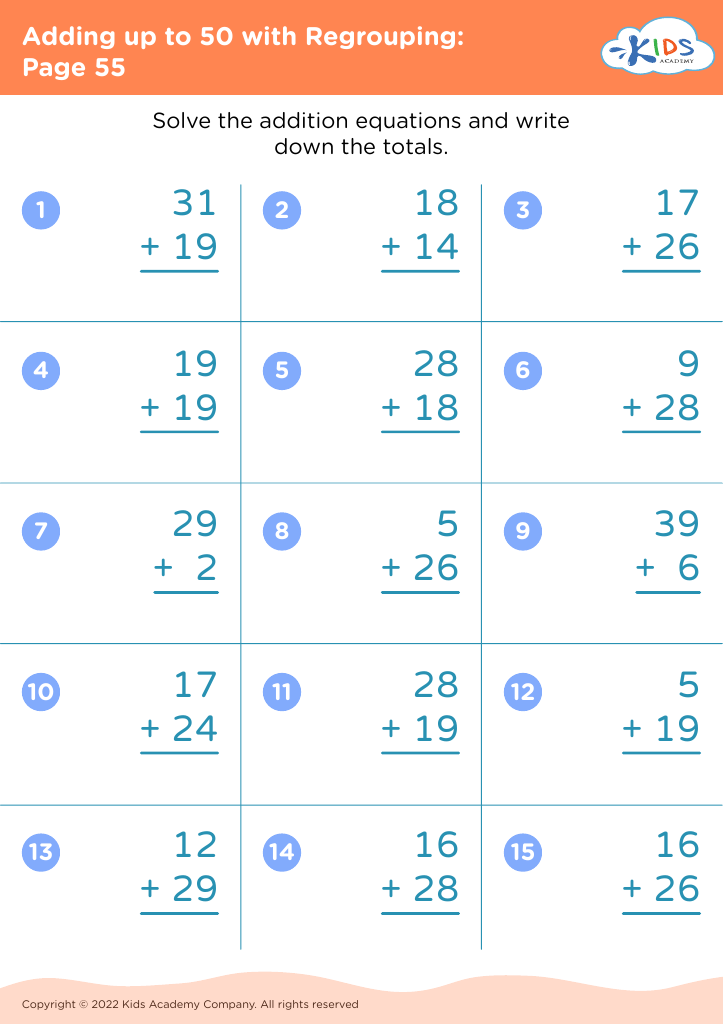
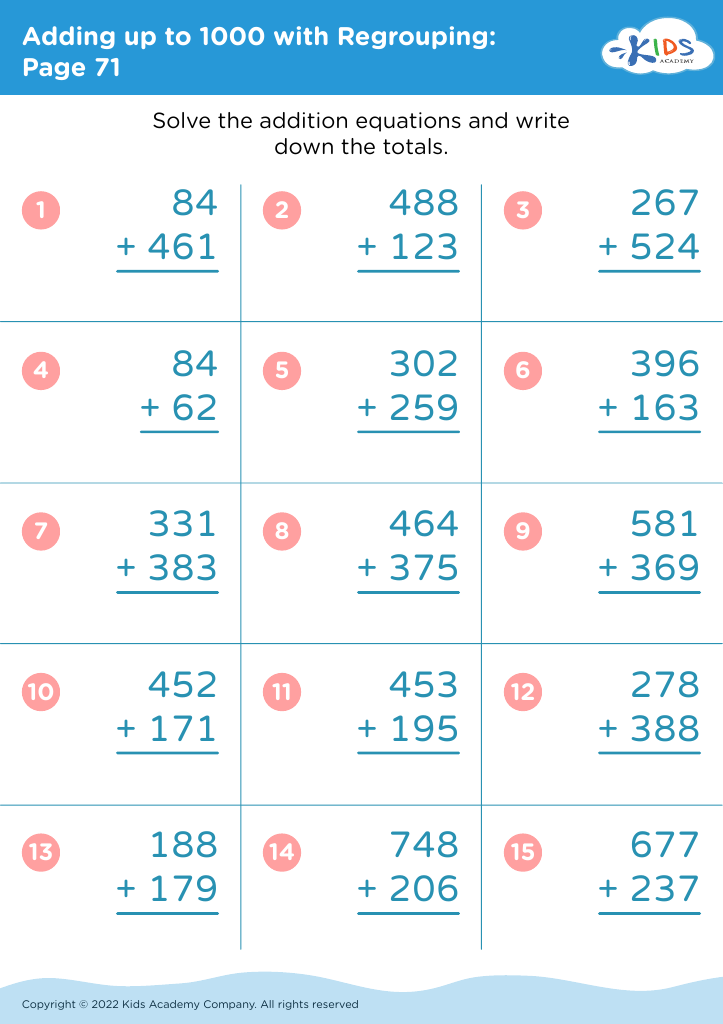
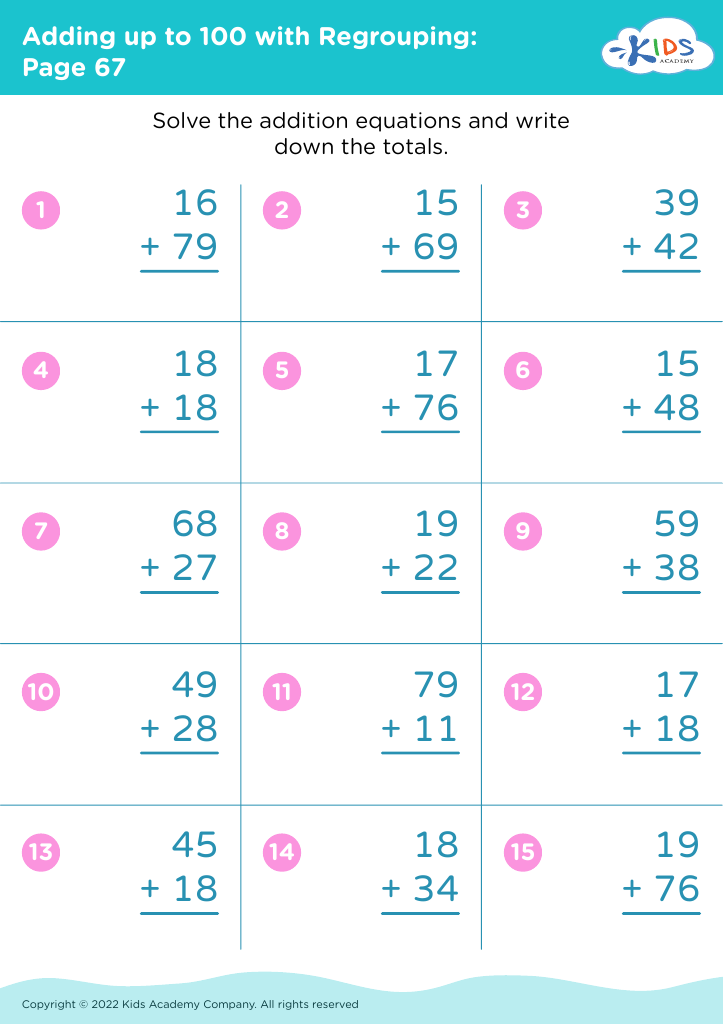
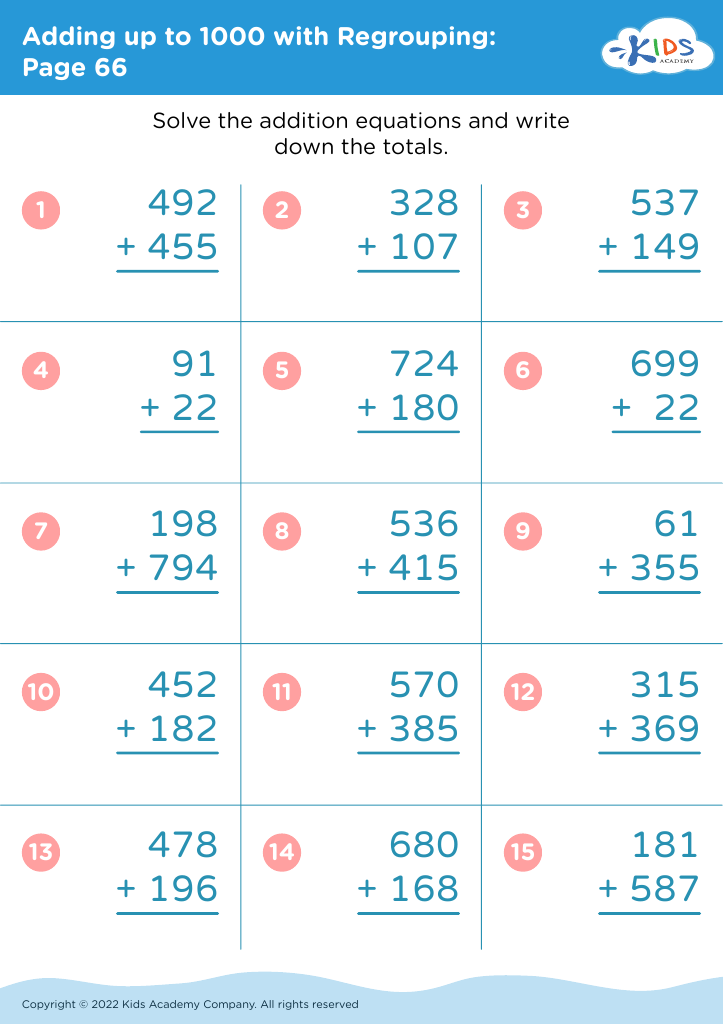
Discover our expertly crafted "Enhances Number Recognition Addition & Subtraction Worksheets" designed for children ages 7-9. These engaging resources help young learners strengthen their number recognition skills while mastering essential addition and subtraction concepts. Each worksheet encourages students to practice addition and subtraction in fun, interactive ways, fostering a deeper understanding of numbers and their relationships. Our printable worksheets cater to different learning styles, making math enjoyable and accessible. Perfect for homeschoolers or classroom use, these activities will build confidence in early math skills, promote problem-solving, and prepare children for future academic success. Start your math journey with us today!








Parents and teachers should prioritize enhancing number recognition and the skills of addition and subtraction in children aged 7-9 due to its foundational impact on mathematical literacy. This stage is crucial as children begin to internalize mathematical concepts that serve as building blocks for their future learning.
Enhanced number recognition helps children understand the relationships between numbers, aiding them in solving more complex problems. It fosters confidence, empowering children to tackle math challenges. Furthermore, proficient addition and subtraction skills are essential not only for academic success but also for everyday problem-solving and real-world application, such as managing money, telling time, and measuring.
Additionally, early mastery of these concepts reduces math anxiety, promoting a positive attitude towards learning and nurturing a growth mindset. When children feel competent in math, they are more likely to engage actively in their learning process, fostering a lifelong appreciation for the subject.
Teachers and parents play a vital role in facilitating this growth through engaging and diverse instructional strategies, promoting a stimulating environment that encourages exploration and inquiry. Ultimately, improving number recognition and arithmetic skills sets the stage for greater mathematical understanding and success in higher-tier mathematics later on.








