Filters

40 filtered results

Clear all filters
Favorites
With answer key
Interactive

40 filtered results

Difficulty Level

Grade


Enhance your child's fine motor skills and mathematical proficiency with our engaging Addition & Subtraction Worksheets, specially designed for children aged 7-9. These worksheets combine essential math problems with activities that promote fine motor development, making learning interactive and fun. As children solve addition and subtraction problems, they also practice important pre-writing skills, such as cutting, tracing, and coloring. Our thoughtfully created materials cater to various learning styles and ensure kids are developing hand-eye coordination alongside their math capabilities. Visit our collection now to support your child's academic growth while nurturing their motor skills in a playful way!
Check out this FREE Trial Lesson on Addition & Subtraction for age 7-9!

H

Favorites
With answer key
Interactive
  • 7-9
  • Fine Motor Skills
  • Addition & Subtraction
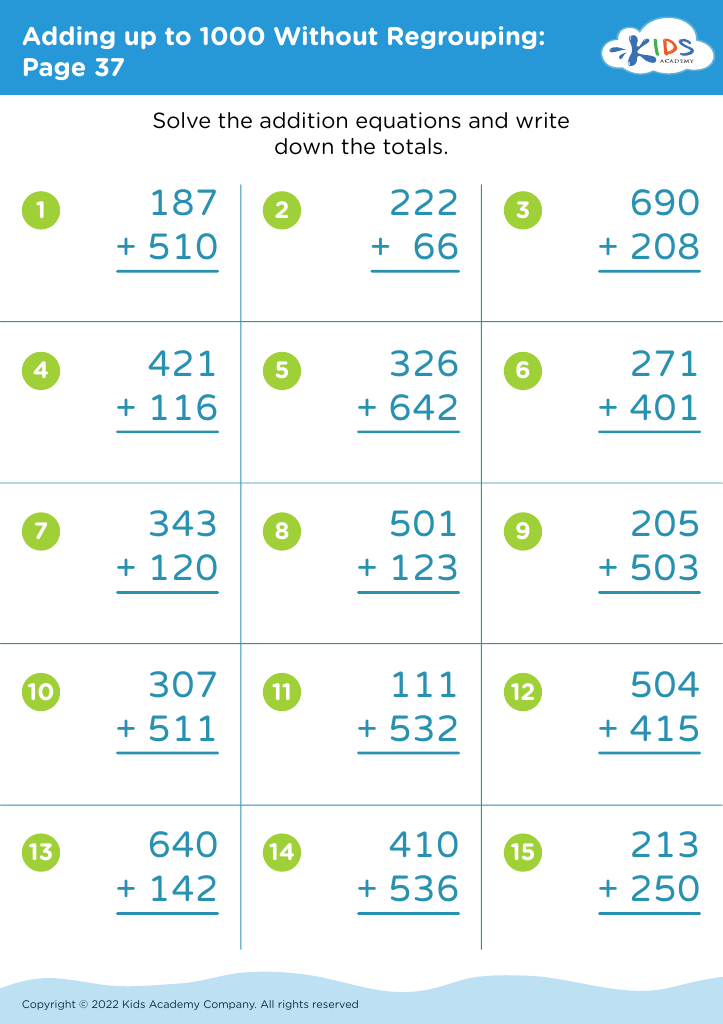
Adding up to 1000 Without Regrouping: Page 37
Worksheet
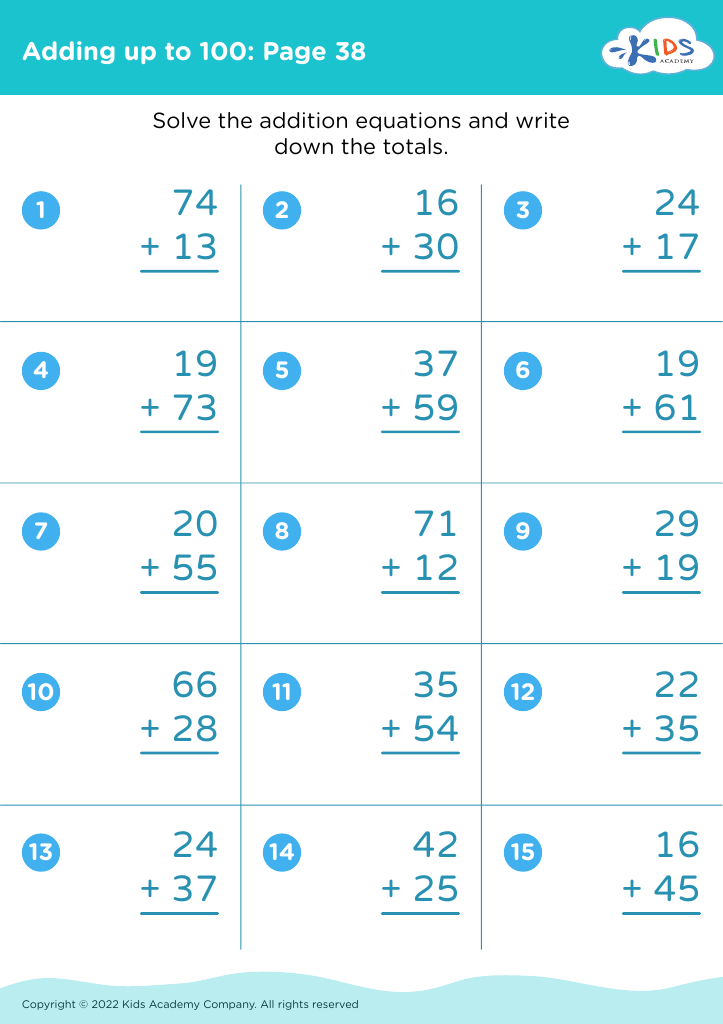
Adding up to 100: Page 38

Adding up to 100: Page 38

Adding up to 100: Page 38
Worksheet
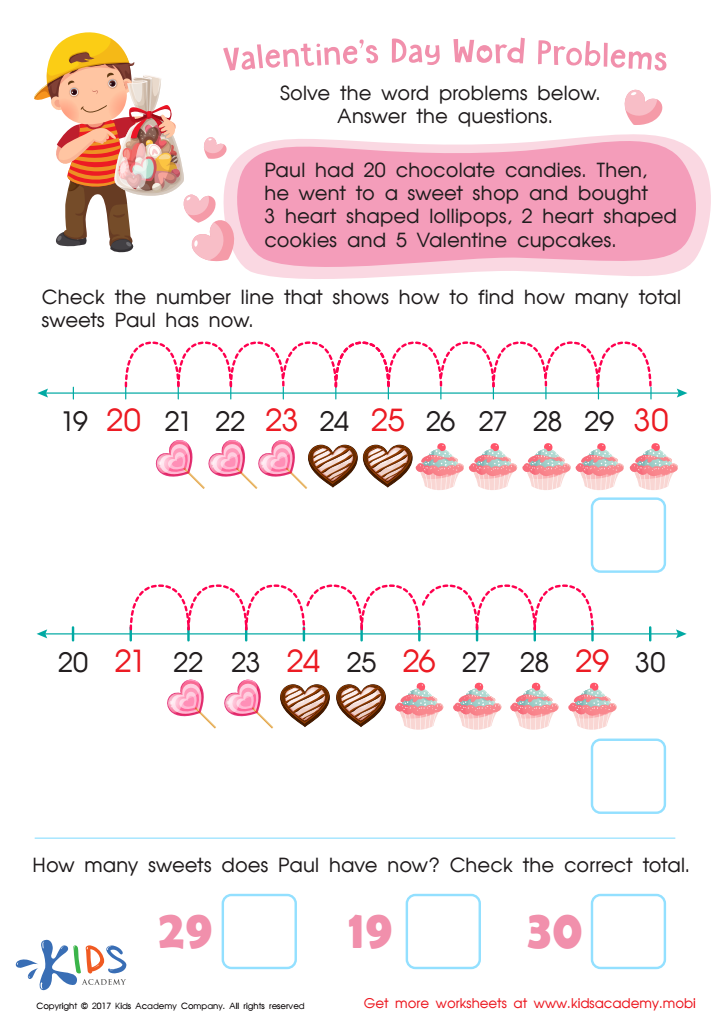
Valentine’s Day word problem PDF worksheet

Valentines Day 2 Printable

This PDF worksheet uses a number line to help solve the problems. Your child will be ready for Valentine's Day after completing it. Counting and adding from 20 is also reinforced.
Valentines Day 2 Printable
Worksheet
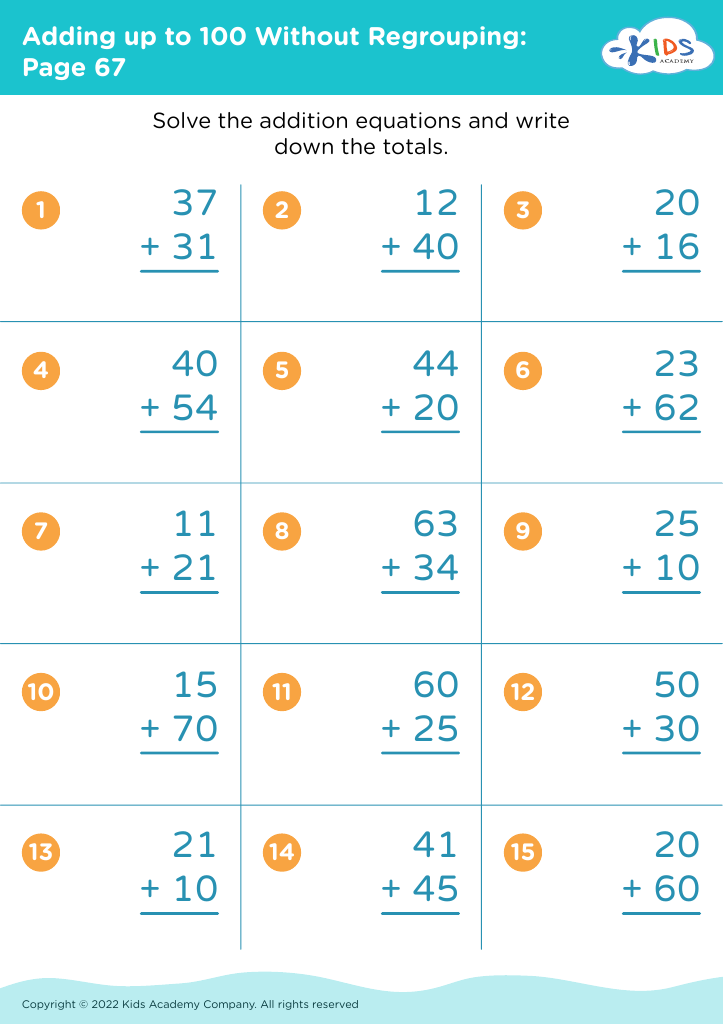
Adding up to 100 Without Regrouping: Page 67
Worksheet
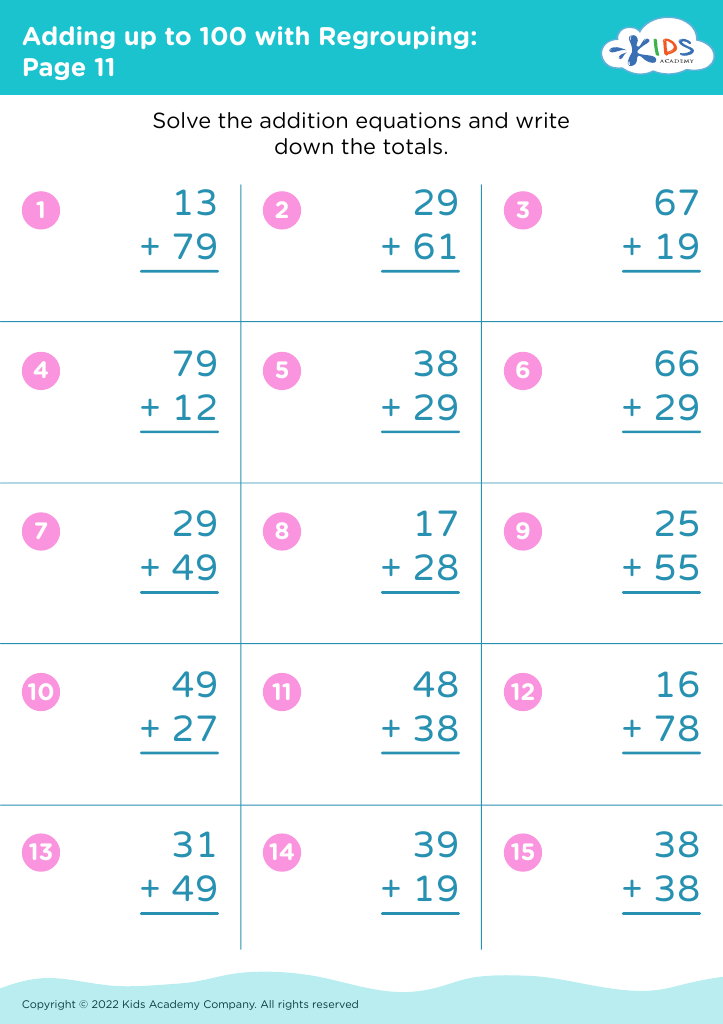
Adding up to 100 with Regrouping: Page 11
Worksheet
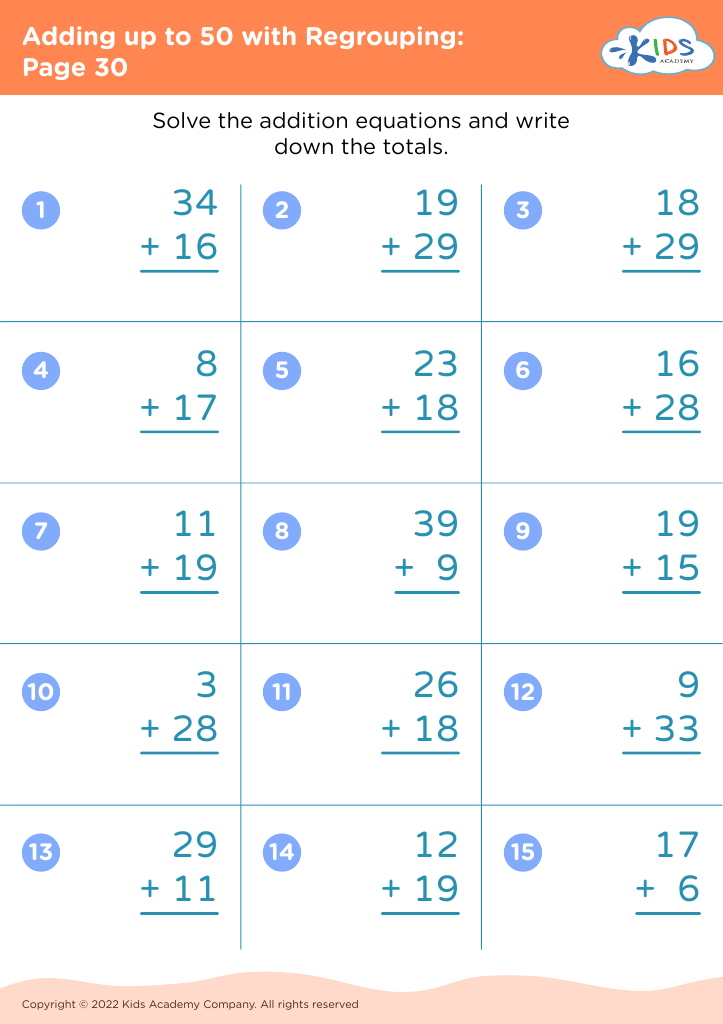
Adding up to 50 with Regrouping: Page 30
Worksheet
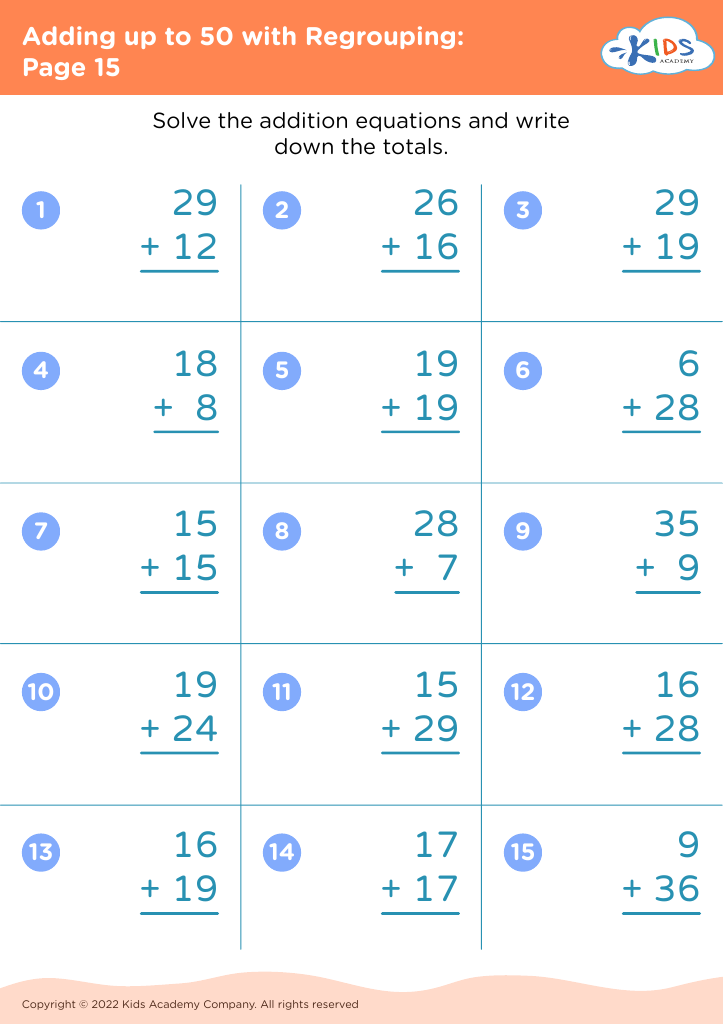
Adding up to 50 with Regrouping: Page 15
Worksheet
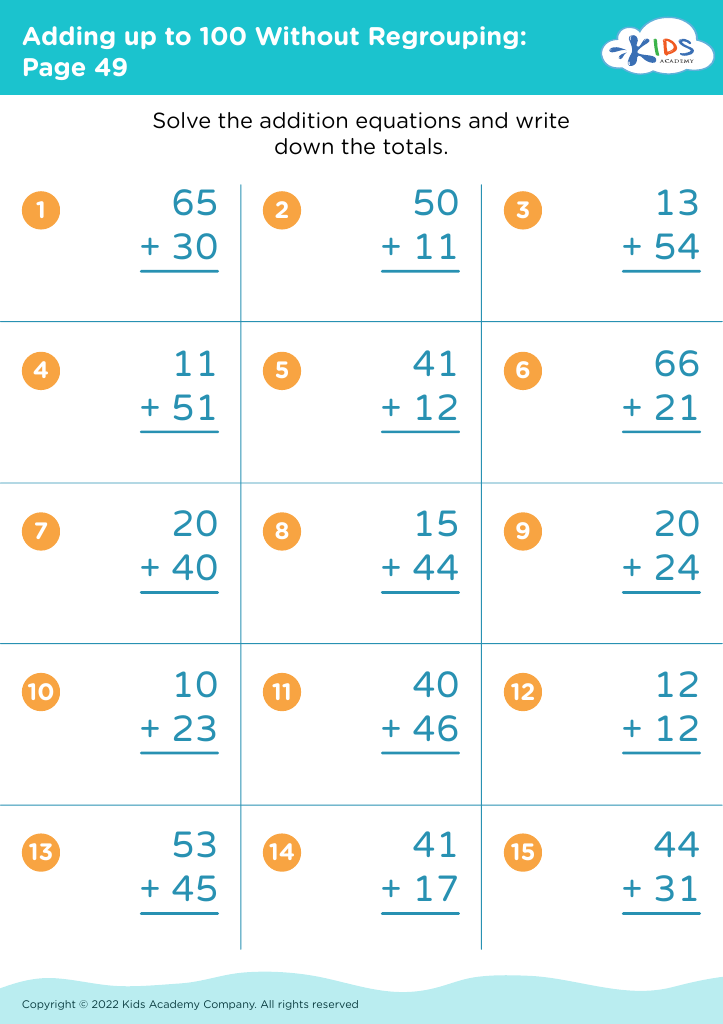
Adding up to 100 Without Regrouping: Page 49
Worksheet
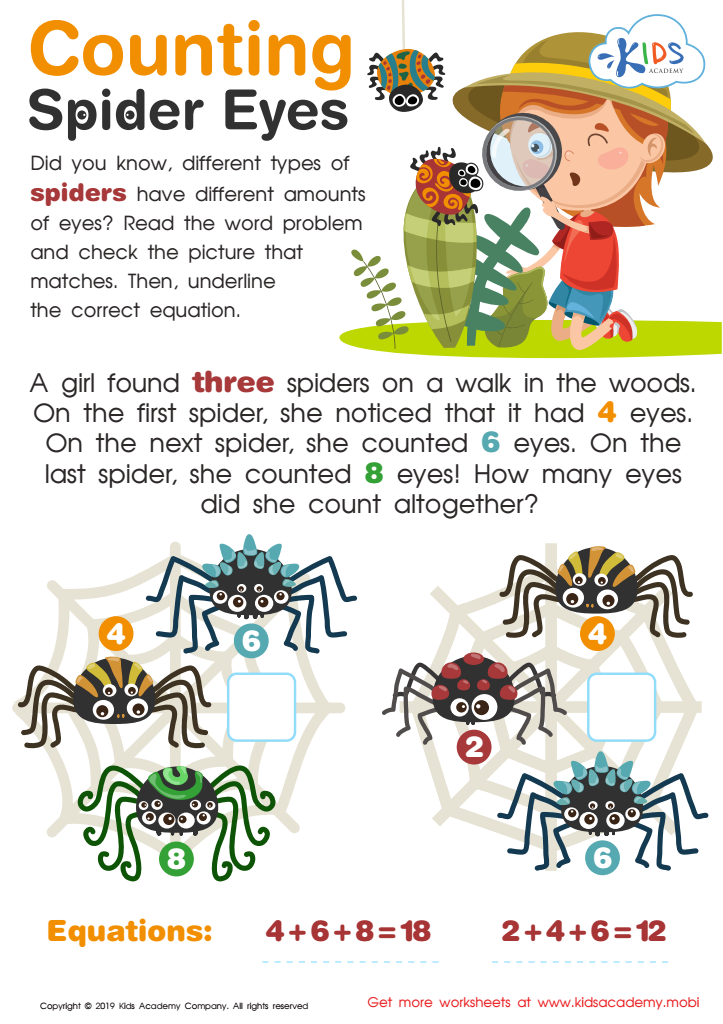
Counting Spider Eyes Worksheet

Counting Spider Eyes Worksheet

Did you know different spiders have different eye numbers? Kids will love learning this fact and solving the spider word problems on this free worksheet! Word problems promote a deeper understanding of the concept, plus they get to add up the spiders’ eyes while solving addition problems with more than one addend. Fun and math all in one!
Counting Spider Eyes Worksheet
Worksheet
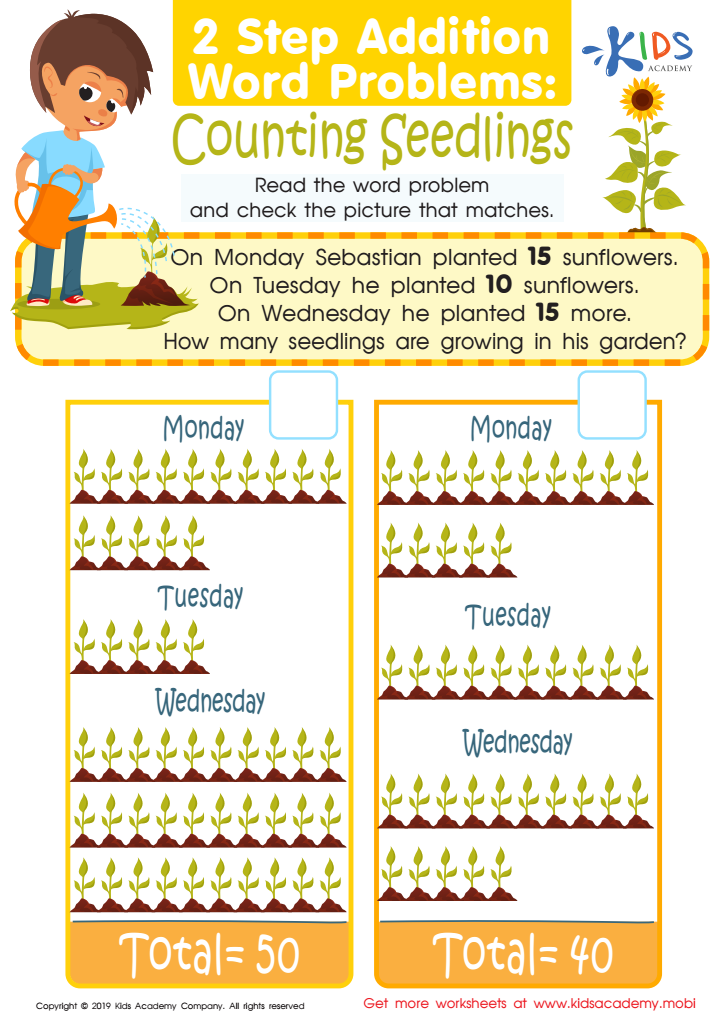
Counting Seedlings Worksheet
Counting Seedlings Worksheet
Understanding math word problems is key. Multiple steps can prove challenging - this free worksheet provides one-to-one picture representation to help kids solve multi-step addition word problems. Strengthen addition skills by choosing the matching picture to the answer.
Counting Seedlings Worksheet
Worksheet
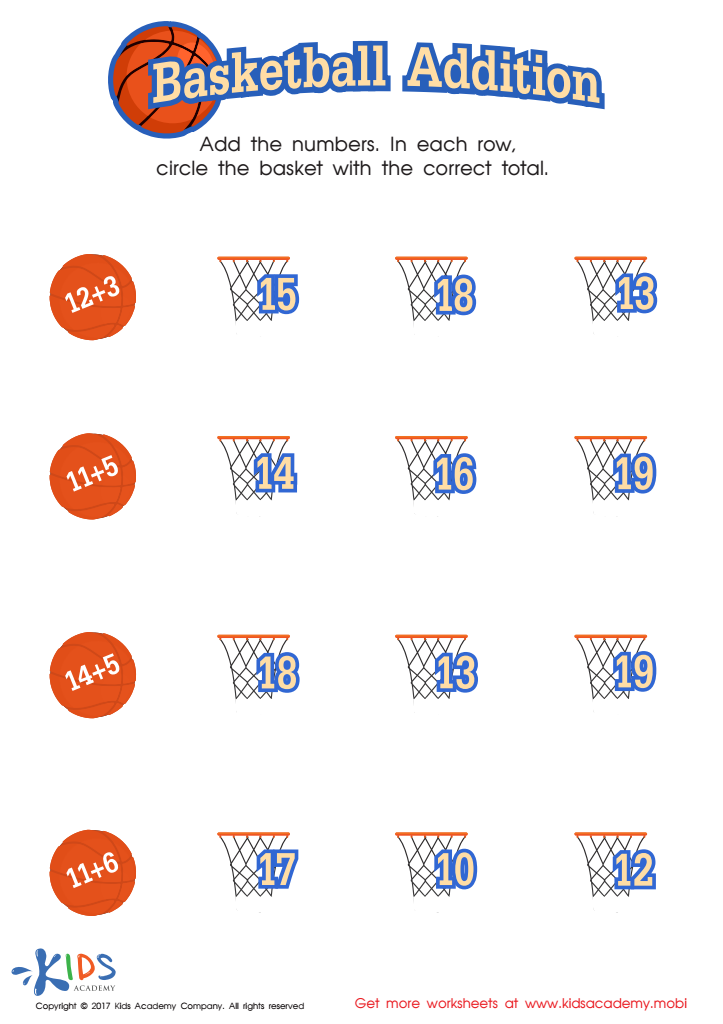
Basketball Addition Worksheet

Basketball Addition Worksheet

Basketball Addition Worksheet
Worksheet
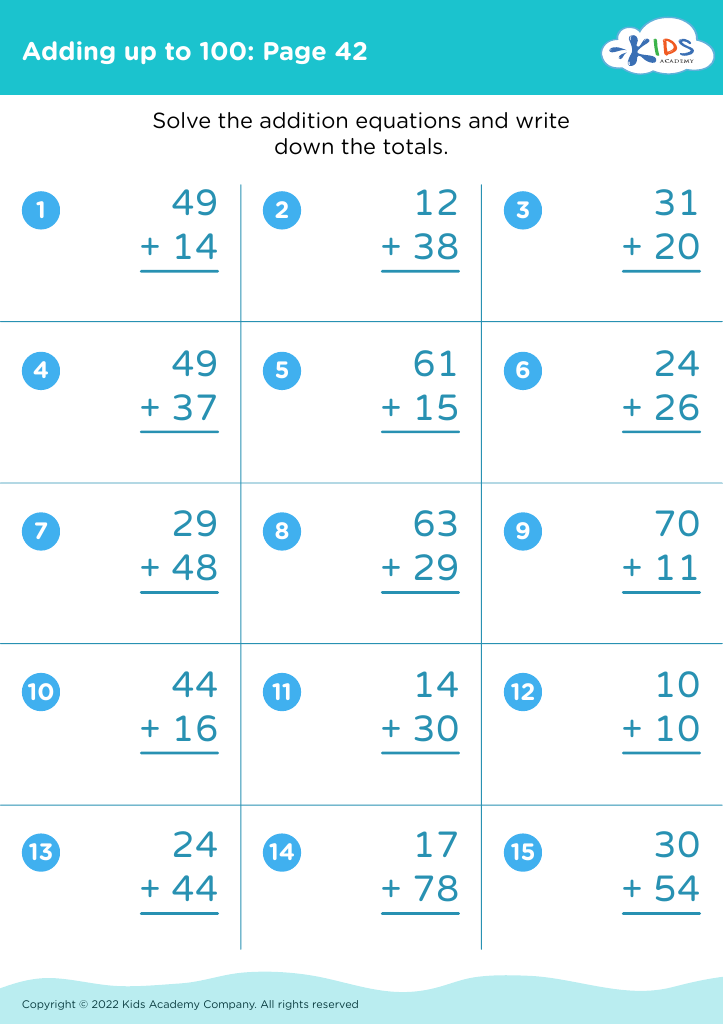
Adding up to 100: Page 42

Adding up to 100: Page 42

Adding up to 100: Page 42
Worksheet
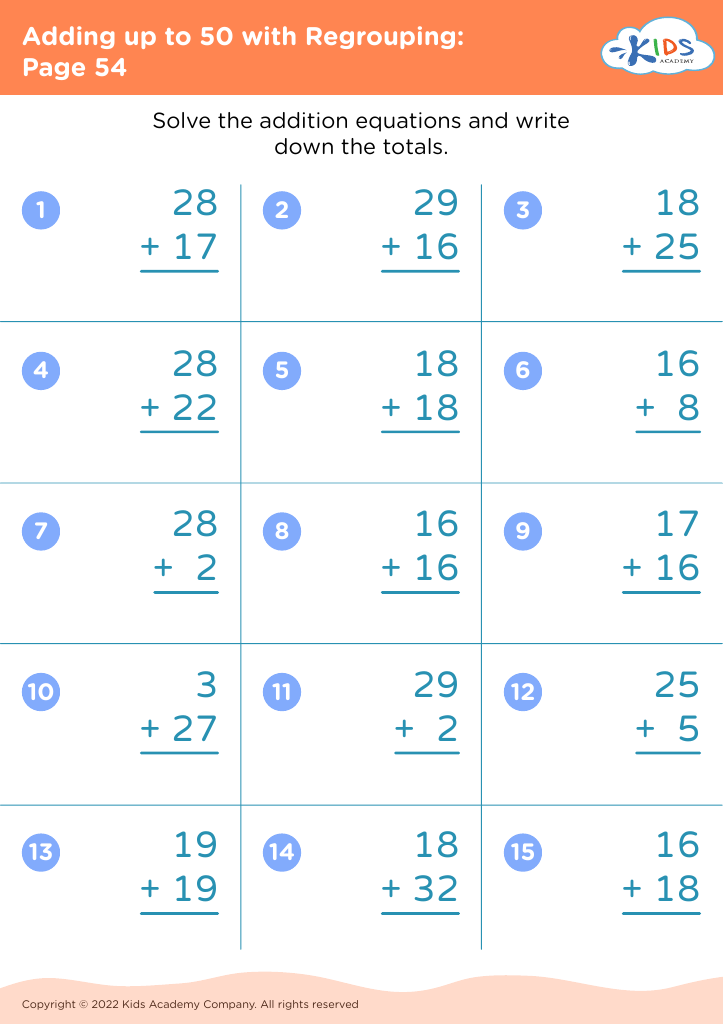
Adding up to 50 with Regrouping: Page 54
Worksheet
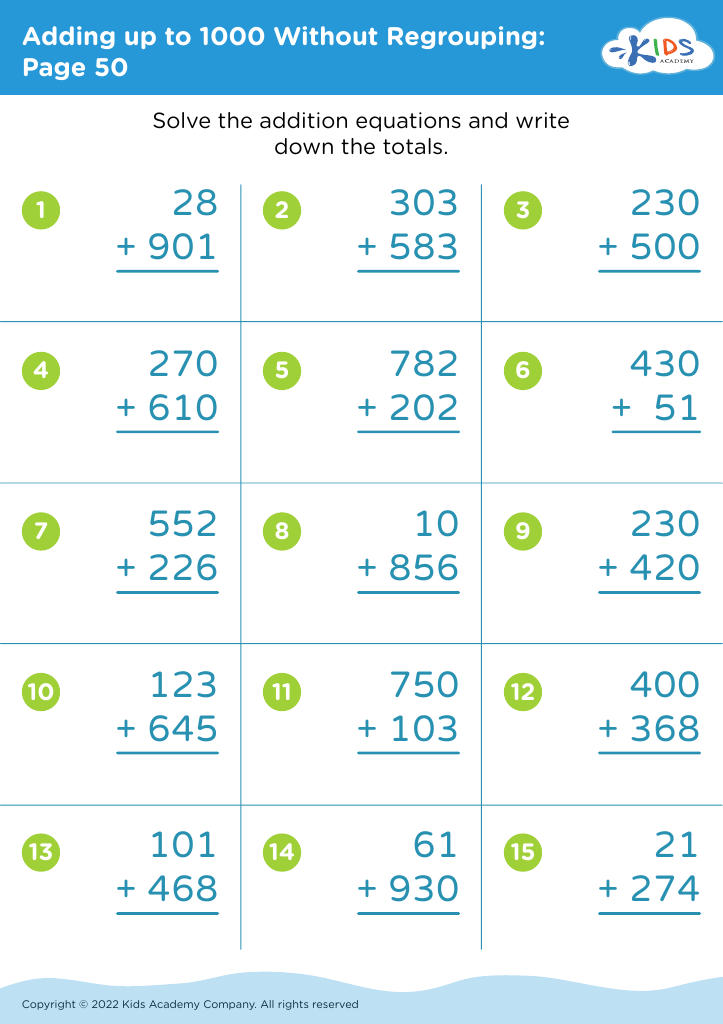
Adding up to 1000 Without Regrouping: Page 50
Worksheet
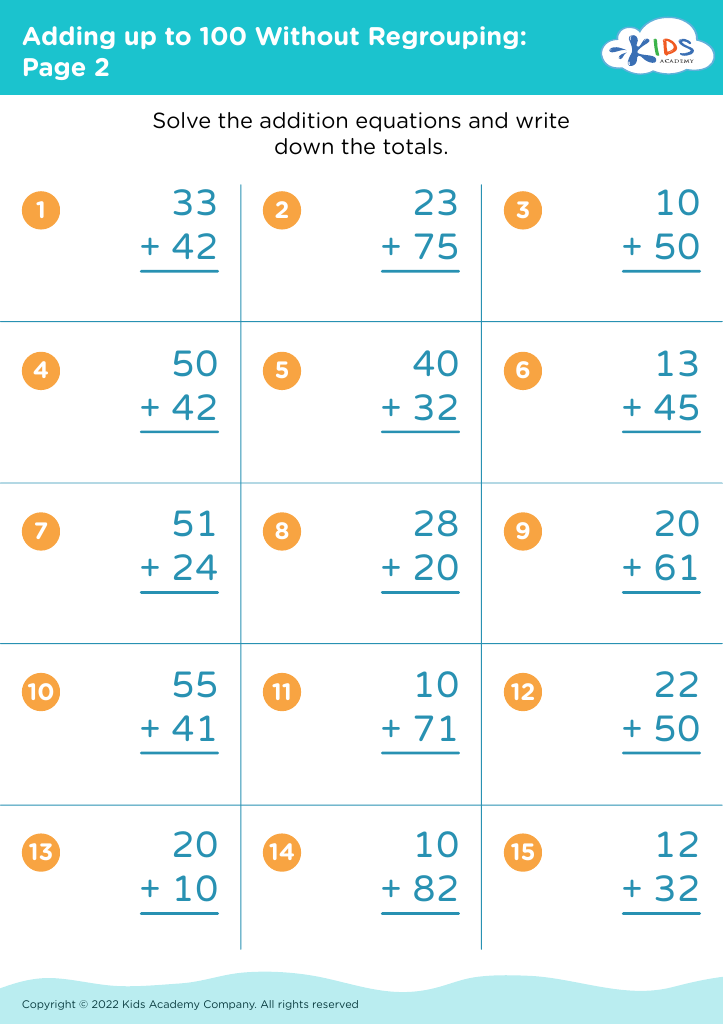
Adding up to 100 Without Regrouping: Page 2
Worksheet
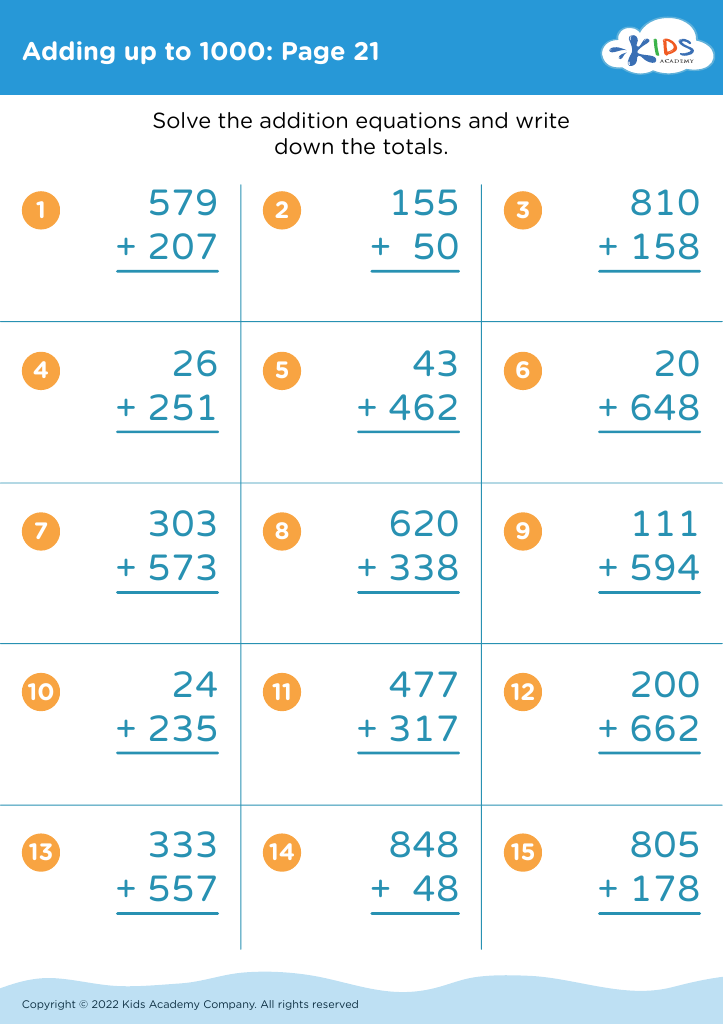
Adding up to 1000: Page 21

Adding up to 1000: Page 21

Adding up to 1000: Page 21
Worksheet
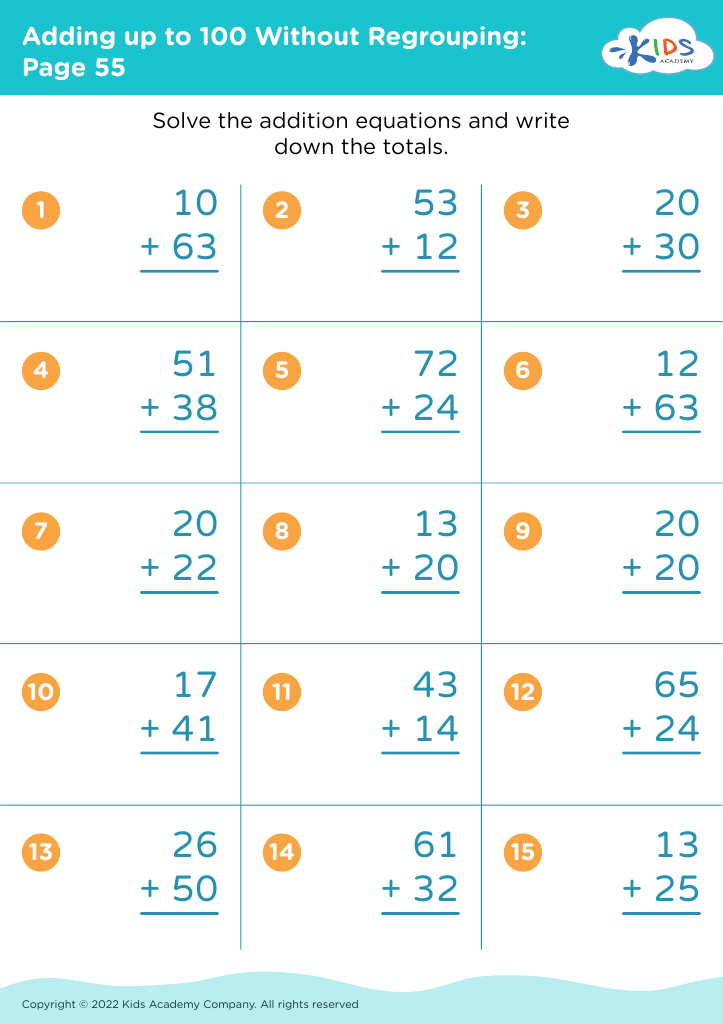
Adding up to 100 Without Regrouping: Page 55
Worksheet
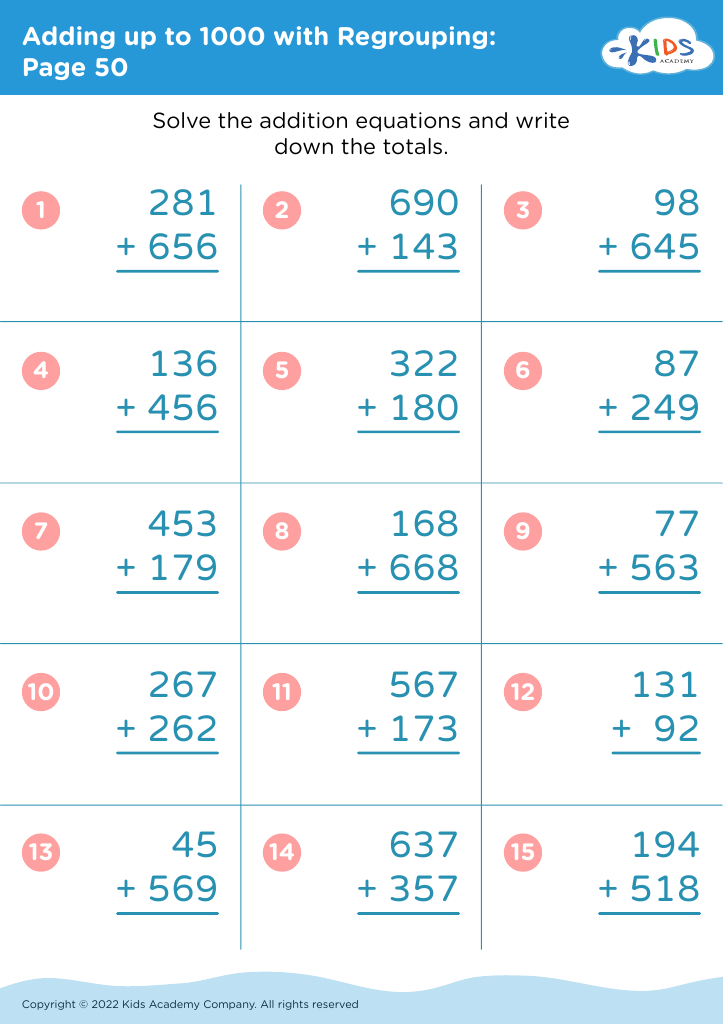
Adding up to 1000 with Regrouping: Page 50
Worksheet
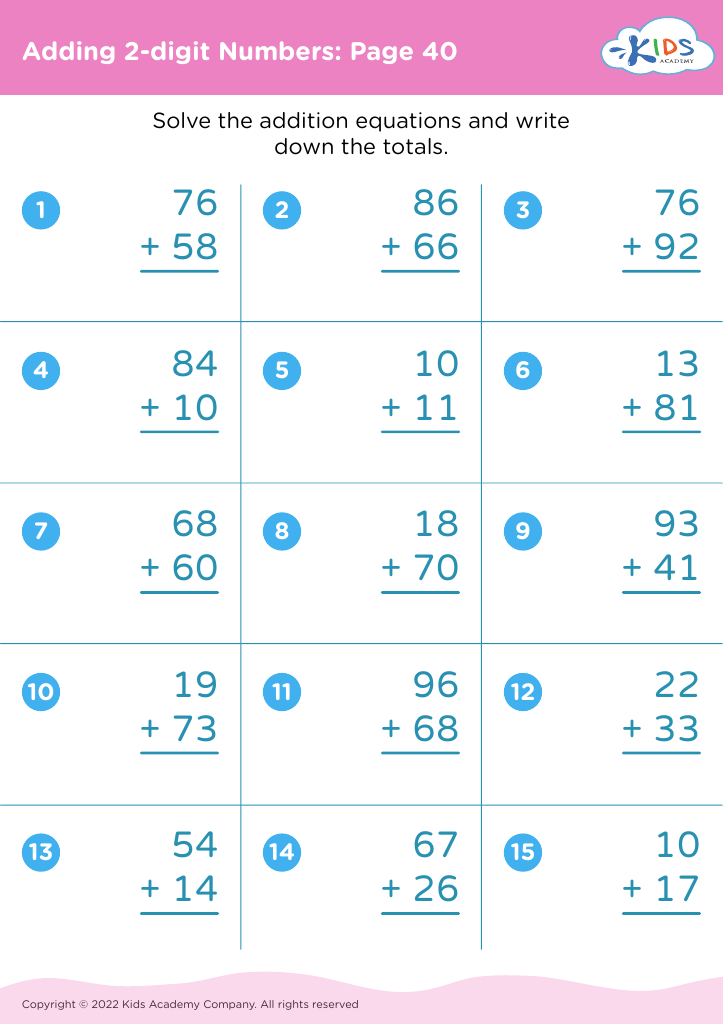
Adding 2-digit Numbers: Page 40

Adding 2-digit Numbers: Page 40

Adding 2-digit Numbers: Page 40
Worksheet
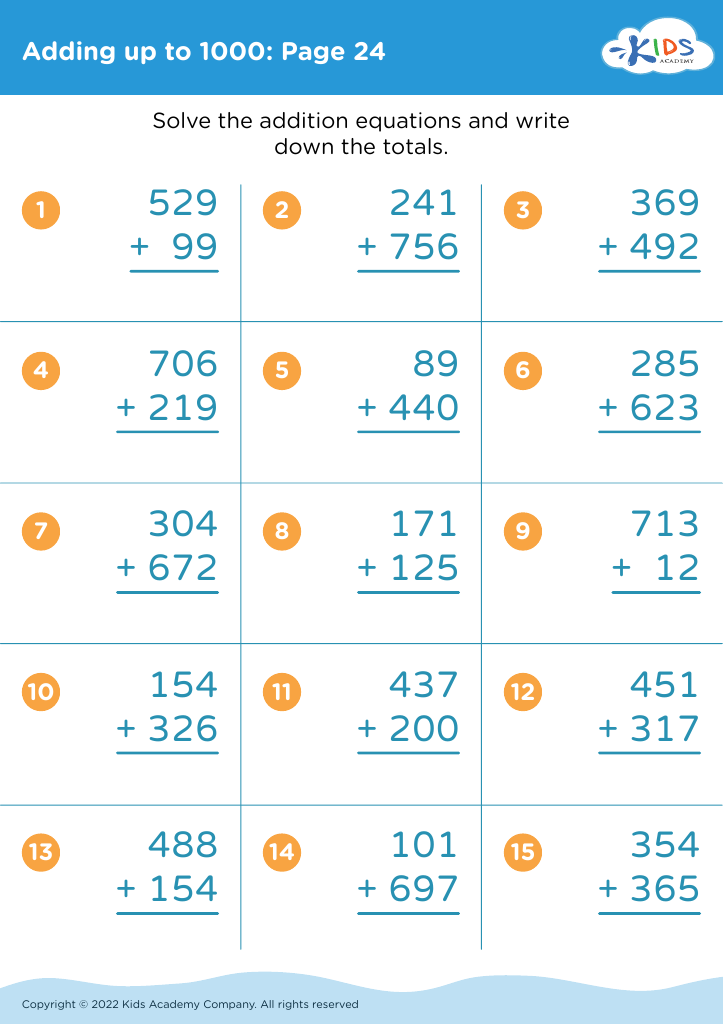
Adding up to 1000: Page 24

Adding up to 1000: Page 24

Adding up to 1000: Page 24
Worksheet
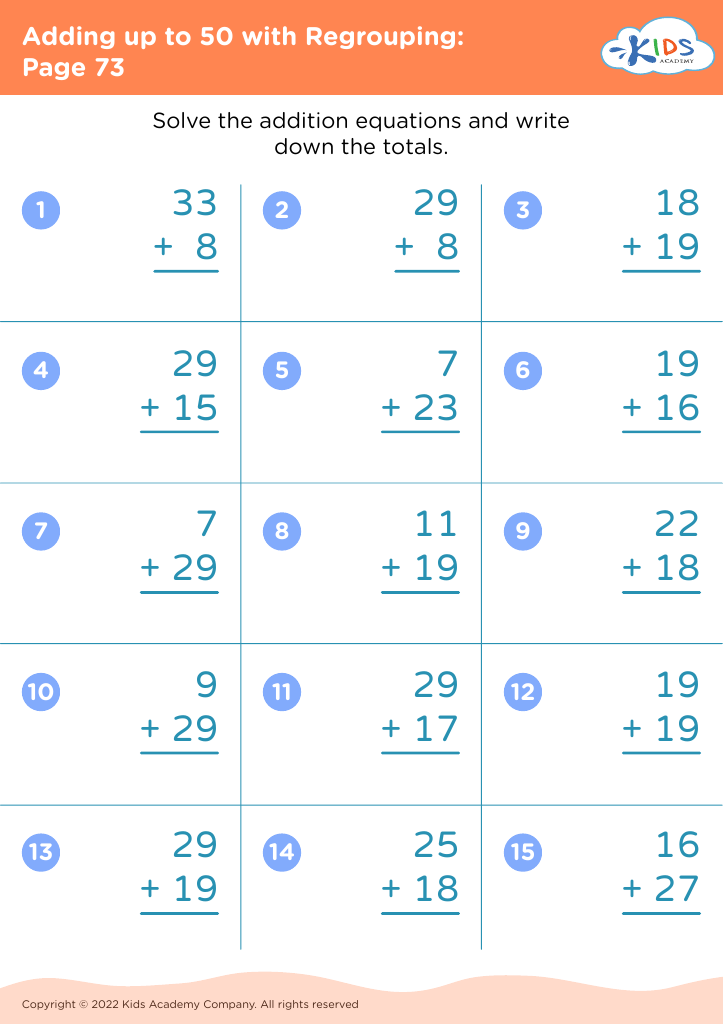
Adding up to 50 with Regrouping: Page 73
Worksheet
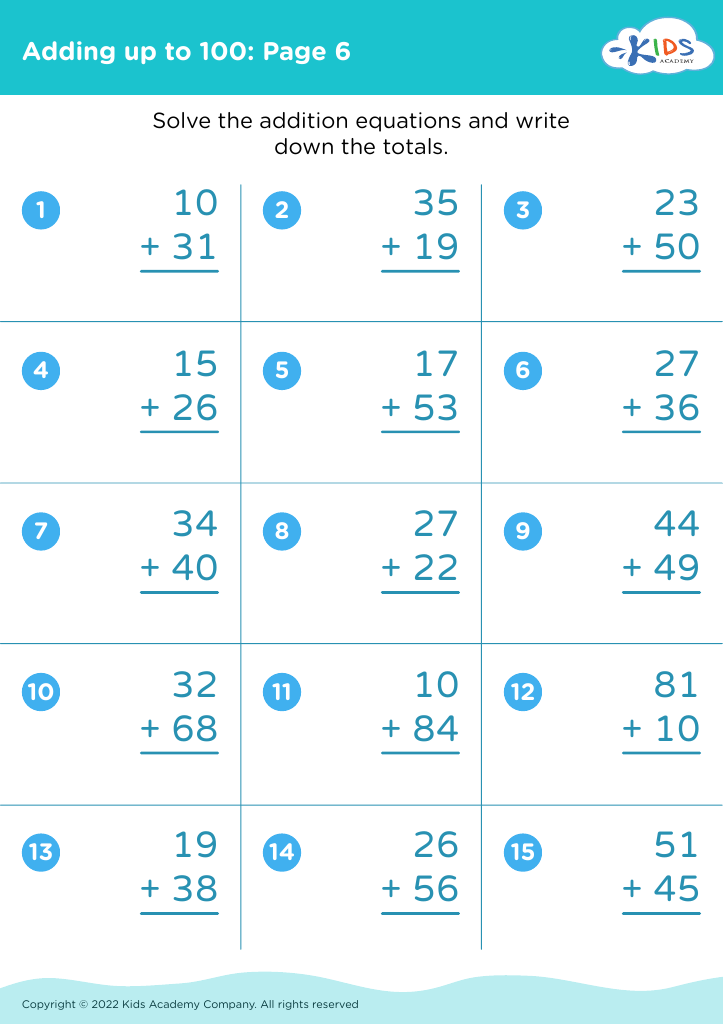
Adding up to 100: Page 6

Adding up to 100: Page 6

Adding up to 100: Page 6
Worksheet
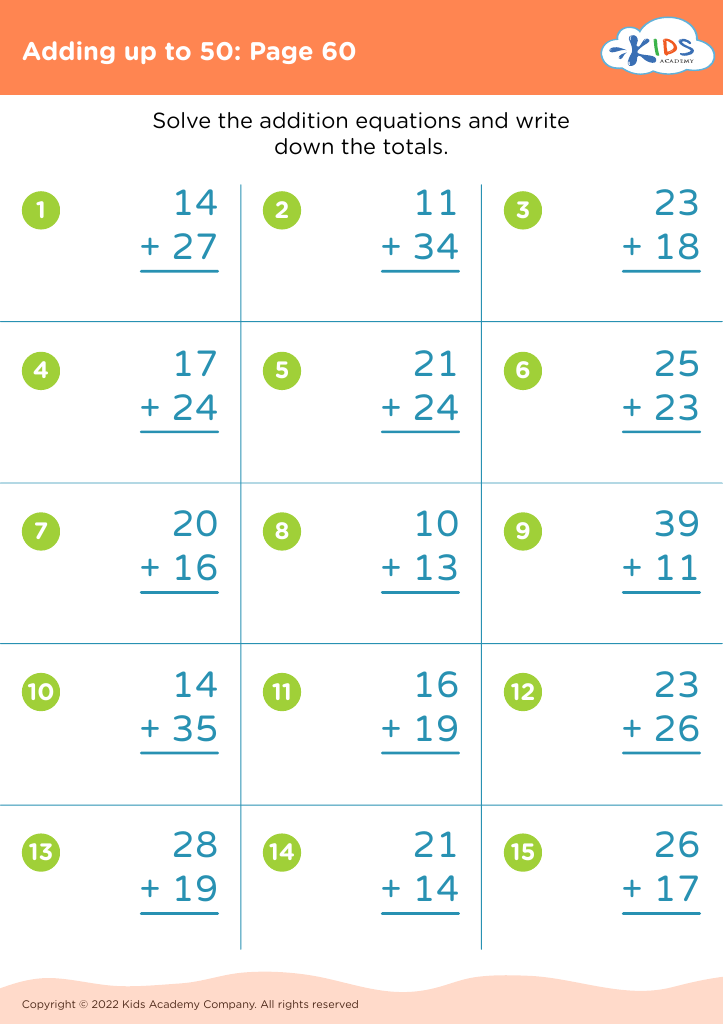
Adding up to 50: Page 60

Adding up to 50: Page 60

Adding up to 50: Page 60
Worksheet
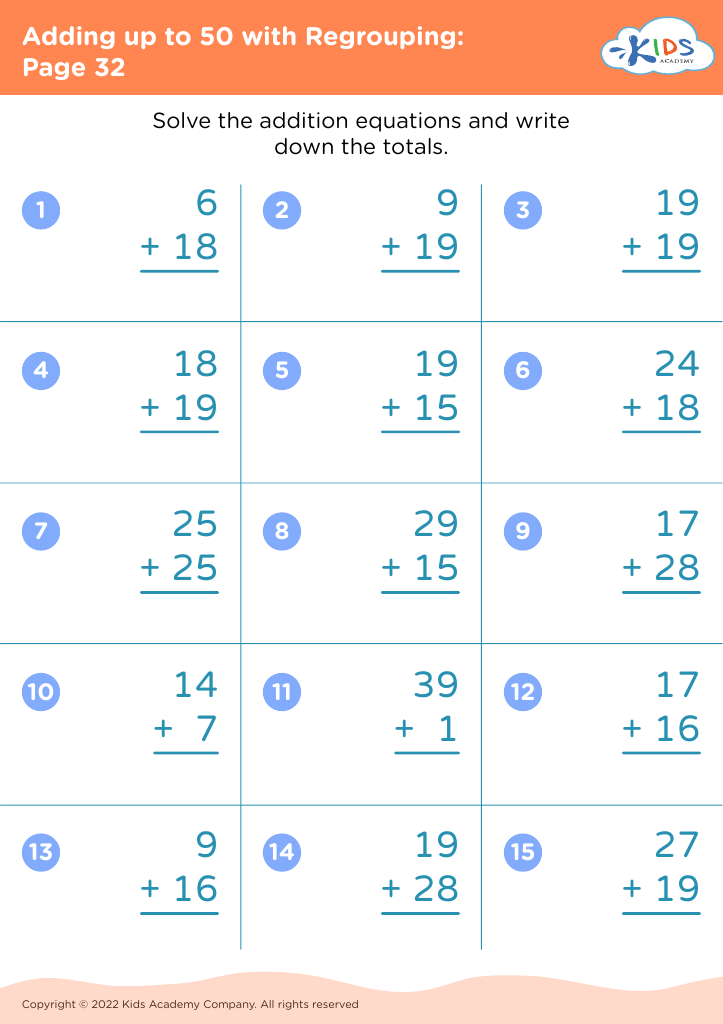
Adding up to 50 with Regrouping: Page 32
Worksheet


Parents and teachers should prioritize fine motor skills development during ages 7-9, especially in relation to addition and subtraction. At this stage, children are refining the dexterity needed to manipulate tools, such as pencils, scissors, and manipulatives, which are integral for accurate and confident math calculations. These skills not only impact a child’s ability to write clearly and neatly but also affect their capacity to engage in structured math tasks effectively.

Fine motor skills are crucial for supporting cognitive development. Mastery in tasks like adding and subtracting using manipulatives enhances understanding of mathematical concepts, allowing children to physically see and manipulate numbers. This tactile approach deepens their comprehension of math operations, transforming abstract concepts into concrete experiences.

Moreover, proficient fine motor skills contribute to a child’s overall academic performance and self-esteem. As they gain confidence in executing math tasks, they are more likely to participate actively in class, tackle challenges, and develop a positive attitude towards learning. Furthermore, strong fine motor skills correlate with social skills, enabling better collaboration during group activities. Ultimately, supporting fine motor development in relation to math sets the foundation for lifelong learning and success across various disciplines.