
Reinforce math concepts Addition & Subtraction Worksheets for Ages 7-9
3 filtered results
Difficulty Level
Grade
Age
-
From - To
Subject
Activity
Standards
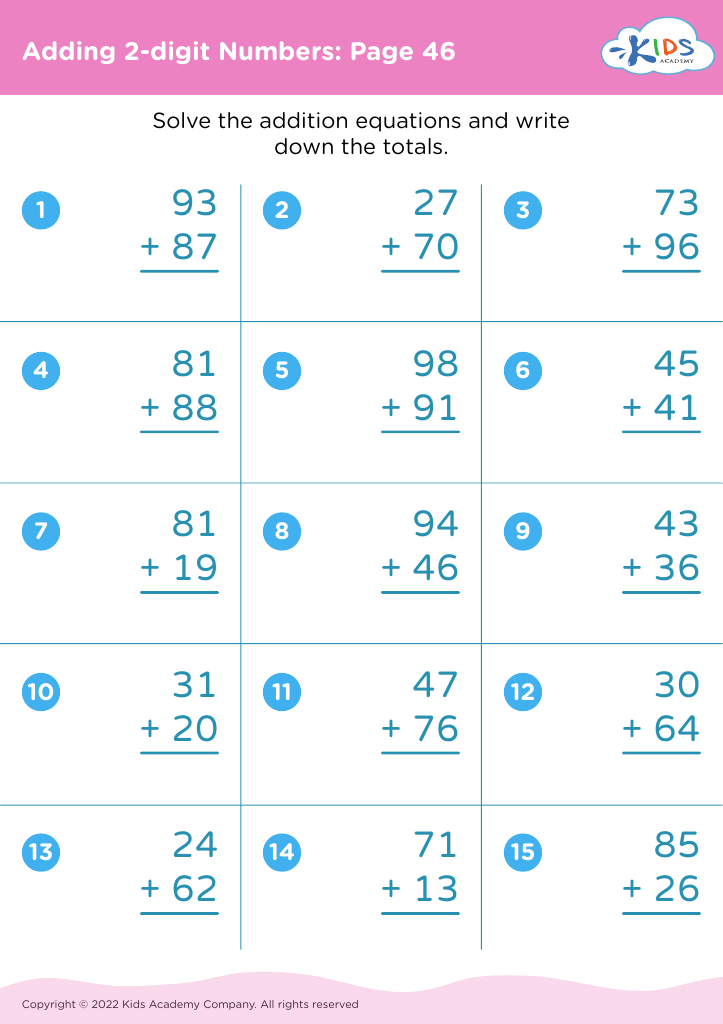
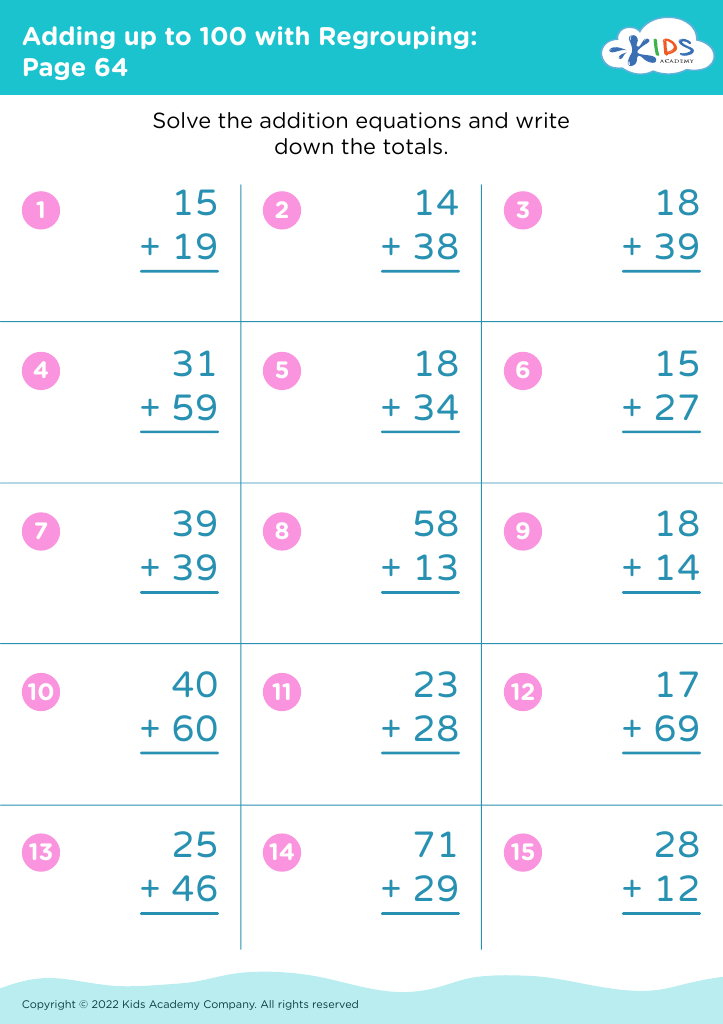
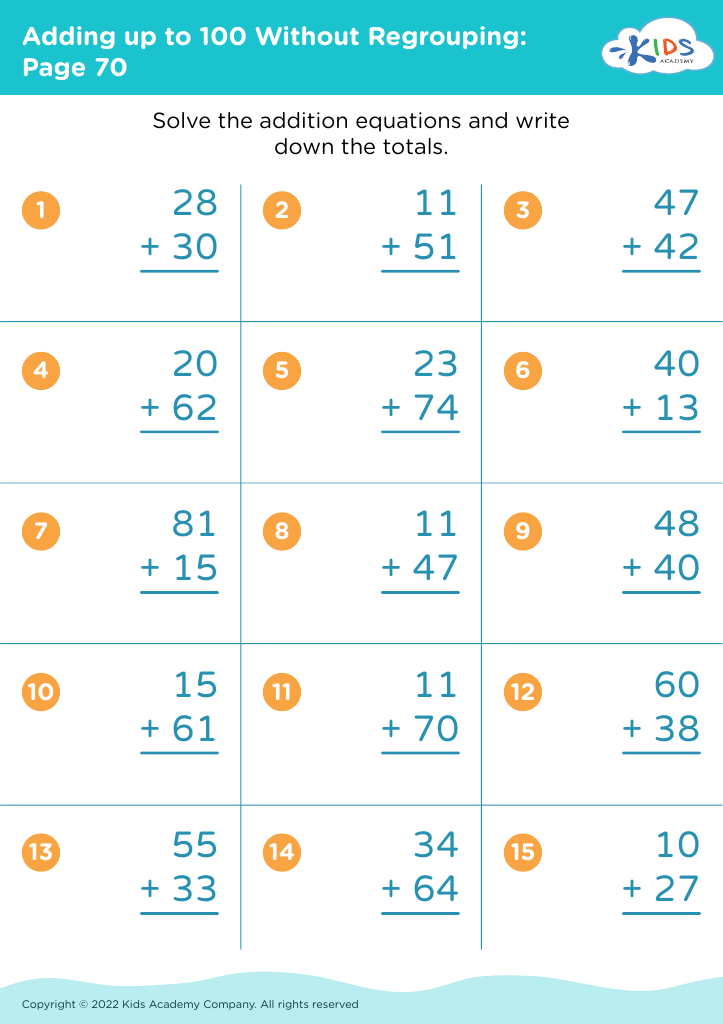
Enhance your child's math skills with our engaging Addition and Subtraction Worksheets designed specifically for ages 7-9. These worksheets offer a variety of exercises aimed at reinforcing fundamental math concepts, ensuring a solid understanding of addition and subtraction. Each activity supports children in practicing their skills through fun and interactive tasks that promote critical thinking and problem-solving. Perfect for home or classroom use, these worksheets cater to diverse learning styles, making math enjoyable and approachable. Help your young learners build confidence in their math abilities while they master essential skills required for their academic success! Explore our collection today!
Favorites
With answer key
Interactive
Join Kids Academy for Free
Who is primarily going to use this learning content?








Parental and teacher involvement in reinforcing math concepts such as addition and subtraction for children aged 7-9 is essential for several reasons. At this developmental stage, children are building foundational skills that will support their future learning in mathematics. Mastery of these basic operations is crucial as they serve as building blocks for more complex concepts, such as multiplication, division, and problem-solving.
Additionally, engaging parents and teachers in reinforcing these skills creates a supportive learning environment. When children see the same concepts being validated at home and in school, they are more likely to understand and retain the information. This reinforcement helps boost confidence in their abilities, reducing math anxiety and fostering a positive attitude towards learning.
Moreover, children in this age group are also developing critical thinking and reasoning skills. By employing various strategies—such as manipulatives, games, and real-world applications—parents and teachers can make math engaging and relatable, nurturing a love for the subject.
Lastly, regularly practicing addition and subtraction can help identify any learning gaps early on, allowing for timely interventions that can significantly improve a child's academic trajectory. In essence, reinforcing these critical concepts lays the groundwork for lifelong mathematical proficiency.








