Check out this FREE Trial Lesson on Addition & Subtraction for age 7-9!

Match Objects that Fit Together

Favorites
With answer key
Interactive
  • 7-9
  • Understanding fractions
  • Addition & Subtraction
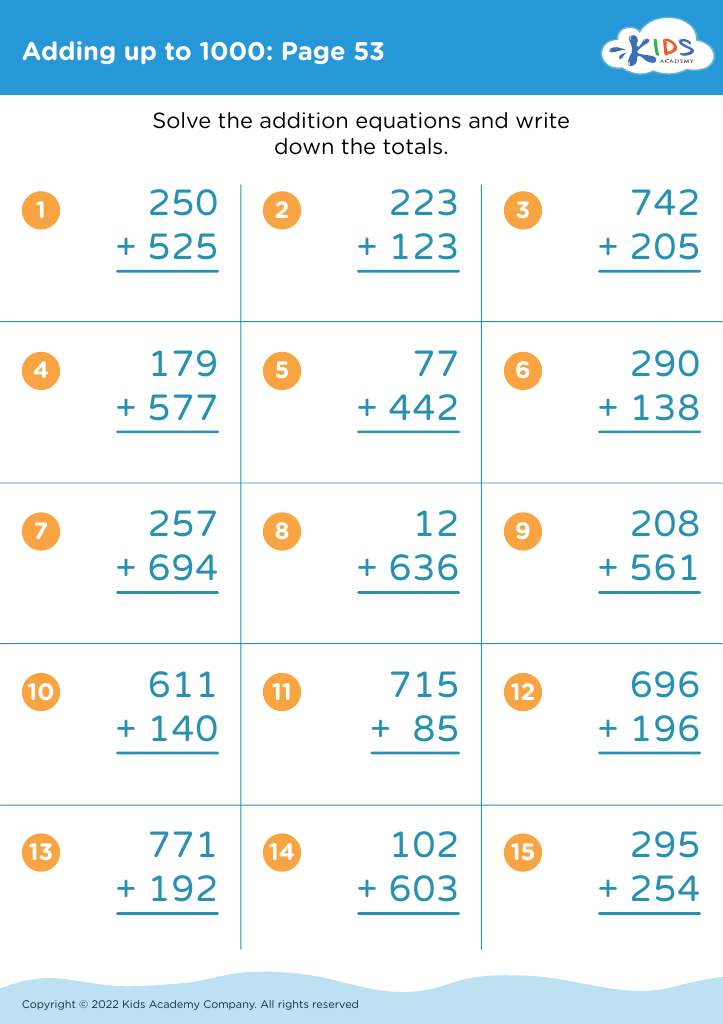
Adding up to 1000: Page 53

Adding up to 1000: Page 53

Adding up to 1000: Page 53
Worksheet
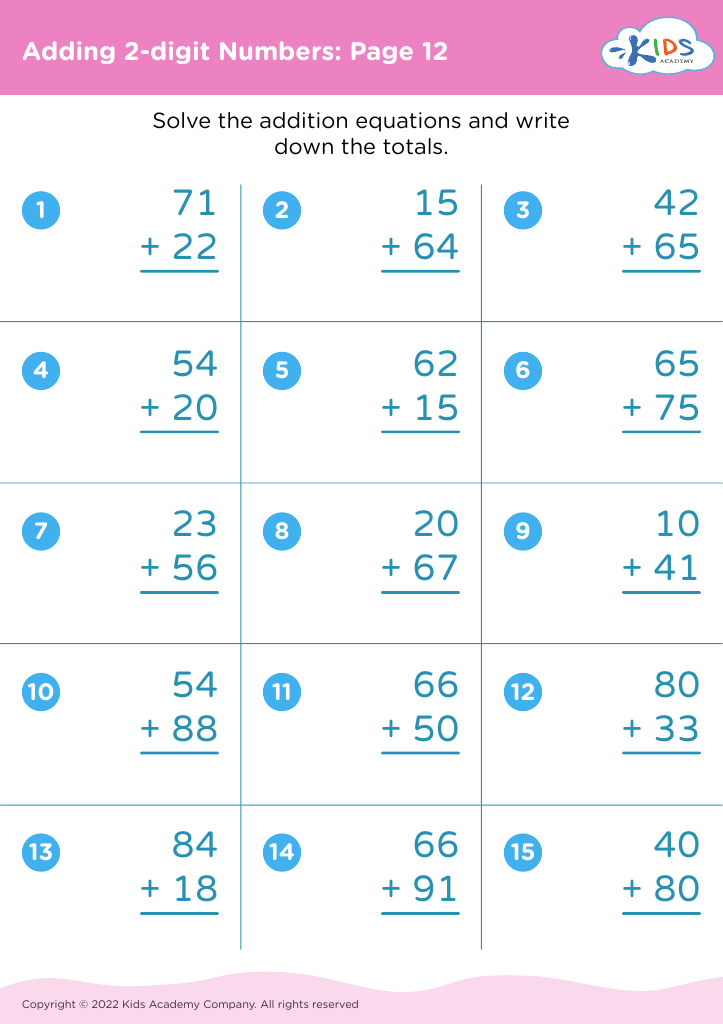
Adding 2-digit Numbers: Page 12

Adding 2-digit Numbers: Page 12

Adding 2-digit Numbers: Page 12
Worksheet
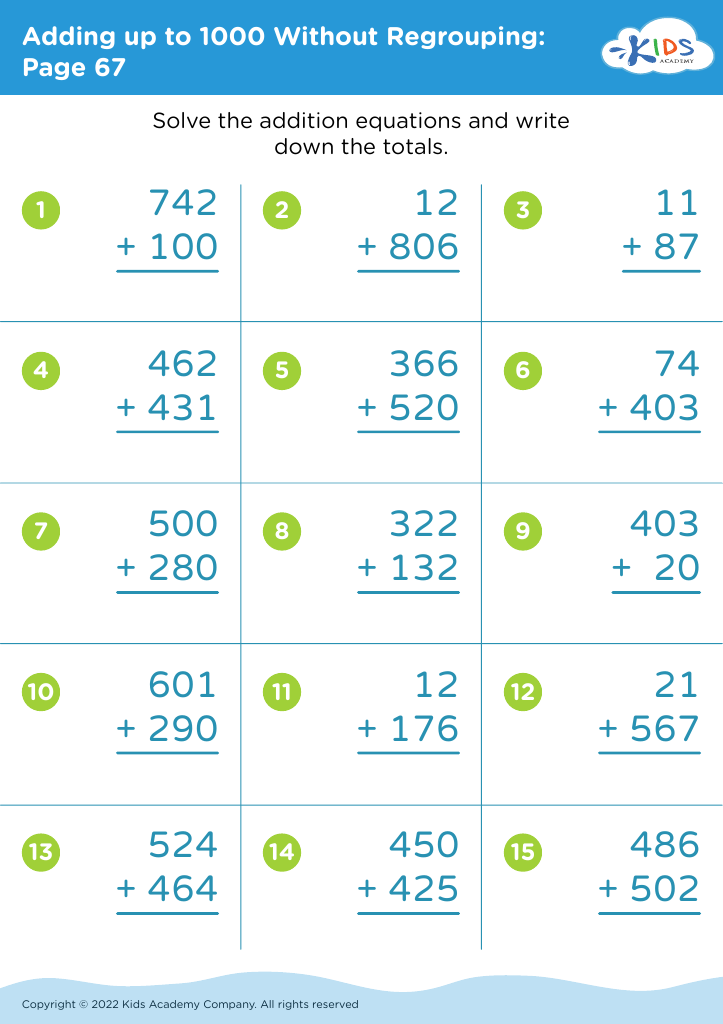
Adding up to 1000 Without Regrouping: Page 67
Worksheet
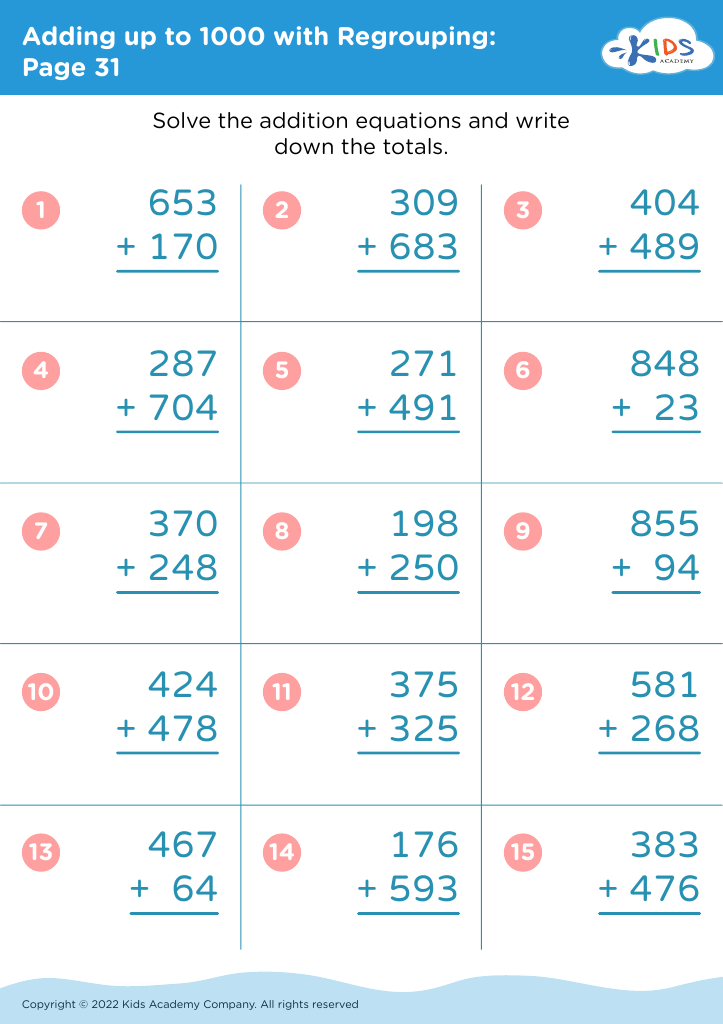
Adding up to 1000 with Regrouping: Page 31
Worksheet
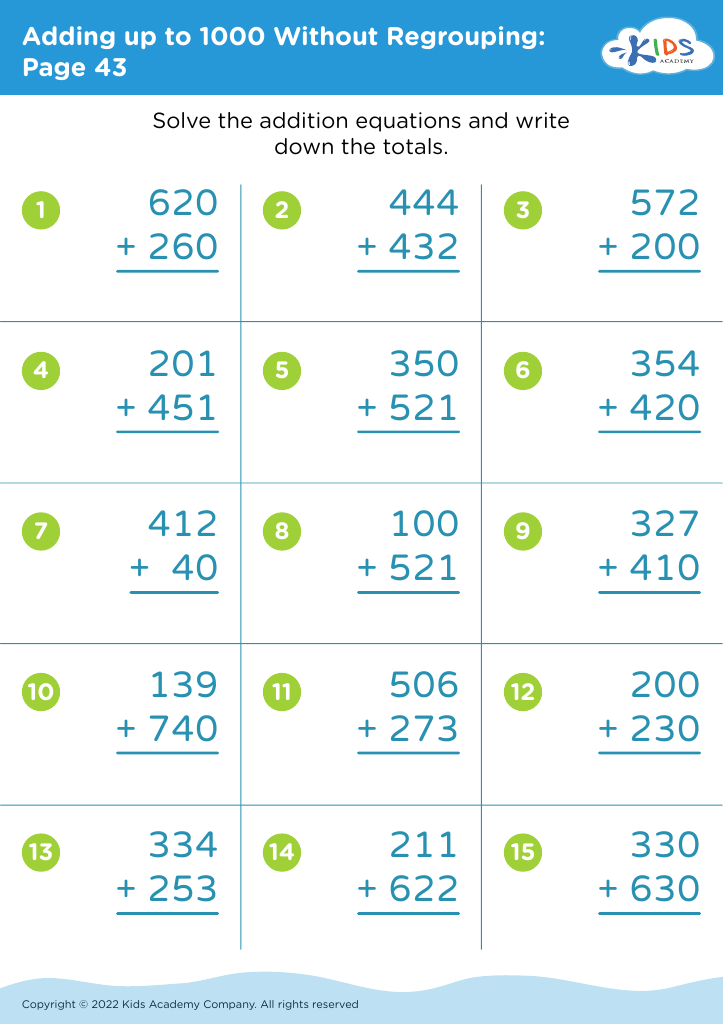
Adding up to 1000 Without Regrouping: Page 43
Worksheet
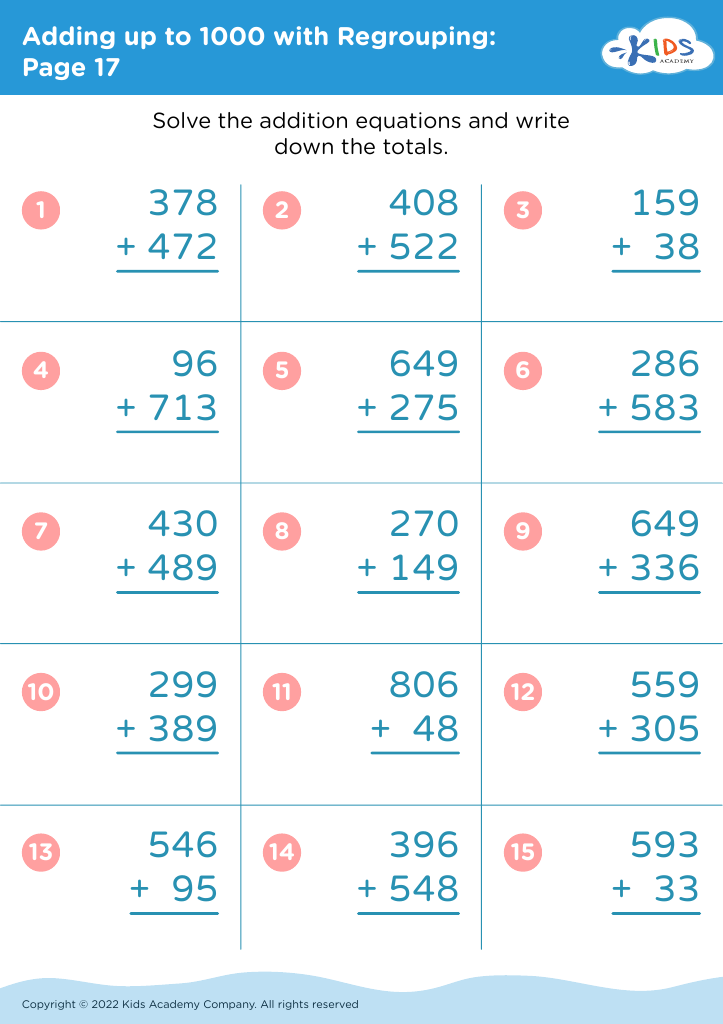
Adding up to 1000 with Regrouping: Page 17
Worksheet
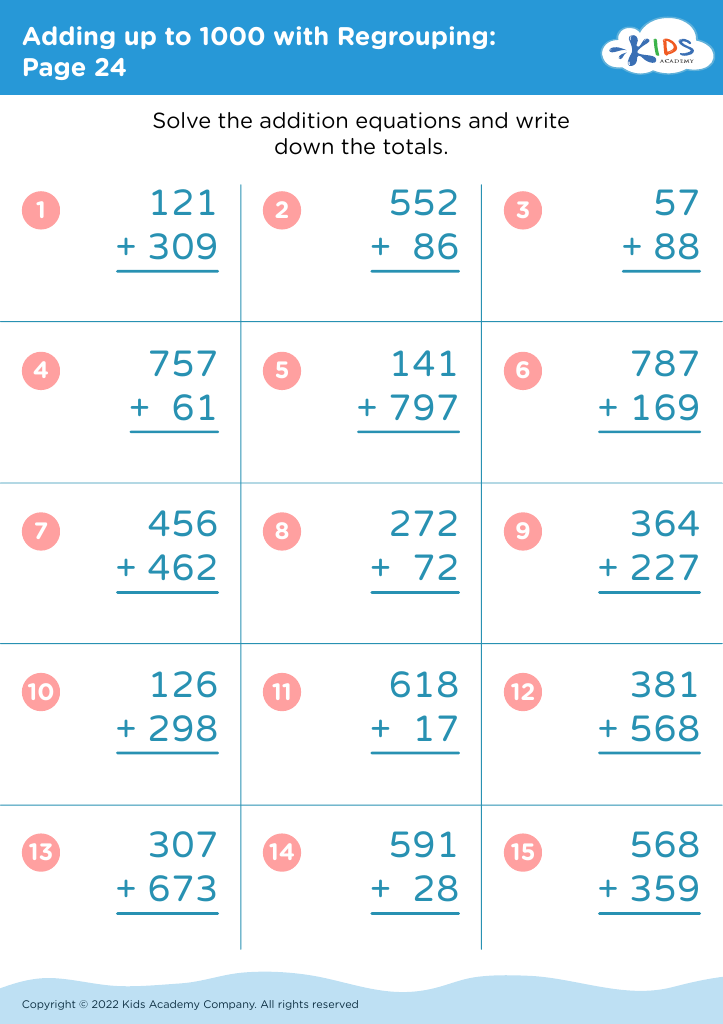
Adding up to 1000 with Regrouping: Page 24
Worksheet
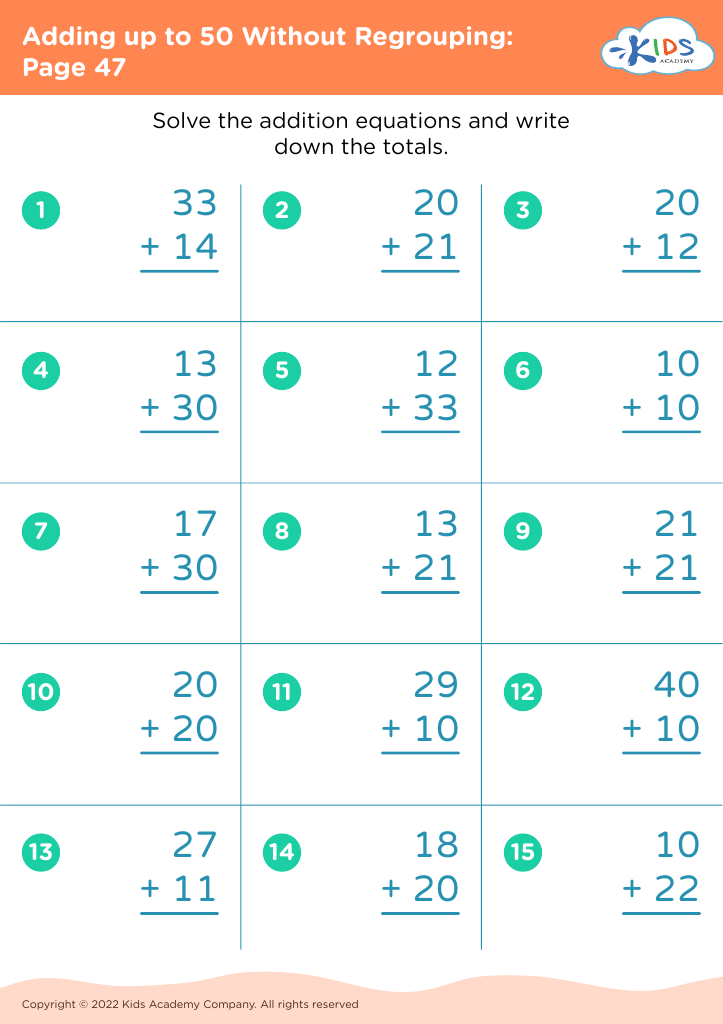
Adding up to 50 Without Regrouping: Page 47
Worksheet
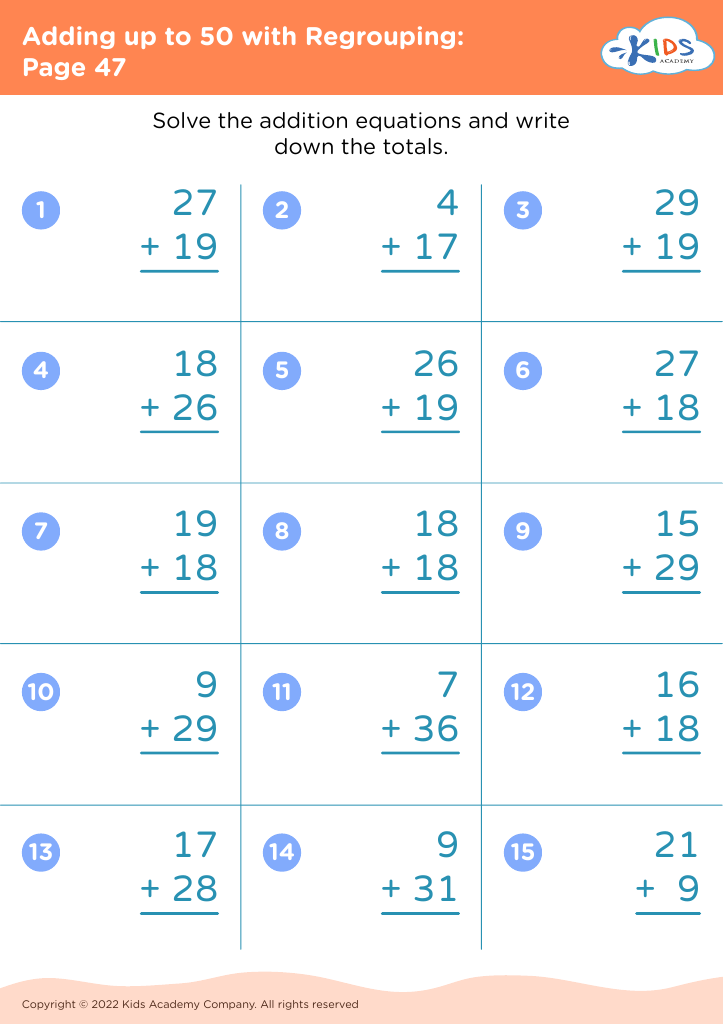
Adding up to 50 with Regrouping: Page 47
Worksheet
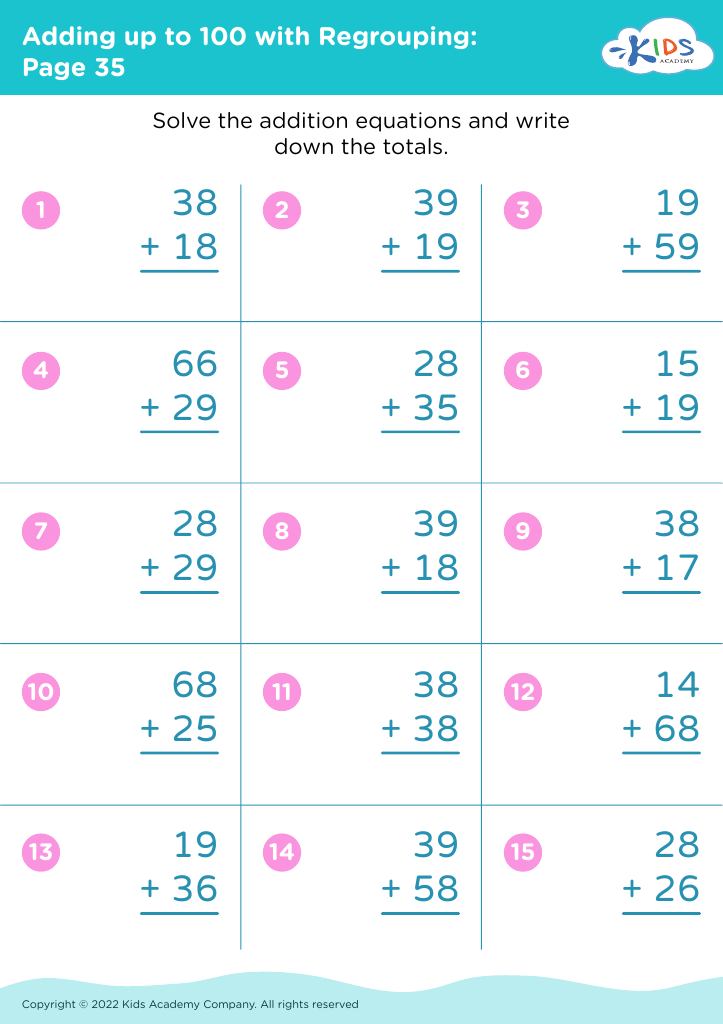
Adding up to 100 with Regrouping: Page 35
Worksheet
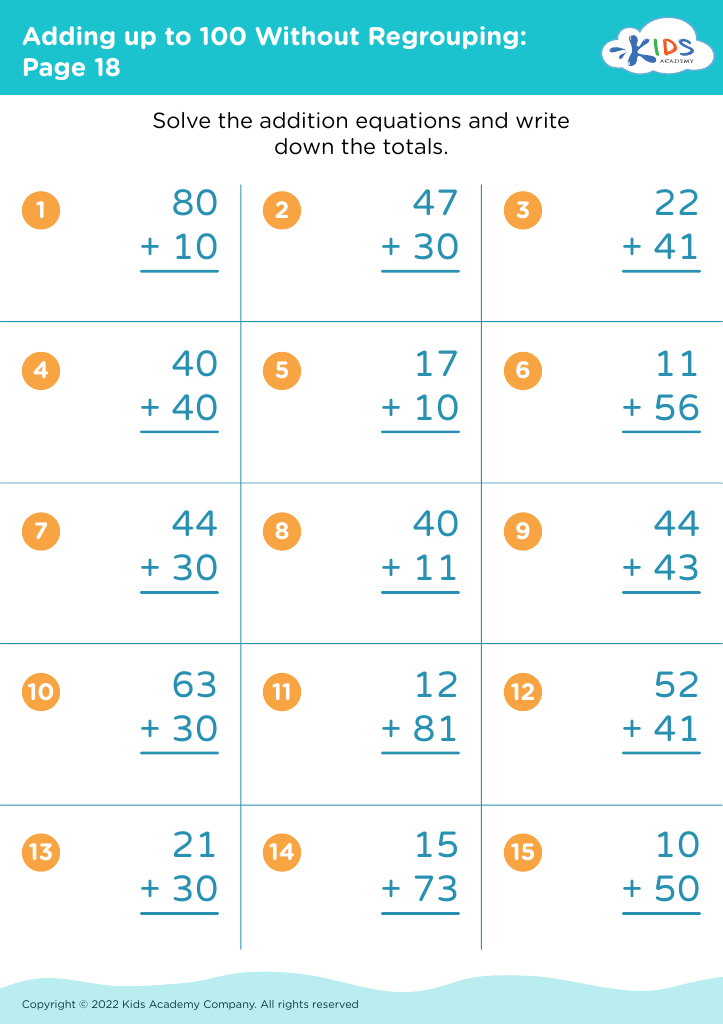
Adding up to 100 Without Regrouping: Page 18
Worksheet
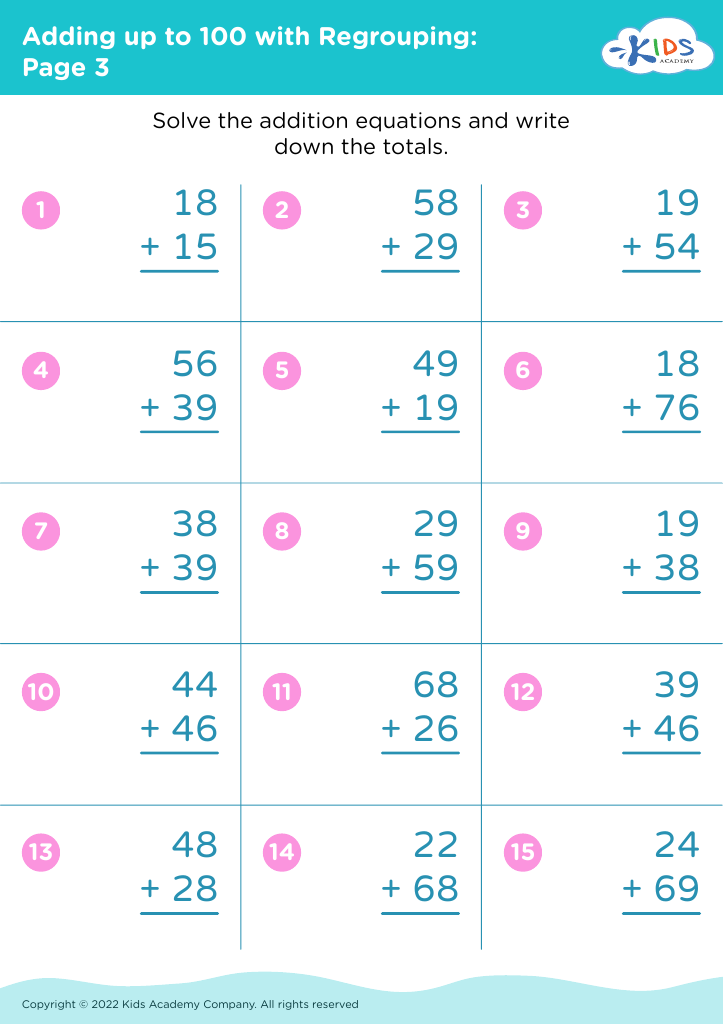
Adding up to 100 with Regrouping: Page 3
Worksheet
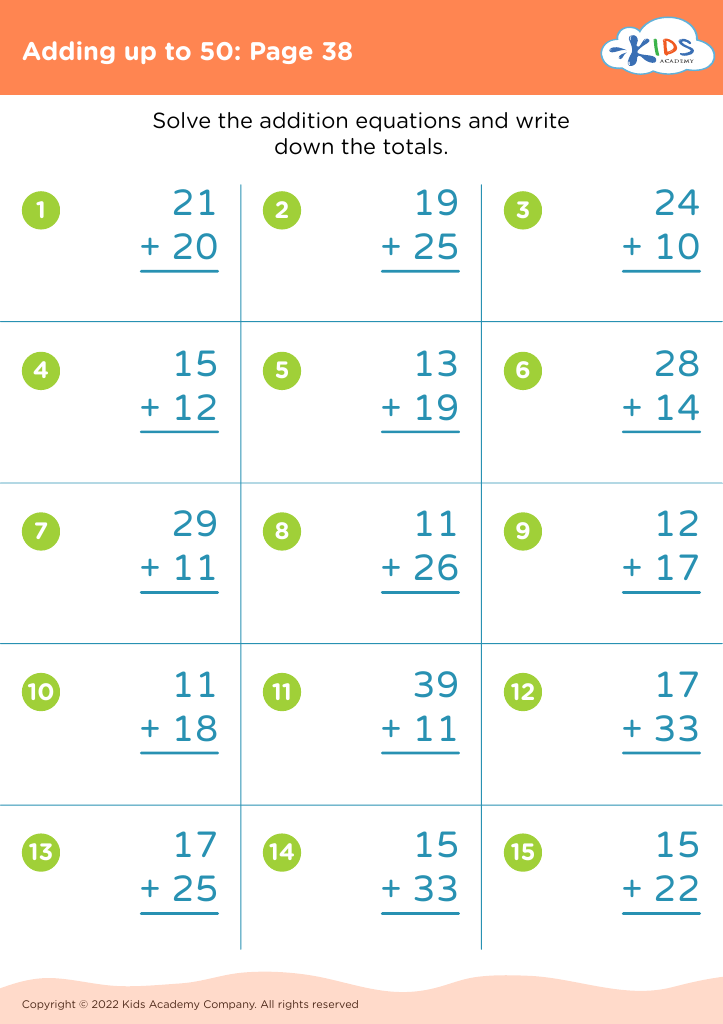
Adding up to 50: Page 38

Adding up to 50: Page 38

Adding up to 50: Page 38
Worksheet
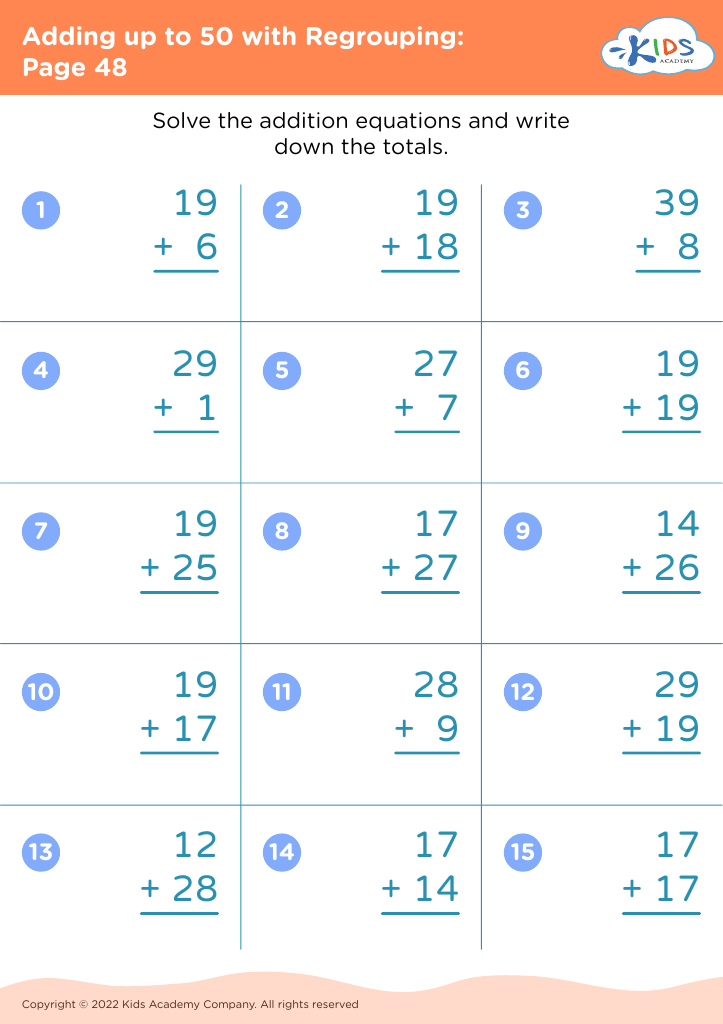
Adding up to 50 with Regrouping: Page 48
Worksheet
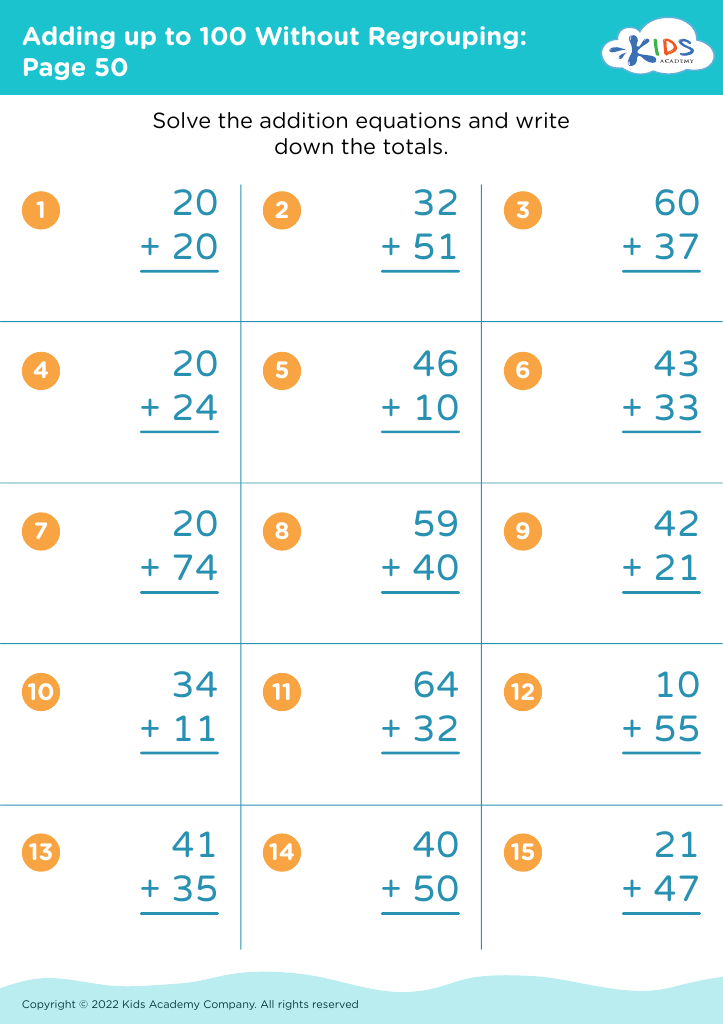
Adding up to 100 Without Regrouping: Page 50
Worksheet
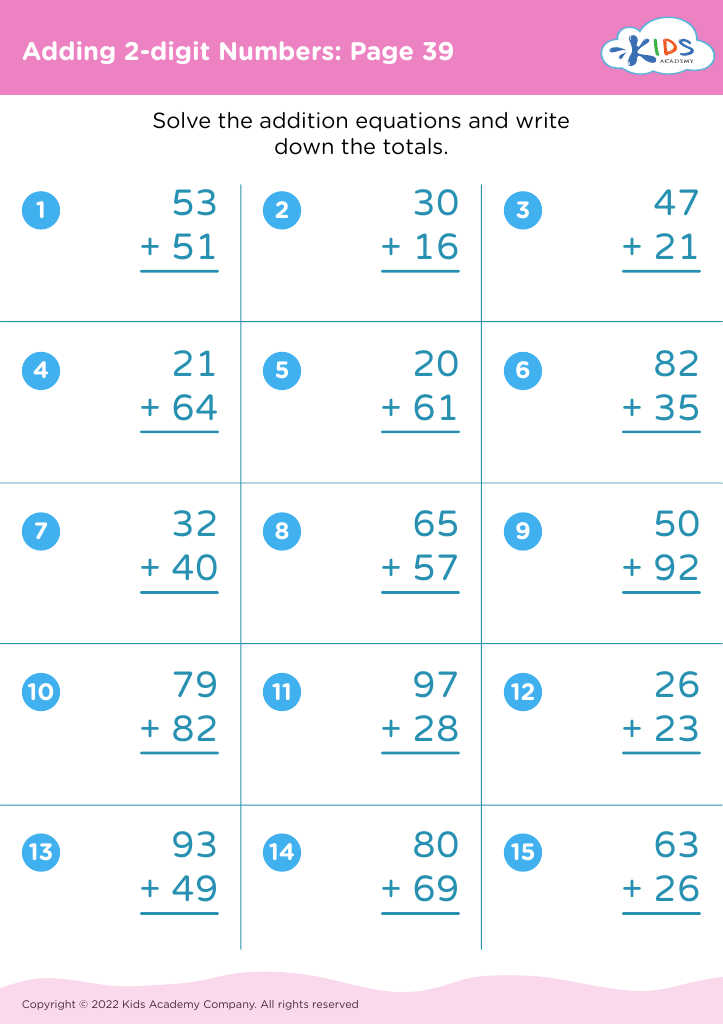
Adding 2-digit Numbers: Page 39

Adding 2-digit Numbers: Page 39

Adding 2-digit Numbers: Page 39
Worksheet
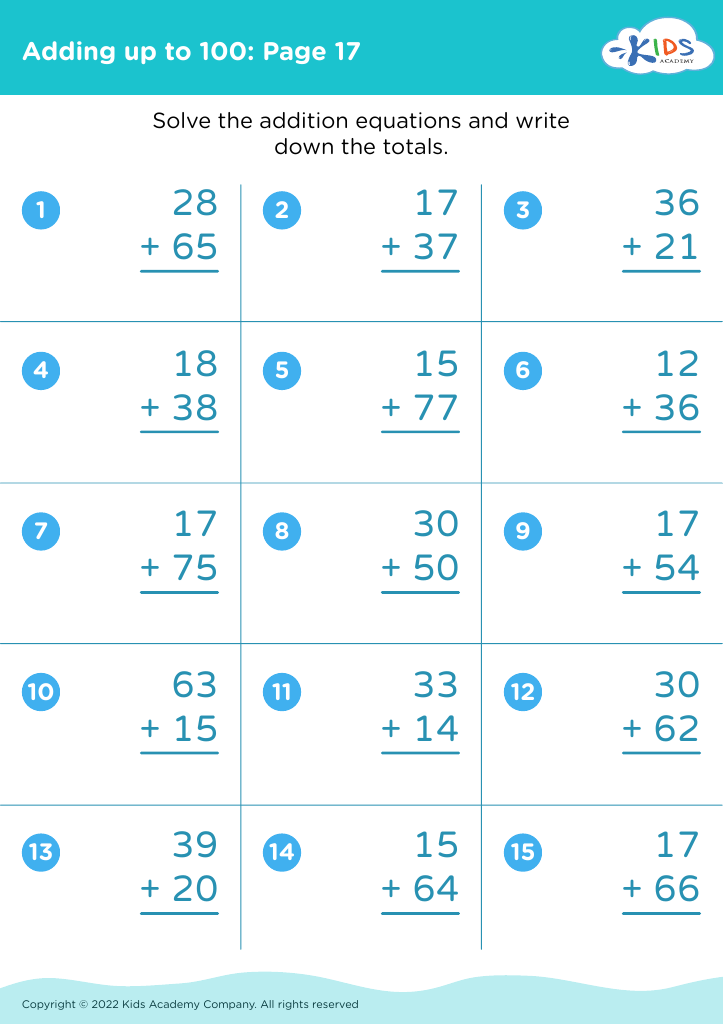
Adding up to 100: Page 17

Adding up to 100: Page 17

Adding up to 100: Page 17
Worksheet
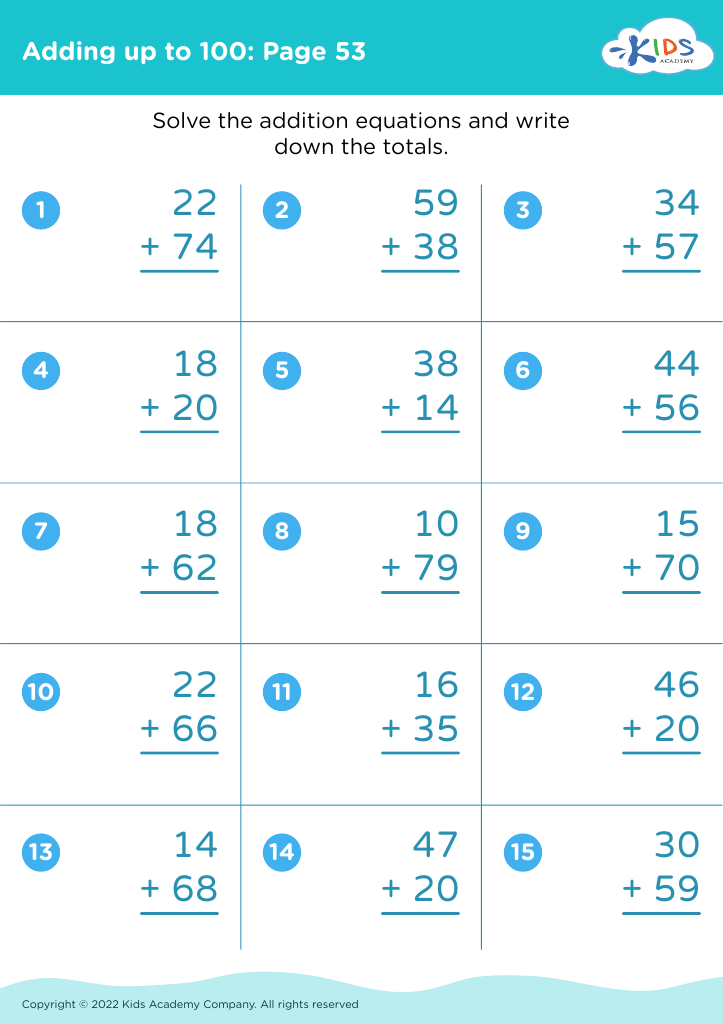
Adding up to 100: Page 53

Adding up to 100: Page 53

Adding up to 100: Page 53
Worksheet
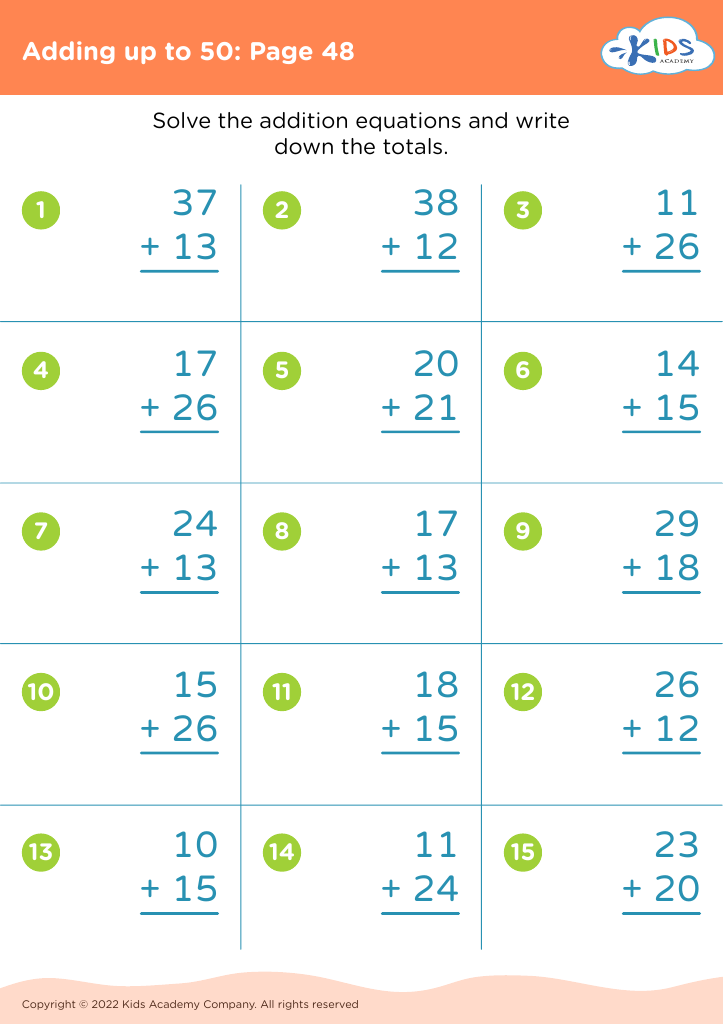
Adding up to 50: Page 48

Adding up to 50: Page 48

Adding up to 50: Page 48
Worksheet
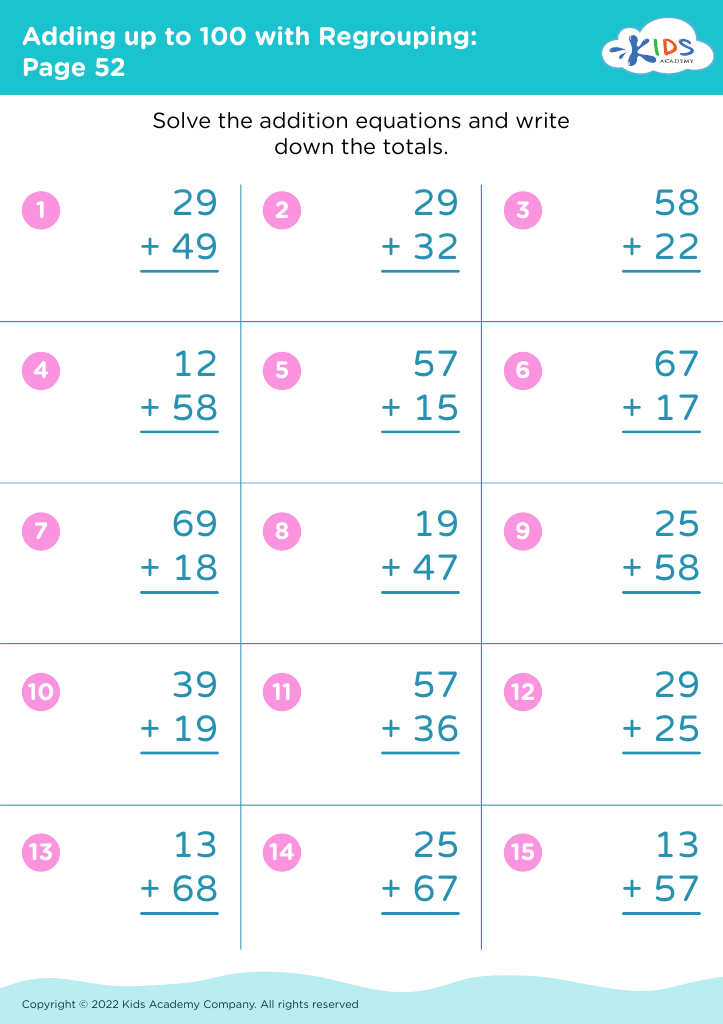
Adding up to 100 with Regrouping: Page 52
Worksheet
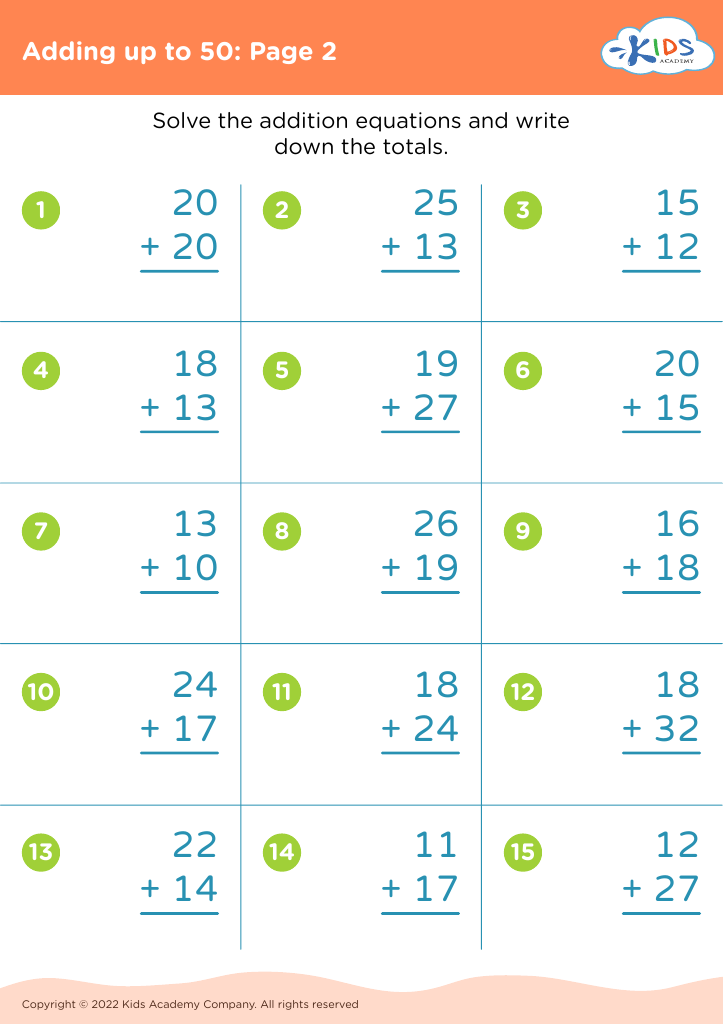
Adding up to 50: Page 2

Adding up to 50: Page 2

Adding up to 50: Page 2
Worksheet
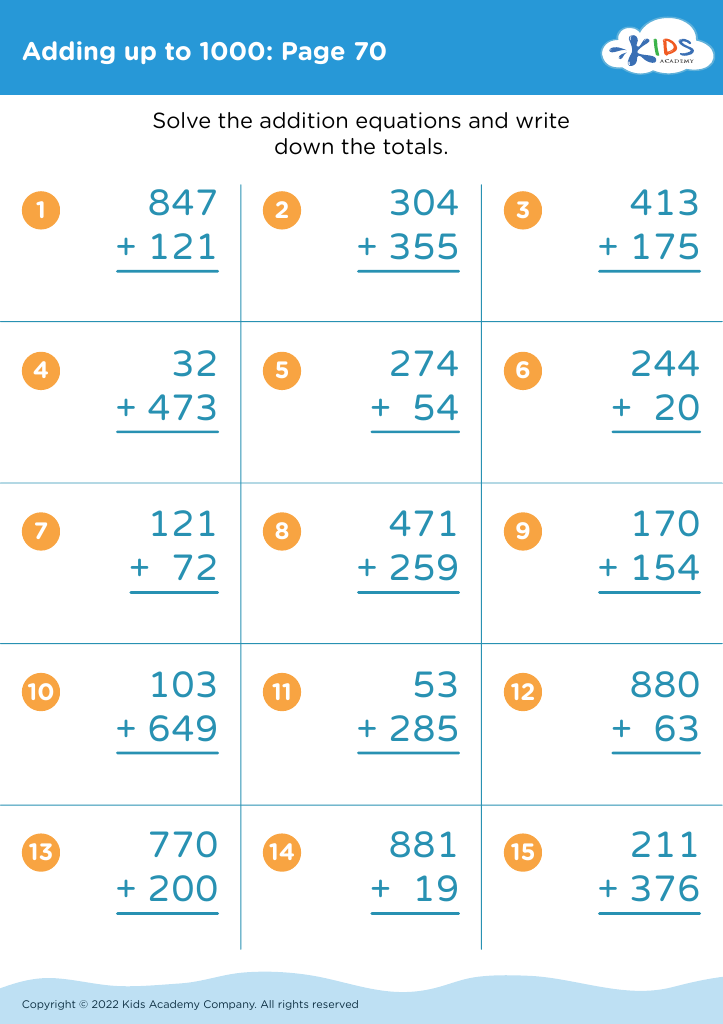
Adding up to 1000: Page 70

Adding up to 1000: Page 70

Adding up to 1000: Page 70
Worksheet
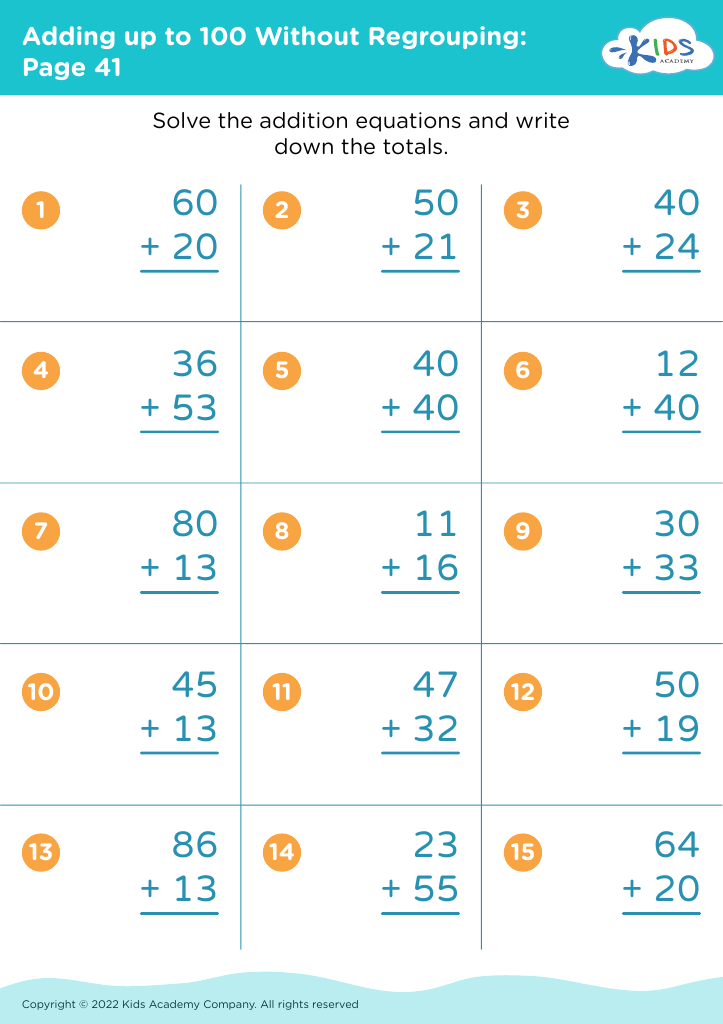
Adding up to 100 Without Regrouping: Page 41
Worksheet
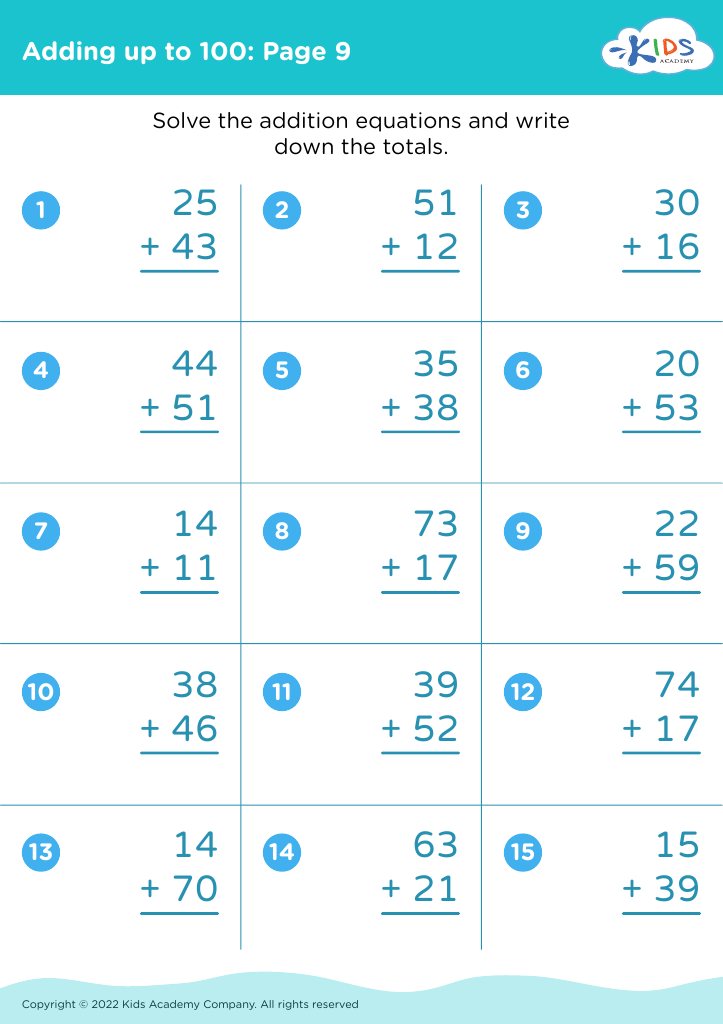
Adding up to 100: Page 9

Adding up to 100: Page 9

Adding up to 100: Page 9
Worksheet


Understanding fractions, addition, and subtraction is crucial for children ages 7-9 as it lays the foundation for future mathematical learning and real-world problem-solving skills. During these formative years, grasping these concepts helps to enhance a child's number sense, logical reasoning, and cognitive development.

Parents and teachers should care about teaching fractions because they represent a critical transition from whole numbers to more complex numerical concepts. Being adept at adding and subtracting fractions prepares children for advanced mathematics, including algebra and geometry, where fractions frequently appear. Given that many standardized tests assess these skills, early mastery can also contribute to academic success.

Furthermore, fraction addition and subtraction are practical skills applicable in everyday life. For instance, children learn to equally share food, measure ingredients in cooking, and understand portions—skills that foster independence and confidence. A strong understanding of these concepts also promotes better decision-making and problem-solving as adults.

Additionally, early struggles with fractions can lead to math anxiety and a dislike for the subject. By providing appropriate support and fostering a positive learning environment, parents and teachers can help children build a solid mathematical foundation, ensuring they are well-equipped for future academic and life challenges.