Filters

31 filtered results

Clear all filters
Favorites
With answer key
Interactive

31 filtered results

Difficulty Level

Grade


Explore our "Understanding Patterns Addition & Subtraction Worksheets" designed specifically for children ages 7-9. These engaging worksheets help young learners grasp the concepts of addition and subtraction while recognizing and utilizing mathematical patterns. By identifying similarities in numbers, students will enhance their problem-solving skills and connect mathematical operations. Perfect for parents and teachers, these resources facilitate a fun learning experience that promotes critical thinking. With diverse exercises tailored for varying skill levels, kids can build confidence in their math abilities prompting a deeper understanding of essential math concepts. Start your child's learning journey today with our user-friendly and interactive worksheets!
Check out this FREE Trial Lesson on Addition & Subtraction for age 7-9!

Z

Favorites
With answer key
Interactive
  • 7-9
  • Understanding patterns
  • Addition & Subtraction
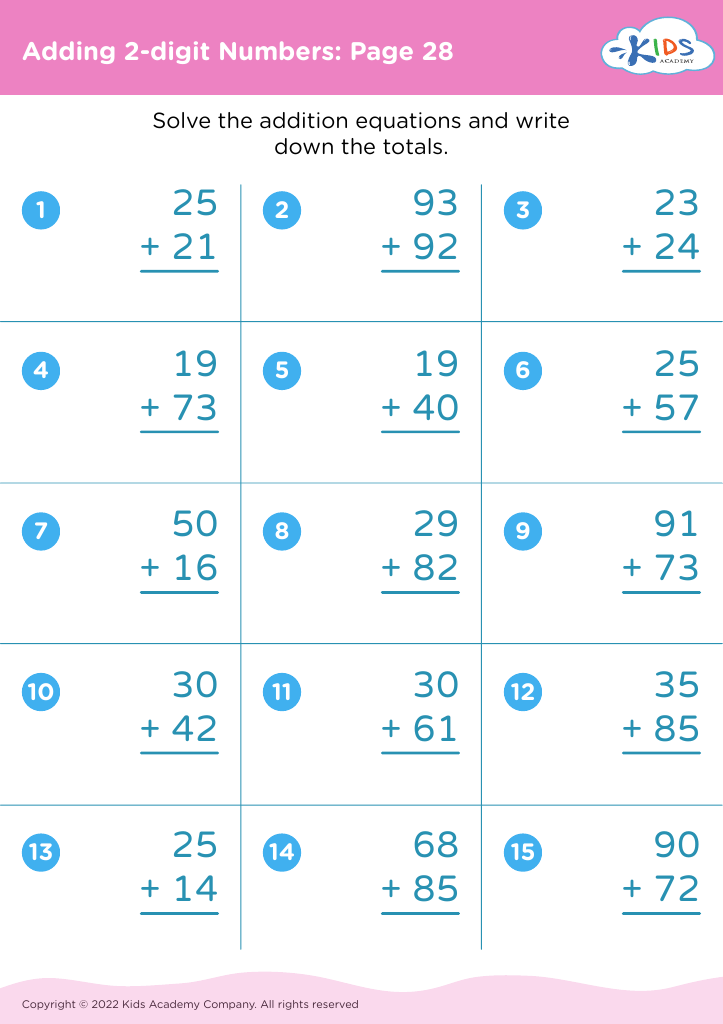
Adding 2-digit Numbers: Page 28

Adding 2-digit Numbers: Page 28

Adding 2-digit Numbers: Page 28
Worksheet
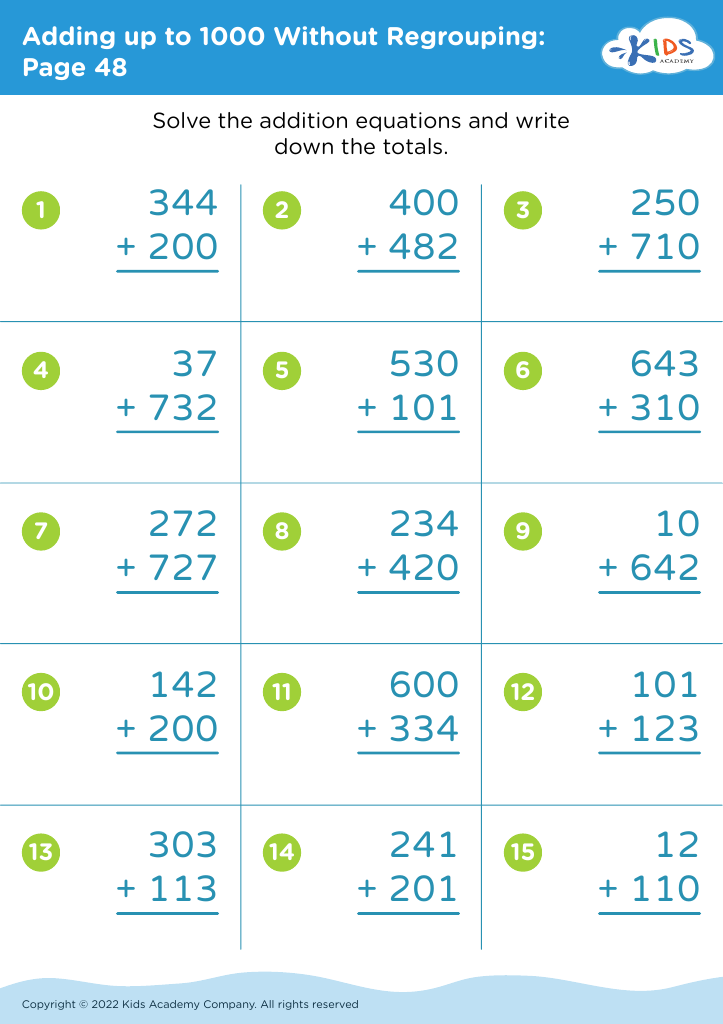
Adding up to 1000 Without Regrouping: Page 48
Worksheet
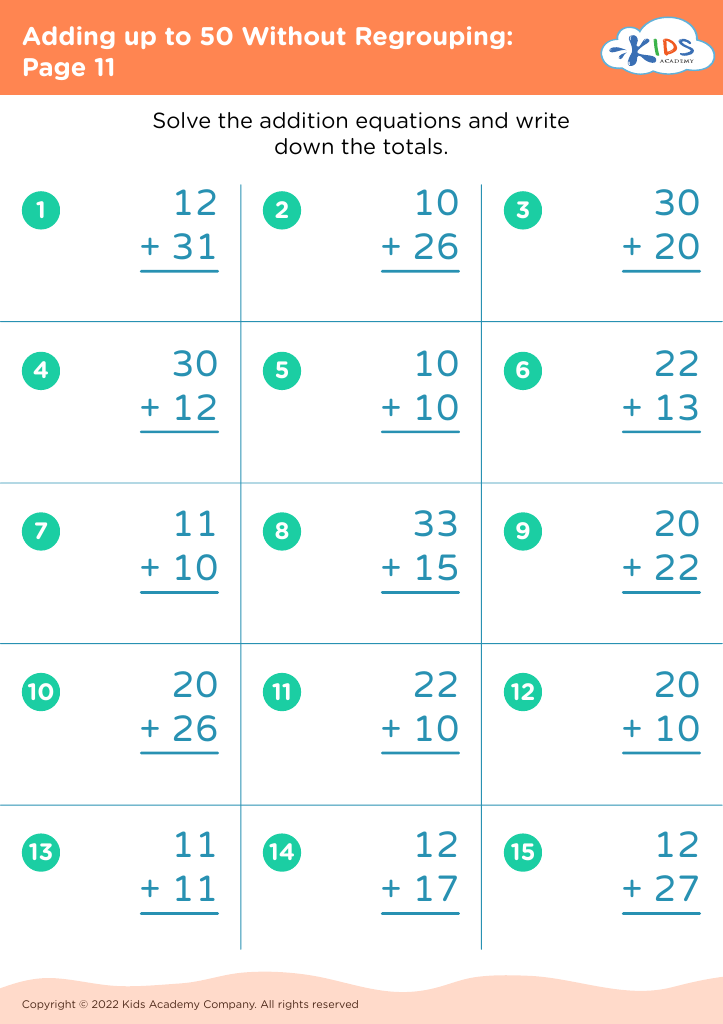
Adding up to 50 Without Regrouping: Page 11
Worksheet
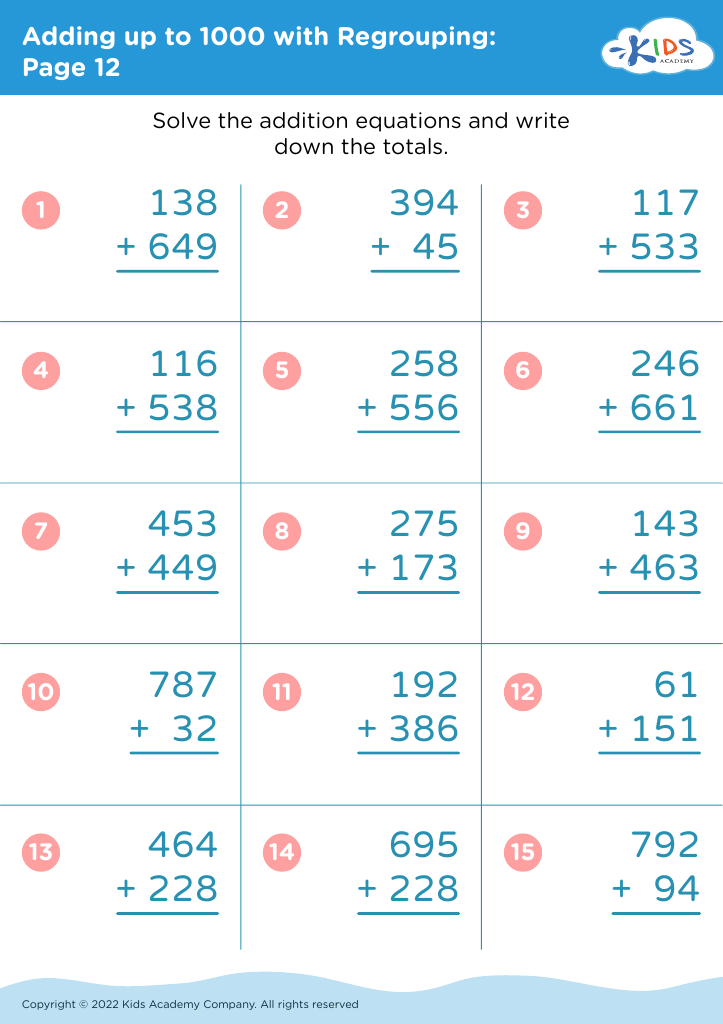
Adding up to 1000 with Regrouping: Page 12
Worksheet
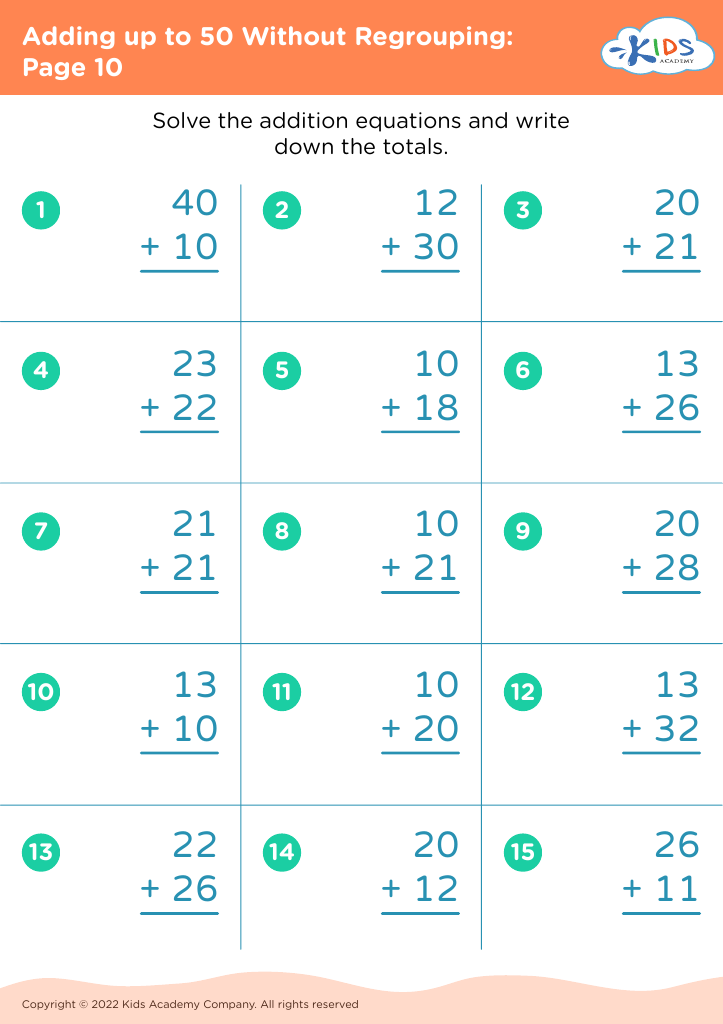
Adding up to 50 Without Regrouping: Page 10
Worksheet
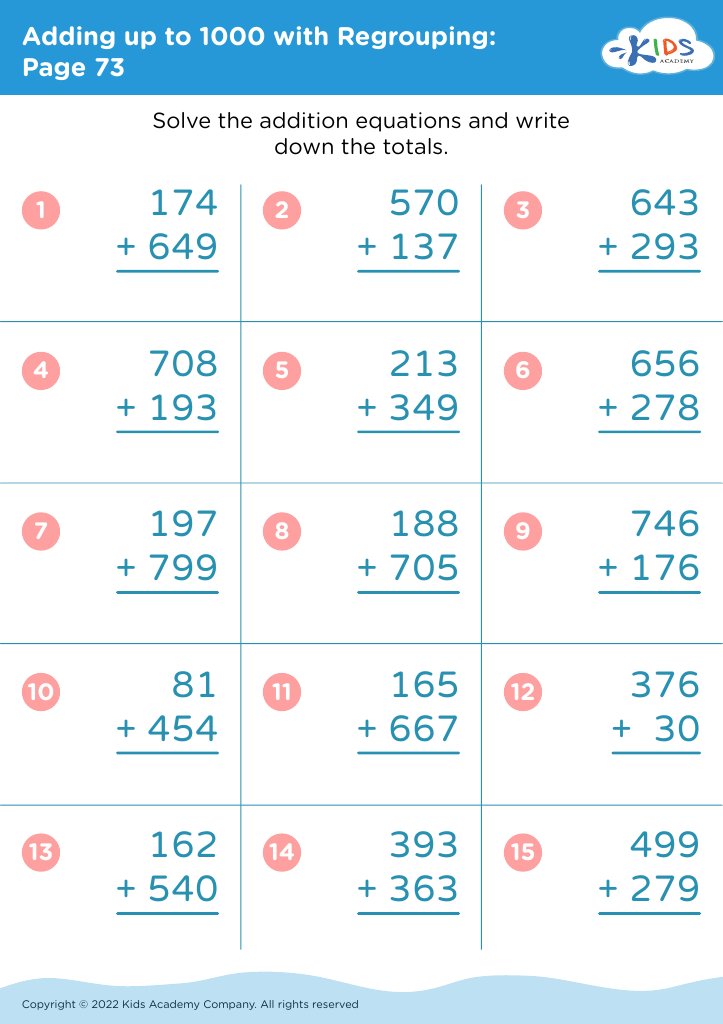
Adding up to 1000 with Regrouping: Page 73
Worksheet
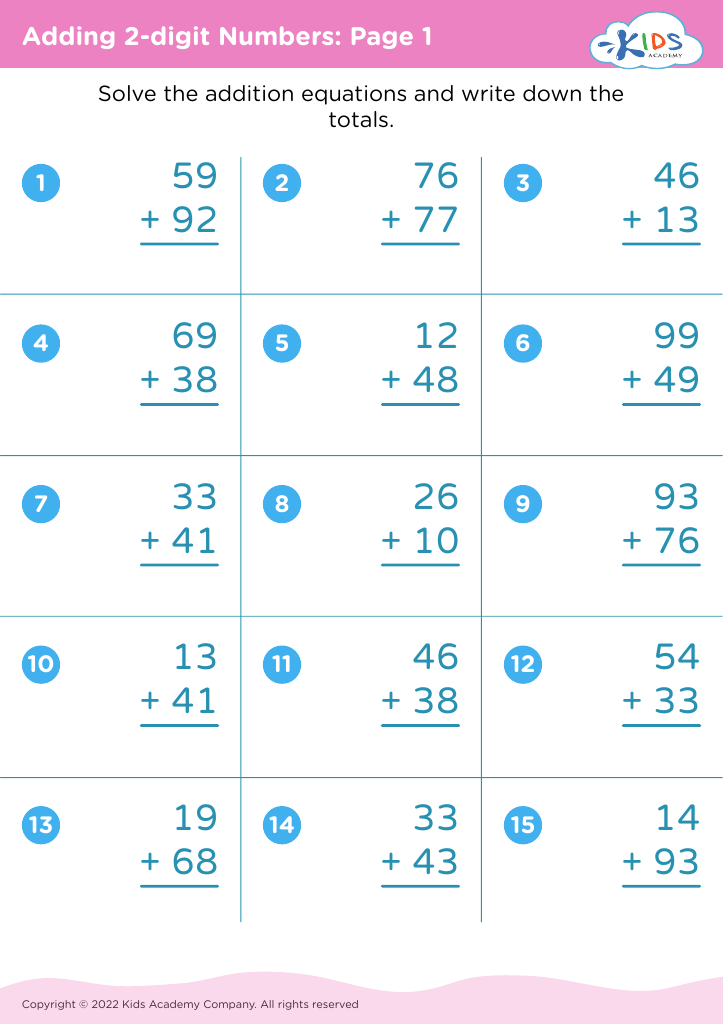
Adding 2-digit Numbers: Page 1

Adding 2-digit Numbers: Page 1

Adding 2-digit Numbers: Page 1
Worksheet
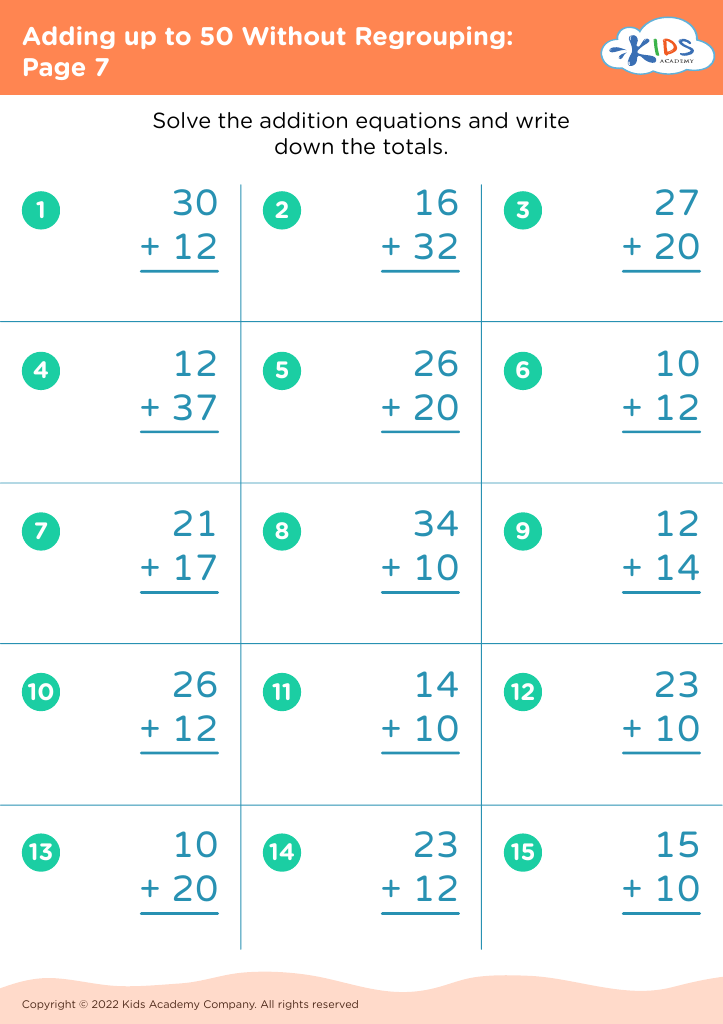
Adding up to 50 Without Regrouping: Page 7
Worksheet
Second Grade Math Worksheets

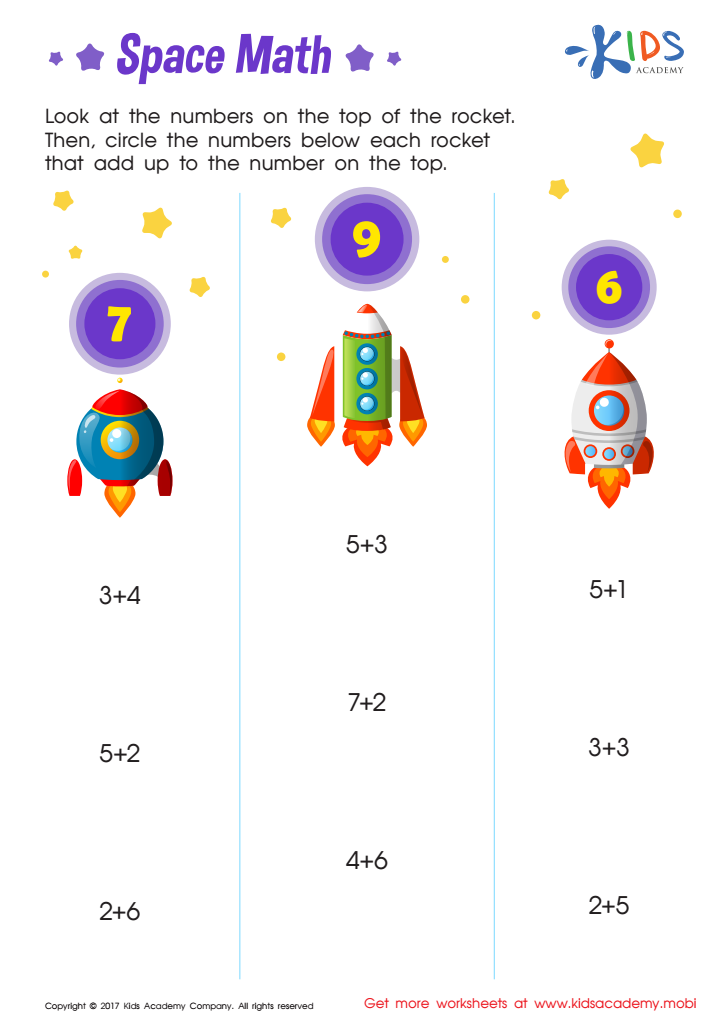
Addition: Space Math Worksheet

Fun and engaging space-themed practice with vivid pictures and matching numbers will make learning more meaningful. Take their math skills out of this galaxy today with Kids Academy!
Addition: Space Math Worksheet
Worksheet
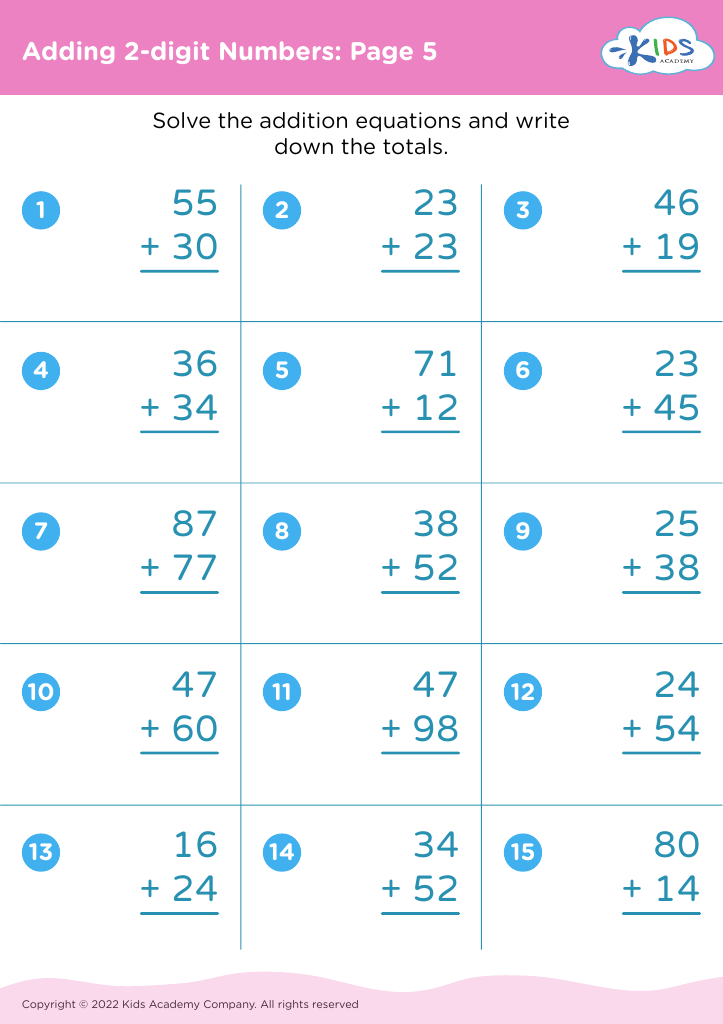
Adding 2-digit Numbers: Page 5

Adding 2-digit Numbers: Page 5

Adding 2-digit Numbers: Page 5
Worksheet
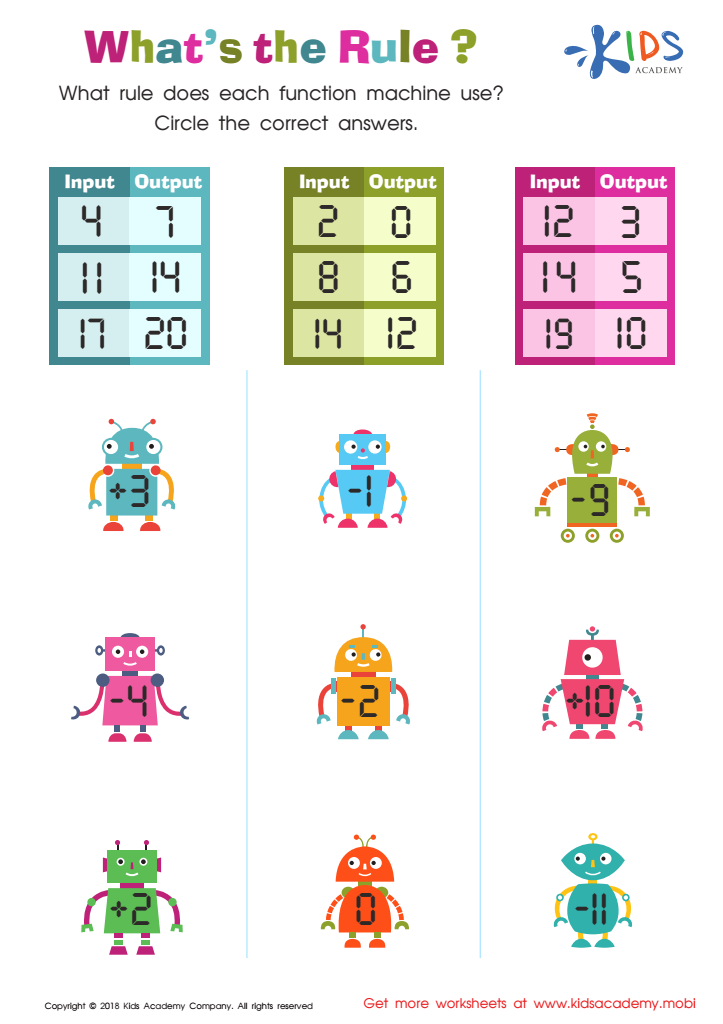
What's the Rule Worksheet

What's the Rule Worksheet

Robots are here to help your child find the relationship between each set of numbers! Adorably illustrated worksheets use vivid pictures that each contain a rule. Look at each function machine and find the pattern or relationship between the input and output. Then, complete the sheet by circling the correct answer!
What's the Rule Worksheet
Worksheet
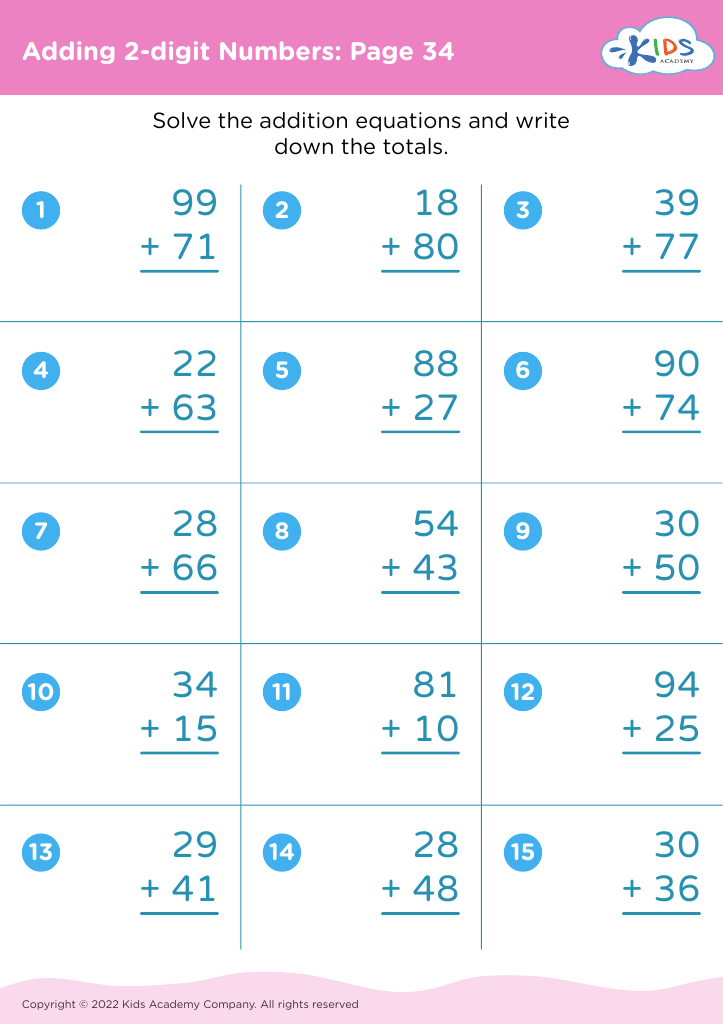
Adding 2-digit Numbers: Page 34

Adding 2-digit Numbers: Page 34

Adding 2-digit Numbers: Page 34
Worksheet
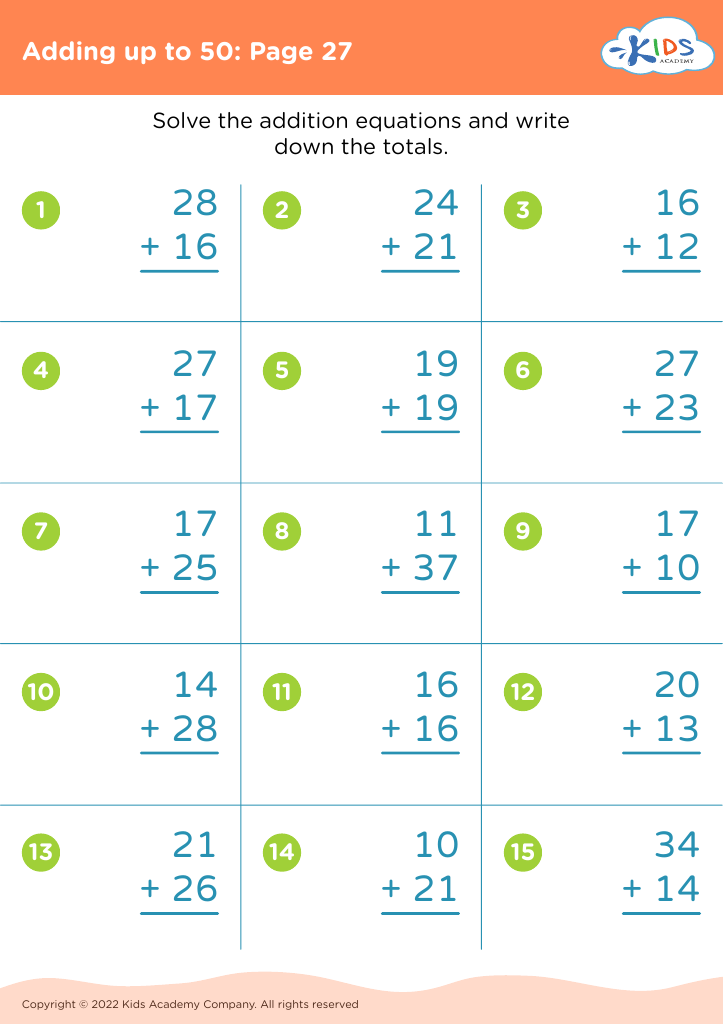
Adding up to 50: Page 27

Adding up to 50: Page 27

Adding up to 50: Page 27
Worksheet
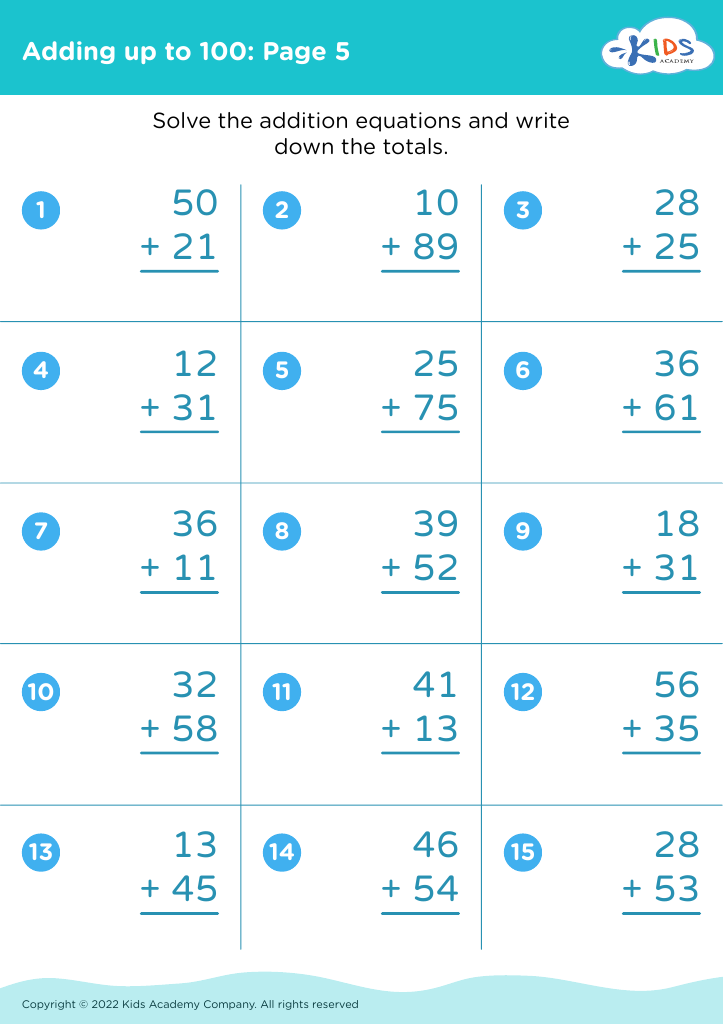
Adding up to 100: Page 5

Adding up to 100: Page 5

Adding up to 100: Page 5
Worksheet
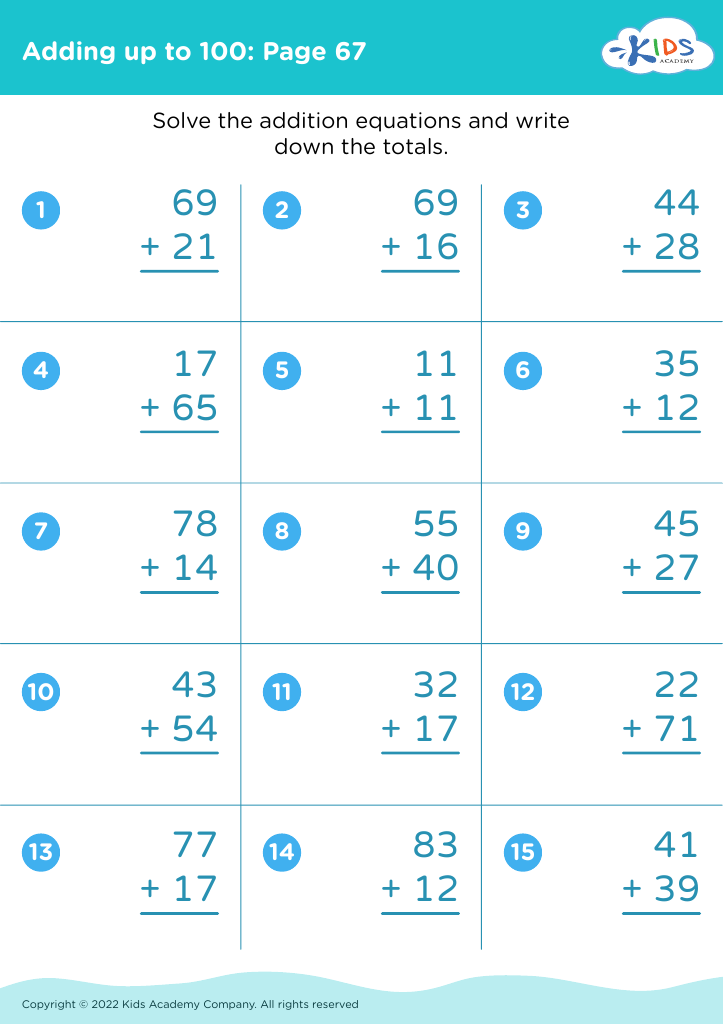
Adding up to 100: Page 67

Adding up to 100: Page 67

Adding up to 100: Page 67
Worksheet
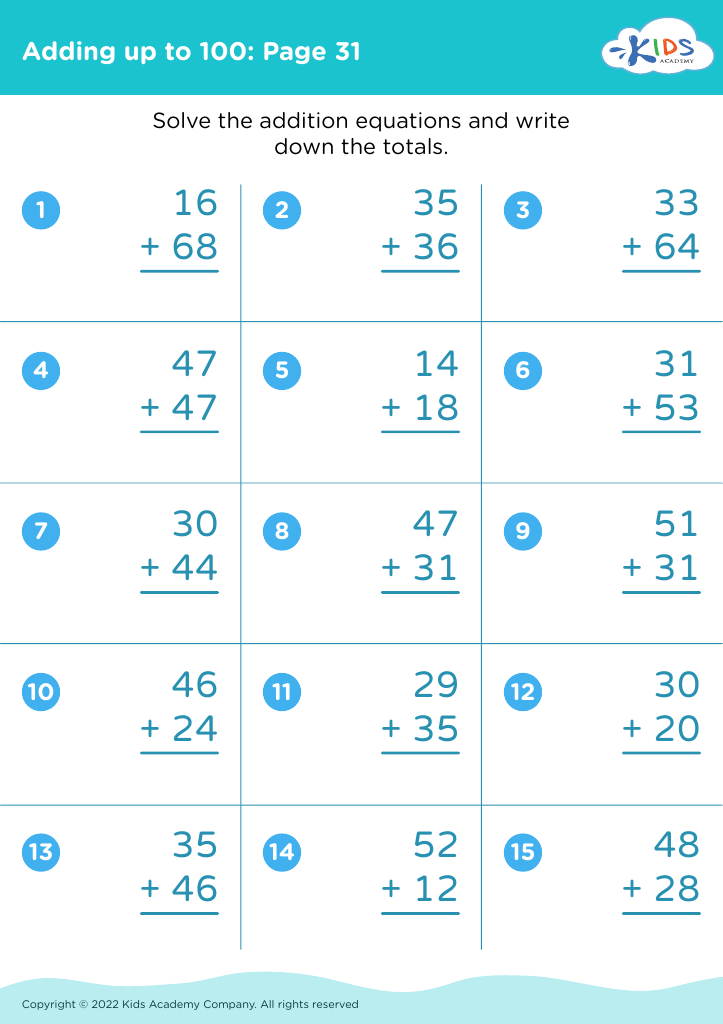
Adding up to 100: Page 31

Adding up to 100: Page 31

Adding up to 100: Page 31
Worksheet
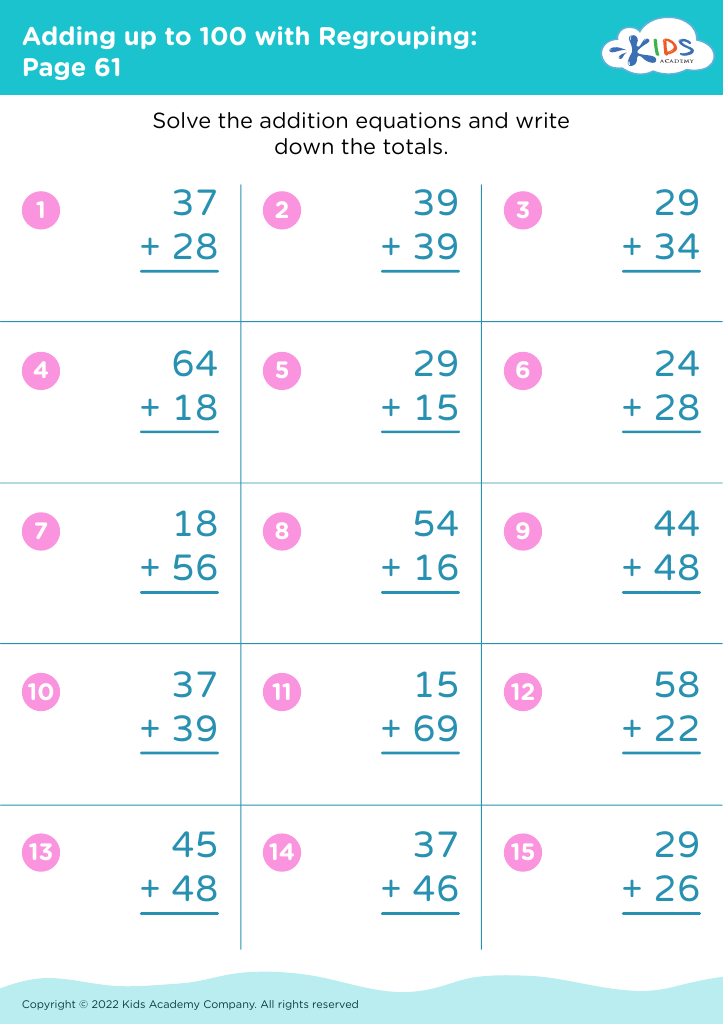
Adding up to 100 with Regrouping: Page 61
Worksheet
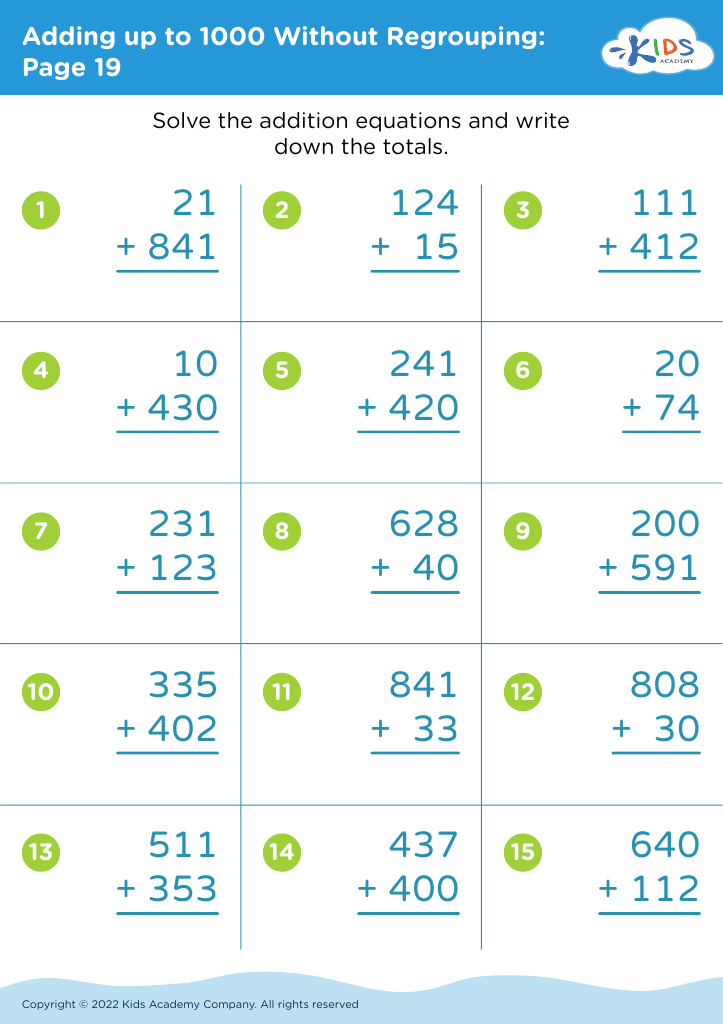
Adding up to 1000 Without Regrouping: Page 19
Worksheet
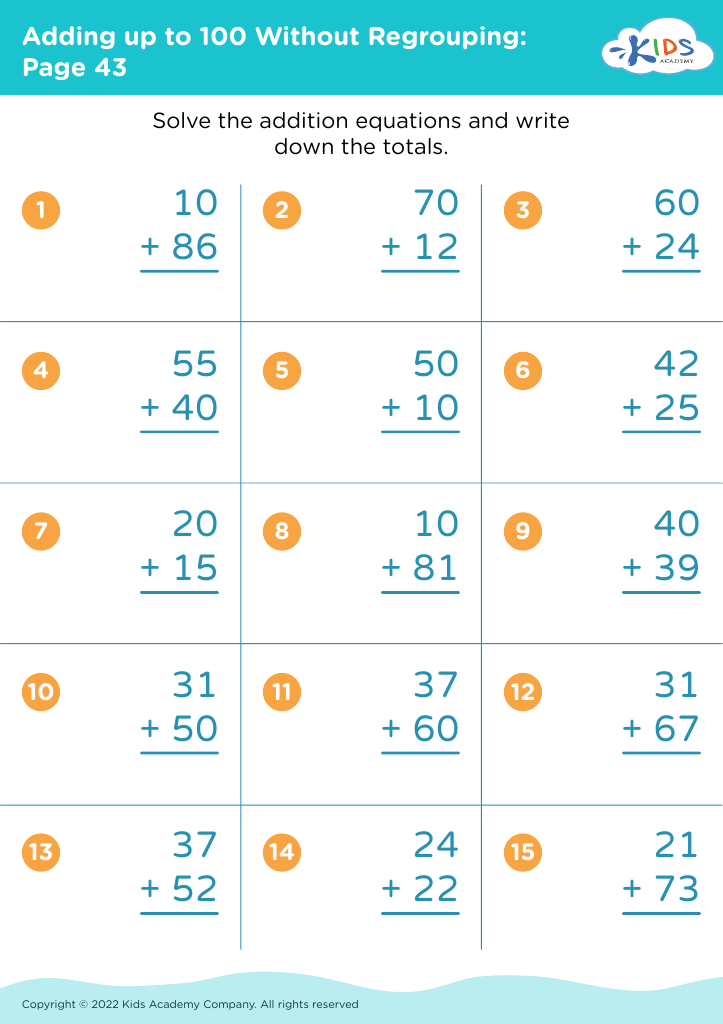
Adding up to 100 Without Regrouping: Page 43
Worksheet
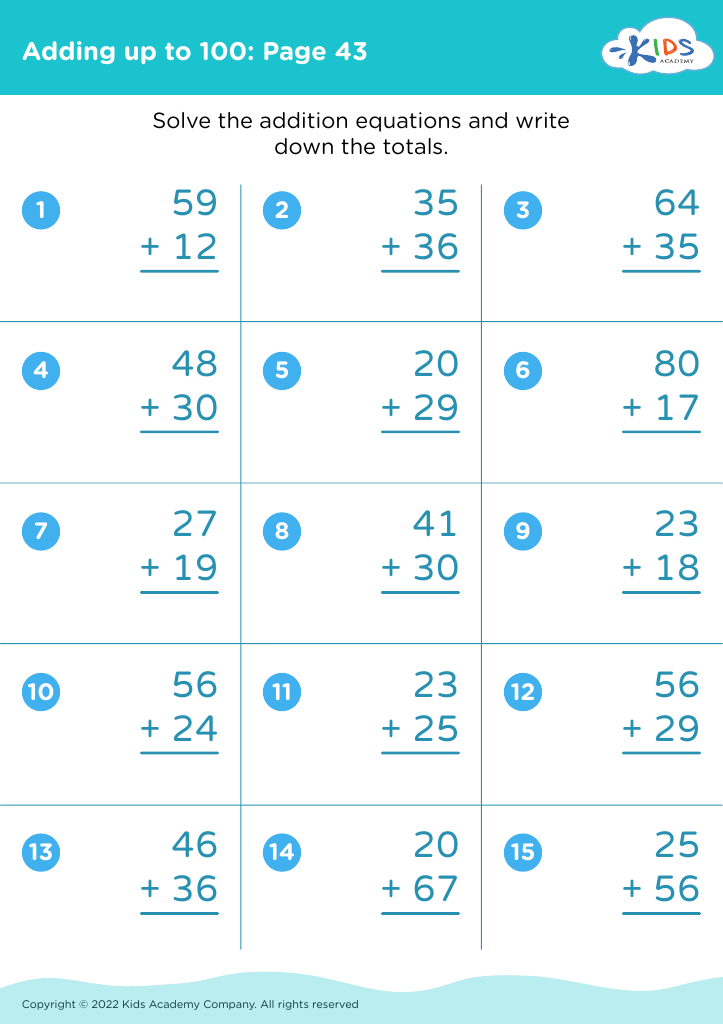
Adding up to 100: Page 43

Adding up to 100: Page 43

Adding up to 100: Page 43
Worksheet
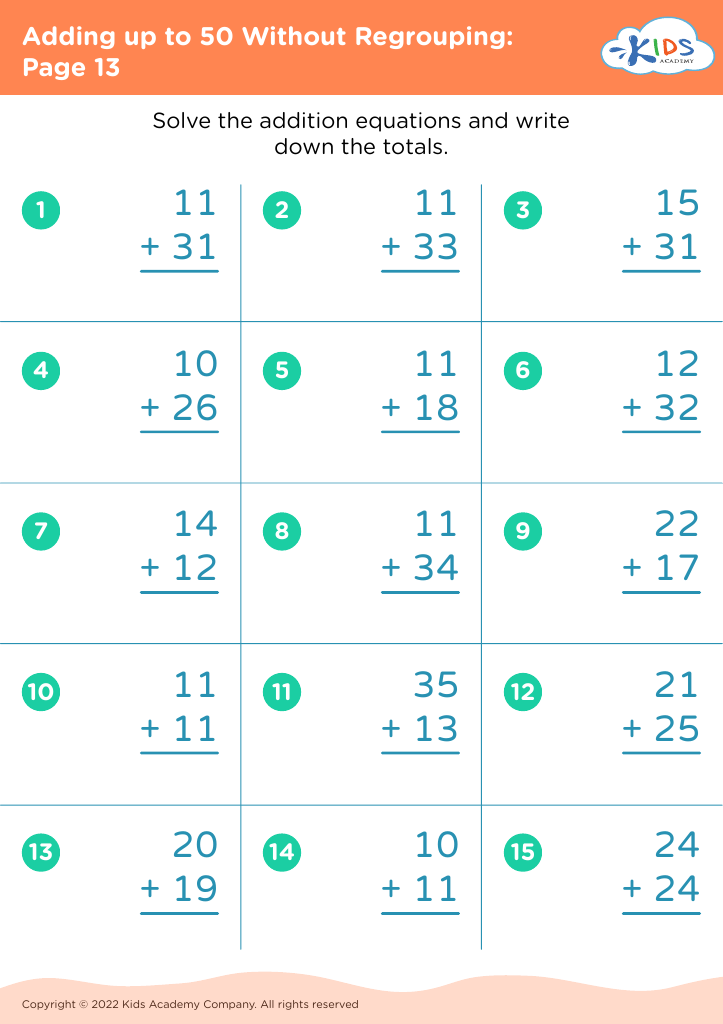
Adding up to 50 Without Regrouping: Page 13
Worksheet
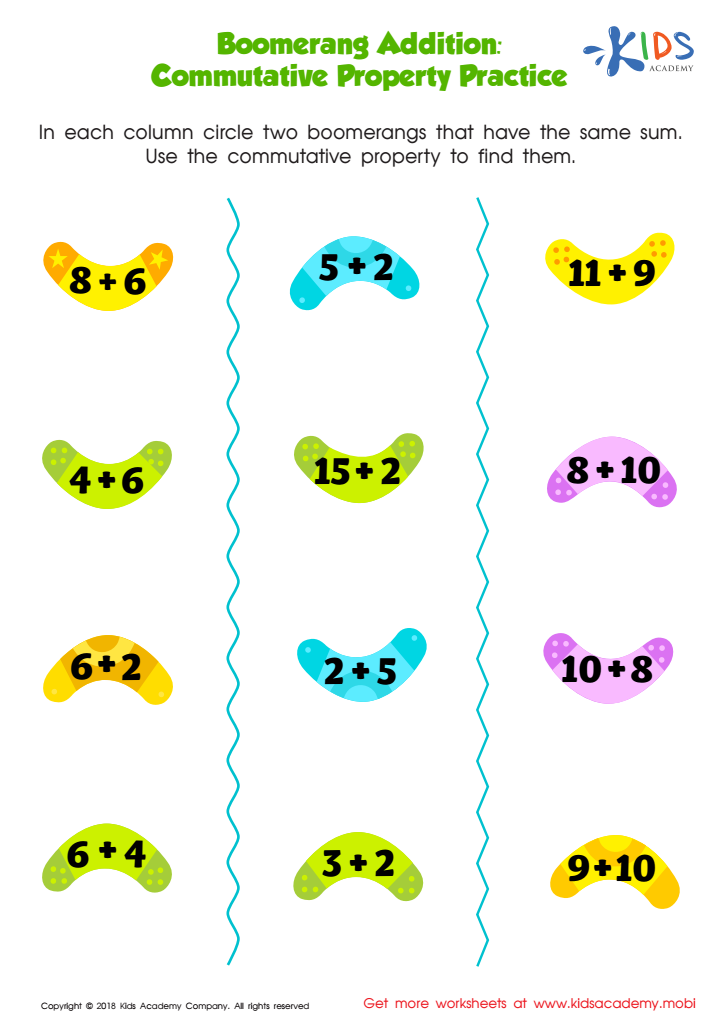
Boomerang Addition Worksheet
Boomerang Addition Worksheet

Kids know that when a boomerang is thrown, it reverses its path back. The same goes for addition: numbers can be rearranged and the sum will remain the same. Use this worksheet to find matching pairs of colorful boomerangs and equations. Look through each column and use the commutative property to find the pairs with the same sum.
Boomerang Addition Worksheet

Worksheet
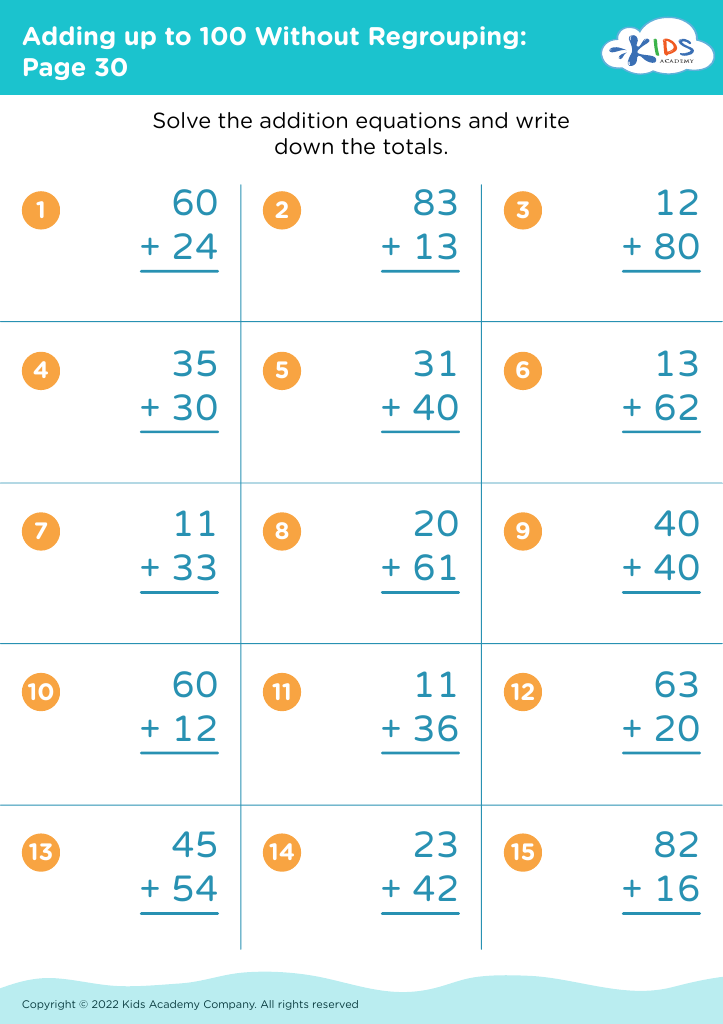
Adding up to 100 Without Regrouping: Page 30
Worksheet
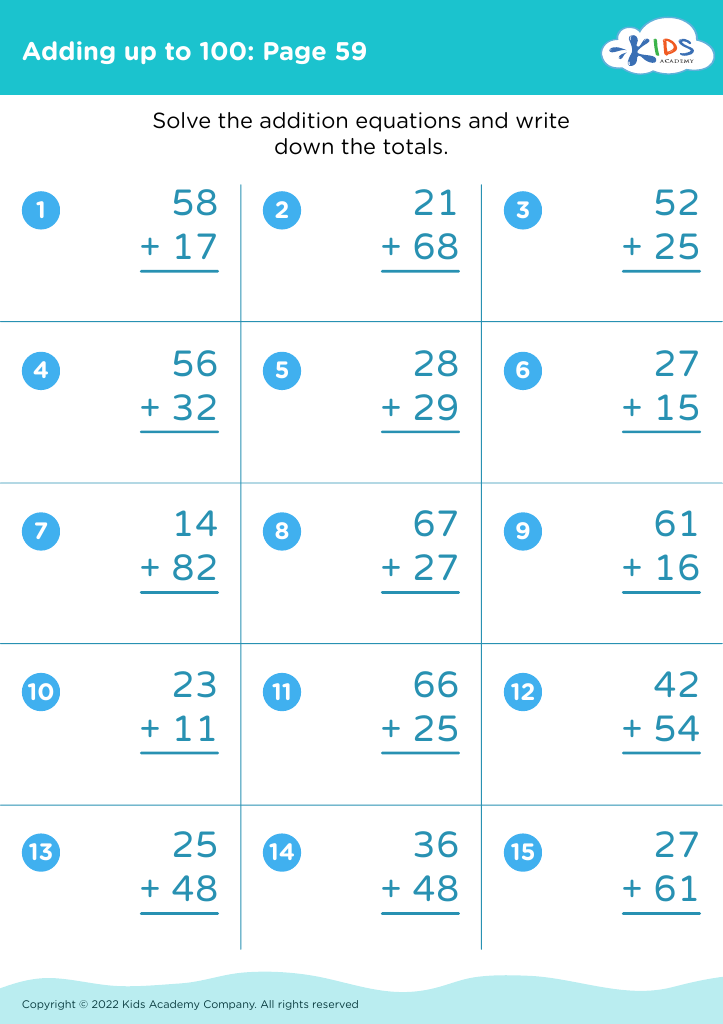
Adding up to 100: Page 59

Adding up to 100: Page 59

Adding up to 100: Page 59
Worksheet


Understanding patterns in addition and subtraction is crucial for children aged 7-9 because it lays a solid foundation for their future mathematical skills. At this age, students are transitioning from basic arithmetic to more complex concepts, and recognizing patterns enhances their ability to solve problems more efficiently. When children understand mathematical patterns, they can make connections between related concepts and develop critical thinking skills that extend beyond math.

For parents and teachers, fostering this understanding helps children build confidence as they realize that math is not merely about memorizing facts or procedures, but involves identifying relationships and making predictions. This conceptual groundwork not only helps in mastering addition and subtraction but also serves as a springboard for more advanced topics like multiplication, division, and even fractions.

Moreover, engaging with patterns allows children to develop perseverance and resilience, as they learn to approach challenges using strategic thinking. Teaching this subject provides opportunities for collaborative learning, whereby students share their discoveries with peers, further enriching their experience. Ultimately, strong foundational skills in understanding patterns contribute to a child's overall success in mathematics and prepare them for real-world applications, making it vital for educators and parents to prioritize this area of learning.