Visual representation comprehension Addition & Subtraction Worksheets for Ages 7-9
5 filtered results
-
From - To
Our "Visual Representation Comprehension Addition & Subtraction Worksheets for Ages 7-9" are specially designed to enhance your child’s mathematical skills through engaging visuals. Ideal for young learners, these worksheets transform abstract numerical concepts into tangible, easy-to-understand images. By interpreting graphs, charts, and drawings, children develop a stronger grasp of addition and subtraction. Perfect for use at home or in the classroom, these resources facilitate active learning and critical thinking. Start your child’s journey towards math excellence with practical exercises that make learning both effective and enjoyable. Download our visually rich worksheets today and watch their confidence grow!
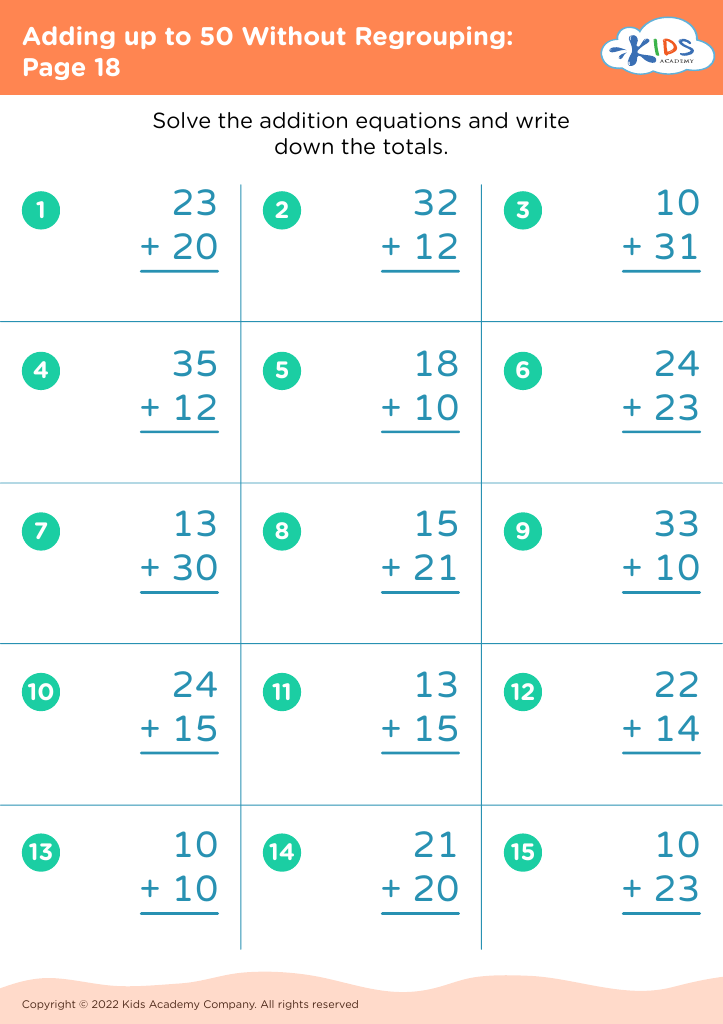
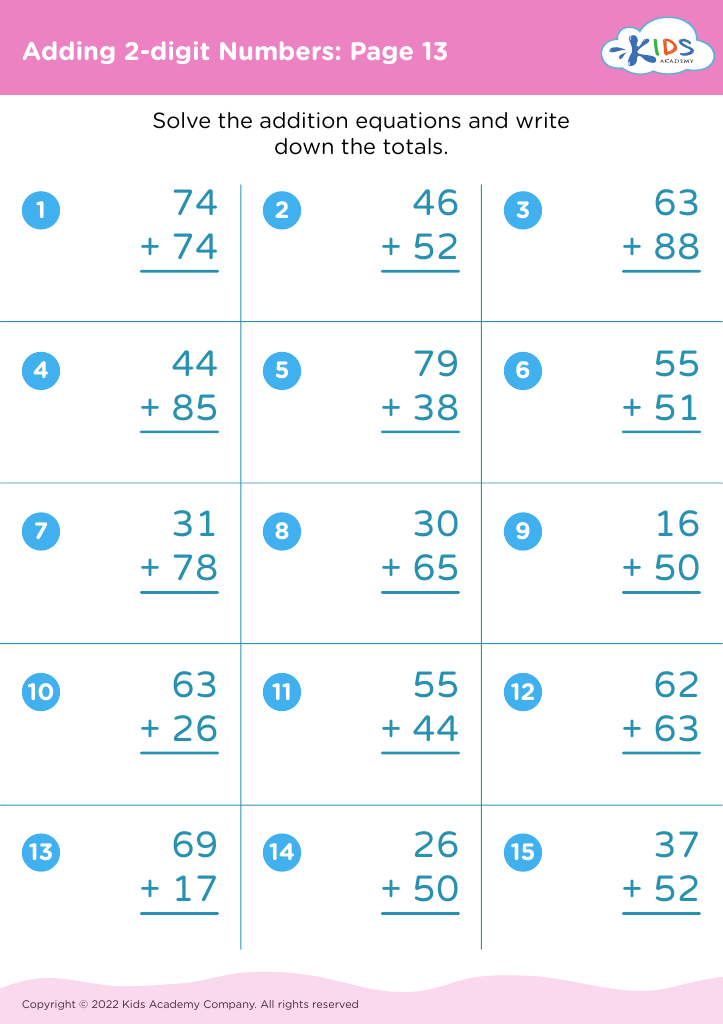
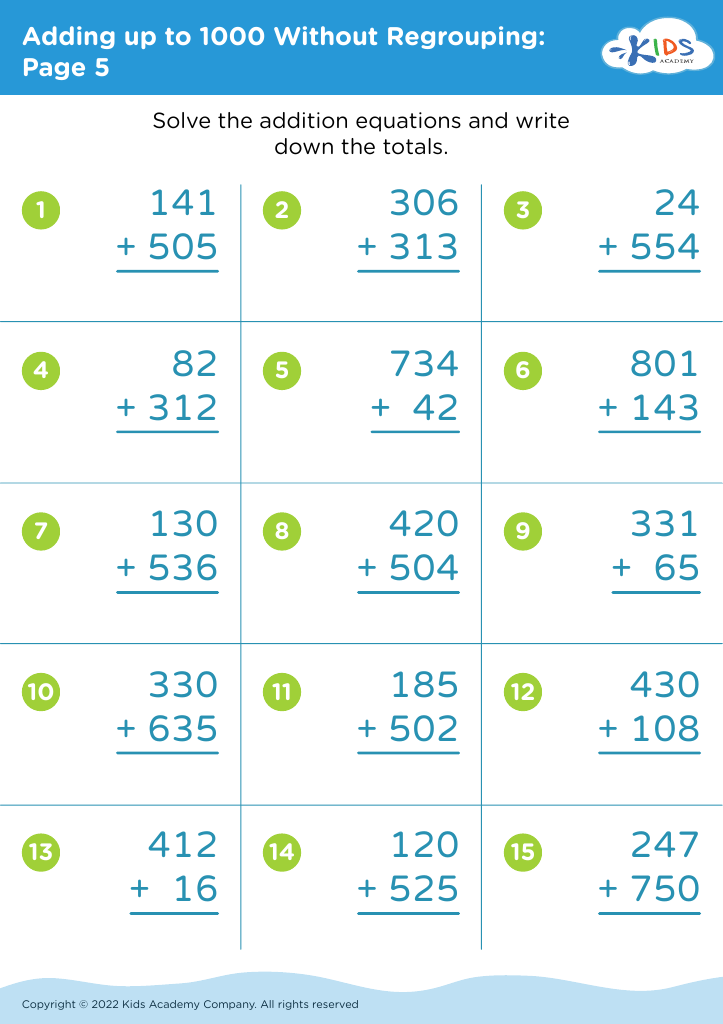
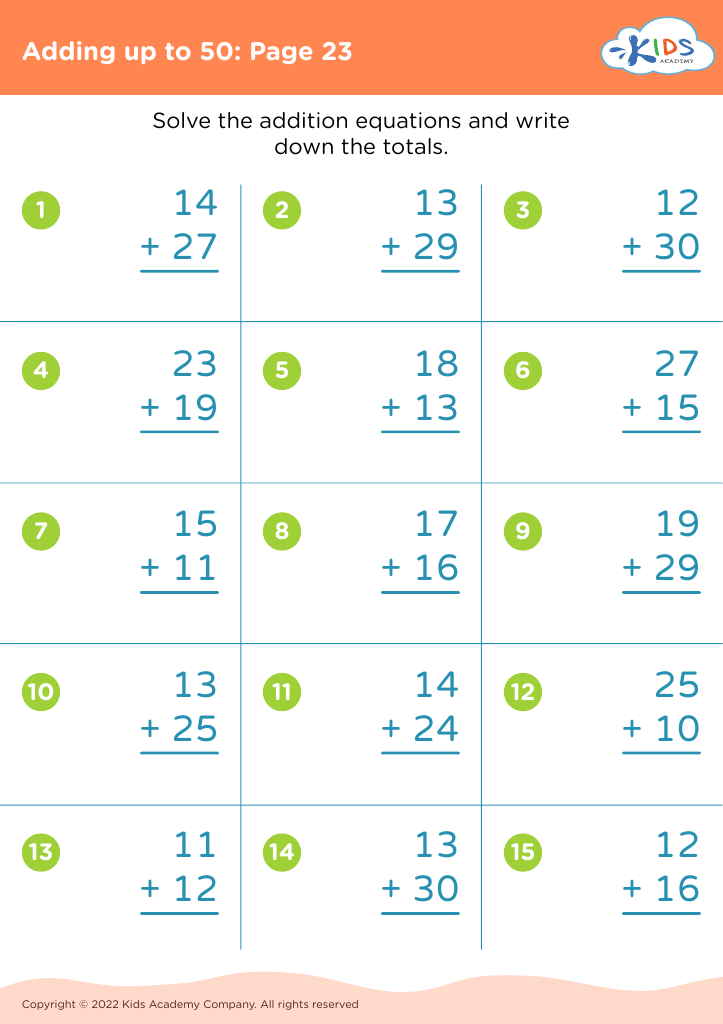
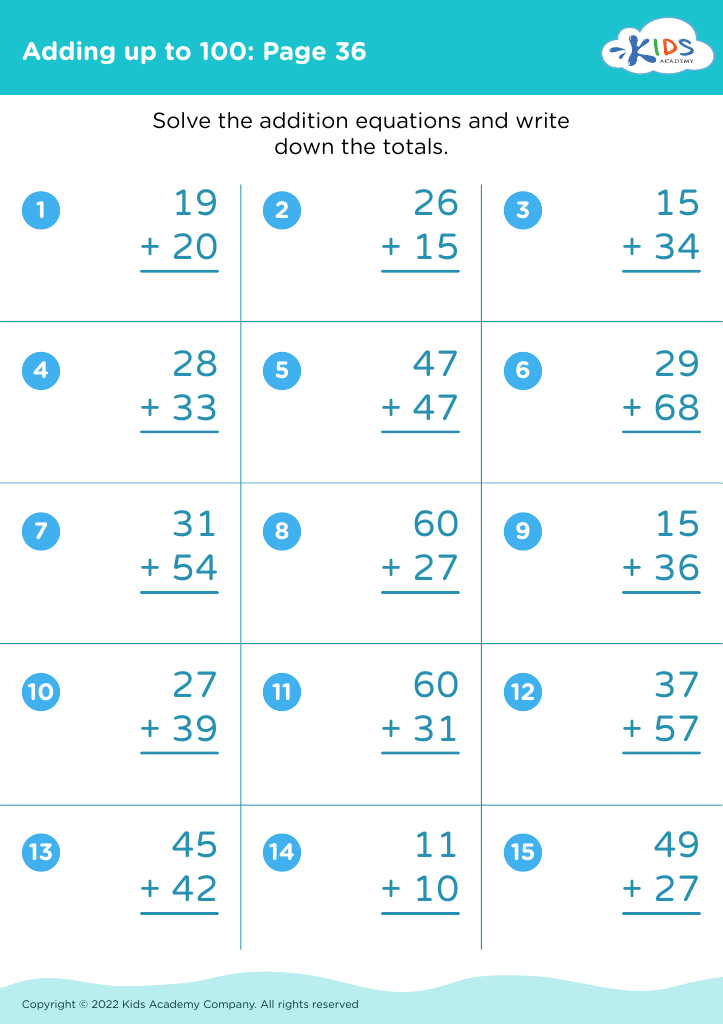








Visual representation comprehension is crucial for children ages 7-9 as they build foundational skills in addition and subtraction. At this developmental stage, kids transition from concrete objects to more abstract thinking. Visual tools such as number lines, counters, and diagrams help bridge this gap by offering tangible representations of mathematical concepts.
When children see visual models, they can better understand the relationships between numbers and the concepts of adding and subtracting. For instance, a number line can illustrate how numbers increase with addition and decrease with subtraction, helping children grasp these operations' directional nature. Visual aids also foster problem-solving skills as children learn to break down more complex problems into manageable parts.
Parents and teachers should be invested because adequate comprehension at this stage influences future mathematical learning. Misunderstandings now can lead to difficulties in grasping more advanced concepts later in subjects such as multiplication, division, and even algebra. Additionally, children who master addition and subtraction through visual representation often develop greater confidence and enthusiasm for math, fostering a positive attitude towards learning.
By integrating visual learning strategies, parents and teachers can make math more accessible, enjoyable, and meaningful for young learners, laying a solid foundation for their academic journey.








