Basic Math Skills Addition Worksheets for Ages 7-9 - Page 3
51 filtered results
-
From - To
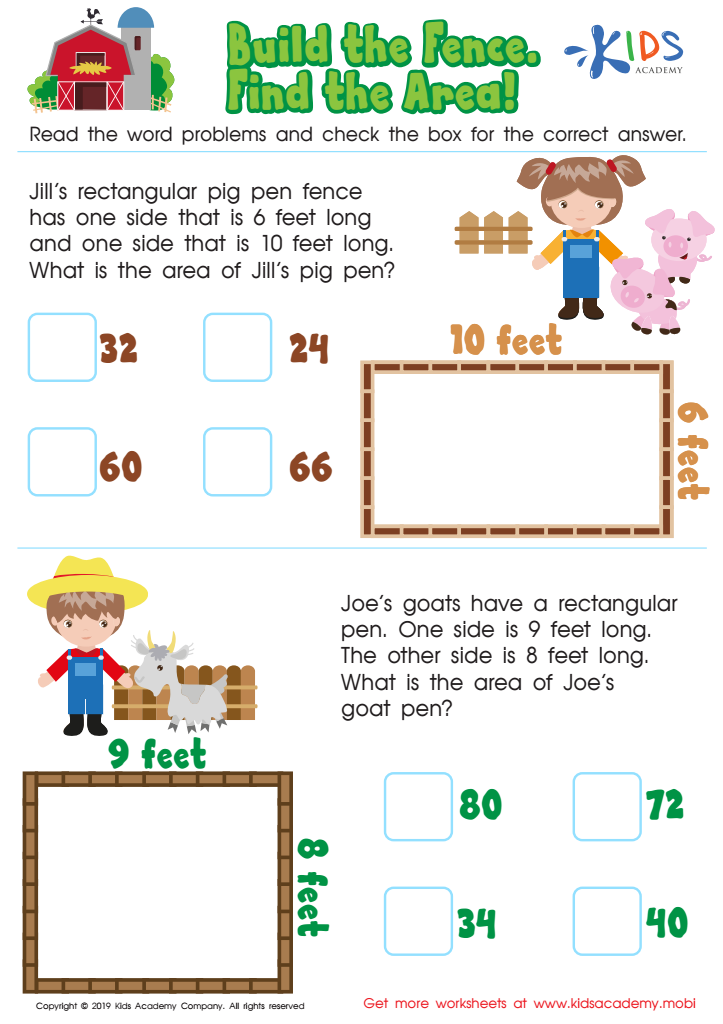
Build the Fence, Find the Area Worksheet
 Assign to My Students
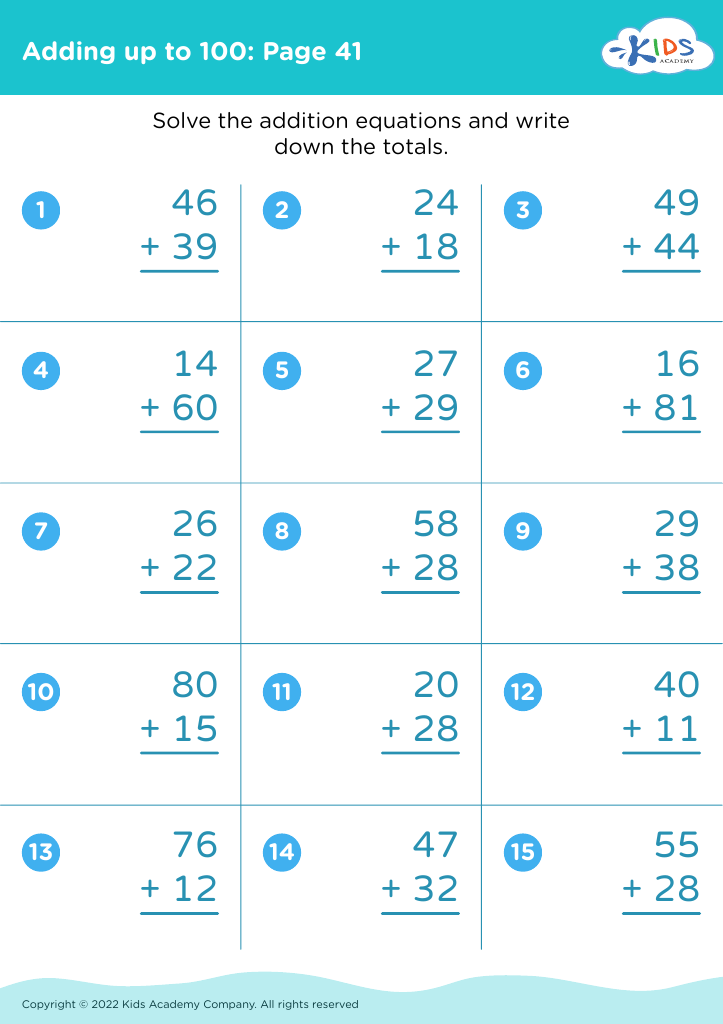
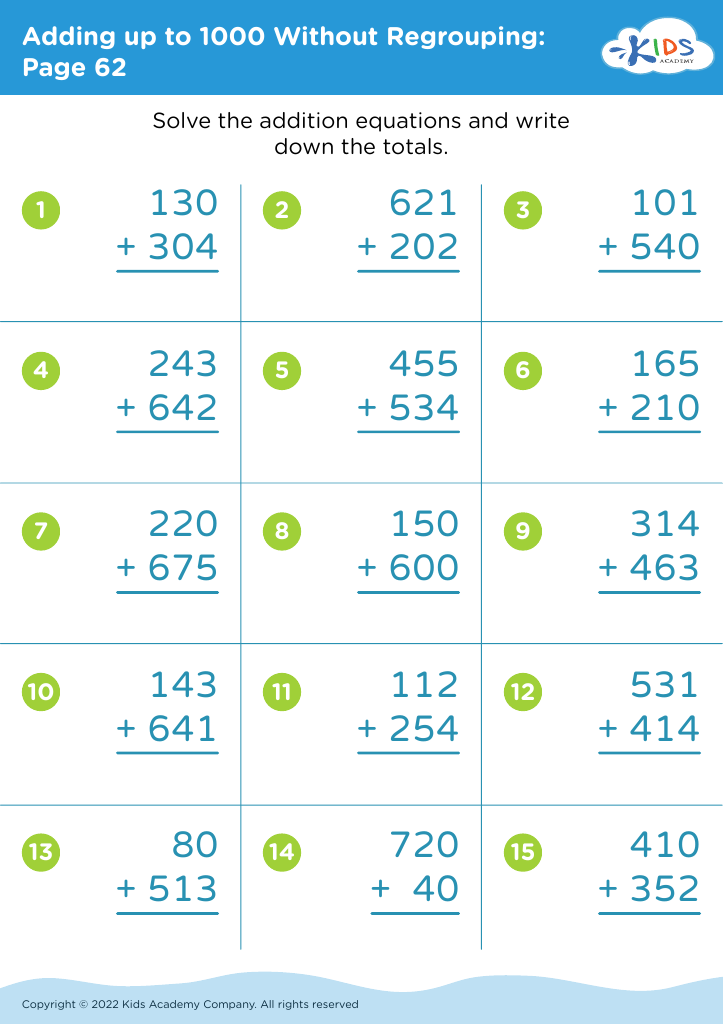








Basic math skills in addition are fundamental building blocks for a child's academic and everyday life. For ages 7-9, focusing on addition sets the stage for mastering more advanced mathematical concepts. Firstly, addition serves as one of the core operations that underpin much of mathematics. Without a solid understanding of addition, children may struggle with future math topics such as subtraction, multiplication, division, and fractions.
For parents and teachers, nurturing competency in addition is essential. A strong grasp of addition enhances logical thinking and problem-solving skills, enabling children to approach tasks methodically. Moreover, math learned during these ages integrates into daily activities such as telling time, counting money, and measuring quantities in cooking, fostering practical life skills.
Additionally, early success in math boosts confidence and positions students as capable learners, creating a positive feedback loop that encourages further academic endeavor. Studies indicate that early math skills are good predictors of later academic achievement, suggesting that proficiency in addition can also impact overall educational outcomes.
In summary, prioritizing basic math skills like addition for 7-9 year-olds builds a solid foundation for future learning, enhances daily life function, and instills confidence and a positive attitude towards education.








