Filters

82 filtered results

Clear all filters
Favorites
With answer key
Interactive

82 filtered results

Difficulty Level

Grade


Check out this FREE Trial Lesson on Addition for age 7-9!

Exactly the Same, or Not

Favorites
With answer key
Interactive
  • 7-9
  • Comparing Fractions
  • Addition
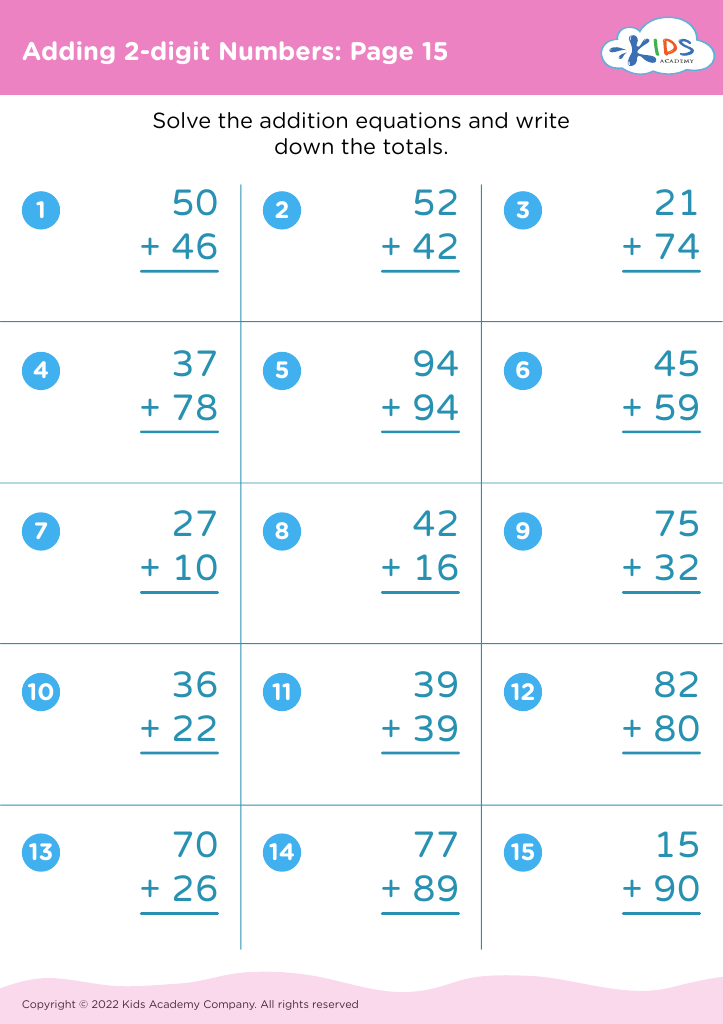
Adding 2-digit Numbers: Page 15

Adding 2-digit Numbers: Page 15

Adding 2-digit Numbers: Page 15
Worksheet
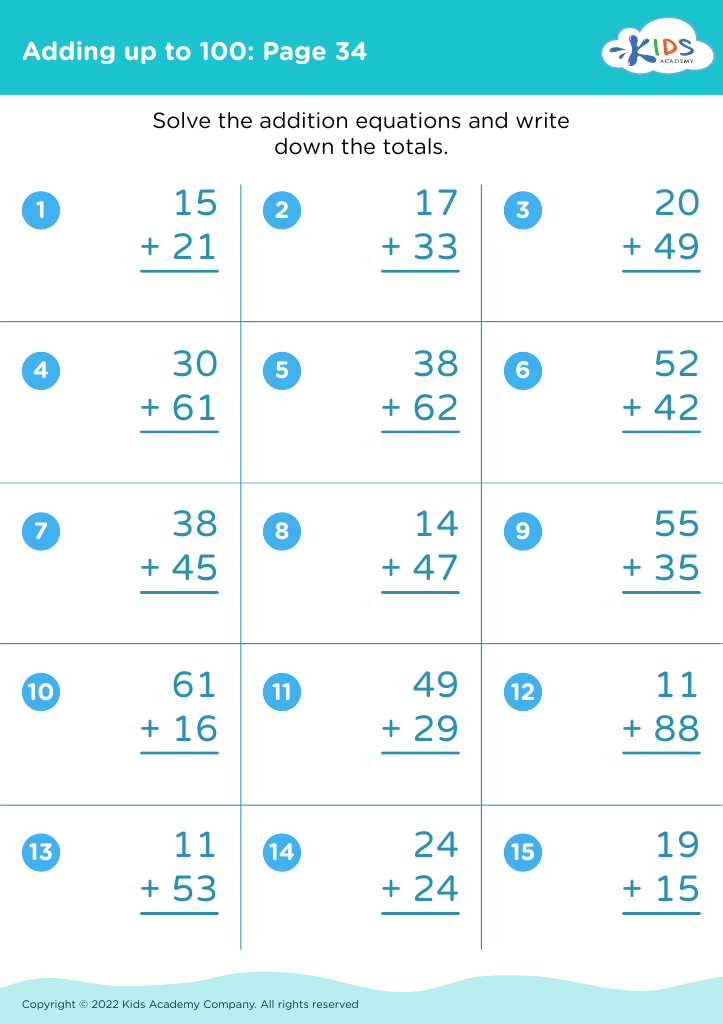
Adding up to 100: Page 34

Adding up to 100: Page 34

Adding up to 100: Page 34
Worksheet
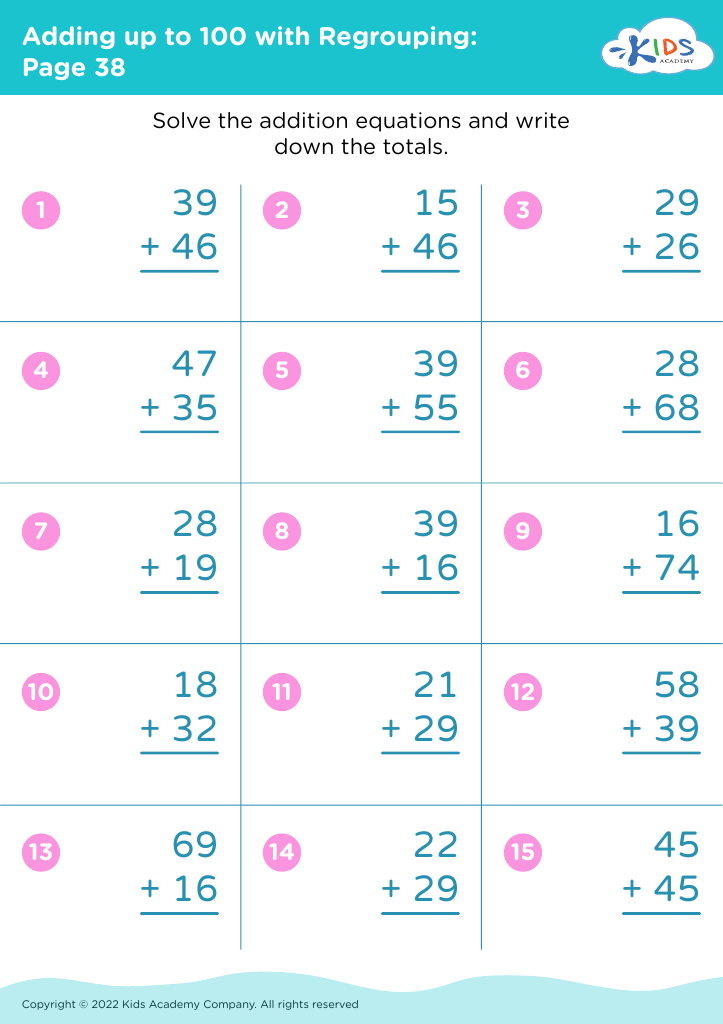
Adding up to 100 with Regrouping: Page 38
Worksheet
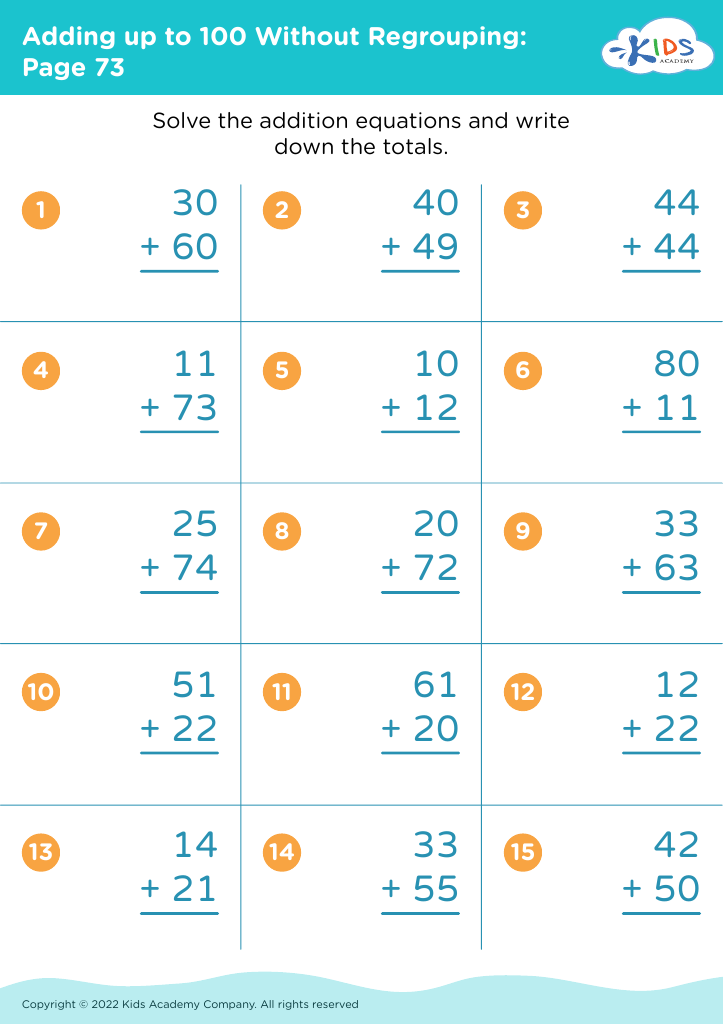
Adding up to 100 Without Regrouping: Page 73
Worksheet
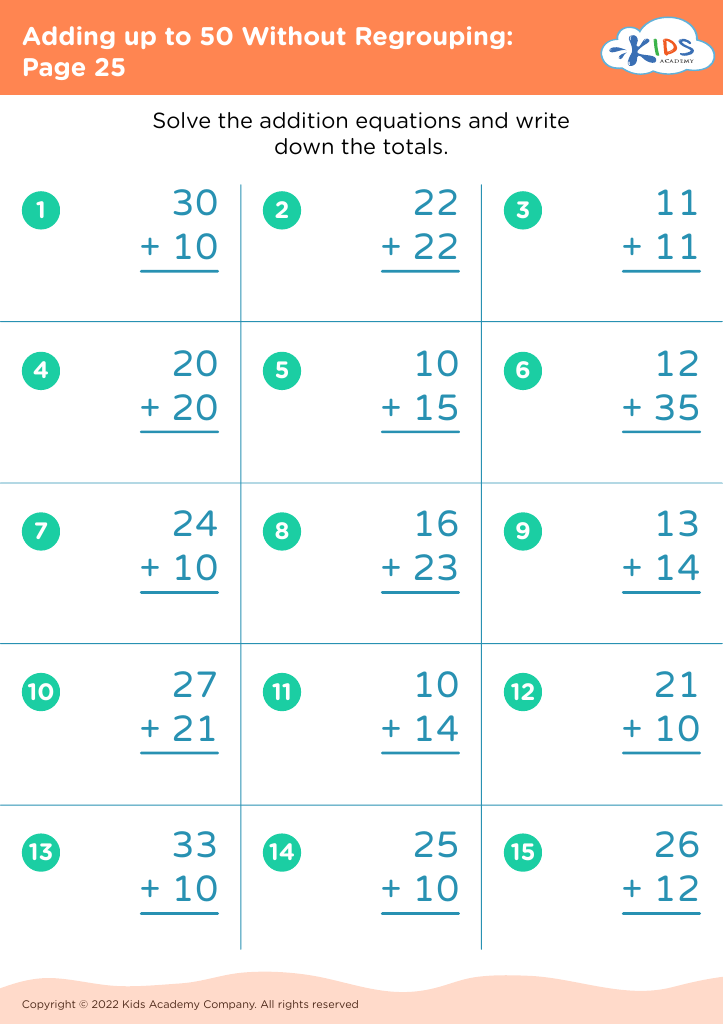
Adding up to 50 Without Regrouping: Page 25
Worksheet
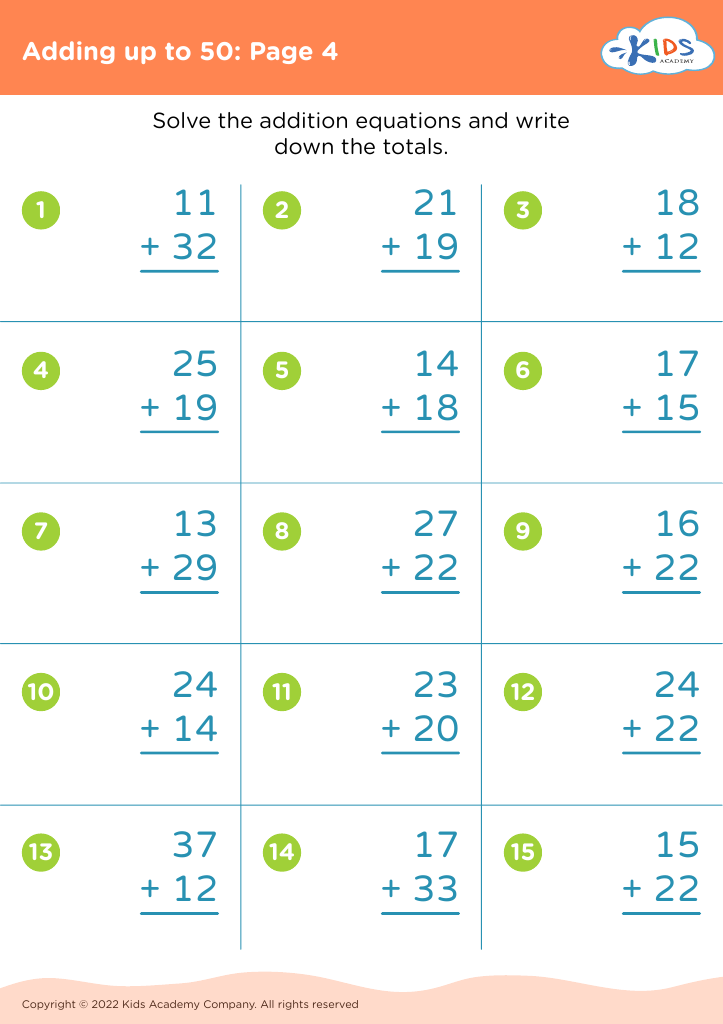
Adding up to 50: Page 4

Adding up to 50: Page 4

Adding up to 50: Page 4
Worksheet
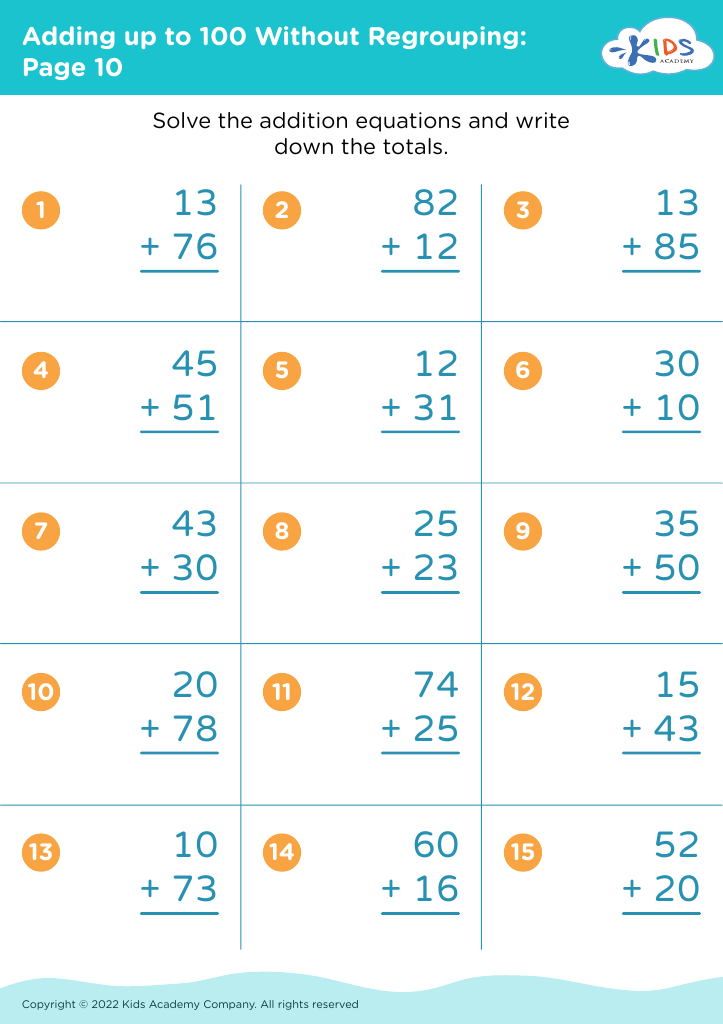
Adding up to 100 Without Regrouping: Page 10
Worksheet
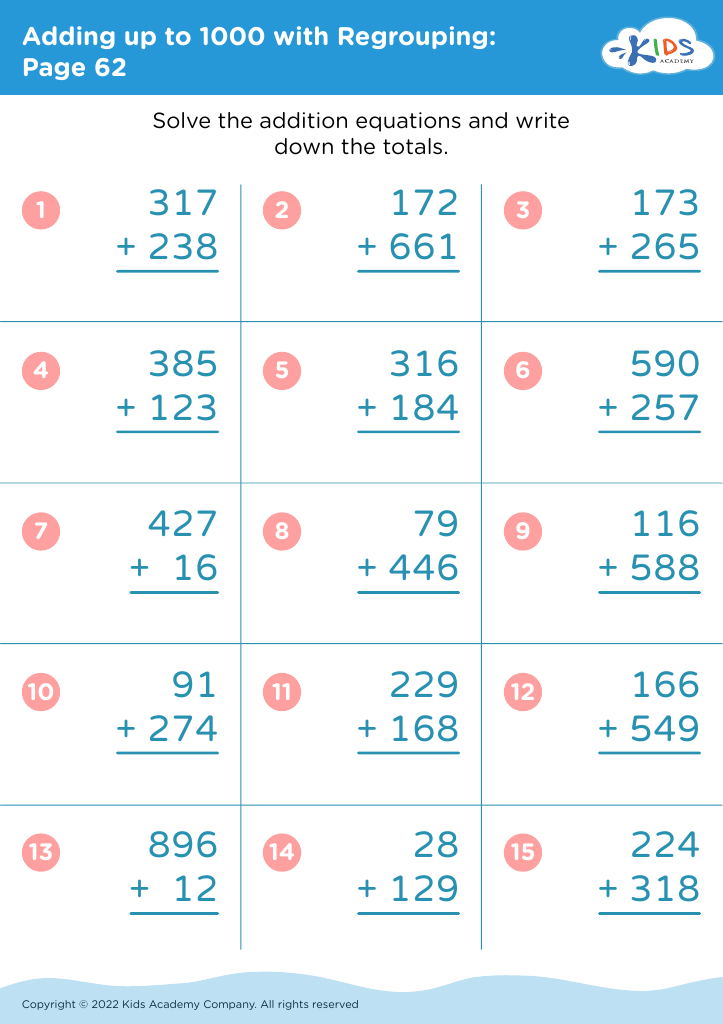
Adding up to 1000 with Regrouping: Page 62
Worksheet
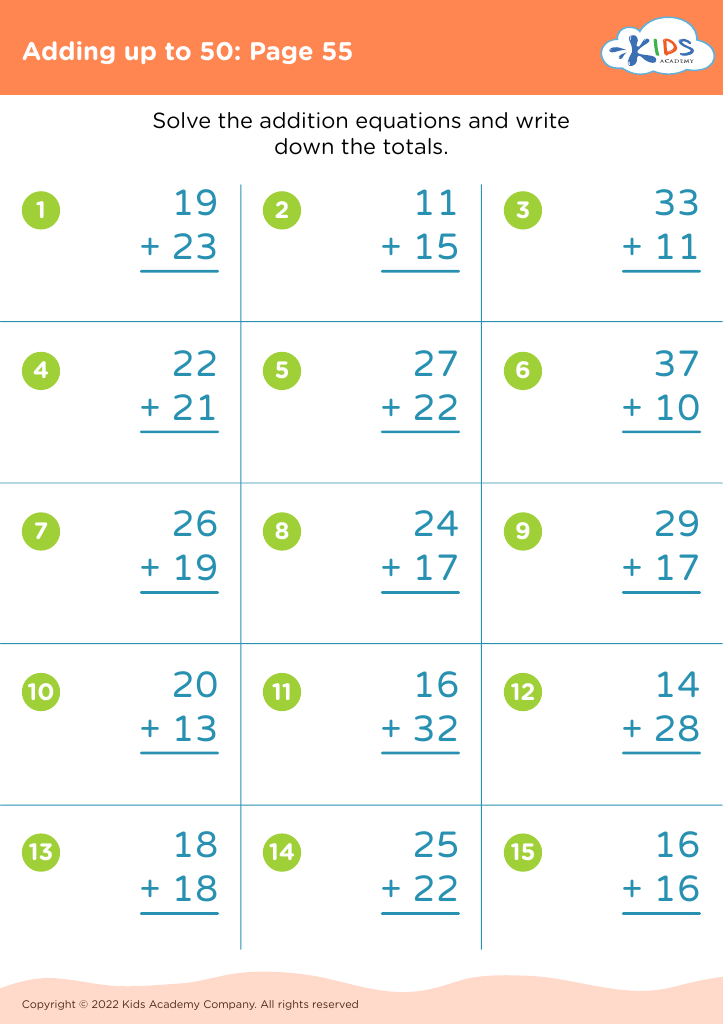
Adding up to 50: Page 55

Adding up to 50: Page 55

Adding up to 50: Page 55
Worksheet
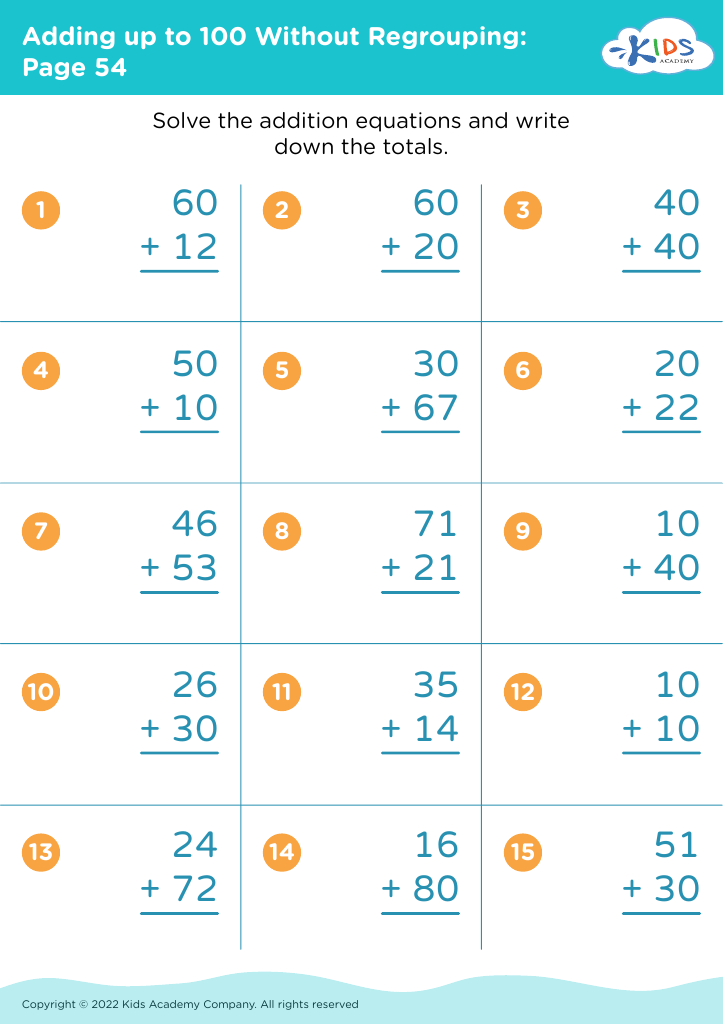
Adding up to 100 Without Regrouping: Page 54
Worksheet
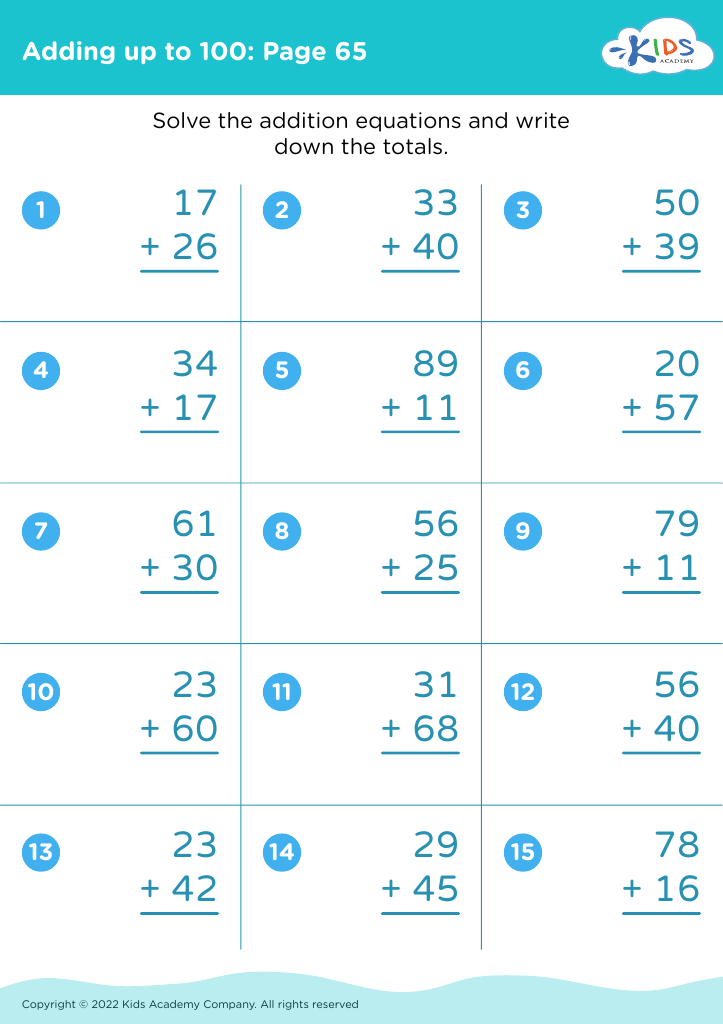
Adding up to 100: Page 65

Adding up to 100: Page 65

Adding up to 100: Page 65
Worksheet
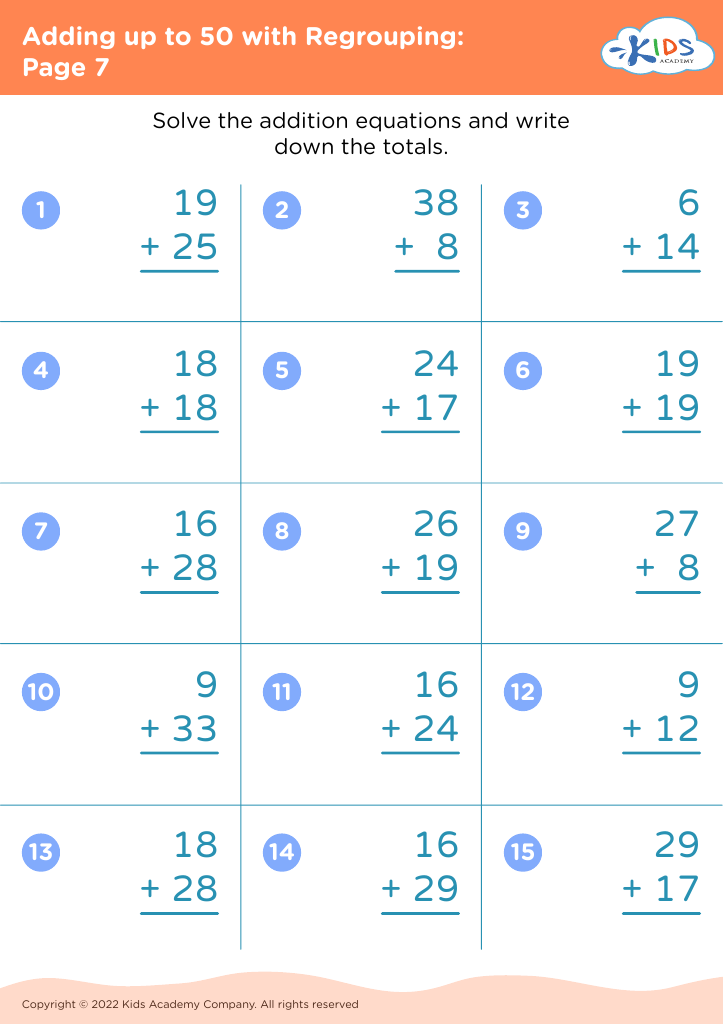
Adding up to 50 with Regrouping: Page 7
Worksheet
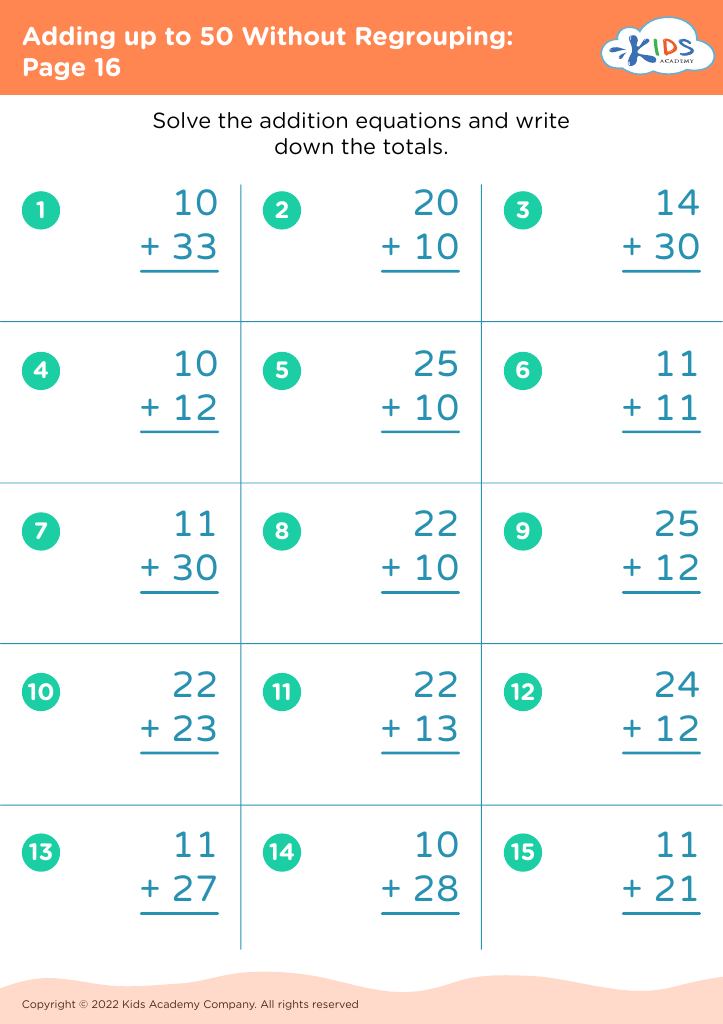
Adding up to 50 Without Regrouping: Page 16
Worksheet
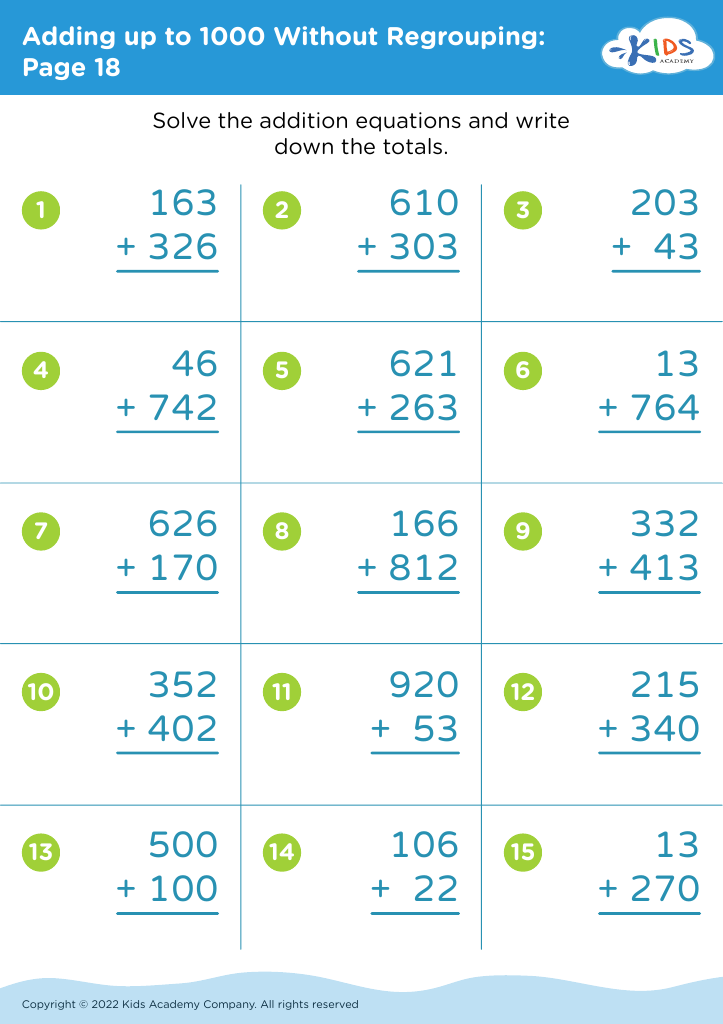
Adding up to 1000 Without Regrouping: Page 18
Worksheet
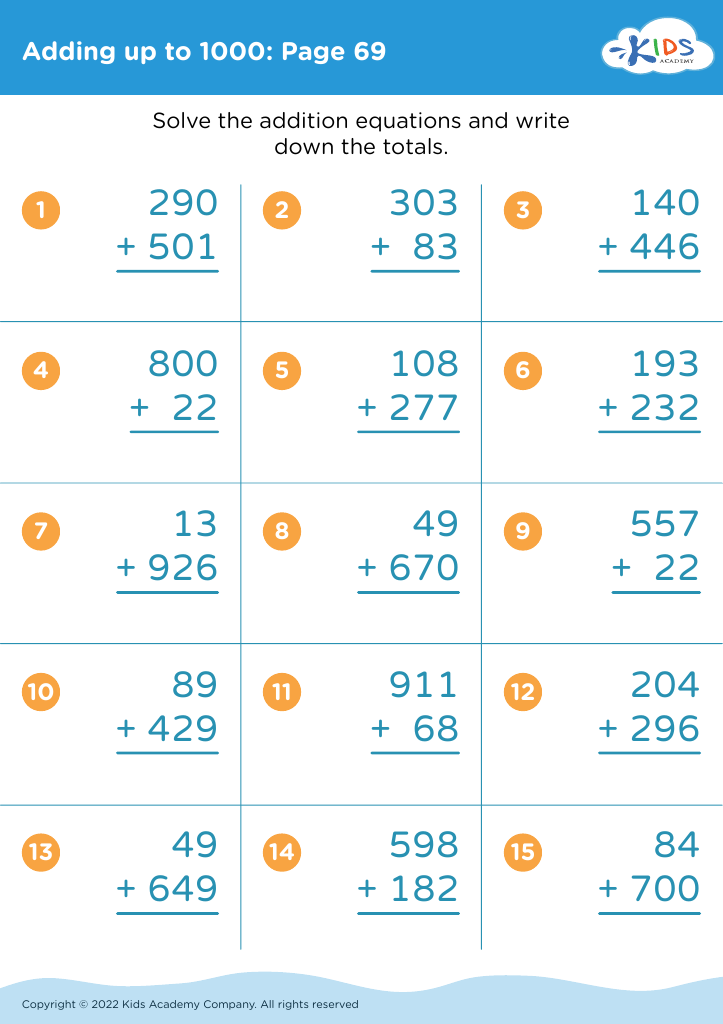
Adding up to 1000: Page 69

Adding up to 1000: Page 69

Adding up to 1000: Page 69
Worksheet
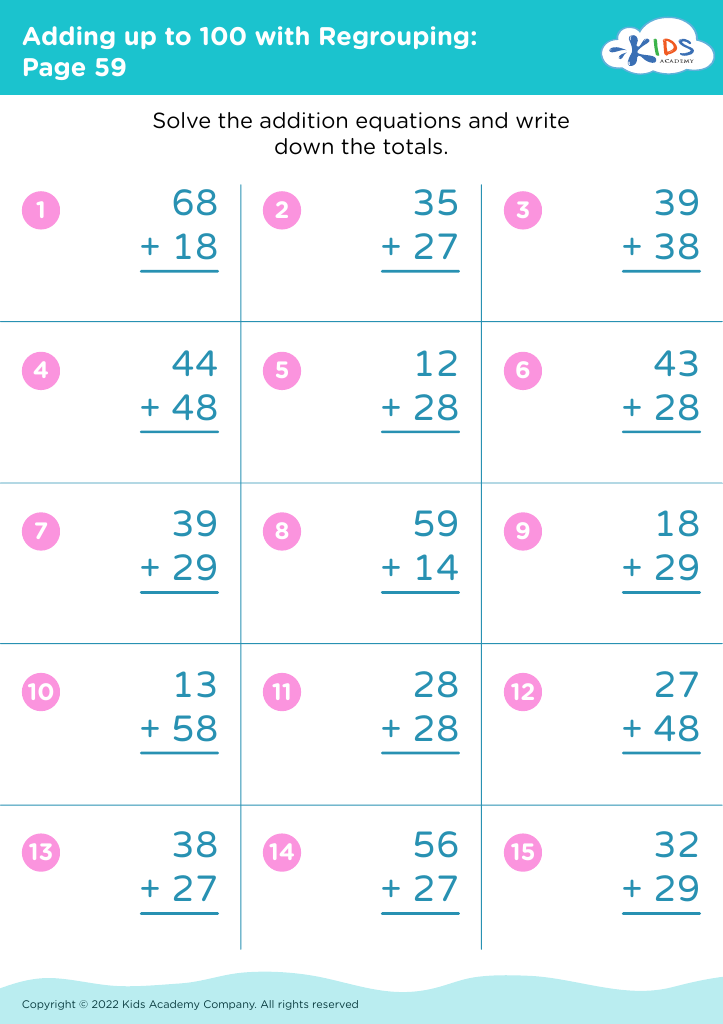
Adding up to 100 with Regrouping: Page 59
Worksheet
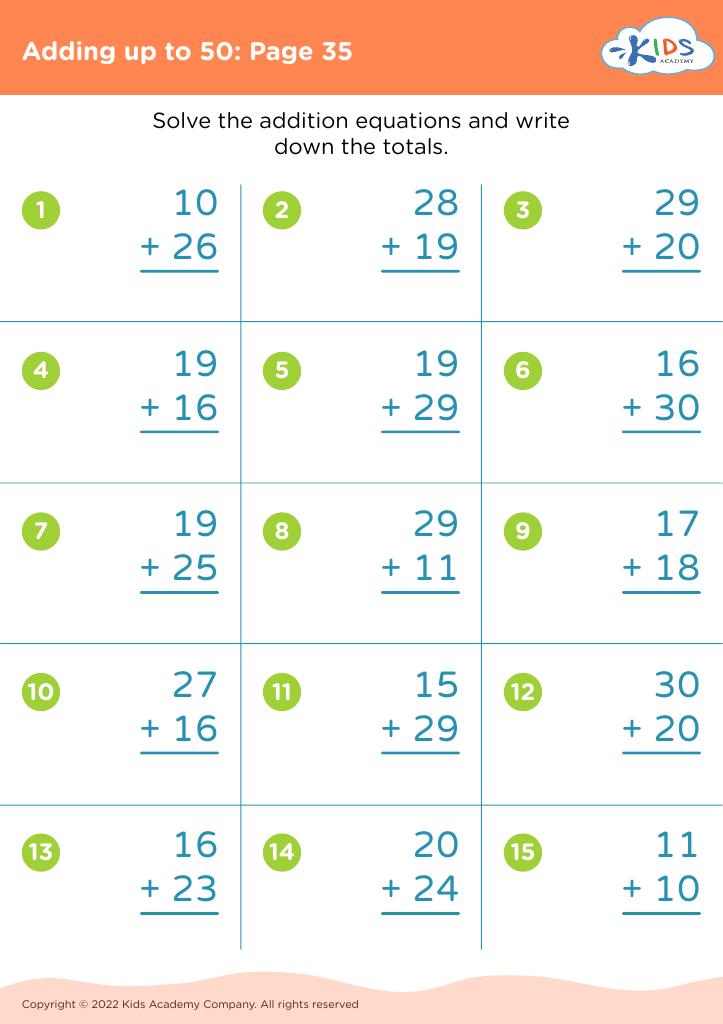
Adding up to 50: Page 35

Adding up to 50: Page 35

Adding up to 50: Page 35
Worksheet
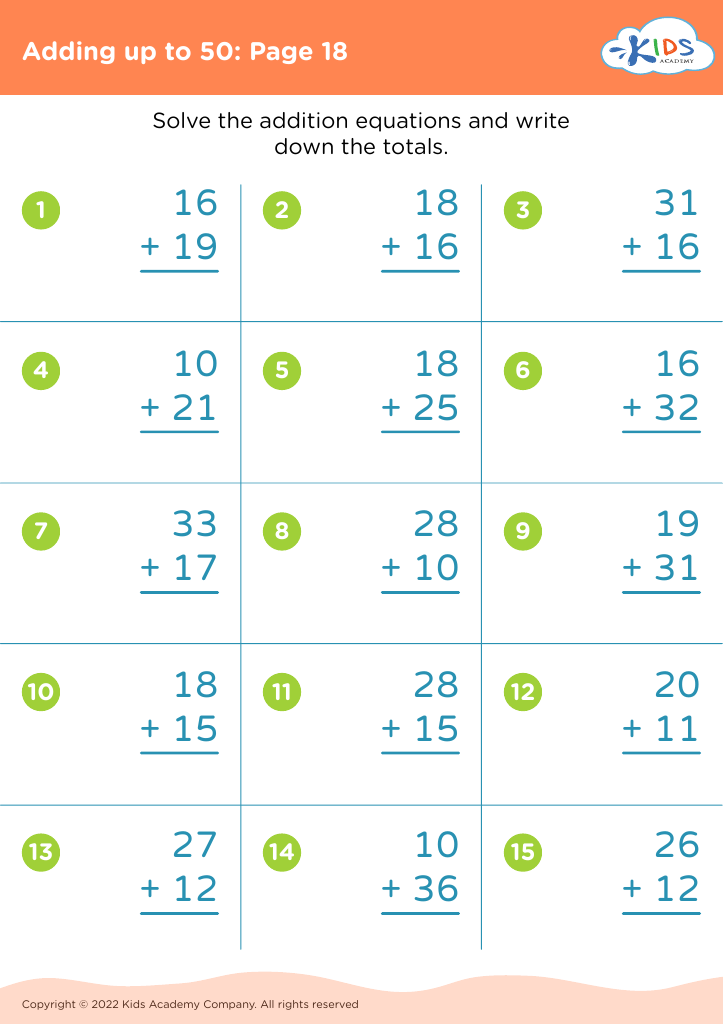
Adding up to 50: Page 18

Adding up to 50: Page 18

Adding up to 50: Page 18
Worksheet
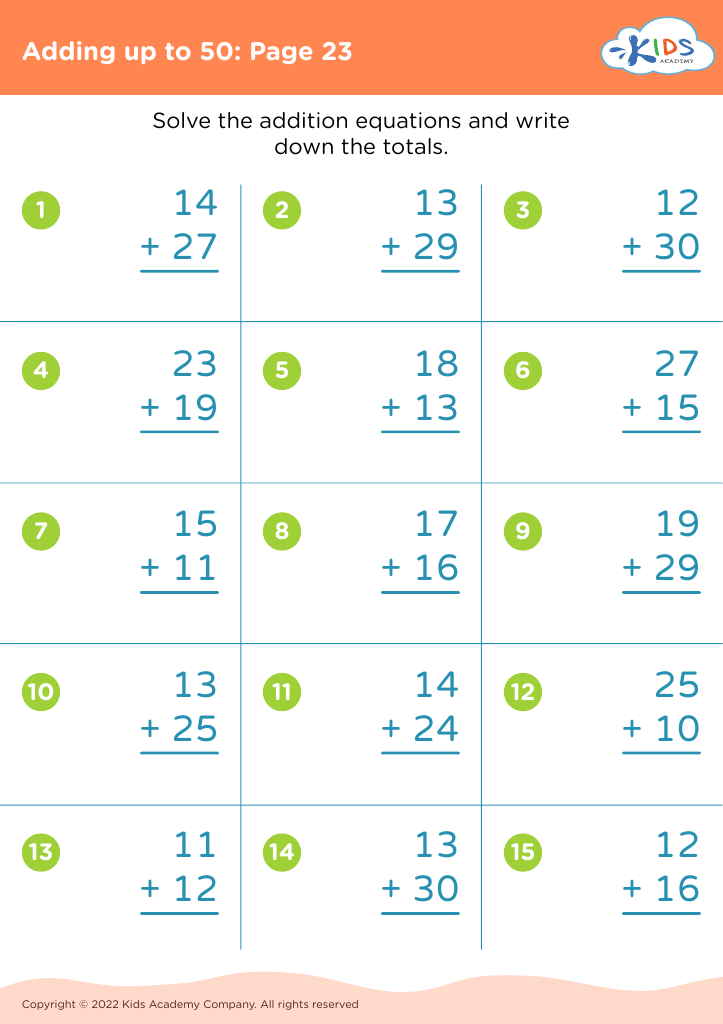
Adding up to 50: Page 23

Adding up to 50: Page 23

Adding up to 50: Page 23
Worksheet
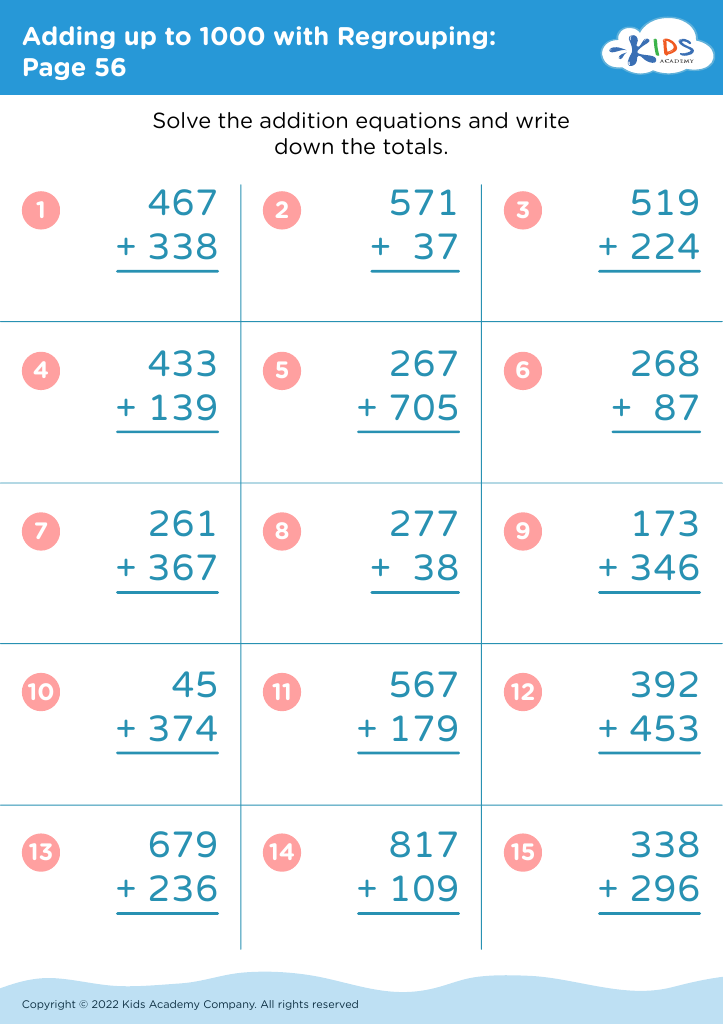
Adding up to 1000 with Regrouping: Page 56
Worksheet
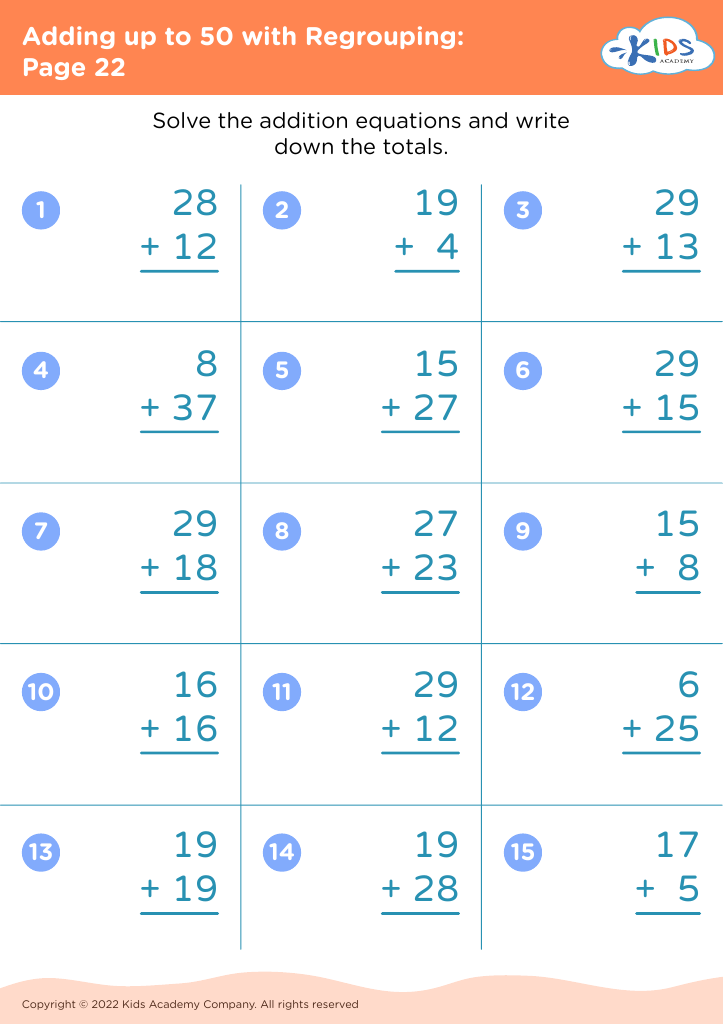
Adding up to 50 with Regrouping: Page 22
Worksheet
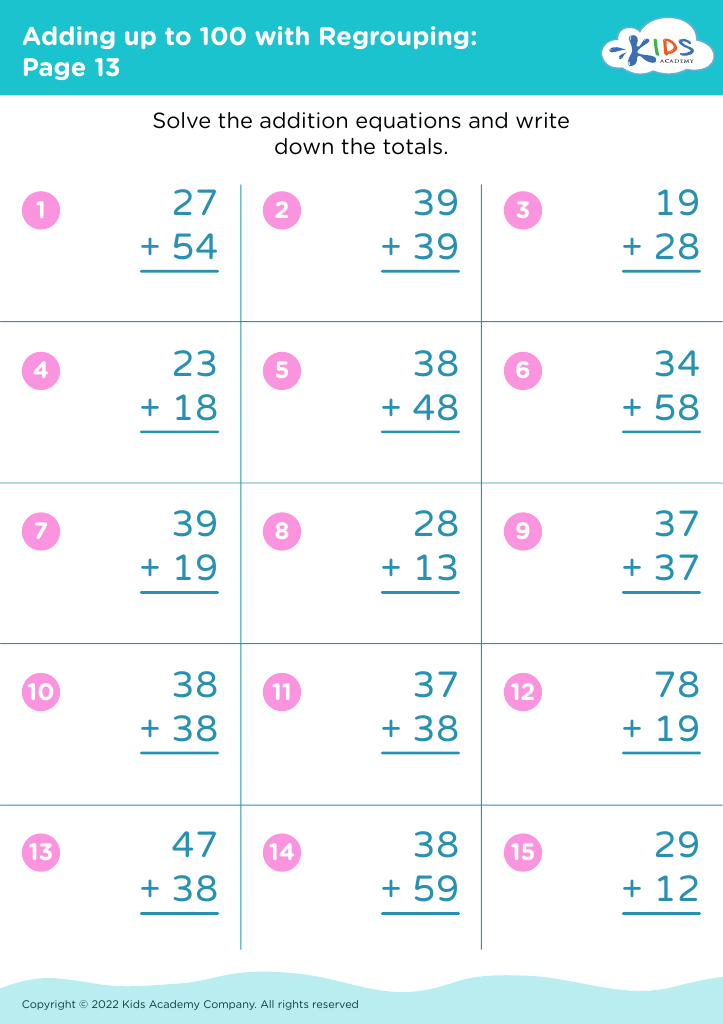
Adding up to 100 with Regrouping: Page 13
Worksheet
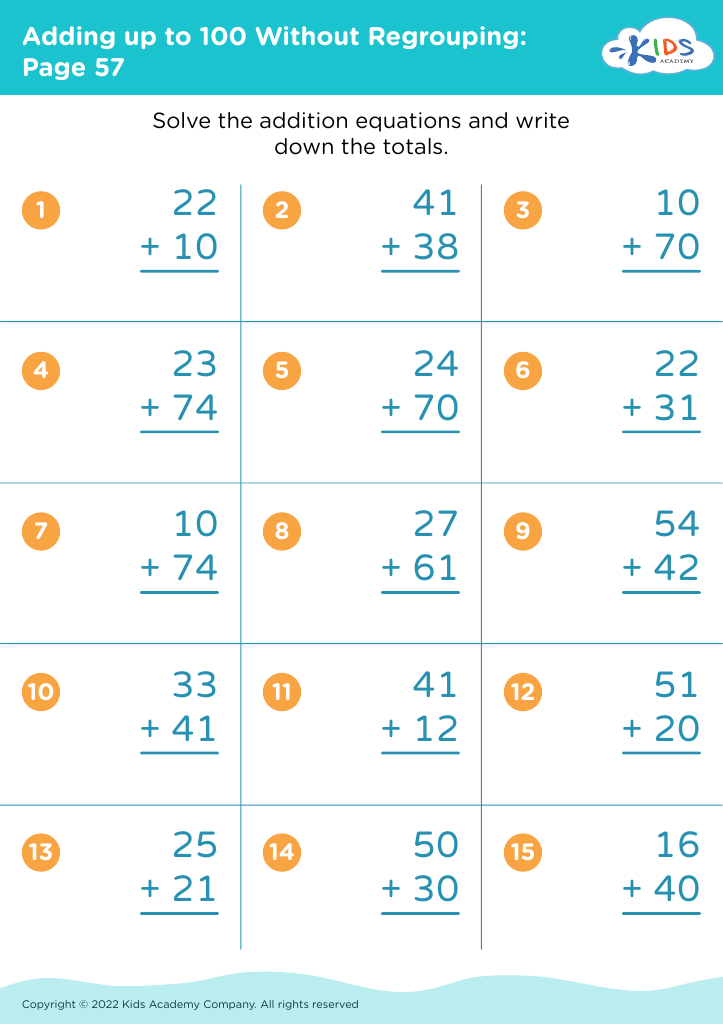
Adding up to 100 Without Regrouping: Page 57
Worksheet
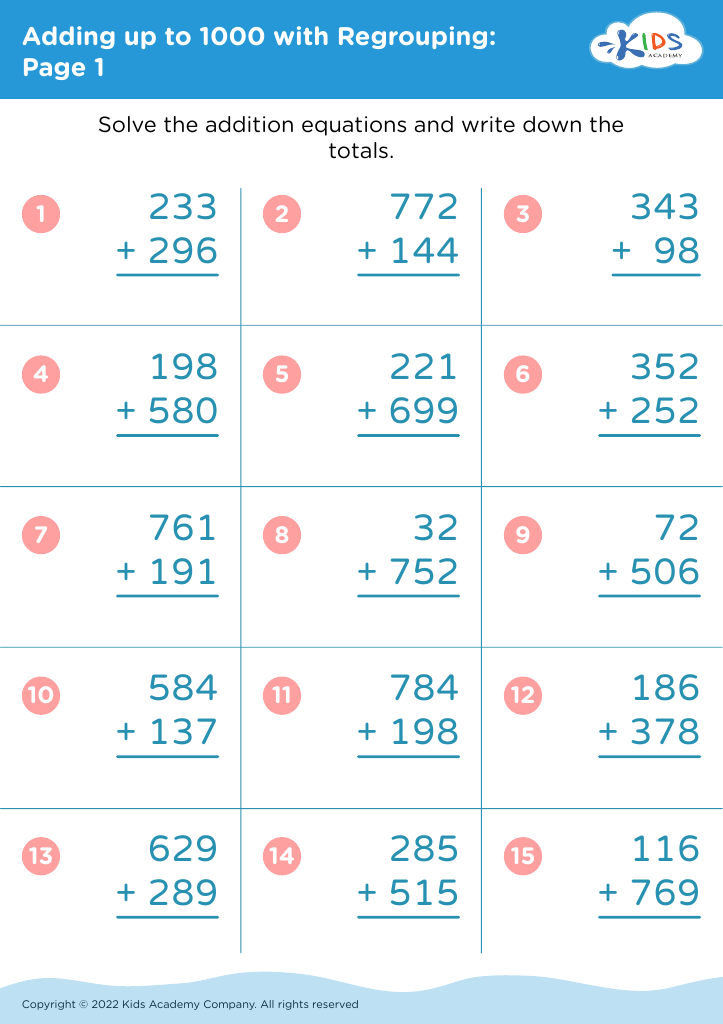
Adding up to 1000 with Regrouping: Page 1
Worksheet


Understanding comparing fractions and addition for ages 7-9 is crucial for several reasons. Firstly, it serves as a foundational math skill that promotes numerical literacy. At this pivotal developmental stage, children are transitioning from concrete to more abstract mathematical concepts. Grasping how to compare and add fractions nurtures their ability to think holistically about quantities and division, underpinning future complex mathematical learning like algebra.

Secondly, mastery in comparing and adding fractions fosters critical thinking and problem-solving skills. These functions teach children how to break down larger problems into manageable parts, analyze relationships, and make reasoned decisions—skills applicable beyond math, enriching everyday life capabilities like cooking or time management.

Thirdly, these mathematical skills enhance confidence and achievement. Early success reinforces a positive attitude toward math, making learners more likely to engage and perform well in subsequent academic subjects. Both teachers and parents play key roles in facilitating these educational milestones. A proactive approach ensures that young learners receive the instruction, practice, and encouragement necessary to thrive.

Lastly, incorporating relatable, hands-on activities like fraction-based games or culinary exercises can make learning engaging and relevant, fostering a lifelong interest and proficiency in mathematics. Therefore, emphasizing fractions addition and comparison is an investment in a child's academic journey and overall intellectual development.