Critical thinking development Addition Worksheets for Ages 7-9
3 filtered results
-
From - To
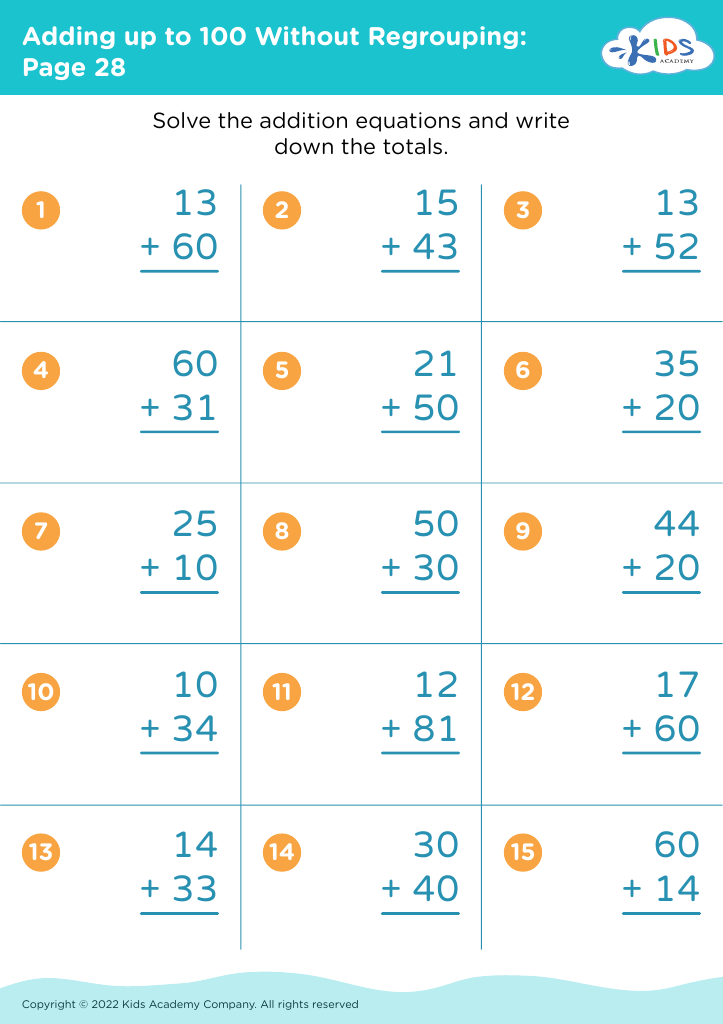
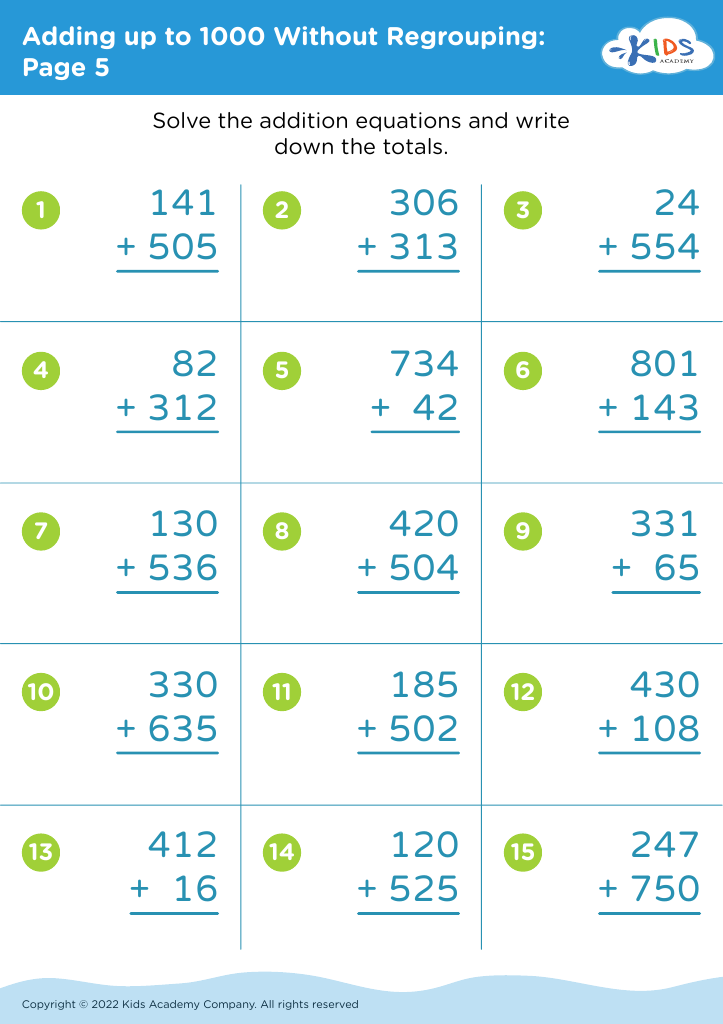
Enhance your child's critical thinking and addition skills with our specially designed worksheets for ages 7-9. These engaging activities go beyond simple arithmetic, promoting deeper understanding and problem-solving abilities. Each worksheet incorporates real-life scenarios and logic puzzles that require students to apply addition concepts thoughtfully. Our expertly crafted resources support cognitive development, helping children recognize patterns, make connections, and evaluate information critically. Perfect for classroom or home use, these worksheets make learning math both challenging and enjoyable, laying a strong foundation for future academic success. Join us in nurturing young minds with tools that inspire and educate.









Promoting critical thinking development in children aged 7-9 is fundamental for their academic success and overall growth. At this developmental stage, children transition from basic understanding to more complex thought processes. Encouraging critical thinking skills lays a foundation for effective problem-solving and decision-making abilities.
When parents and teachers focus on nurturing these skills, children learn to analyze information, ask pertinent questions, and make informed decisions. This not only boosts their confidence in handling academic challenges across subjects such as math and reading, but also enhances their creativity and curiosity. For example, a child who is adept at critical thinking can approach a math problem from different angles to find the best solution, or comprehend a story deeply by thinking about the motivations of its characters.
Moreover, critical thinking is indispensable for social interactions and emotional intelligence. Children learn to consider others' perspectives, solve conflicts amicably, and understand the consequences of their actions. This fosters a respectful and inclusive environment, essential for their social development.
Overall, investing in critical thinking development equips children with versatile tools essential for lifelong learning and adaptability in an ever-changing world. Early interventions by parents and teachers can thus significantly shape a child's future academic and personal success.








