Drawing skills Addition Worksheets for Ages 7-9
6 filtered results
-
From - To
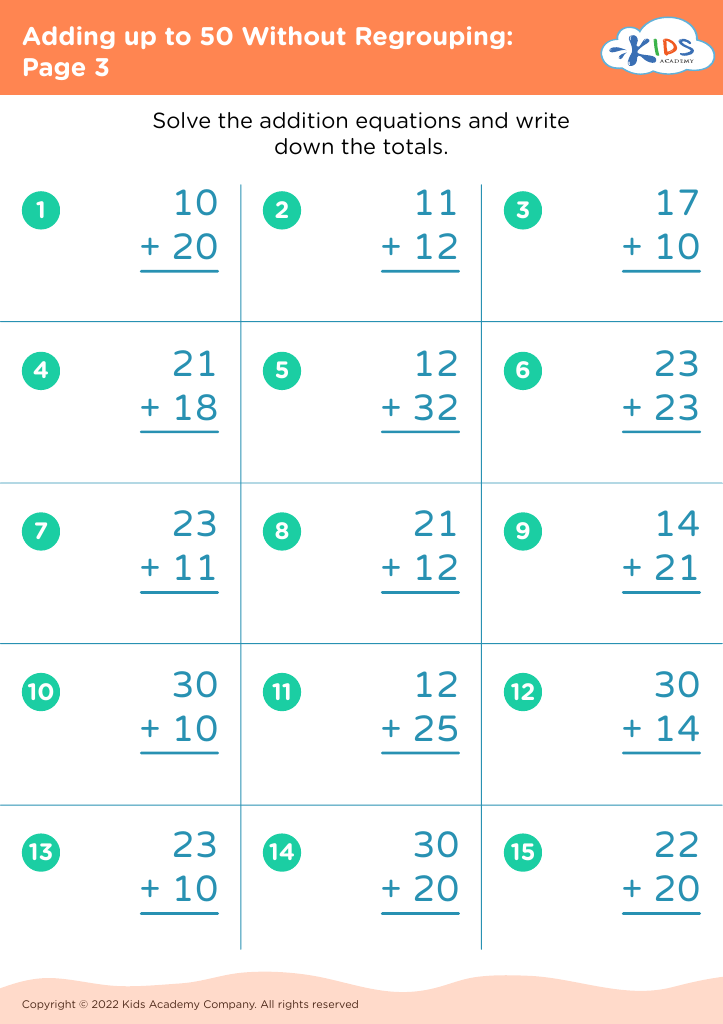
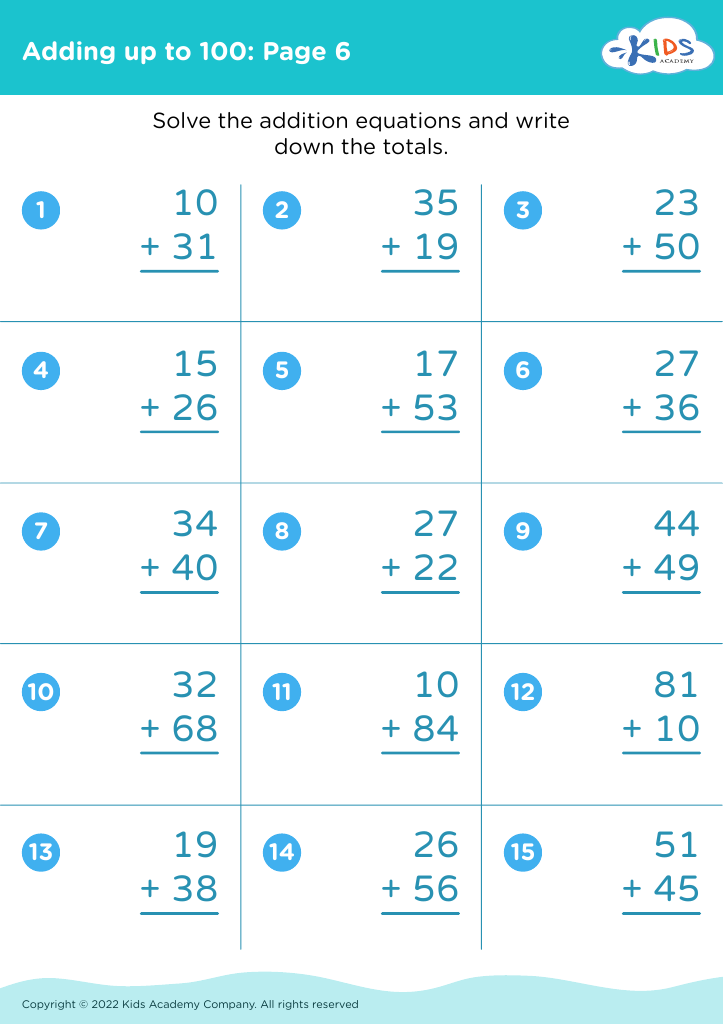
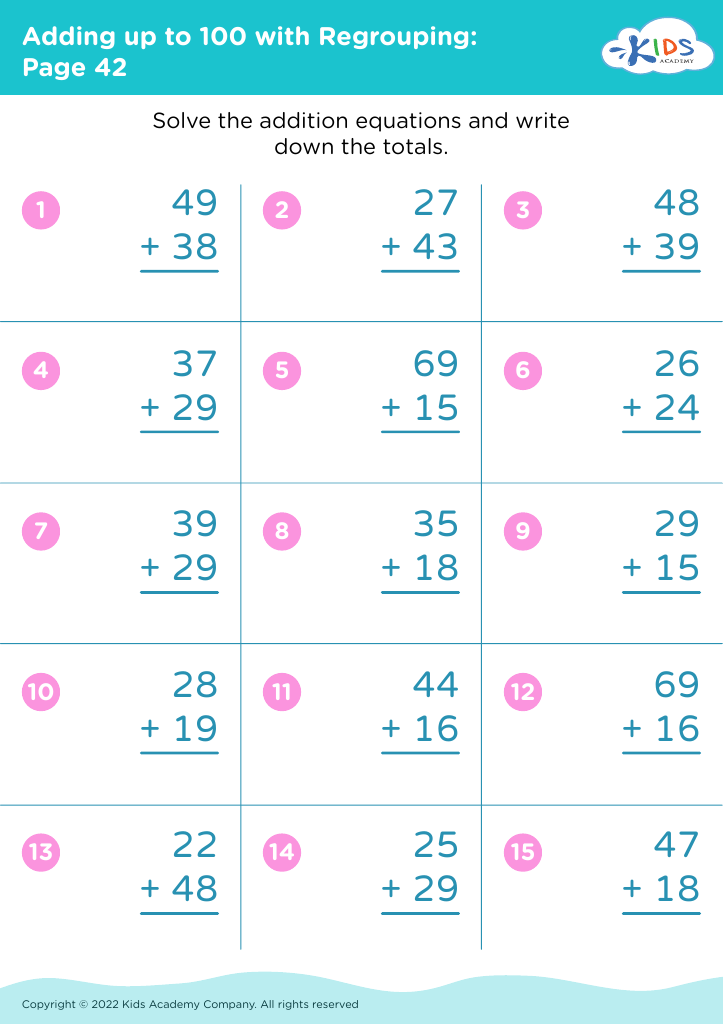
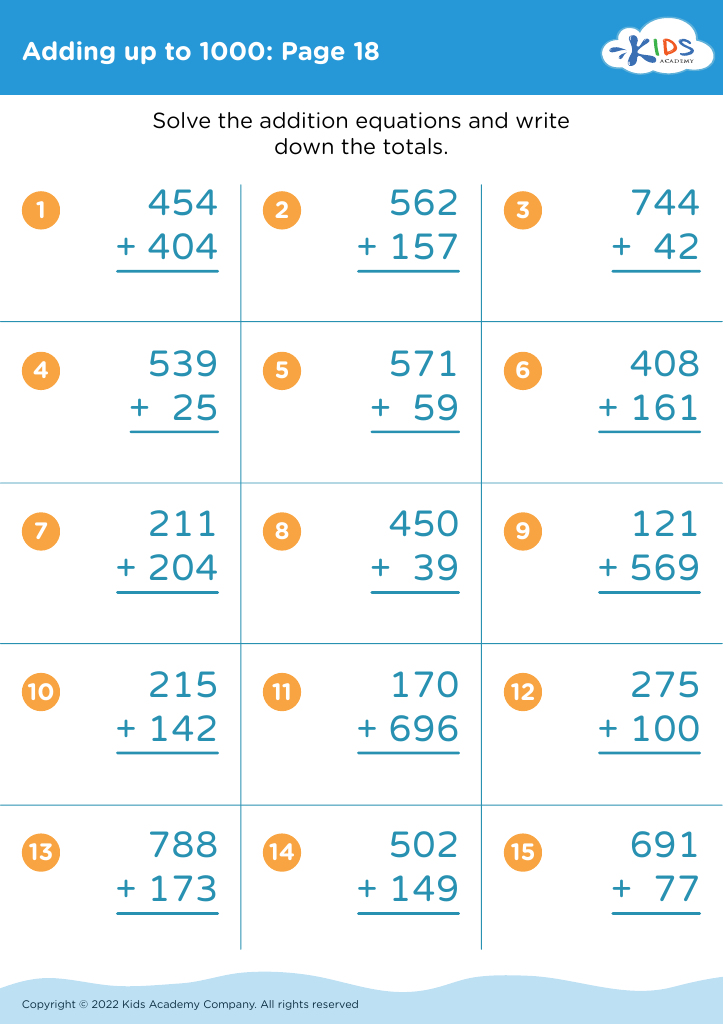
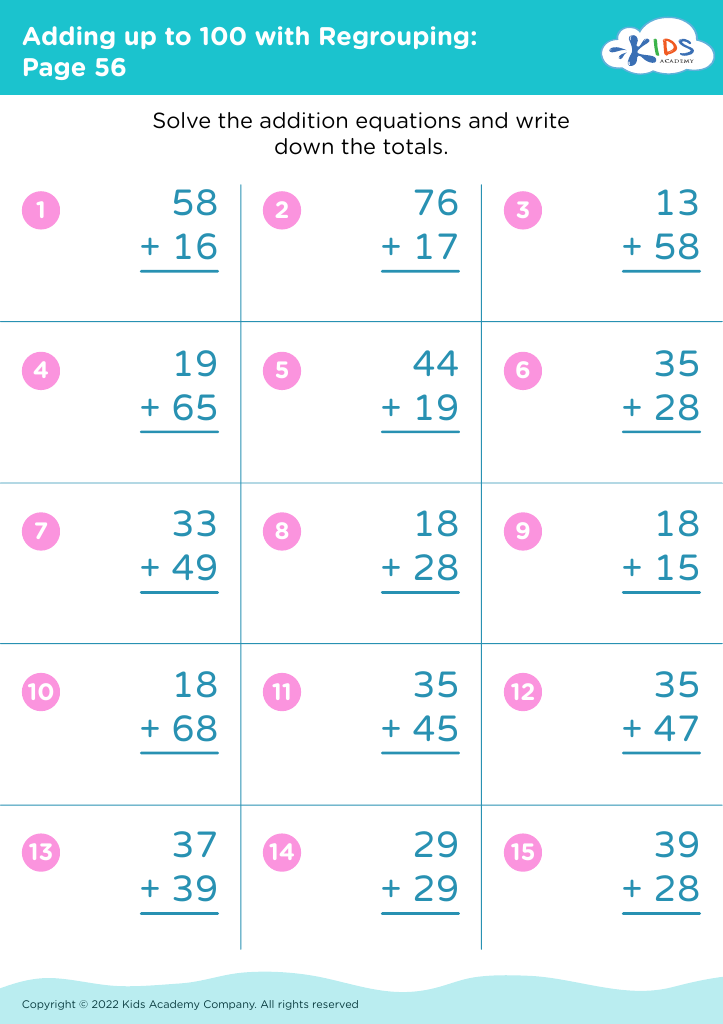
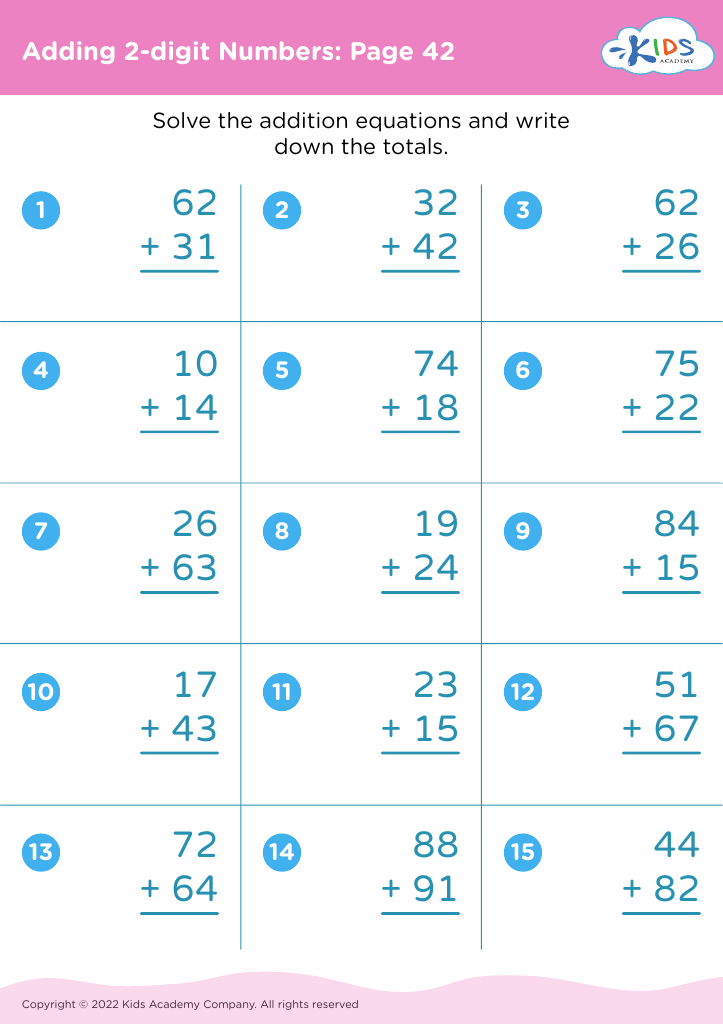
Enhance your child's mathematical proficiency and creativity with our Drawing Skills Addition Worksheets designed for ages 7-9. These engaging worksheets combine basic addition practice with fun drawing exercises, fostering both cognitive development and artistic expression. Each activity encourages kids to solve addition problems to reveal parts of a picture, which they can then color and decorate. This unique blend of math and art not only reinforces addition skills but also boosts fine motor skills, attention to detail, and creativity. Perfect for classroom or home learning, these worksheets make math practice an enjoyable and rewarding experience!








Encouraging drawing skills among children aged 7-9 holds significant benefits for their overall development. At this formative stage, drawing serves as a fundamental means for self-expression, allowing young minds to articulate their thoughts and emotions visually. This is especially crucial as children in this age group may not yet have the full vocabulary to express complex ideas or feelings.
Developing drawing skills also promotes fine motor skills, improving hand-eye coordination and muscle control, which are essential for writing and other tasks requiring precision. Additionally, it fosters creativity and imagination, as kids experiment with different shapes, colors, and concepts.
From a cognitive perspective, drawing enhances visual-spatial reasoning. As children learn to represent 3D objects on a 2D surface, they develop an understanding of space and geometry, laying a foundation for future STEM learning. Moreover, drawing often requires problem-solving and critical thinking, as children plan and execute their ideas.
Finally, the act of drawing can be a therapeutic and relaxing activity, providing children with a constructive outlet for stress and anxiety. It can also improve focus and patience, skills beneficial both in and out of the classroom.
In conclusion, drawing skills addition for ages 7-9 supports emotional, physical, cognitive, and social development, making it an essential component of early education.








