Enhance counting skills Addition Worksheets for Ages 7-9
12 filtered results
-
From - To
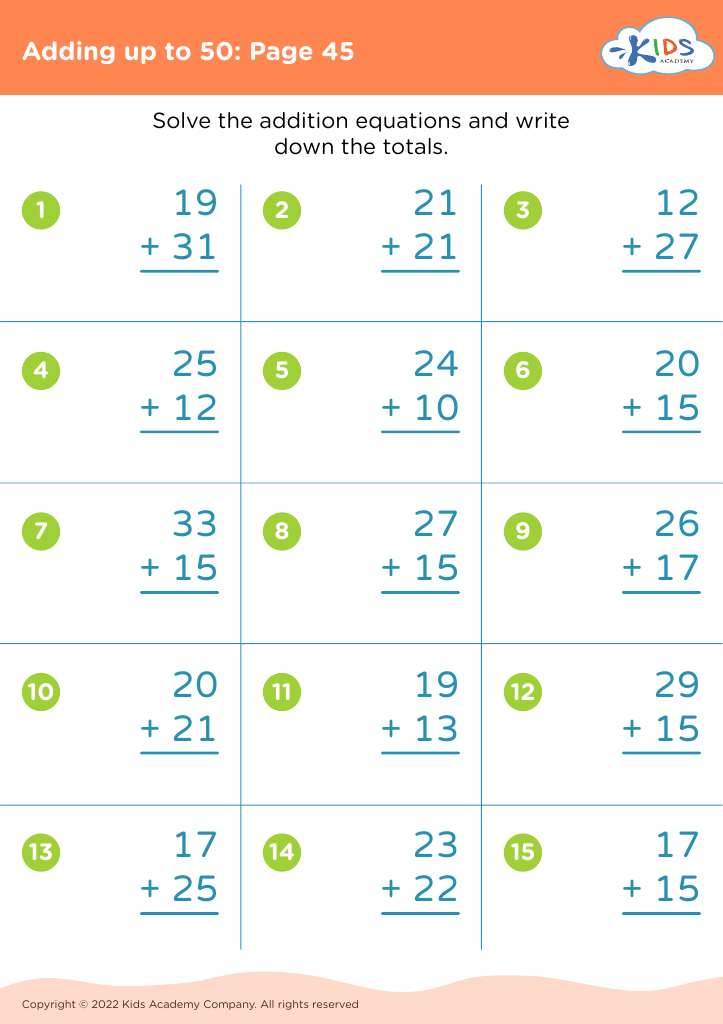
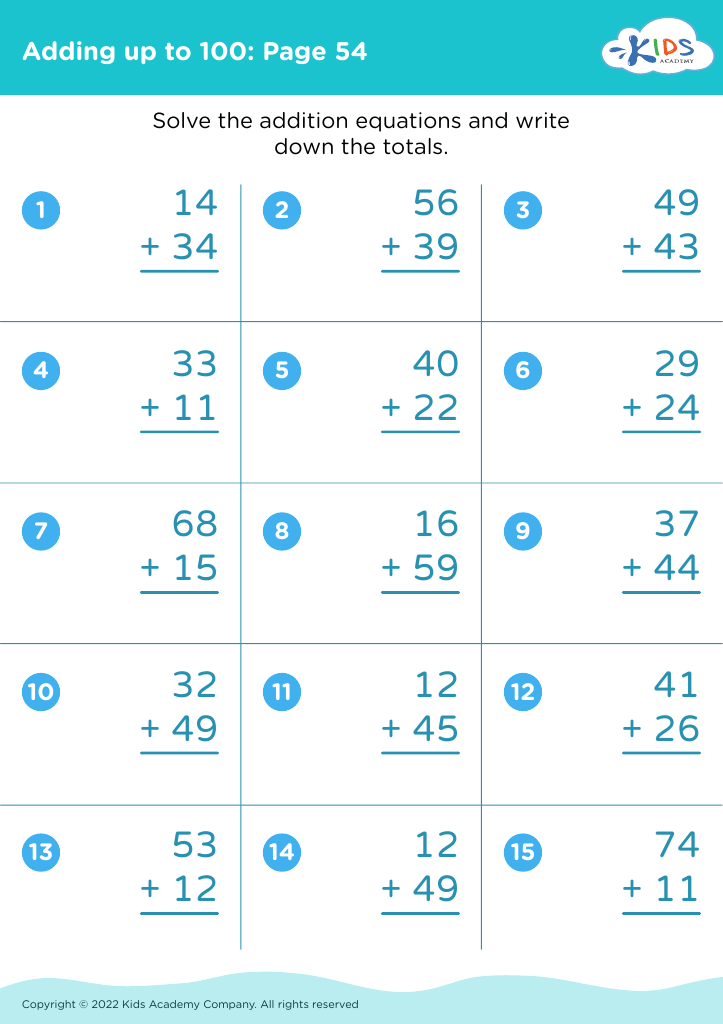
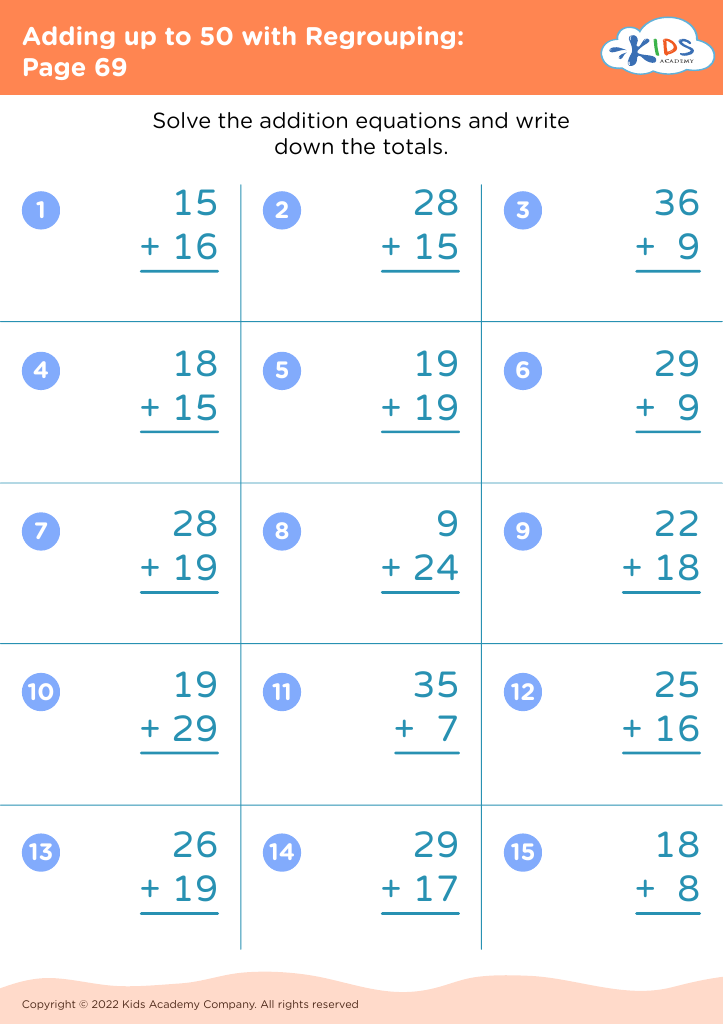
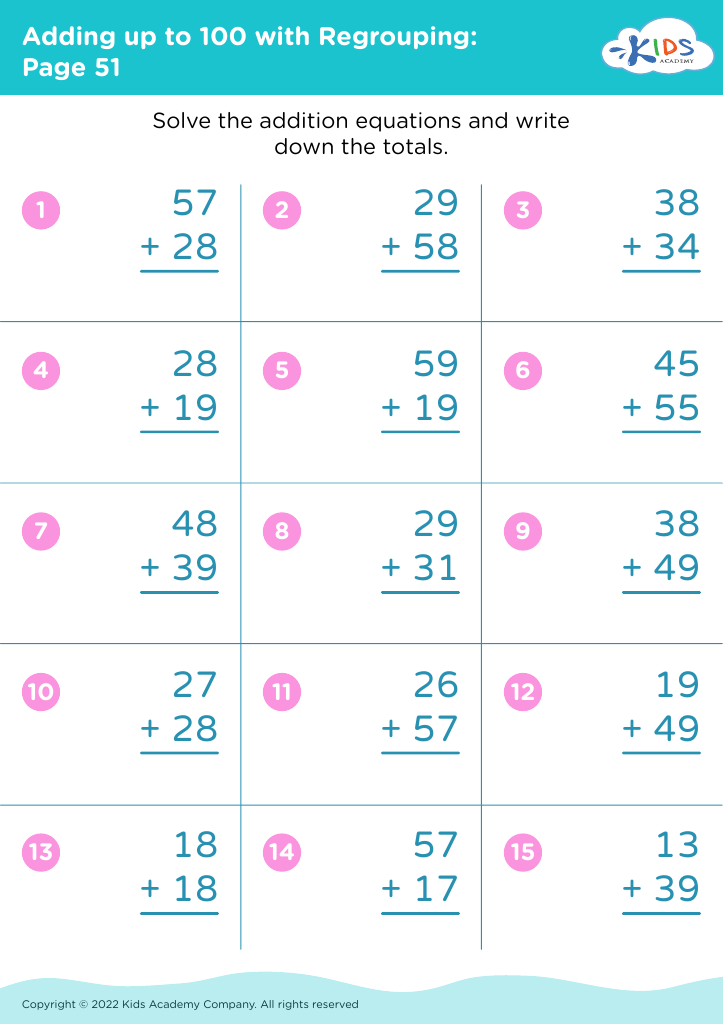
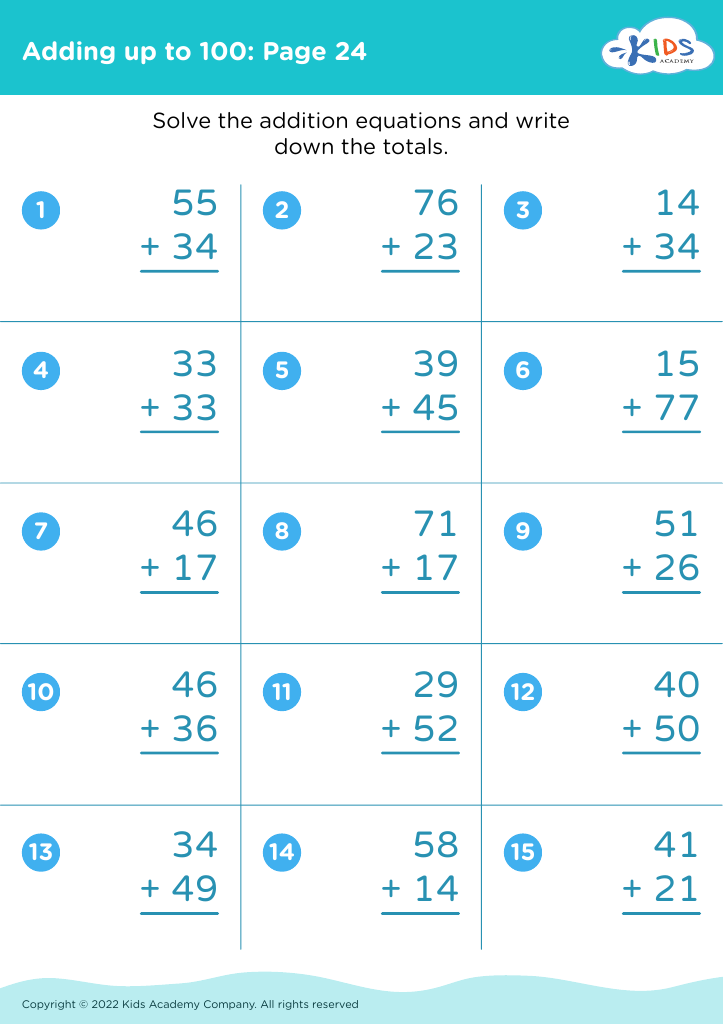
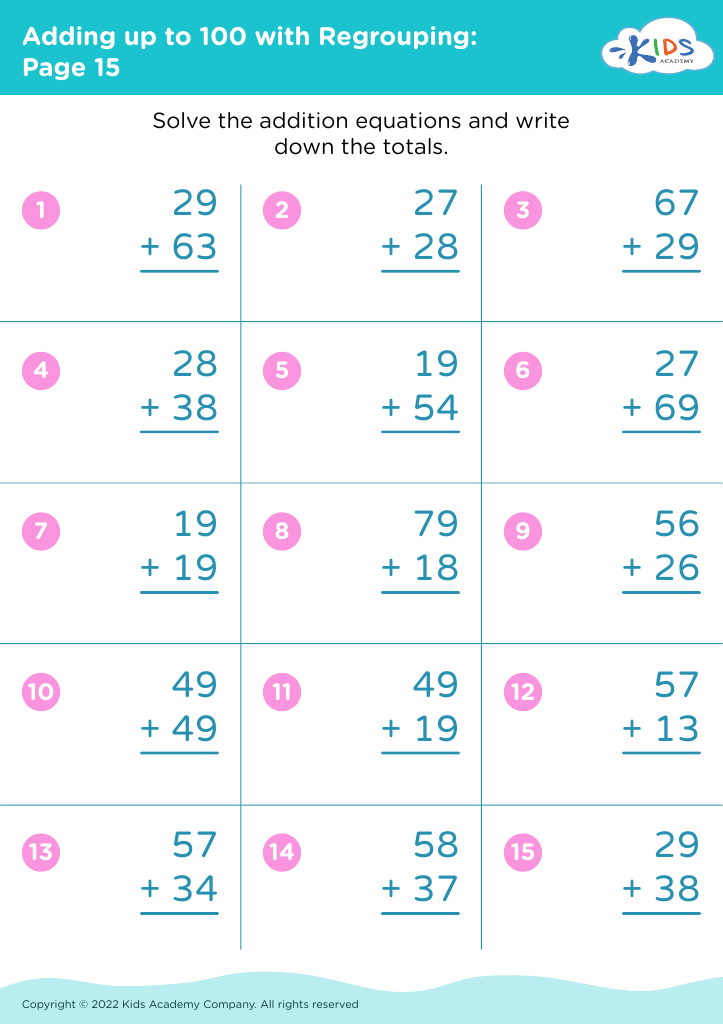
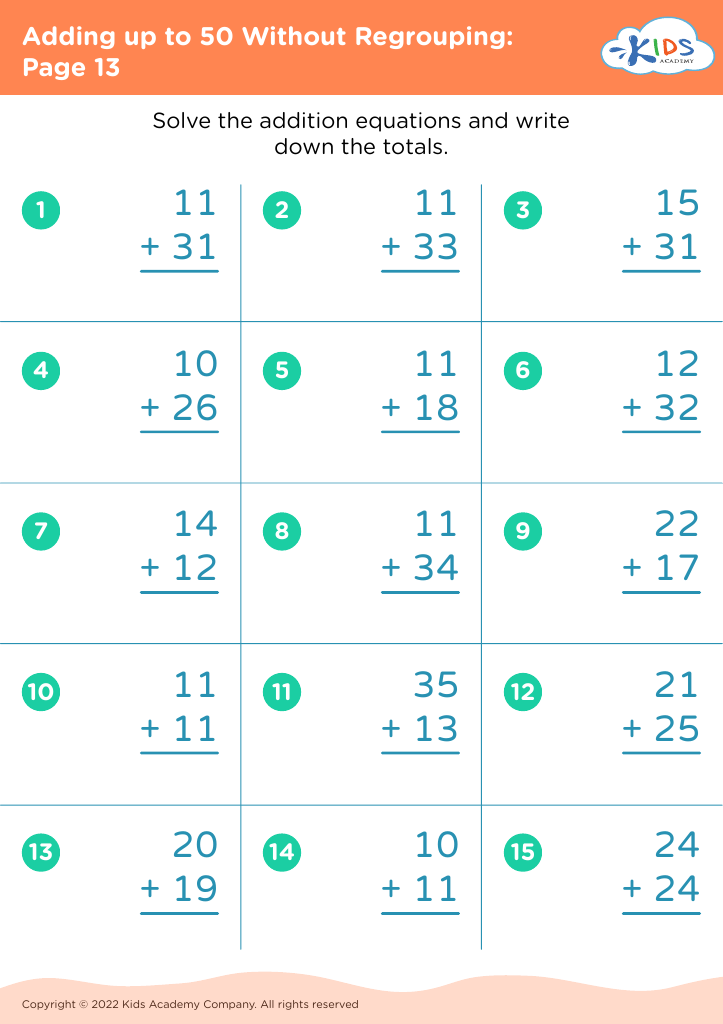
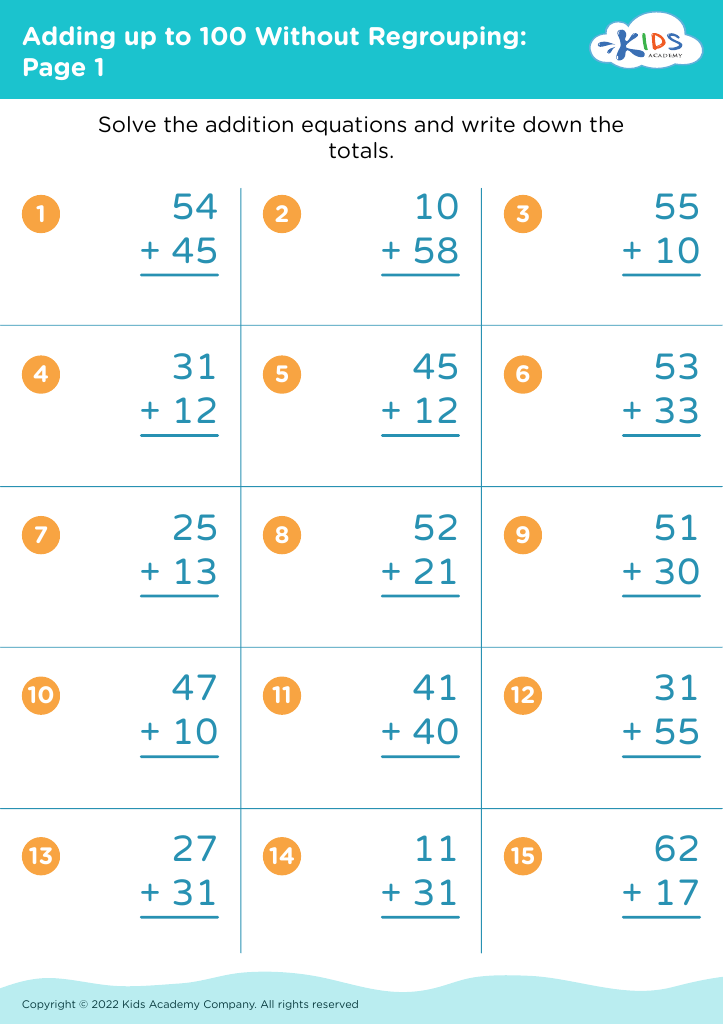
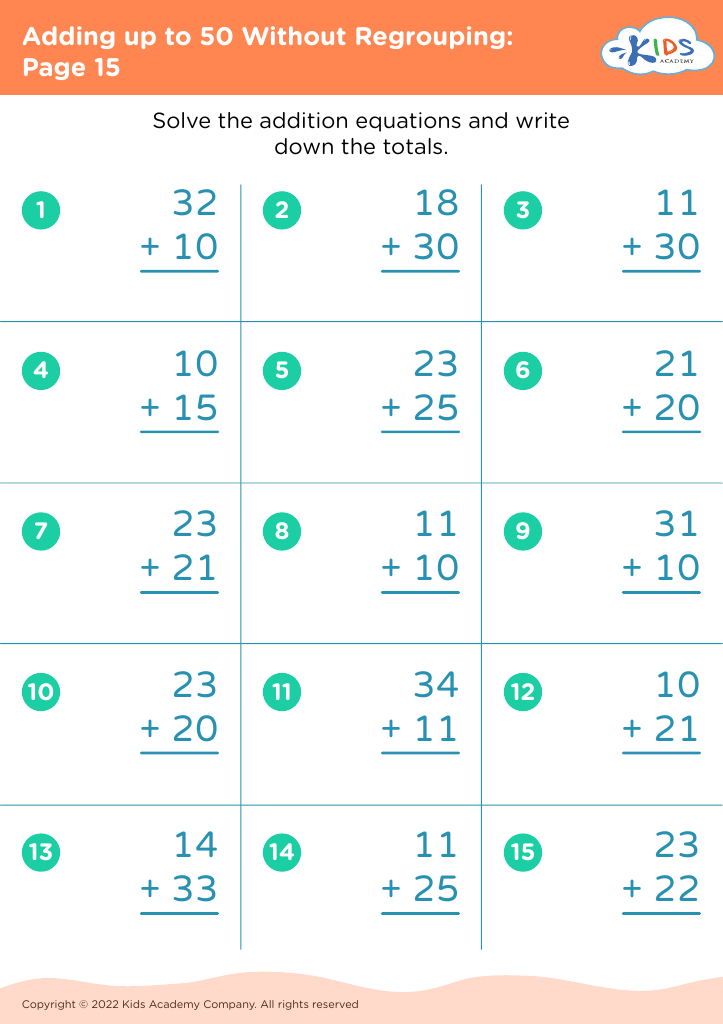
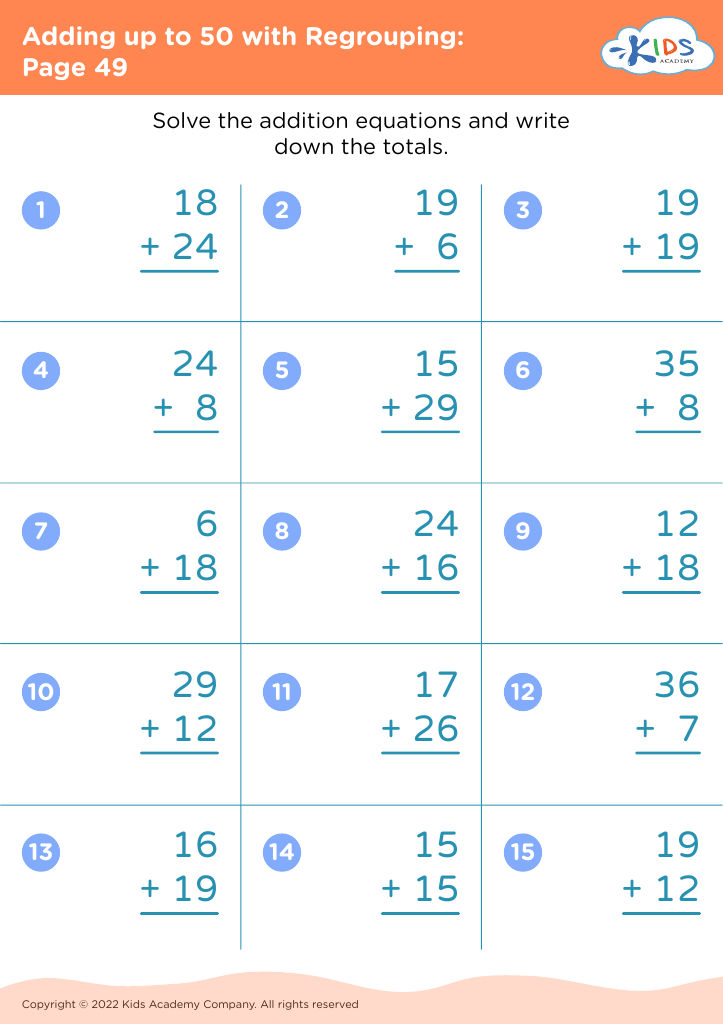
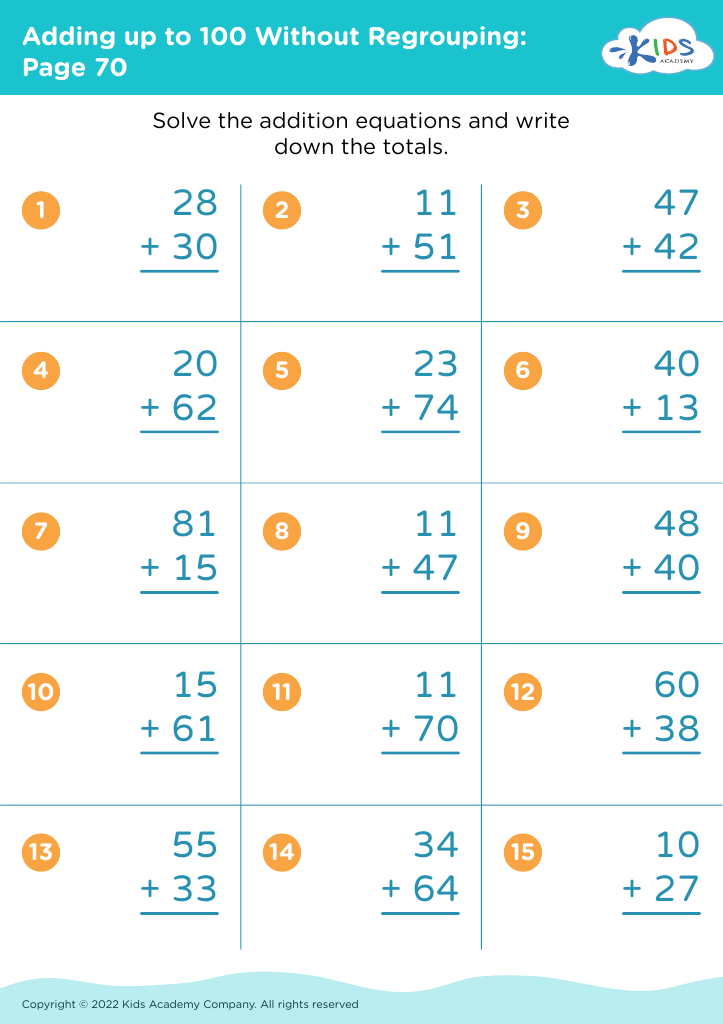
Enhance your child’s counting skills with our engaging Addition Worksheets designed specifically for ages 7-9. These expertly crafted resources help reinforce fundamental math concepts while making learning enjoyable. Each worksheet features vibrant graphics and captivating activities that nurture critical thinking and problem-solving abilities. Kids will explore addition through fun, interactive exercises, boosting their confidence in math. Whether at home or in the classroom, our worksheets are perfect for supplementing lessons or providing extra practice. Get ready to unlock your child's mathematical potential and watch their skills flourish with our Enhance Counting Skills Addition Worksheets! Start their arithmetic adventure today!
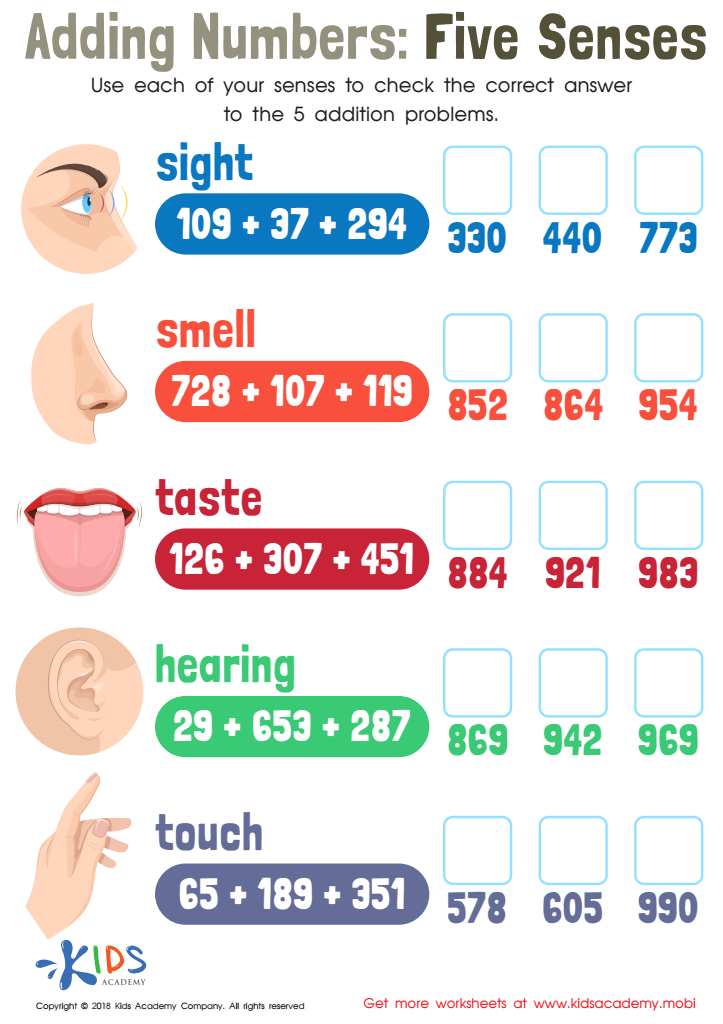
Adding Numbers: Five Senses Worksheet
 Assign to My Students







.jpg)
Enhancing counting skills and addition for children aged 7-9 is crucial for their cognitive development and overall academic success. At this age, children are transitioning from basic arithmetic to more complex mathematical concepts. A strong foundation in counting and addition sets the stage for skills such as subtraction, multiplication, and division. This period is marked by increased cognitive abilities, and fostering these skills can lead to greater confidence in mathematics, reducing anxiety towards what can often be a challenging subject.
Parents and teachers should care because proficient counting and addition contribute to a child’s problem-solving abilities and logical reasoning. Additionally, these skills are applicable beyond the classroom—everyday activities such as shopping, cooking, and budgeting activities integrate these mathematical concepts, promoting essential life skills.
Investing time in this development not only benefits academic learning but also nurtures a child’s curiosity and love for learning. When teachers and parents collaborate in reinforcing counting and addition skills, they create a supportive environment where children feel empowered to tackle new challenges. Ultimately, strong foundational skills can lead to improved performance in mathematics, enhancing future educational opportunities and fostering lifelong learning.








