Enhances counting skills Addition Worksheets for Ages 7-9
5 filtered results
-
From - To
Enhance your child's counting skills with our engaging Addition Worksheets designed specifically for ages 7-9. These worksheets provide a fun and interactive way to practice addition while reinforcing essential counting concepts. Activities focus on building foundational math abilities, encouraging problem-solving, and boosting confidence in arithmetic skills. Our colorful and user-friendly designs cater to different learning styles, making it easy for young learners to stay motivated. With a variety of exercises, from simple addition problems to word challenges, children will develop their counting skills effectively. Equip your child with the tools they need to excel in math and enjoy learning through play!
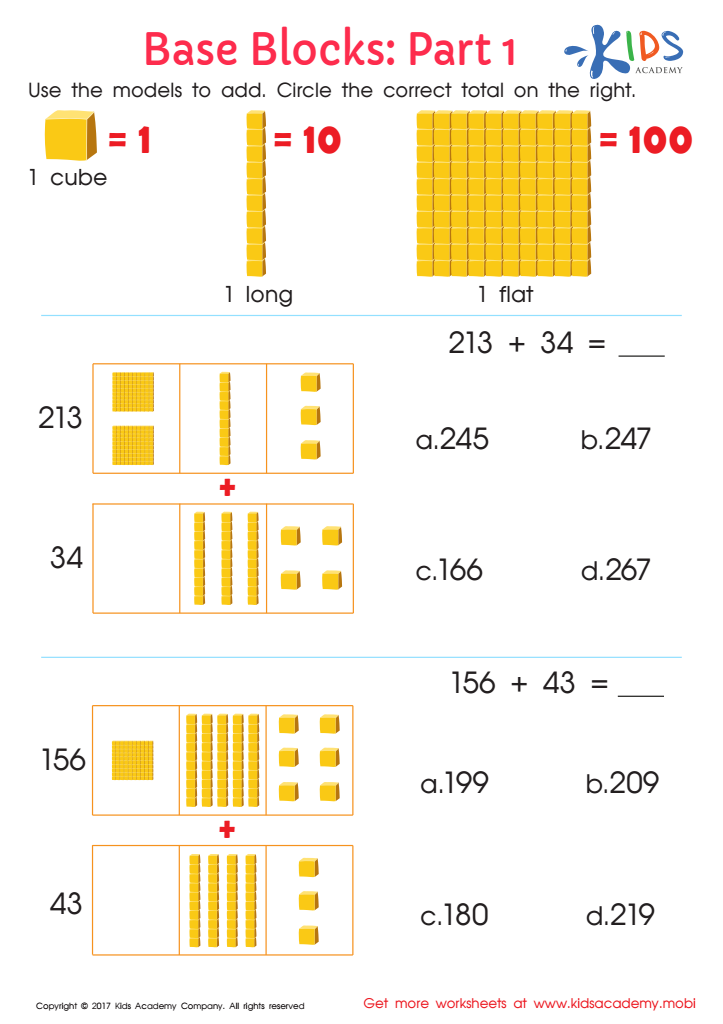
Base Ten Blocks Worksheet: Part 1
 Assign to My Students
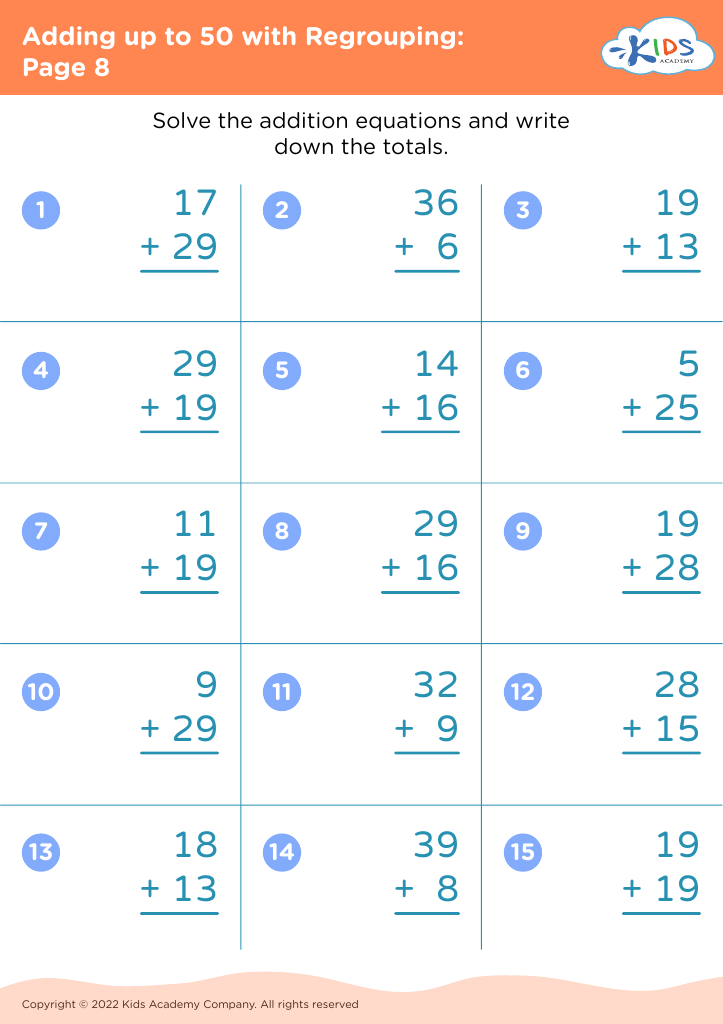
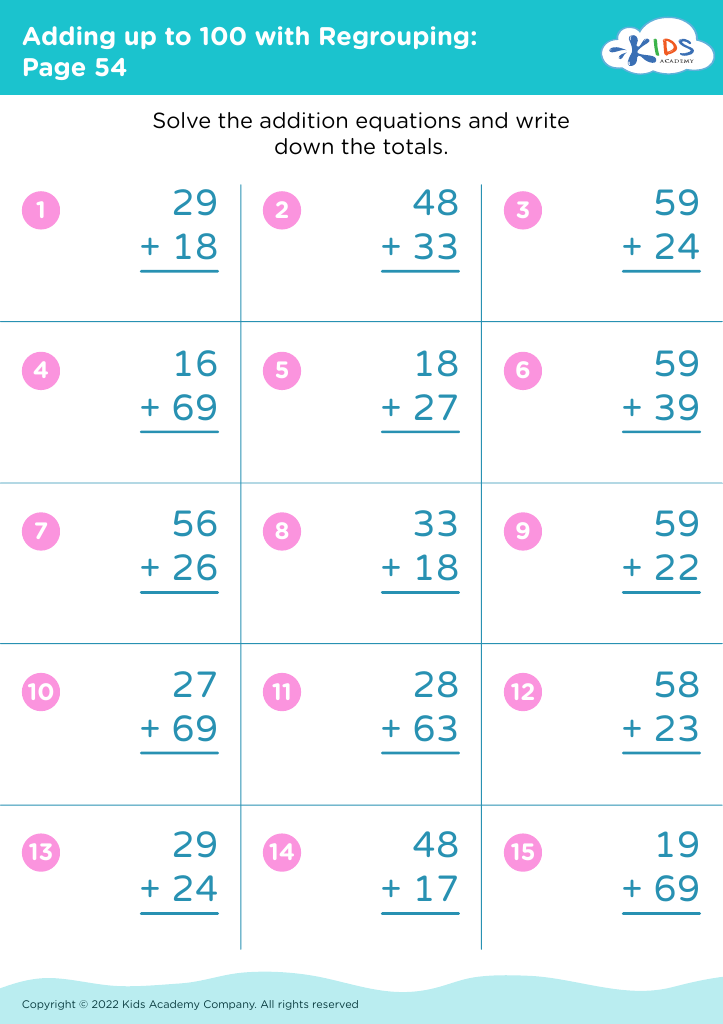
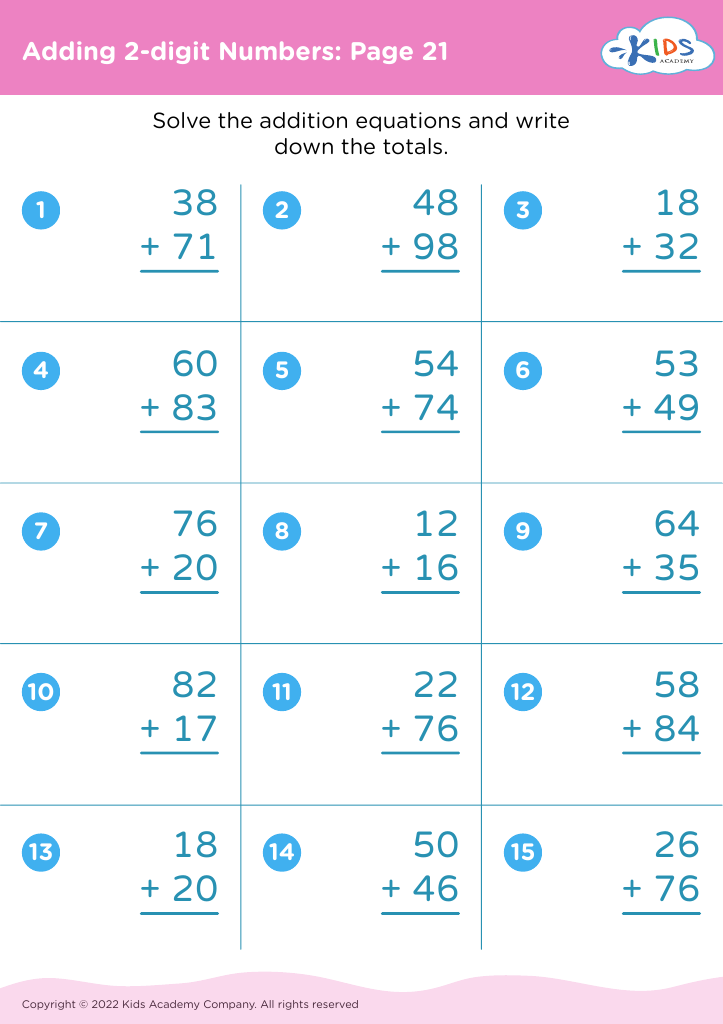
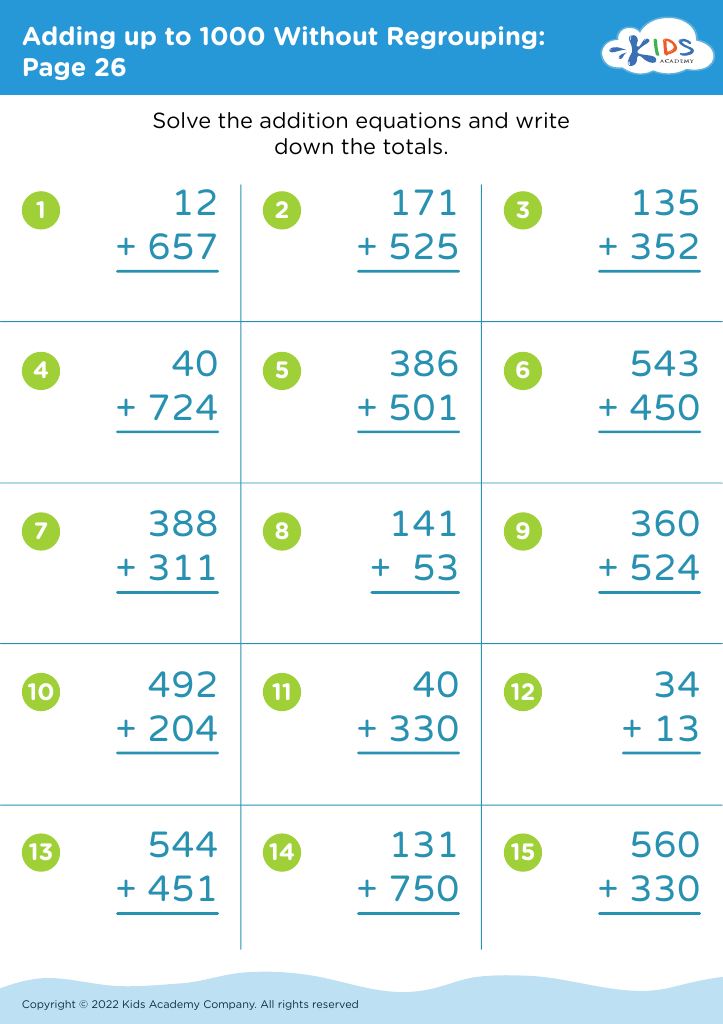








Enhancing counting skills and addition for children aged 7-9 is crucial as these foundational abilities significantly impact their overall mathematical proficiency. During this developmental stage, children transition from basic counting to more complex mathematical concepts. Mastery of counting enhances their ability to add larger numbers, facilitating a better understanding of both addition and subtraction, which are fundamental for more complex operations such as multiplication and division.
Educators and parents should prioritize these skills for several reasons. First, strong counting and addition skills build children's confidence and encourage a positive attitude toward mathematics, reducing math anxiety. Second, these abilities are not just academic; they apply to everyday situations like shopping, cooking, and time management, making math relevant and practical.
Furthermore, teaching counting and addition effectively fosters critical thinking and problem-solving skills. Children learn to recognize patterns, solve puzzles, and approach challenges logically. Engaging activities, games, and hands-on learning can make this practice enjoyable, reinforcing their interest in mathematics.
In conclusion, fostering counting and addition skills equips children with essential tools that support their academic growth, enhances their life skills, and prepares them for future mathematical learning and understanding. Parents and teachers play critical roles in this foundational phase, shaping children's attitudes toward math.








