Fine motor skills (writing) Addition Worksheets for Ages 7-9
6 filtered results
-
From - To
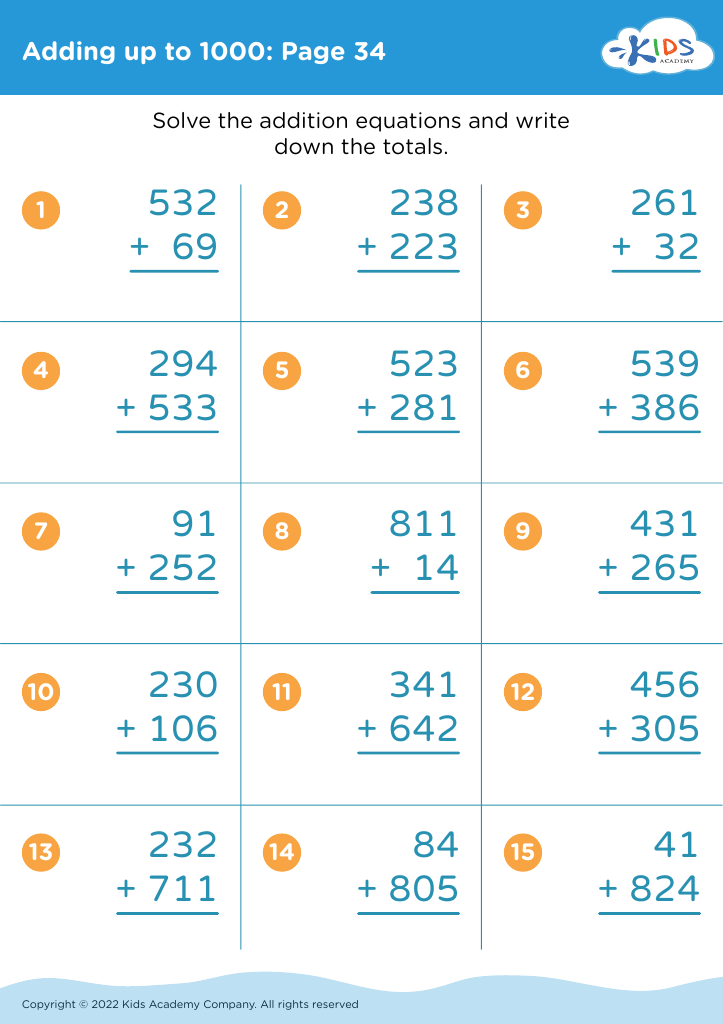
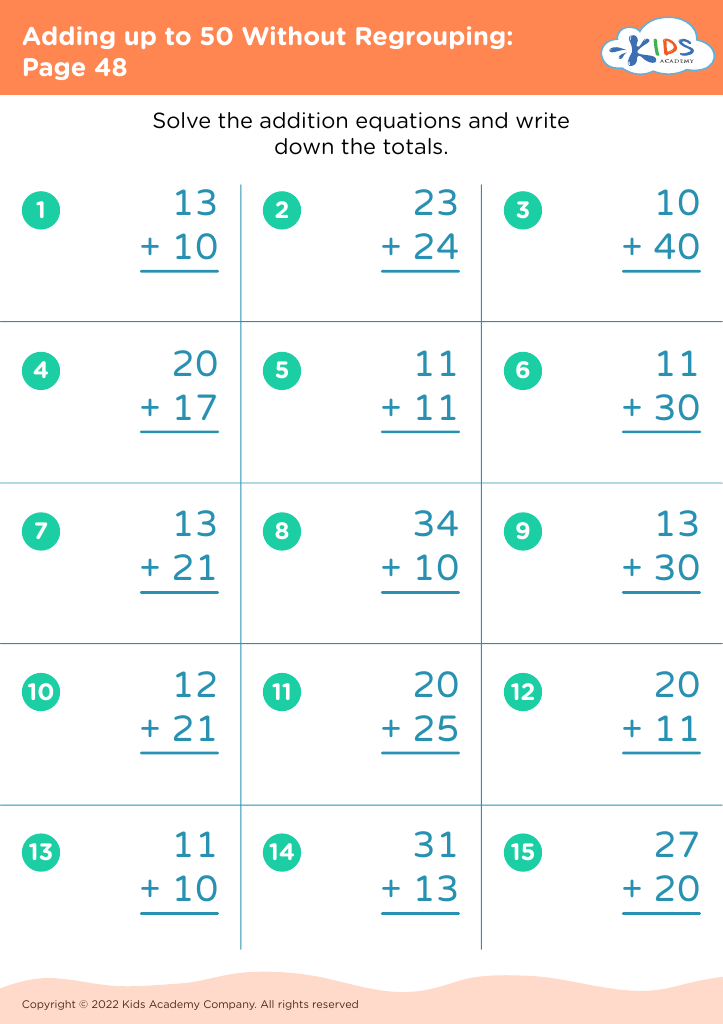
Enhance your child's fine motor skills while mastering addition with our engaging worksheets designed for ages 7-9! These carefully crafted exercises provide a perfect blend of writing practice and math challenges, helping children strengthen their handwriting as they solve addition problems. Our worksheets encourage proper pencil grip and control, ensuring learners develop confidence in both their writing and mathematical abilities. Fun and interactive, each worksheet is tailored to keep kids motivated while improving their motor skills. Perfect for use at home or in the classroom, these addition worksheets are an essential tool for young learners aiming for holistic development.
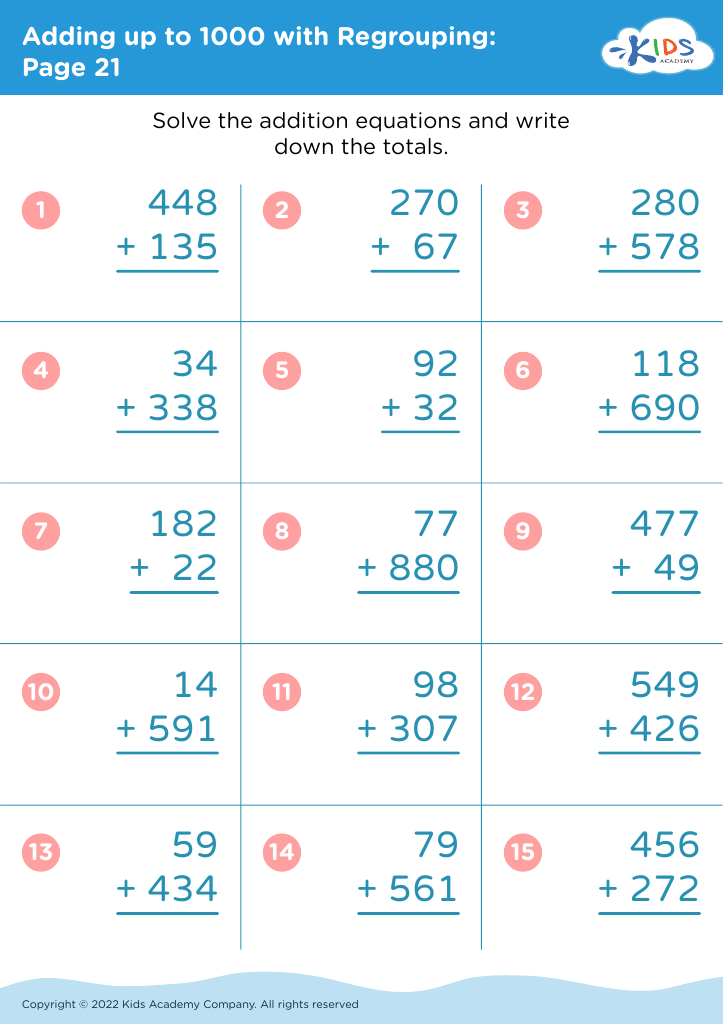
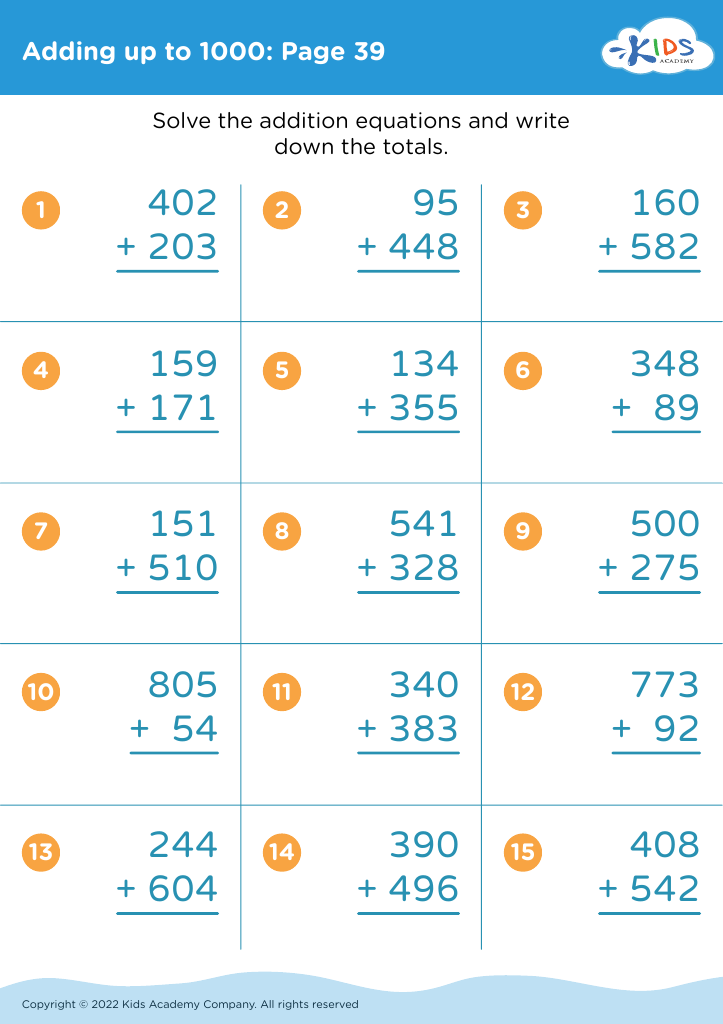
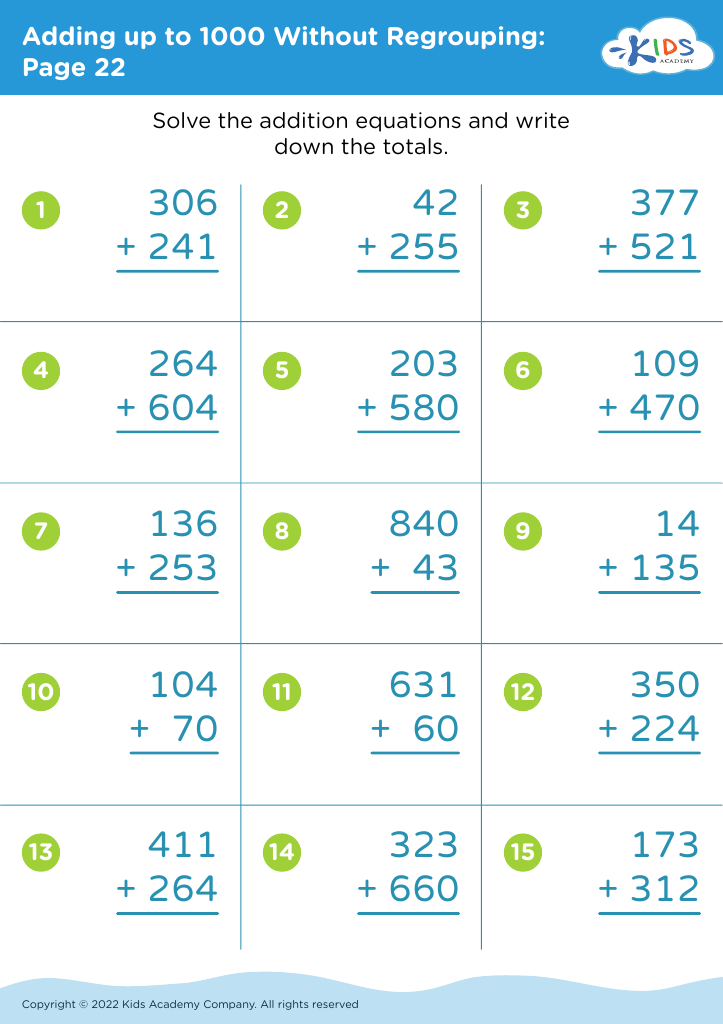
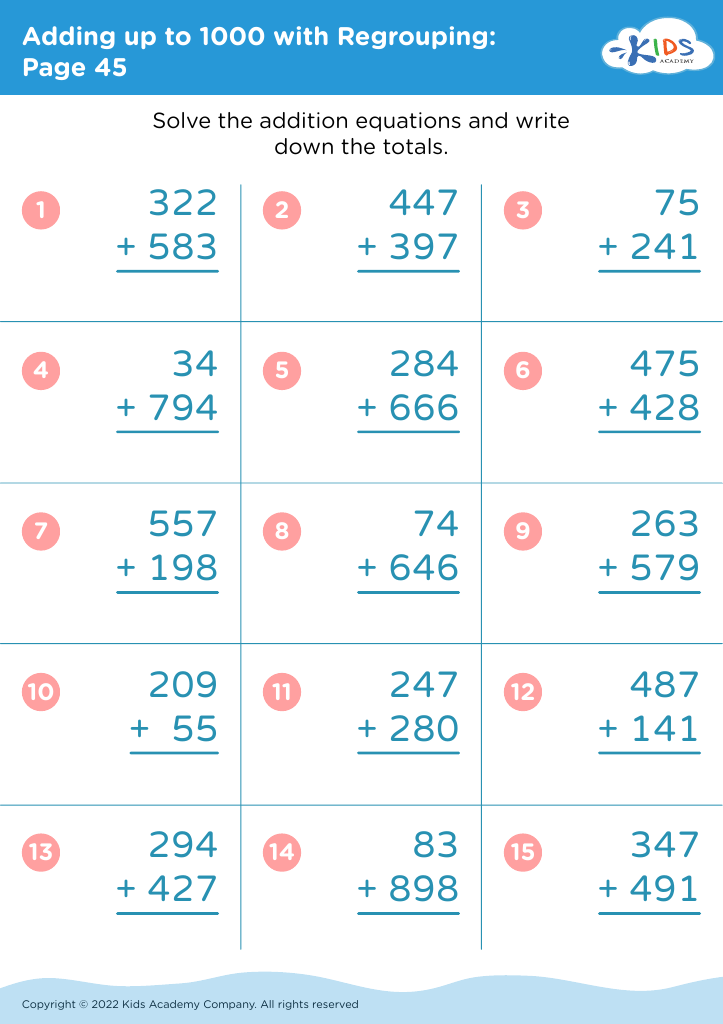








Fine motor skills are crucial for children aged 7-9 as they play a significant role in daily activities, academic success, and overall development. During this age, children refine their ability to control hand and finger movements, which is essential for activities such as writing, drawing, and manipulating small objects. As they progress academically, strong fine motor skills are directly correlated with writing proficiency and literacy development.
Teachers and parents should prioritize these skills because they influence a child's confidence and self-esteem. Children who struggle with fine motor tasks may feel frustrated and disengaged, leading to negative attitudes towards school and learning. Enhancing fine motor skills through interactive activities and guided practice can promote dexterity and coordination while making learning enjoyable.
Moreover, fine motor skills are tied to cognitive development, as children learn how to organize thoughts and express themselves through writing. This age is also critical for the development of creativity and critical thinking, skills that will benefit them in the long run. Engaging in activities that strengthen fine motor skills not only equips children for academic tasks but also lays a foundation for lifelong skills necessary for everything from sports to hobbies, underscoring the importance of this aspect of development.








