
Following instructions Addition Worksheets for Ages 7-9
13 filtered results
Difficulty Level
Grade
Age
-
From - To
Subject
Activity
Standards
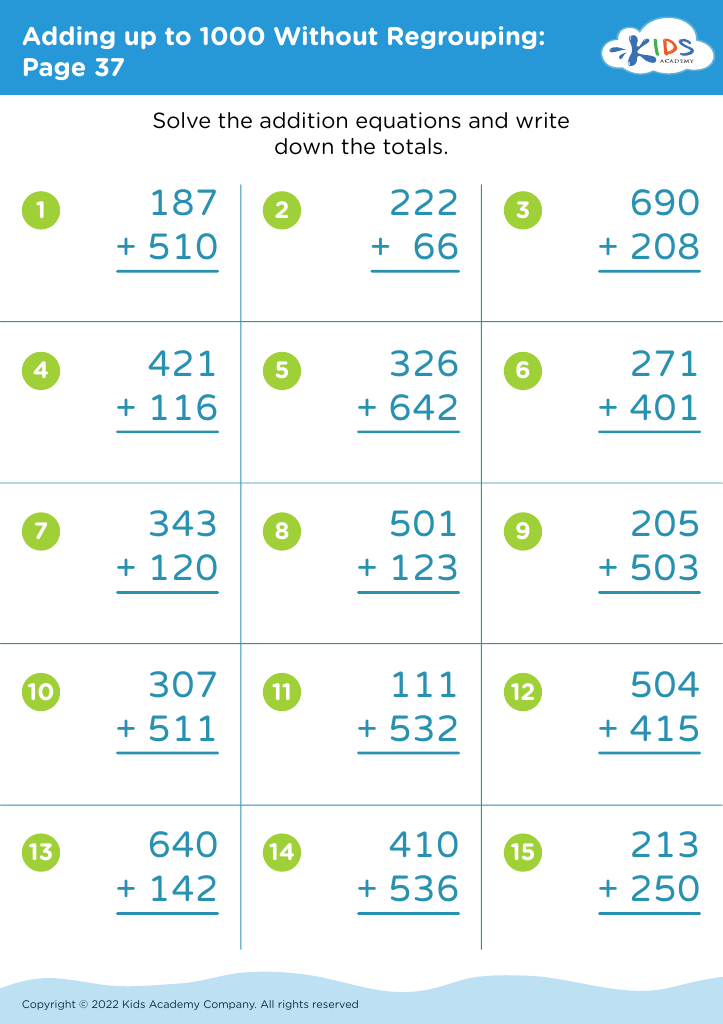
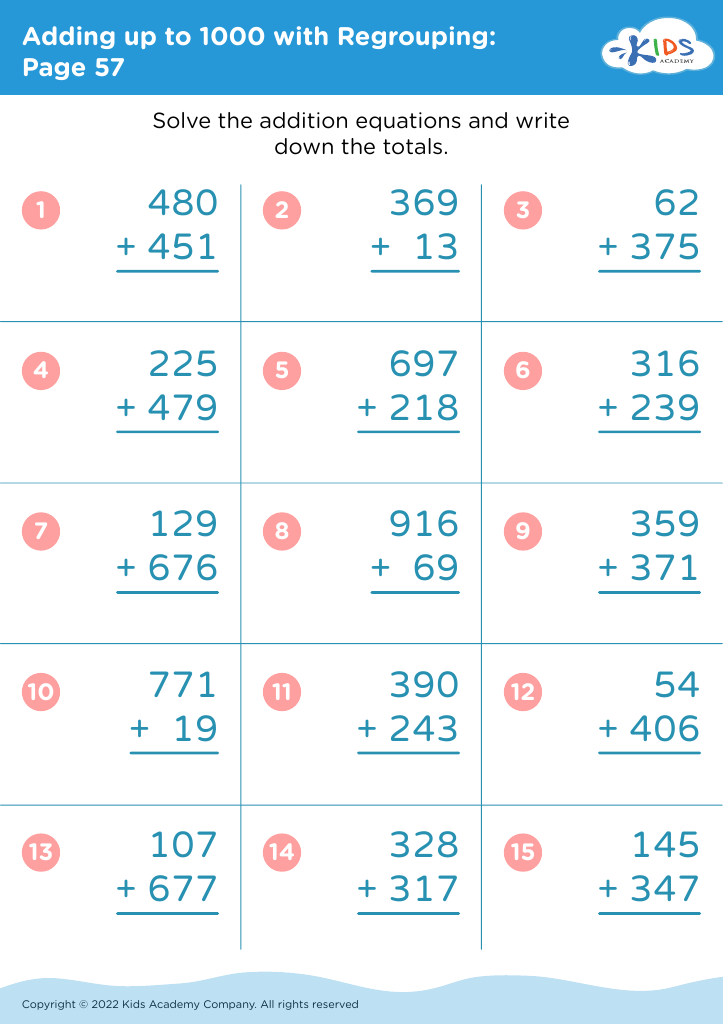
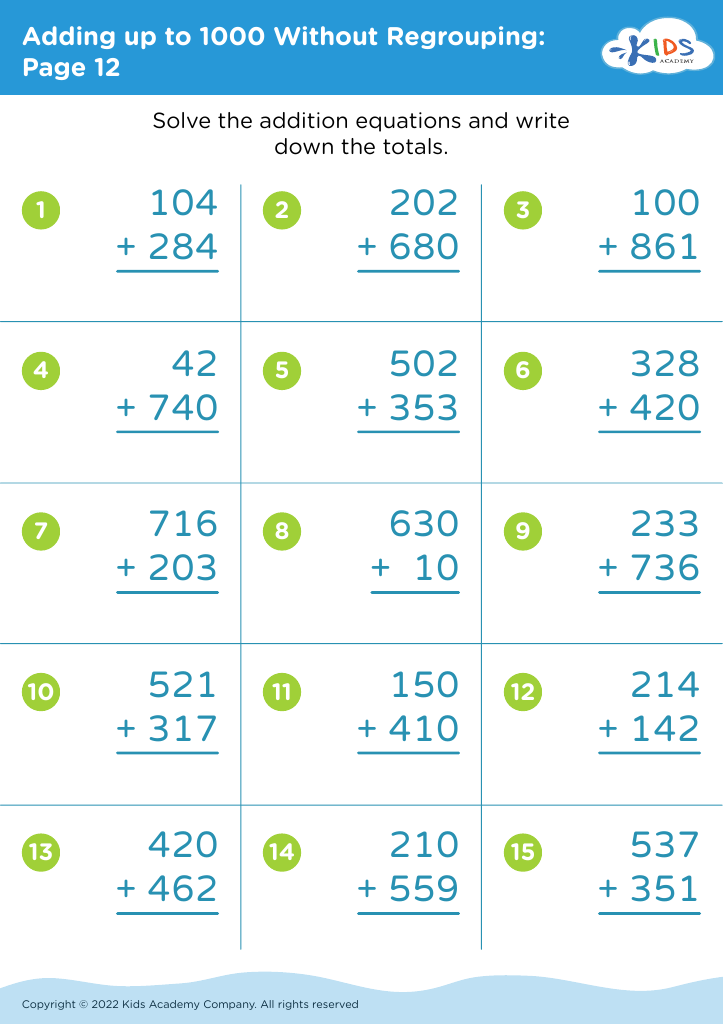
Welcome to our "Following Instructions Addition Worksheets" tailored for ages 7-9! These engaging worksheets are designed to enhance your child's addition skills while promoting comprehension and attentiveness. Each activity encourages students to read and follow specific instructions carefully, improving both their math abilities and overall understanding. With diverse exercises, including word problems and step-by-step tasks, your child will enjoy a mix of fun and educational challenges. Perfect for homework or classroom use, our worksheets help build confidence in approaching math problems. Empower your young learners to excel in mathematics while sharpening their instruction-following skills! Explore our collection today.
Favorites
With answer key
Interactive
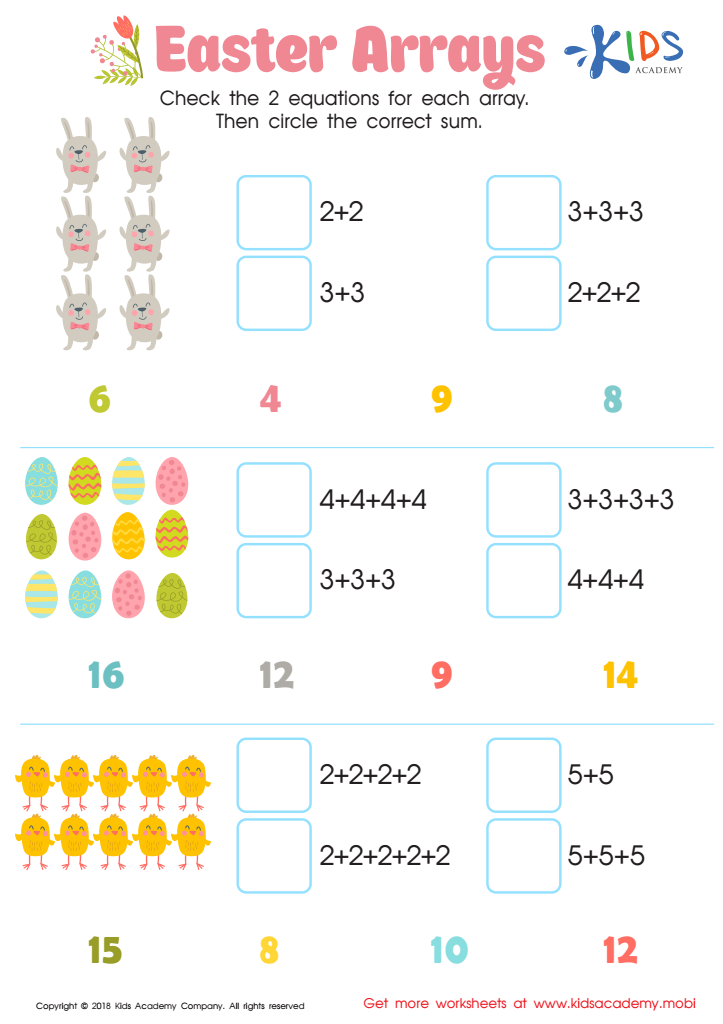
Easter Arrays Worksheet
Does your child love Easter? Do they adore the Easter bunny and egg hunts? Help them have fun with this worksheet! Go through it with them and check the equations for each array. Then, have them circle the correct sum. It's a great way to make the holiday extra exciting!
 Assign to My Students
Easter Arrays Worksheet
Worksheet
Join Kids Academy for Free
Who is primarily going to use this learning content?








Following instructions in addition is a crucial skill for children aged 7 to 9, and it's essential for parents and teachers to recognize its importance. Mastery of this skill lays the foundation for mathematical competencies and everyday problem-solving. When children accurately follow instructions in addition, they develop essential cognitive skills, such as attention to detail and logical reasoning.
In this stage of development, students begin to encounter multi-step problems, where the ability to follow directions affects their ability to reach correct conclusions. If they misinterpret or skip steps, their accuracy diminishes, leading to frustration and a lack of confidence in math. Parents and teachers can support mastery by creating structured environments focused on clear and precise instruction.
Moreover, these skills also extend beyond math; they contribute to overall academic performance and critical life skills, such as organizing tasks and managing responsibilities. Encouraging children to follow instructions nurtures independence and critical thinking, which are invaluable in future learning and life endeavors. By emphasizing the importance of following instructions in math, parents and teachers equip children with tools for academic success and inspire positive attitudes toward learning.








