Fraction simplification Addition Worksheets for Ages 7-9 - Page 3
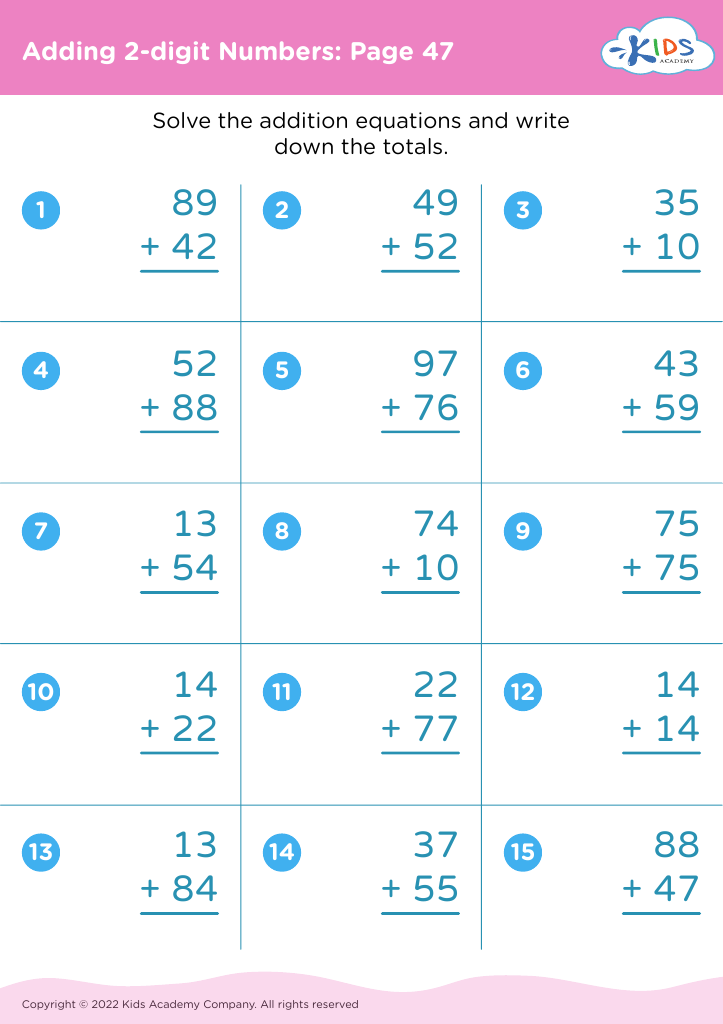
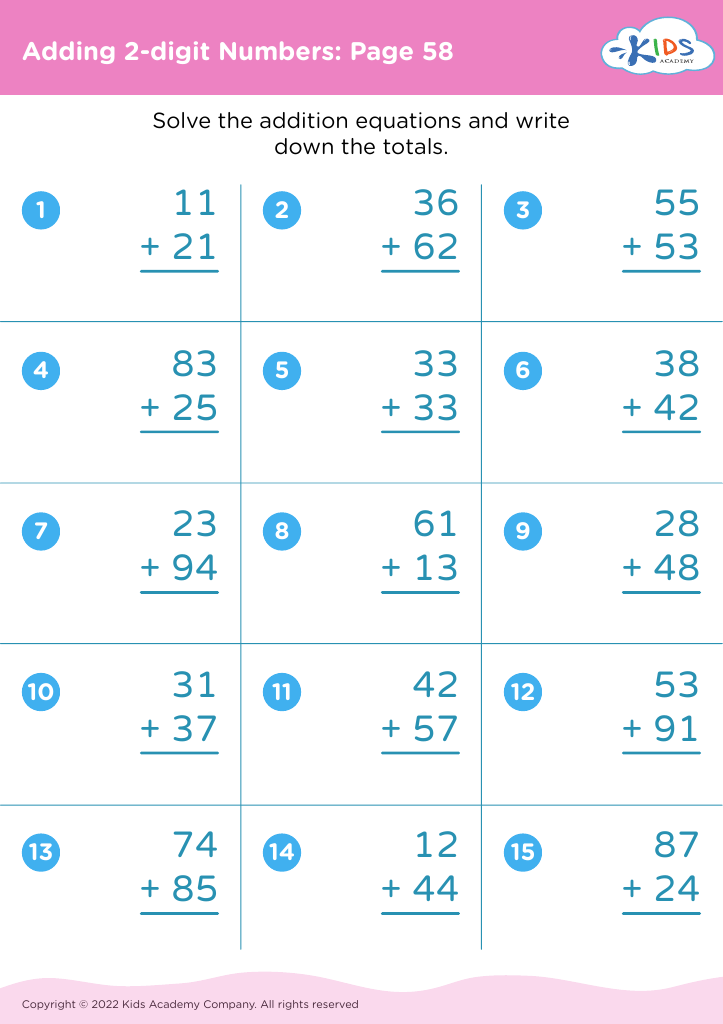
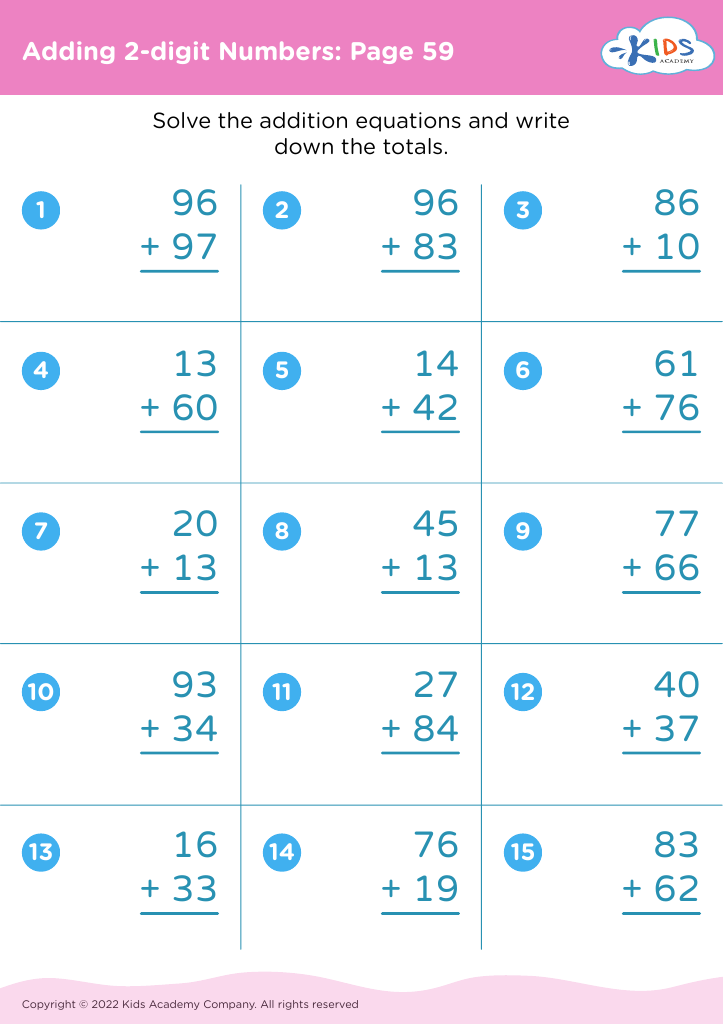
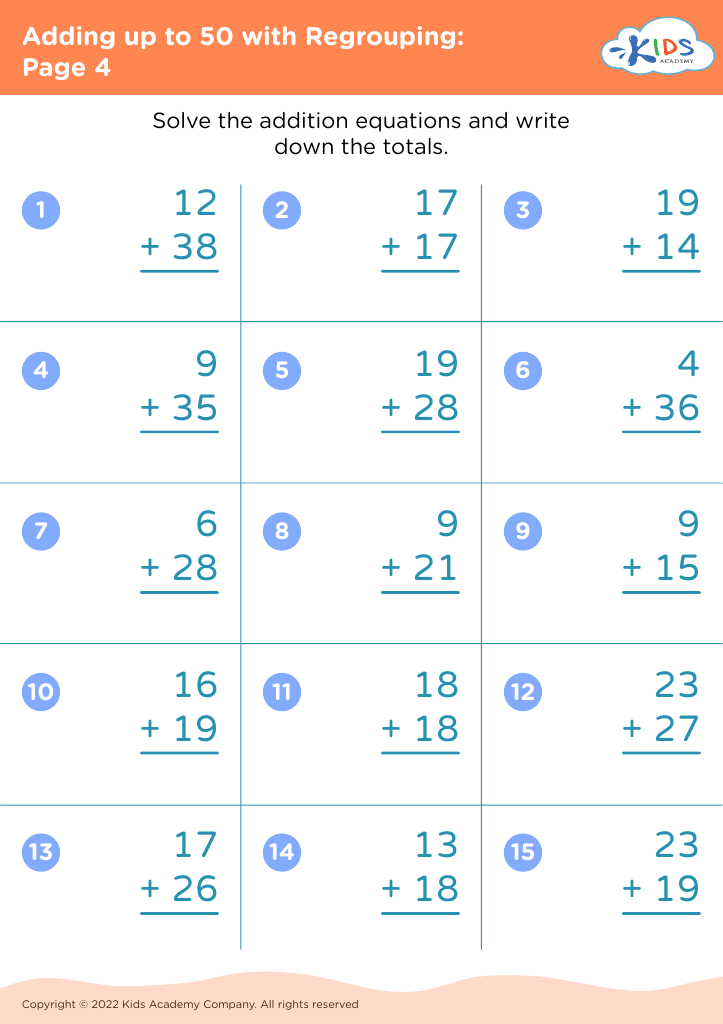




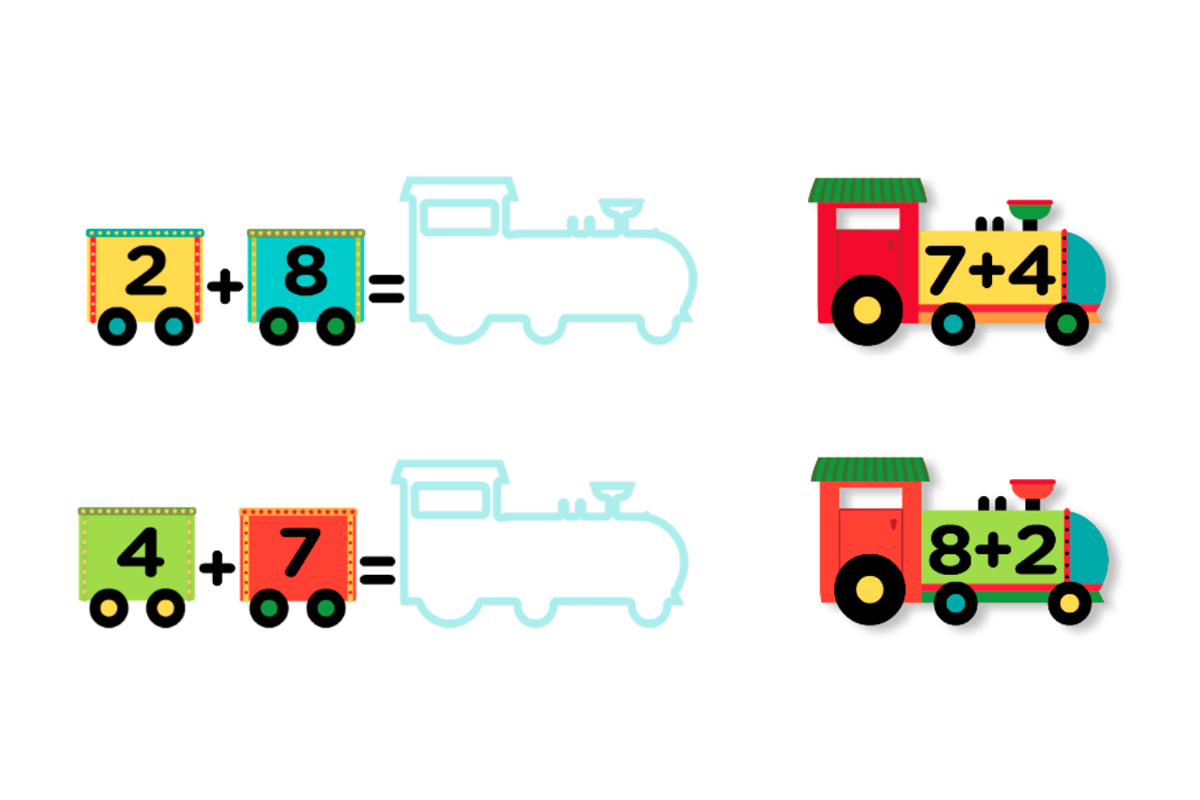



Fraction simplification and addition are foundational math skills that are crucial for young learners aged 7-9. At this age, children are beginning to develop their numerical fluency, and understanding fractions helps in sharpening their mathematical abilities.
Firstly, learning to simplify and add fractions enhances a child's problem-solving skills. It requires them to find common denominators, compare numerators, and reduce fractions to their simplest form. These steps not only improve their computational abilities but also strengthen their analytical thinking.
Secondly, fractions are everywhere in real life. Whether it's dividing a pizza, measuring ingredients for a recipe, or understanding time, fractions help make sense of the world. Teaching them to handle fractions comfortably prepares them for these everyday situations.
Moreover, mastering fractions builds a strong foundation for future math coursework. Advanced topics in mathematics, such as algebra and calculus, rely heavily on a firm understanding of fractions. By ensuring kids are proficient in these areas early on, parents and teachers set the stage for academic success in later years.
Lastly, successful learning experiences build confidence. When children understand how to simplify and add fractions, they feel a sense of achievement. This confidence can lead to a more positive attitude towards math and learning in general. Therefore, emphasizing this aspect of math education is essential for both practical application and future academic growth.








