Motor skills development Addition Worksheets for Ages 7-9
4 filtered results
-
From - To
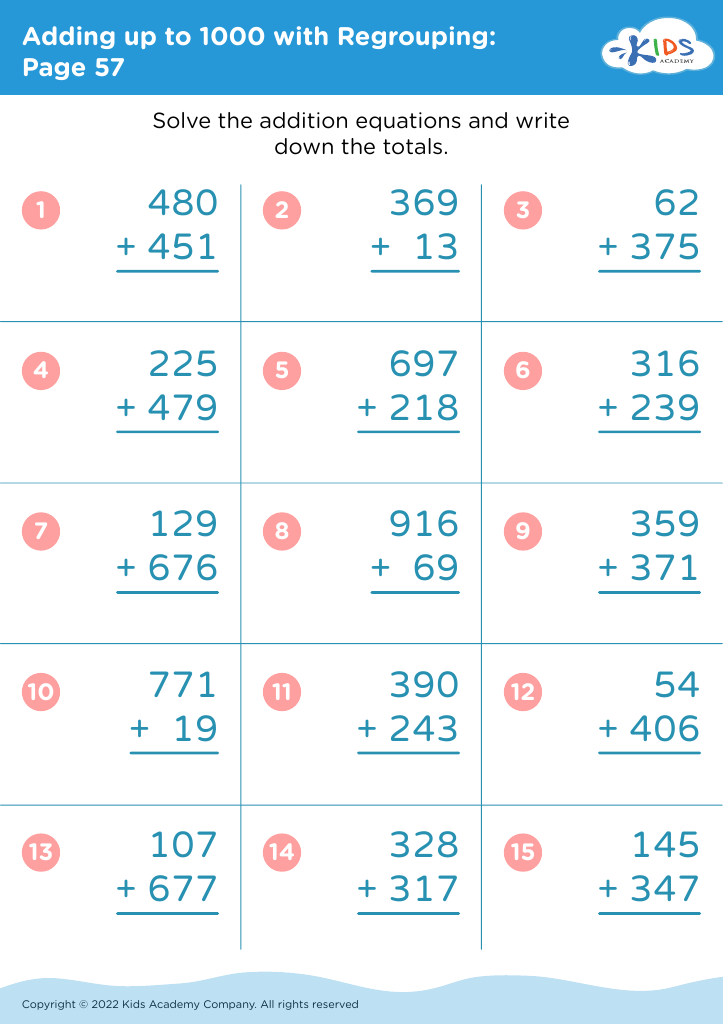
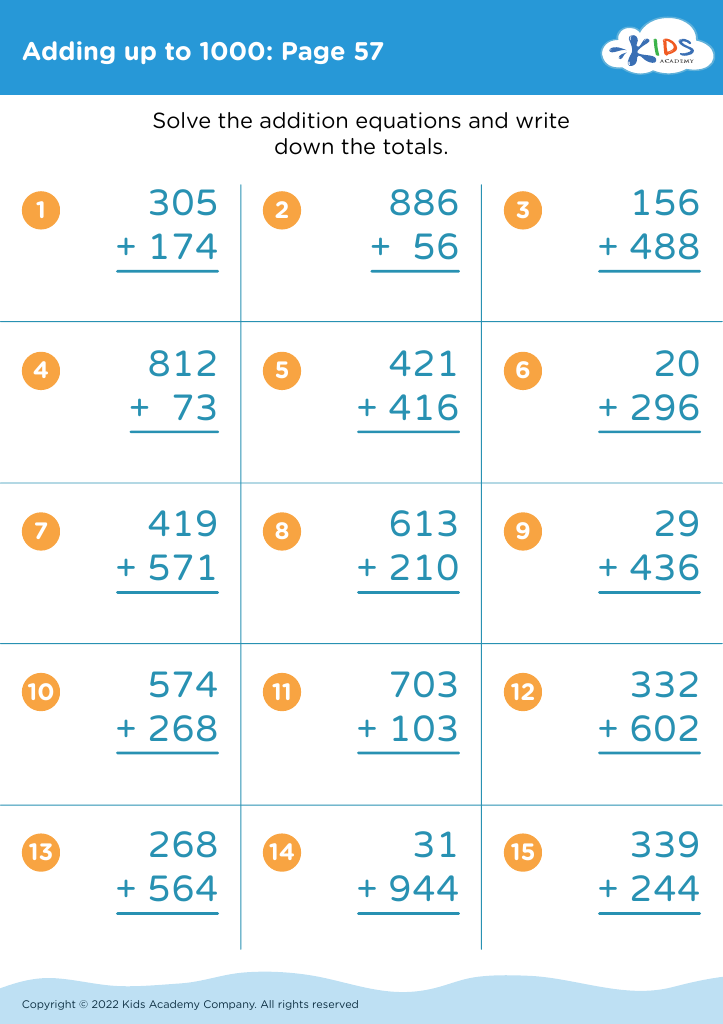
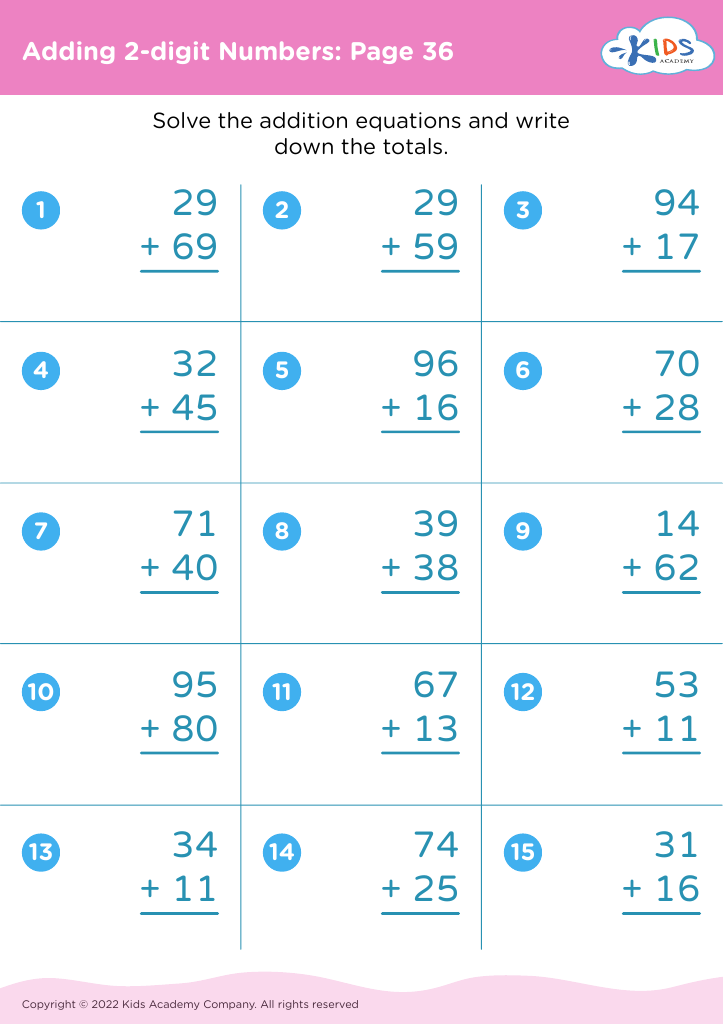
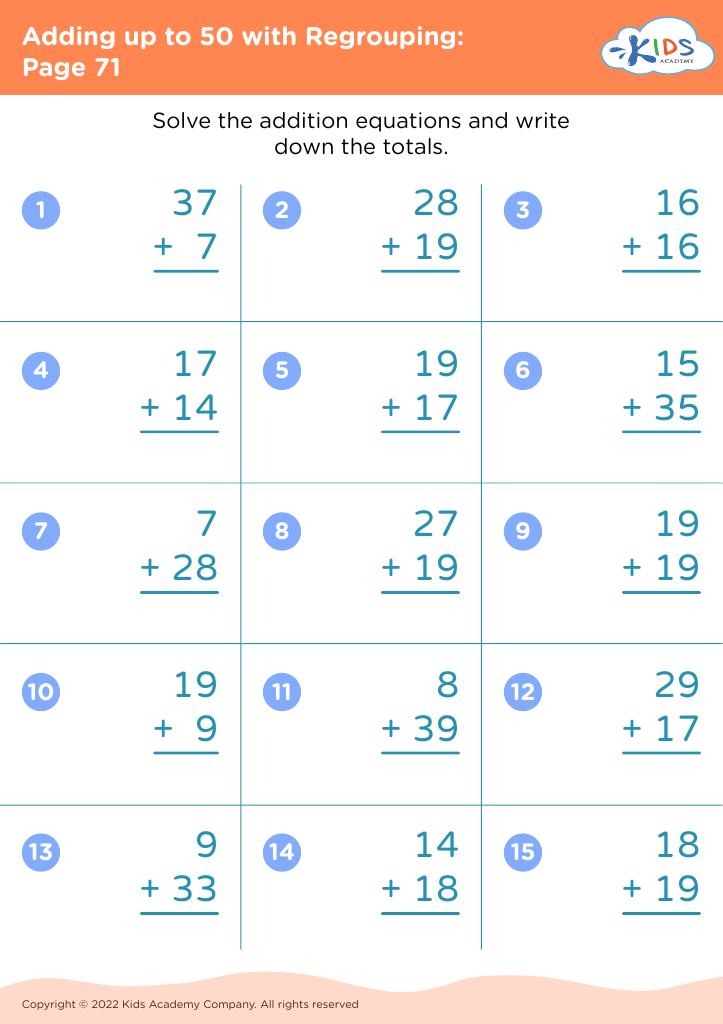
Enhance your child's math and motor skills with our "Motor Skills Development Addition Worksheets for Ages 7-9." Designed by education experts, these worksheets integrate engaging addition problems with activities that improve fine motor abilities, such as tracing, coloring, and puzzle-solving. Perfect for young learners, these exercises not only bolster math proficiency but also refine hand-eye coordination and dexterity. Each worksheet is thoughtfully crafted to make learning both fun and effective. Download now and watch as your child's confidence and skills grow in tandem! Ignite your child's love for learning with Kids Academy's expertly designed resources.








Motor skills development is crucial for children aged 7-9 because these skills form the foundation for more complex movements and everyday activities. Fine motor skills, such as writing, buttoning a shirt, or using utensils, are essential for academic success and self-care. Gross motor skills, like running, jumping, and coordination, are vital for physical health, social participation in sports, and overall confidence.
Parents and teachers should care about motor skills development because it directly impacts a child's ability to perform daily tasks efficiently and with confidence. Mastery of these skills can enhance academic performance, as children can focus better on learning when they aren’t struggling with the physical aspects of school tasks. Additionally, physical activity through practicing motor skills can improve overall health, reducing risks of obesity and related health issues.
Motor skills also play a critical role in social development. Participating in games and sports helps children learn teamwork, communication, and leadership skills. Encouraging motor skills development fosters an active lifestyle, which can be a lifelong benefit. By supporting motor skills development, parents and teachers provide children with the tools they need for academic, social, and personal success.








