
Numeracy skills Addition Worksheets for Ages 7-9
8 filtered results
Difficulty Level
Grade
Age
-
From - To
Subject
Activity
Standards
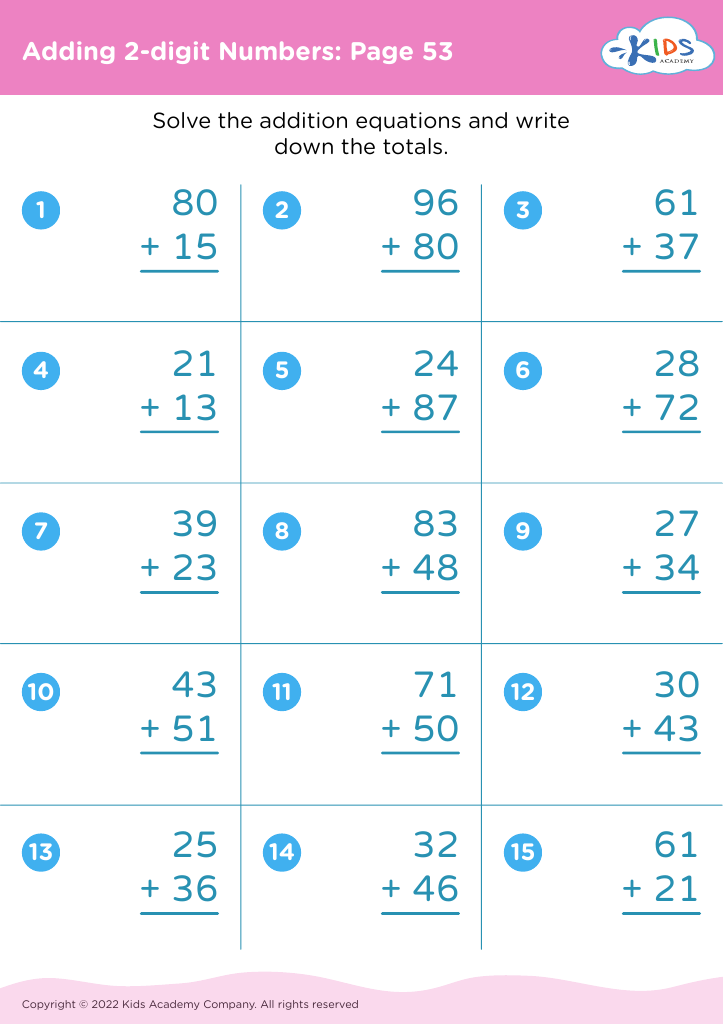
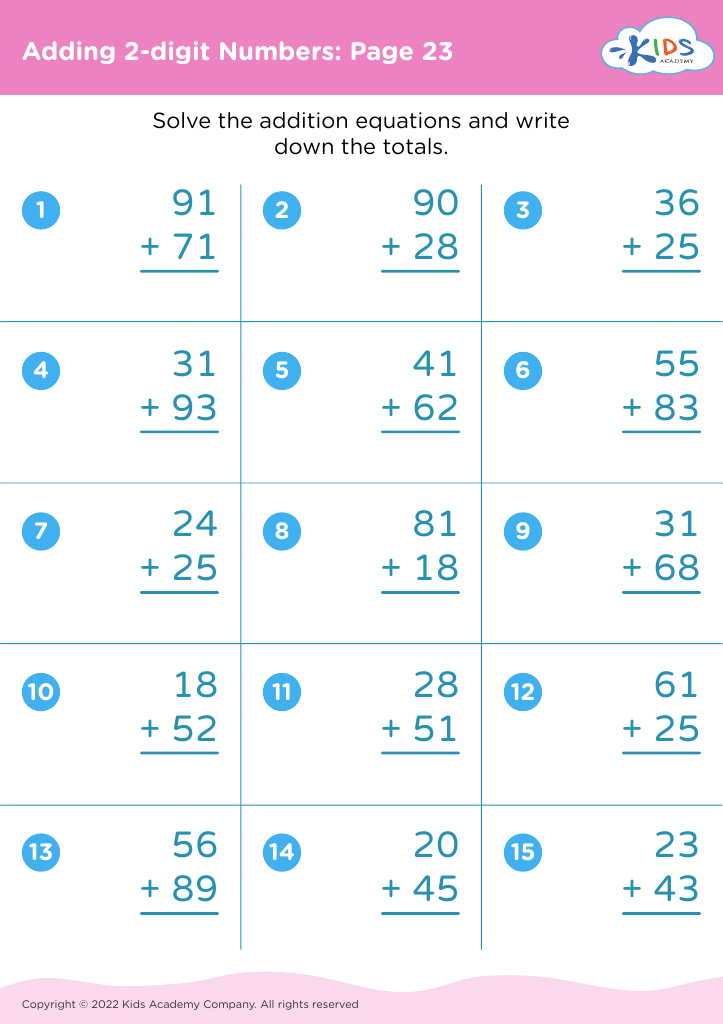
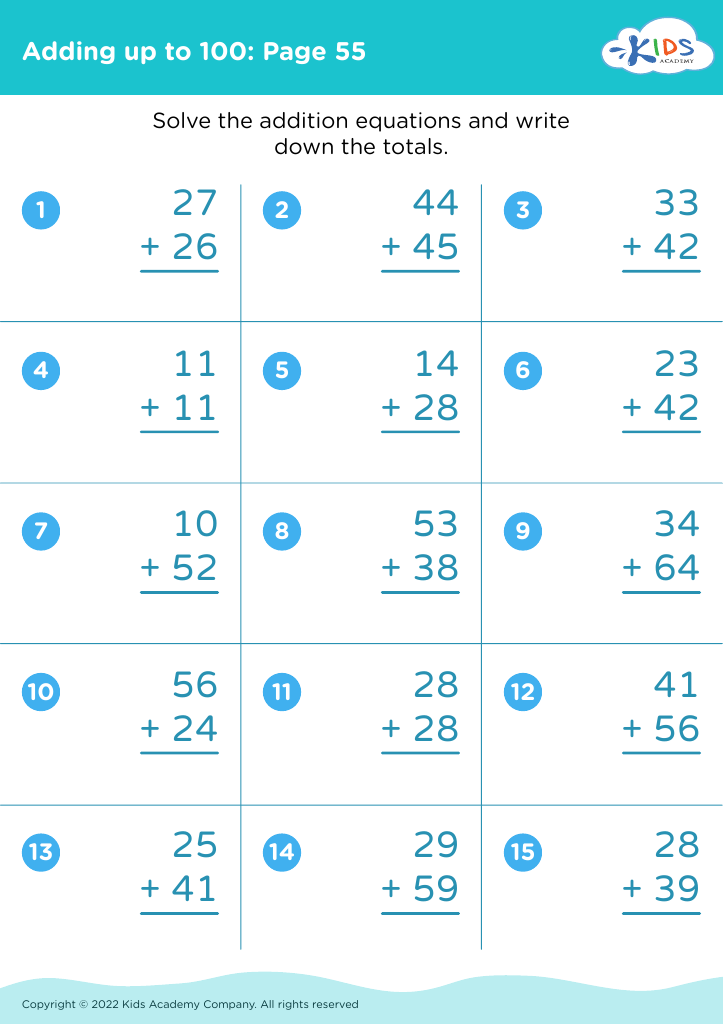
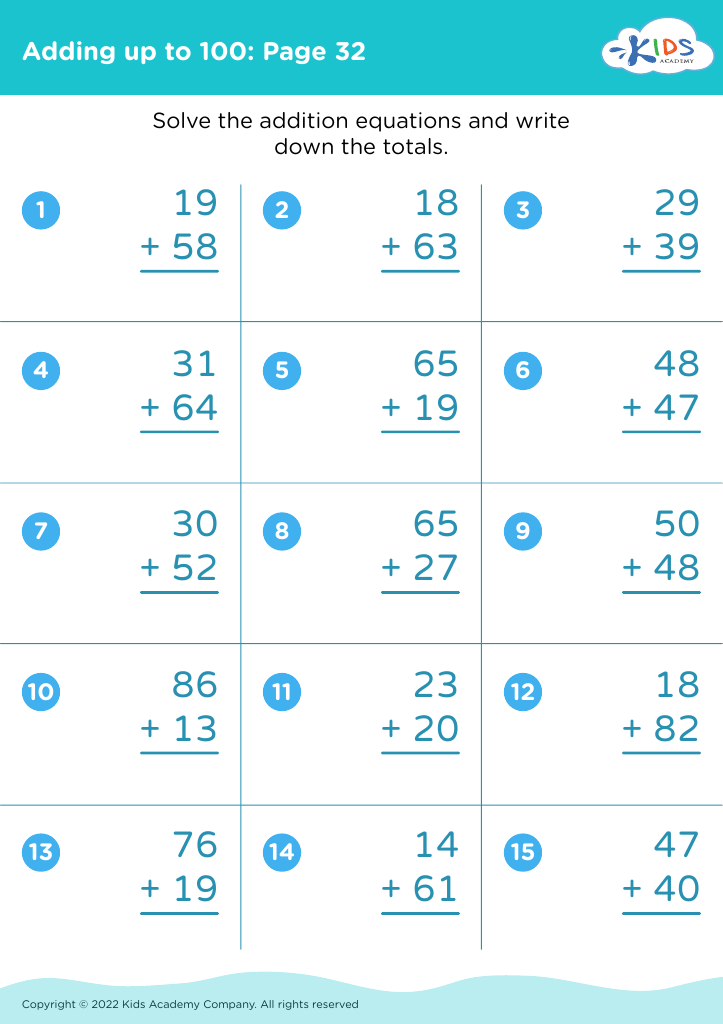
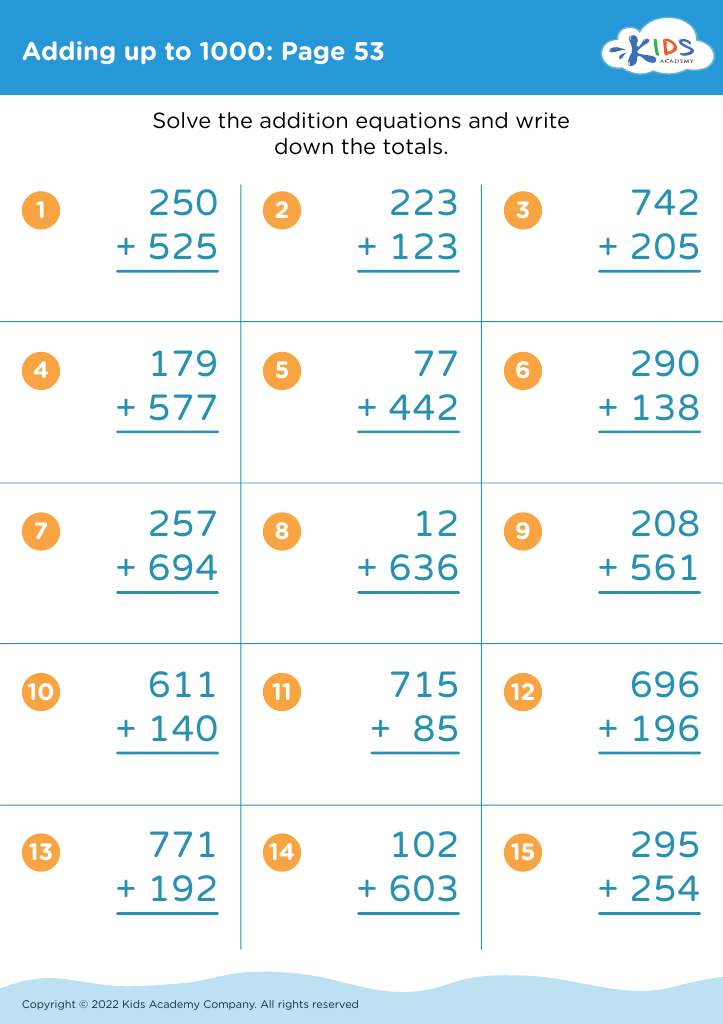
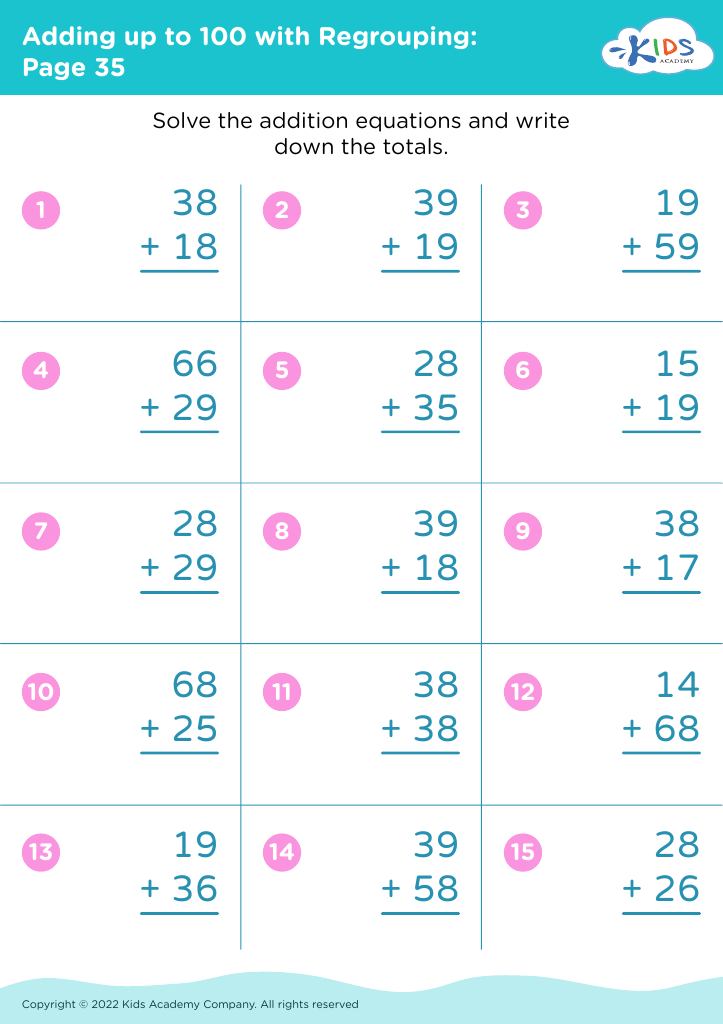
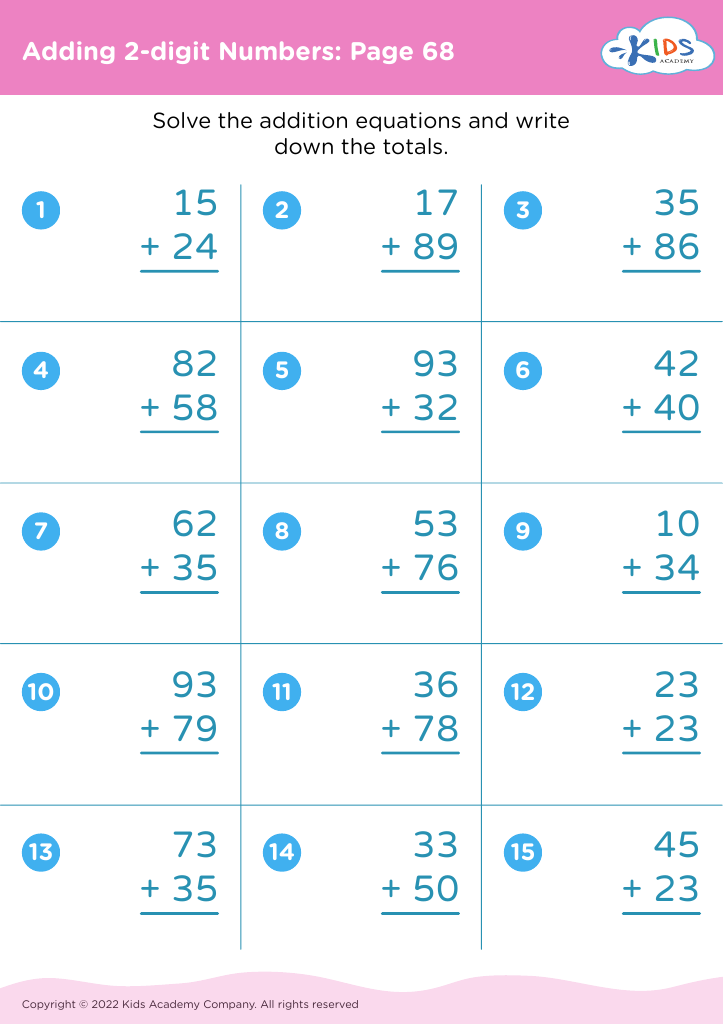
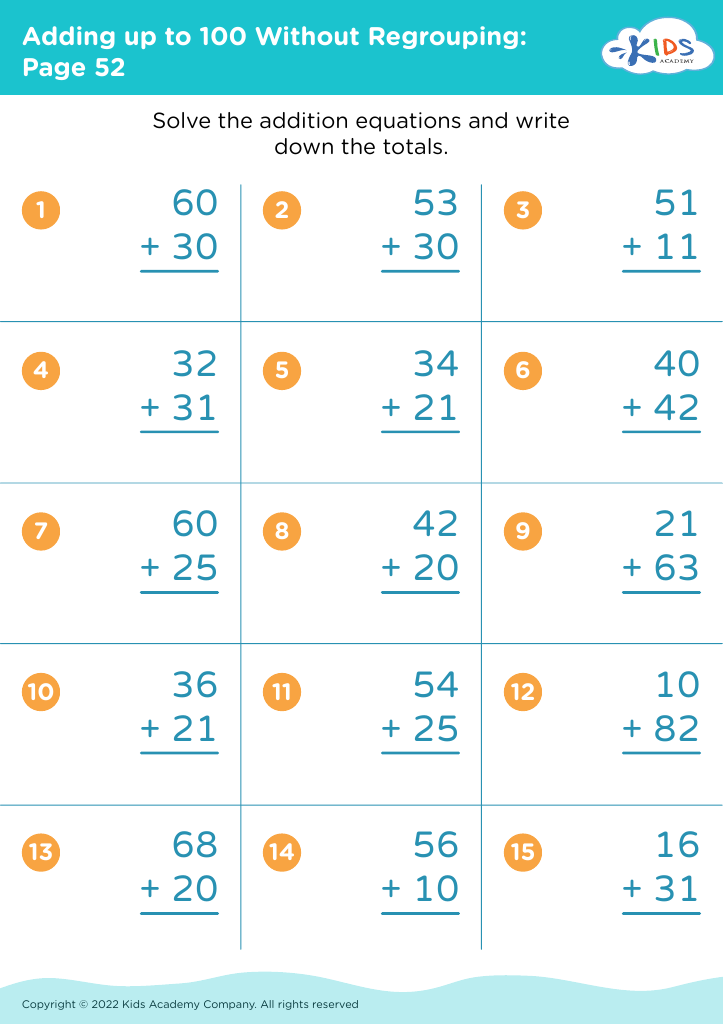
Explore our engaging Numeracy Skills Addition Worksheets designed specifically for children aged 7-9! These worksheets provide a fun way for young learners to enhance their addition skills through various activities tailored to their learning level. With colorful visuals and interactive problems, your child will develop critical thinking and problem-solving abilities while building a strong foundation in mathematics. Perfect for both classroom settings and home practice, our resources cater to diverse learning styles, ensuring every child can improve at their own pace. Download our printable worksheets today and watch your child's confidence in numeracy grow as they conquer addition challenges!
Favorites
With answer key
Interactive
Join Kids Academy for Free
Who is primarily going to use this learning content?








Numeracy skills, particularly addition, are fundamental for children ages 7-9 as they lay the groundwork for more complex mathematical concepts and overall academic success. During this critical stage of development, children begin to move from concrete understanding, using fingers or objects, to more abstract thinking, where they can visualize numbers and relationships in their minds. Mastering addition enhances problem-solving skills and logical thinking, equipping children to tackle real-world challenges, such as budgeting or calculating time, reinforcing the practical relevance of math in daily life.
Moreover, a strong proficiency in addition fosters confidence and self-efficacy in math. Children who struggle with basic arithmetic may experience anxiety or negative feelings toward mathematics, potentially hindering their future progress in the subject. Teachers and parents can create a supportive environment that emphasizes practice, games, and positive reinforcement to develop these skills.
Lastly, foundational numeracy is essential for collaboration and communication in group activities, promoting social development. By prioritizing addition skills, parents and teachers play a critical role in shaping not only children's academic trajectories but also their overall development, helping them to become confident, capable learners prepared for future challenges.








