Practice division Addition Worksheets for Ages 7-9
3 filtered results
-
From - To
Discover our engaging division addition worksheets specifically designed for children aged 7-9! These resources provide a fun way for young learners to practice and reinforce their division skills while simultaneously building strong addition foundations. With a variety of exercises, including word problems, visual aids, and interactive activities, students will enhance their understanding of numbers and operations. Perfect for both classroom and home use, these worksheets are tailored to meet educational standards while ensuring an enjoyable learning experience. Help your child develop confidence in math with our expertly crafted division addition practice materials that make learning both effective and enjoyable!
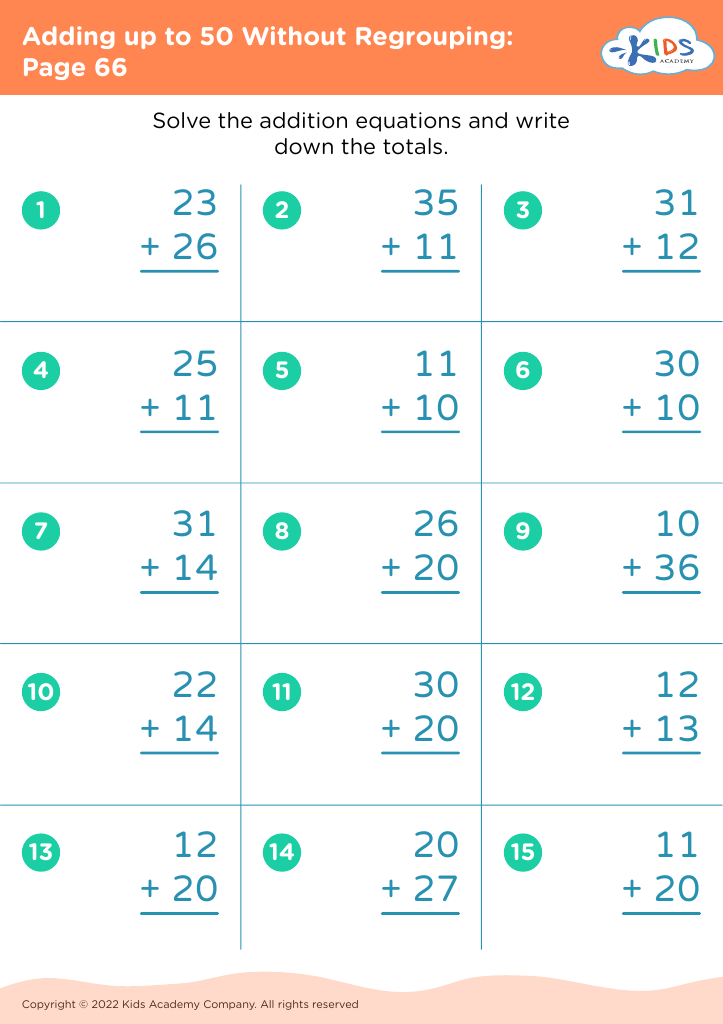
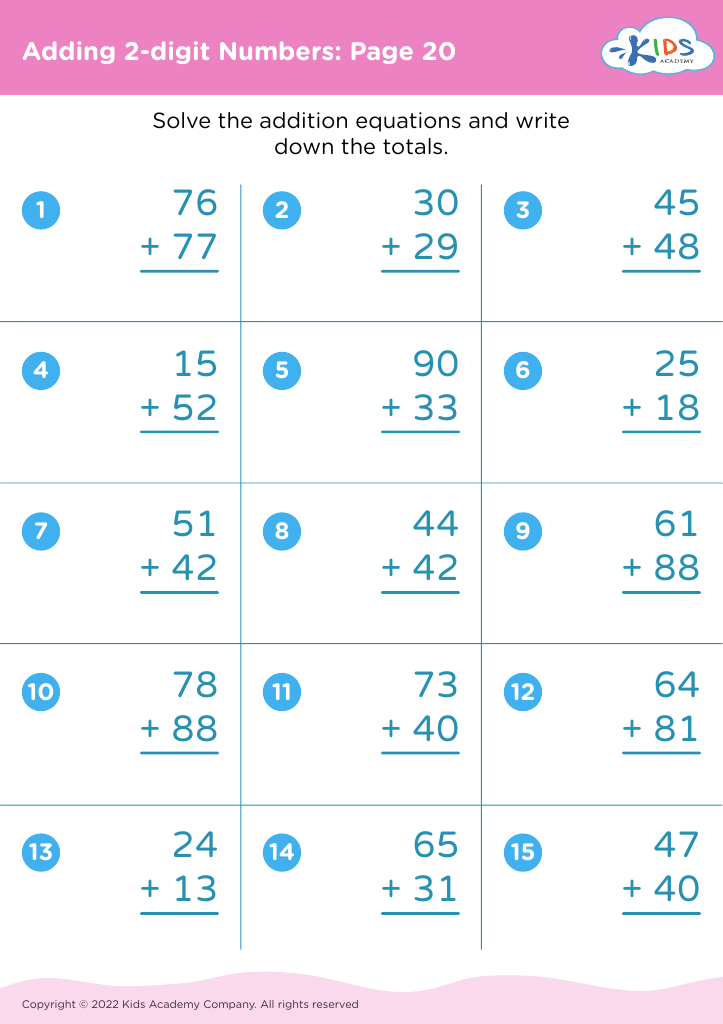
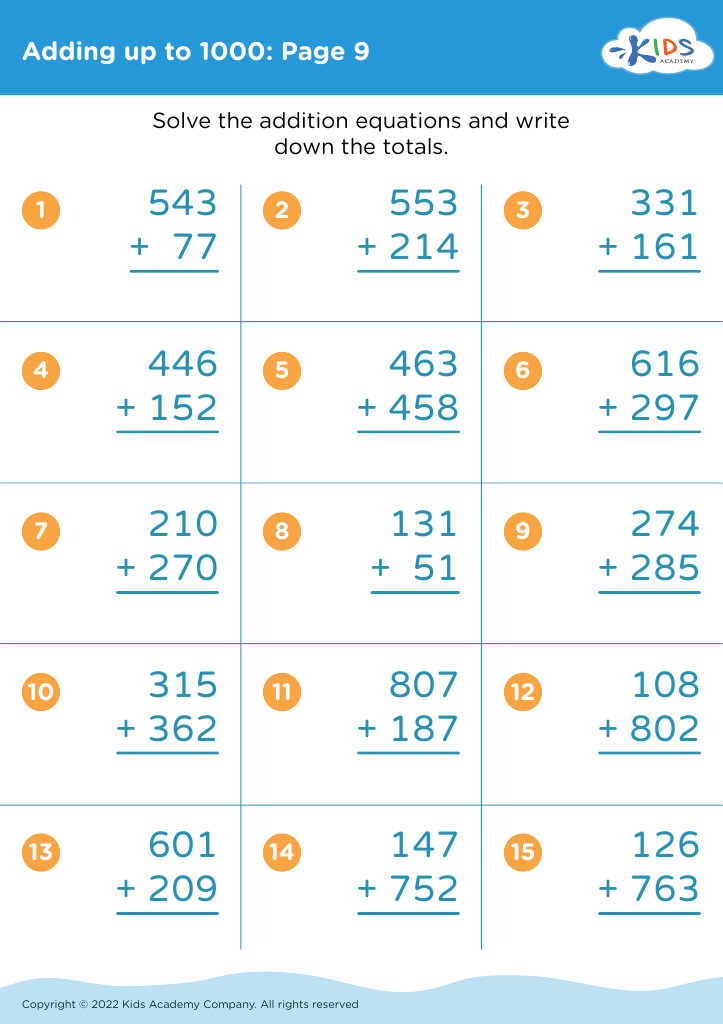








Parents and teachers should prioritize practicing division and addition for children aged 7-9 as these foundational skills are critical for academic success and cognitive development. At this age, children are transitioning from learning basic arithmetic to applying these concepts in more complex problems. Mastery of addition and division not only boosts their confidence in mathematics but also fosters critical thinking and problem-solving abilities.
Additionally, early proficiency in these operations contributes to future success in subjects like science, technology, engineering, and math (STEM), which are increasingly vital in our technology-driven world. Engaging children in practice encourages a strong number sense, enabling them to understand patterns, relationships, and the real-world application of math.
Moreover, consistent practice cultivates perseverance and resilience. Children learn that mastery comes with effort and repetition. Providing opportunities for daily math practice, whether through games, worksheets, or real-world situations, can make learning enjoyable and relevant.
Furthermore, actively participating in their children’s learning journey helps deepen the connection between home and school, reinforcing the importance of education. This collaborative approach supports better commitment to learning and helps build positive attitudes towards math, setting the stage for lifelong learning and curiosity.








