Problem Solving Addition Worksheets for Ages 7-9
9 filtered results
-
From - To
Unlock your child's problem-solving skills with our engaging Addition Worksheets for ages 7-9! Designed to enhance critical thinking and analytical abilities, these worksheets offer a variety of real-life math scenarios that encourage students to apply their addition knowledge in practical ways. From word problems to visual aids, each activity is tailored to make learning fun and interactive. Perfect for reinforcing classroom lessons or supporting at-home learning, our worksheets cater to different skill levels, ensuring every child can progress at their own pace. Help your child build confidence and mastery in math while enjoying the process of problem-solving today!
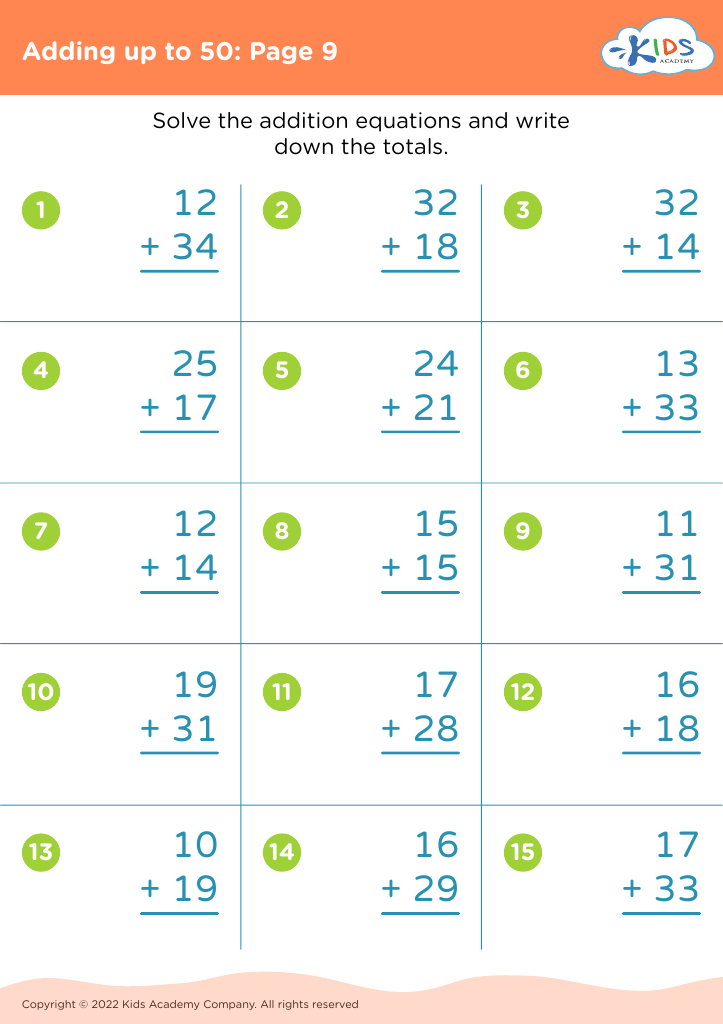
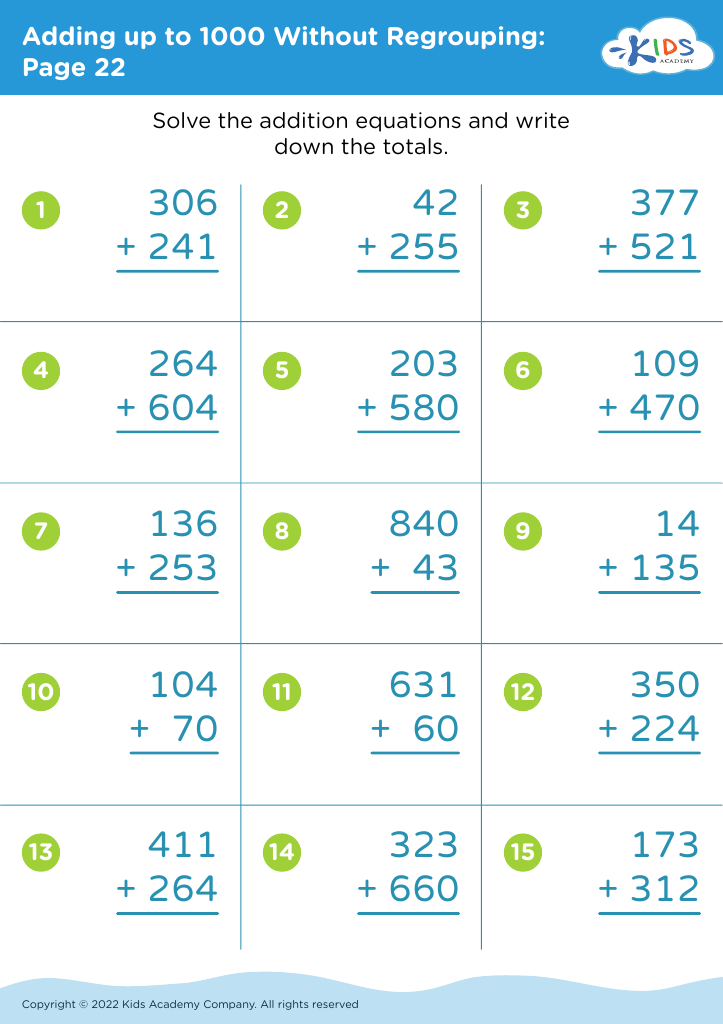
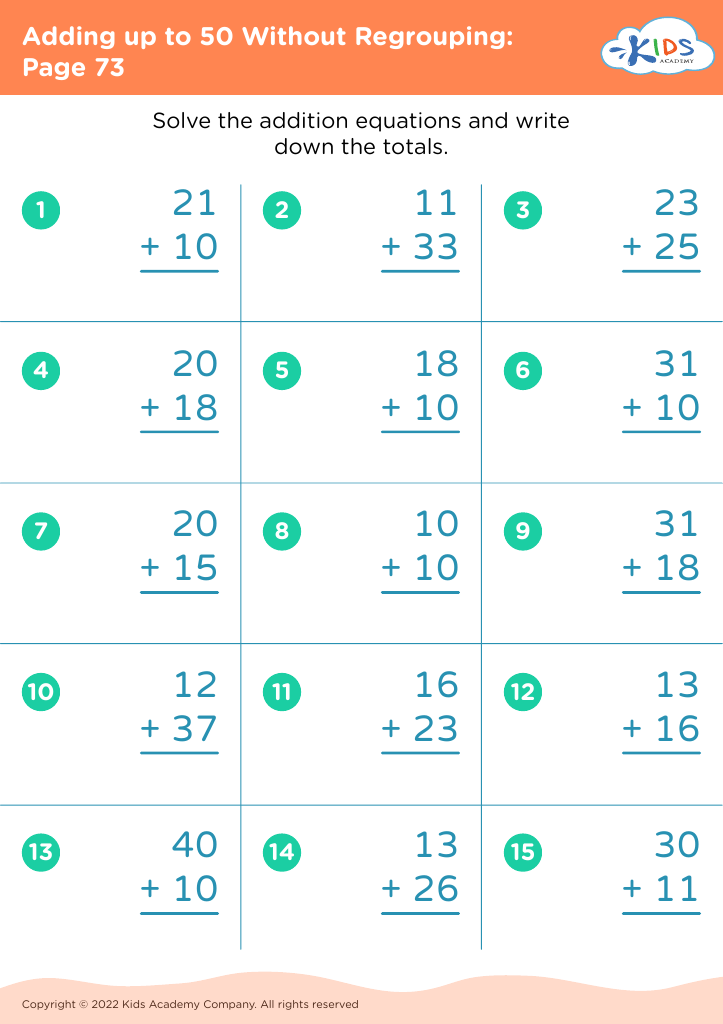
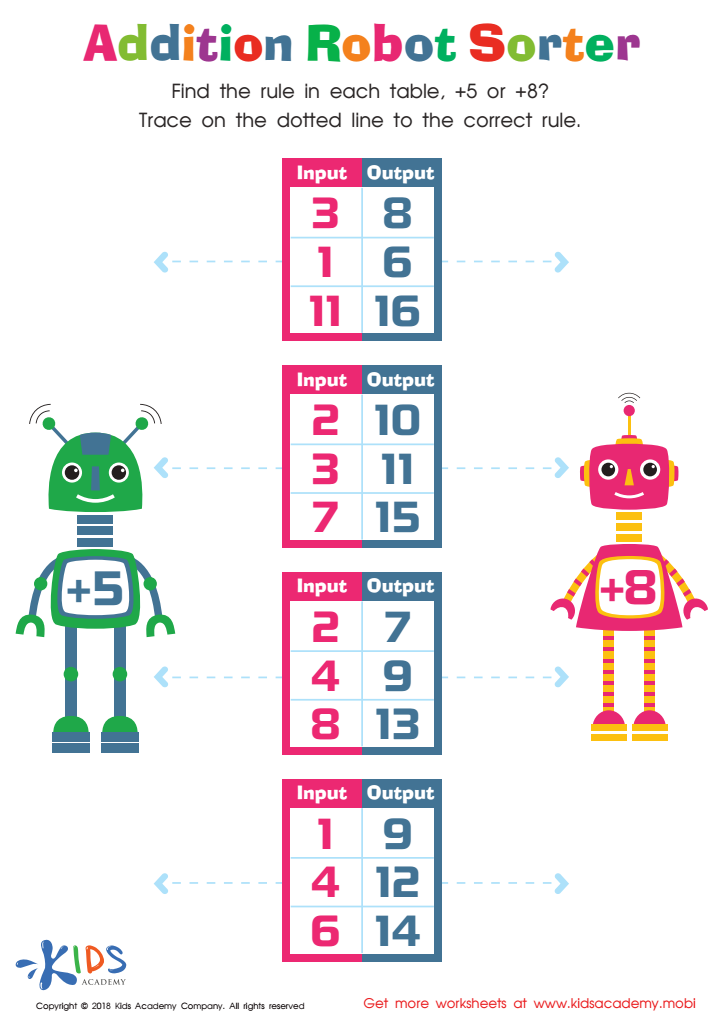
Addition Robot Sorter Worksheet
 Assign to My Students
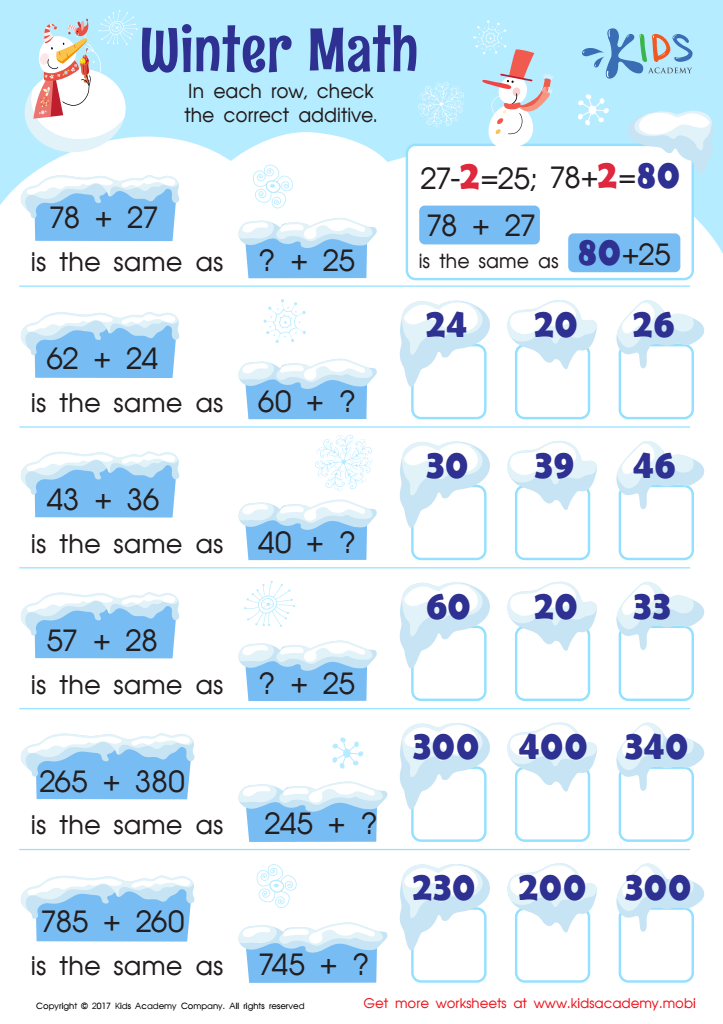
Free Addition Worksheet








Problem-solving addition is a crucial skill for children aged 7-9, and there are several compelling reasons for parents and teachers to prioritize it. Firstly, this age group is typically transitioning from basic arithmetic skills to more sophisticated mathematical reasoning. Engaging in problem-solving activities strengthens their understanding of addition within context, enabling them to apply mathematical concepts to real-life situations. This foundational skill fosters critical thinking and enhances overall cognitive development.
Furthermore, problem-solving addition encourages perseverance and resilience. Children learn to tackle challenges, analyze problems, and develop multiple strategies to find solutions, which not only benefits their math skills but also prepares them for future academic endeavors. These skills are transferable, assisting children in various subjects and day-to-day decision-making.
Educational cooperation is crucial; thus, when parents engage with children on problem-solving tasks, they reinforce the lessons taught in schools. This collaborative approach fosters a positive attitude toward math, reducing math anxiety and building confidence.
Lastly, integrating problem-solving into addition helps enhance communication skills, as children learn to articulate their thought processes and solutions. This combination of skills—the foundation, resilience, and communication—benefits a child’s education and personal development. Therefore, prioritizing problem-solving addition is essential for nurturing well-rounded, capable learners.








