Recognize shapes Addition Worksheets for Ages 7-9
8 filtered results
-
From - To
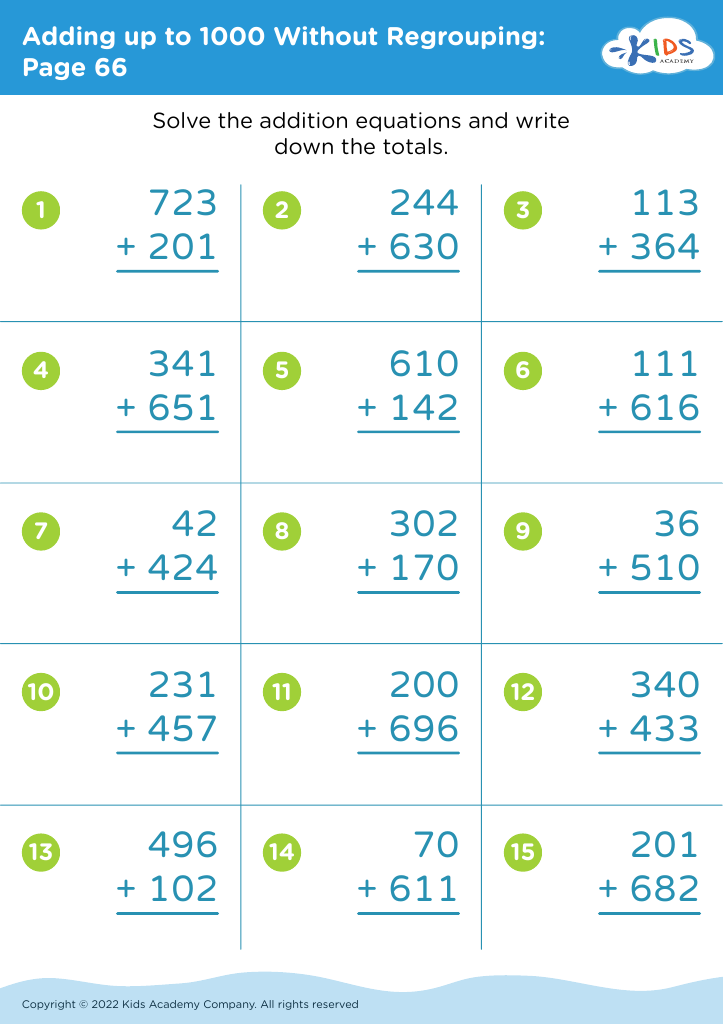
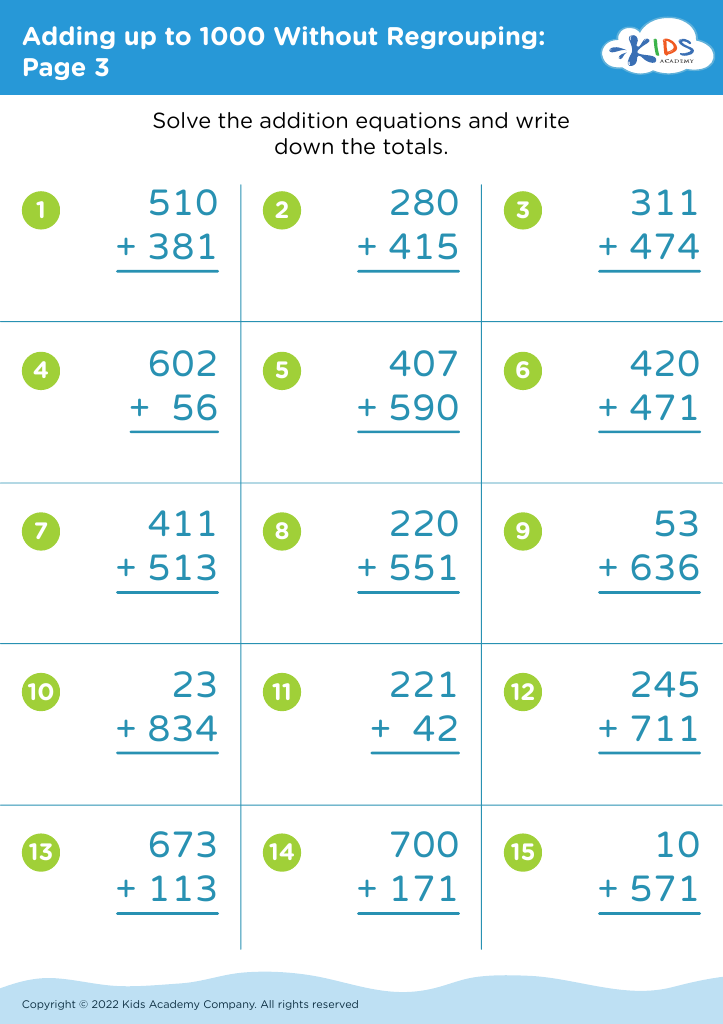
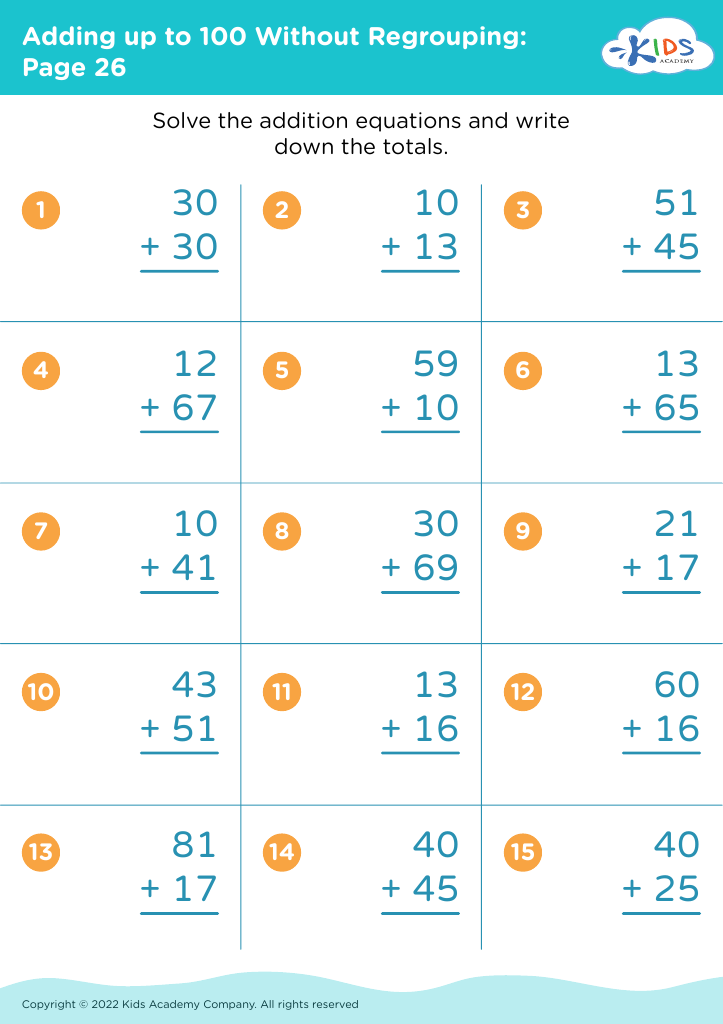
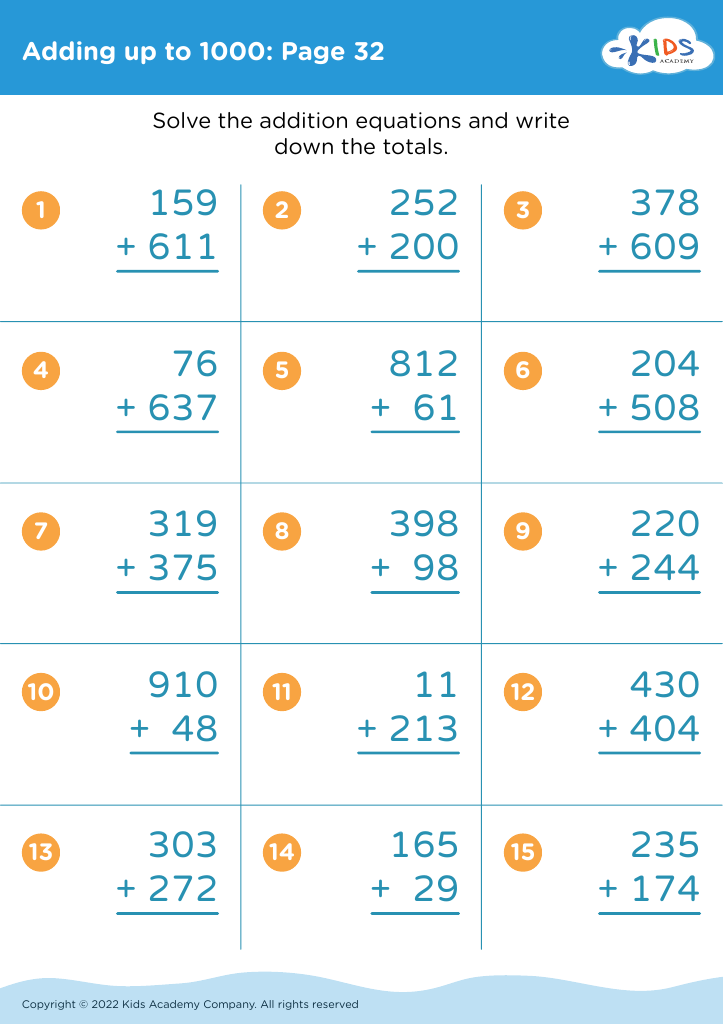
Discover engaging Recognize Shapes Addition Worksheets designed specifically for children aged 7-9! These interactive and colorful worksheets help young learners enhance their addition skills while reinforcing their understanding of shapes. By combining mathematical concepts with shape recognition, kids will enjoy a fun and educational experience. Each worksheet presents a variety of problems that promote critical thinking, allowing students to visually identify shapes and apply their addition skills effectively. Perfect for classroom use or at-home practice, these worksheets are an excellent resource for educators and parents seeking to encourage creativity and improve math proficiency in a playful way. Get started today!








Recognizing shapes and understanding their properties is fundamental in developing mathematical skills for children aged 7-9. At this age, children are transitioning from concrete to more abstract mathematical concepts. When they recognize and categorize shapes, they bolster their spatial awareness and critical thinking abilities, which are essential for solving addition problems that involve shapes, such as area and perimeter calculations.
Moreover, engaging in shape recognition helps children see relationships between different geometric figures and encourages them to visualize problems. This visualization aids in grasping addition concepts, particularly when combining groups of shapes or estimating areas. Additionally, activities incorporating shapes can make learning math more interactive and enjoyable, promoting a positive attitude towards the subject.
From a pedagogical standpoint, integrating shape recognition into addition teaches children to employ creative problem-solving strategies. It also prepares them for advanced mathematical concepts in future grades. For parents, supporting their children in recognizing shapes reinforces learning outside the classroom, helping to build a strong foundation in math while fostering reasoning and analytical skills. Overall, understanding shapes makes addition relevant and applicable, developing well-rounded mathematical thinkers.








