
Sequencing Skills Addition Worksheets for Ages 7-9
3 filtered results
Difficulty Level
Grade
Age
-
From - To
Subject
Activity
Standards
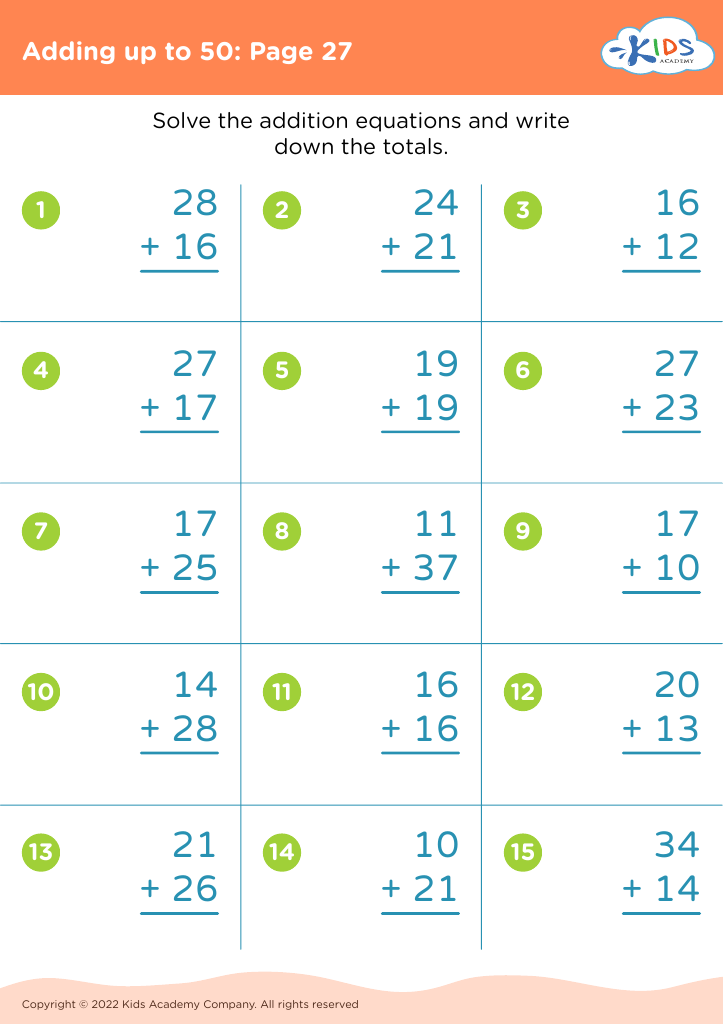
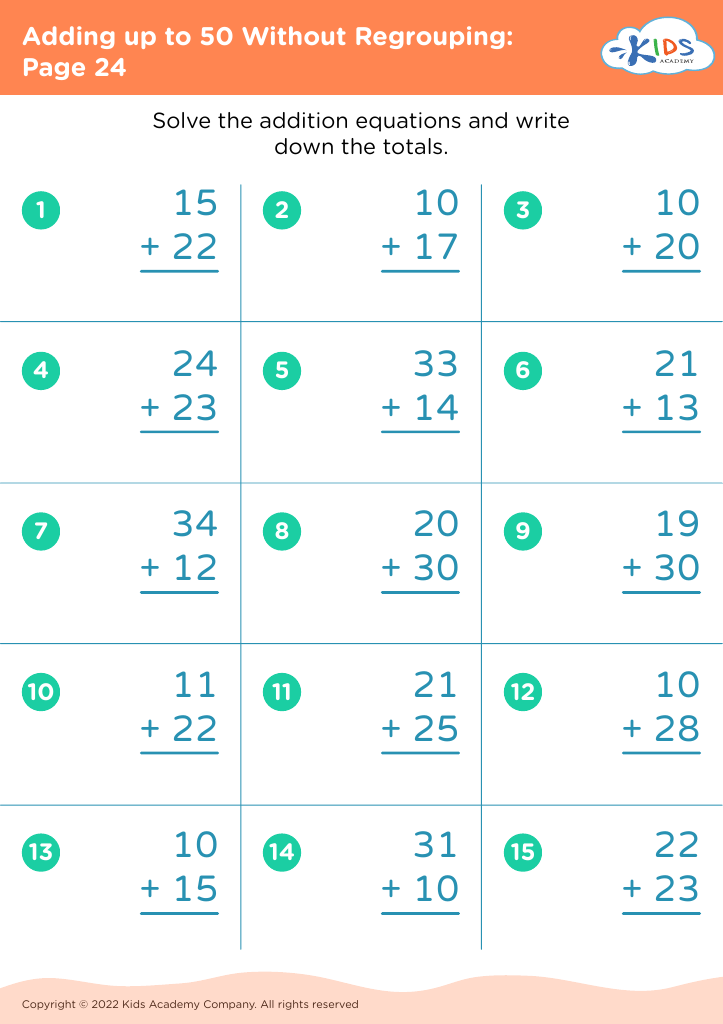
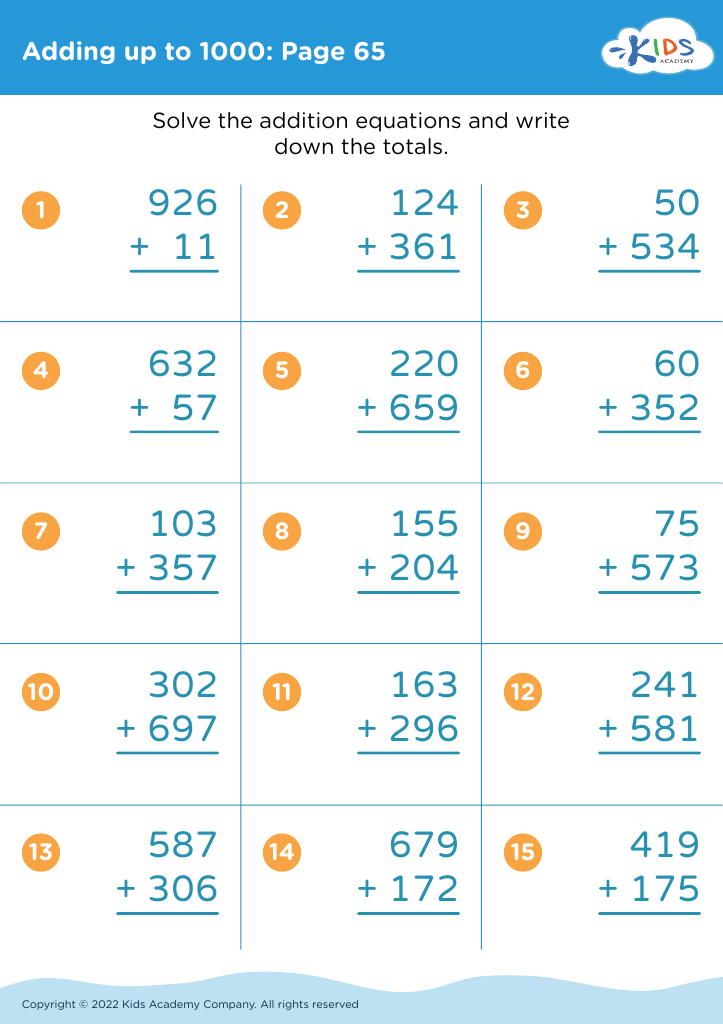
Enhance your child's mathematical abilities with our Sequencing Skills Addition Worksheets designed specifically for ages 7-9. These engaging worksheets focus on developing essential sequencing and addition skills, allowing young learners to master number patterns and sequences in a fun and interactive way. Each worksheet is crafted to encourage critical thinking and problem-solving as students practice addition in various formats. Whether used at home or in the classroom, these resources support foundational math skills and reinforce comprehension through visually stimulating activities. Help your child build confidence and proficiency in math with our carefully designed sequencing addition worksheets today!
Favorites
With answer key
Interactive
Join Kids Academy for Free
Who is primarily going to use this learning content?








Sequencing skills are crucial for children aged 7-9 as they lay the foundation for effective problem-solving and critical thinking. These skills enable kids to understand and follow the order of operations necessary in procedures, whether in mathematics or daily tasks. In the context of addition, sequencing aids students in grasping concepts like carrying and regrouping, which are vital as they progress in their mathematical understanding.
Moreover, strong sequencing skills foster better comprehension in reading and writing. When children can summarize stories or organize their thoughts clearly, they become more effective communicators. This age group is also developing executive functioning skills, and mastering sequencing can enhance their abilities to plan, prioritize, and execute tasks.
For parents and teachers, promoting sequencing not only helps in academic pursuits but also supports life skills. Children who learn how to adapt their thinking to follow a logical order are more likely to become independent problem solvers. By incorporating activities that build sequencing abilities into their daily routines and curricula, adults can significantly contribute to their children's overall intellectual growth and self-confidence. Thus, nurturing these skills is an investment in both present learning and future success.








