Understanding equations Addition Worksheets for Ages 7-9
4 filtered results
-
From - To
Welcome to our "Understanding Equations Addition Worksheets" tailored for children ages 7-9! These engaging worksheets are designed to help young learners grasp the foundational concepts of equations through the addition of numbers. With a variety of exercises, your child will explore how to solve simple equations while improving their addition skills. The worksheets incorporate fun formats, reinforcing understanding through practice. Perfect for enhancing classroom learning or for home use, these activities promote critical thinking and problem-solving abilities. Encourage your child to master the basics of equations with our carefully crafted, age-appropriate resources for a confident start in math!
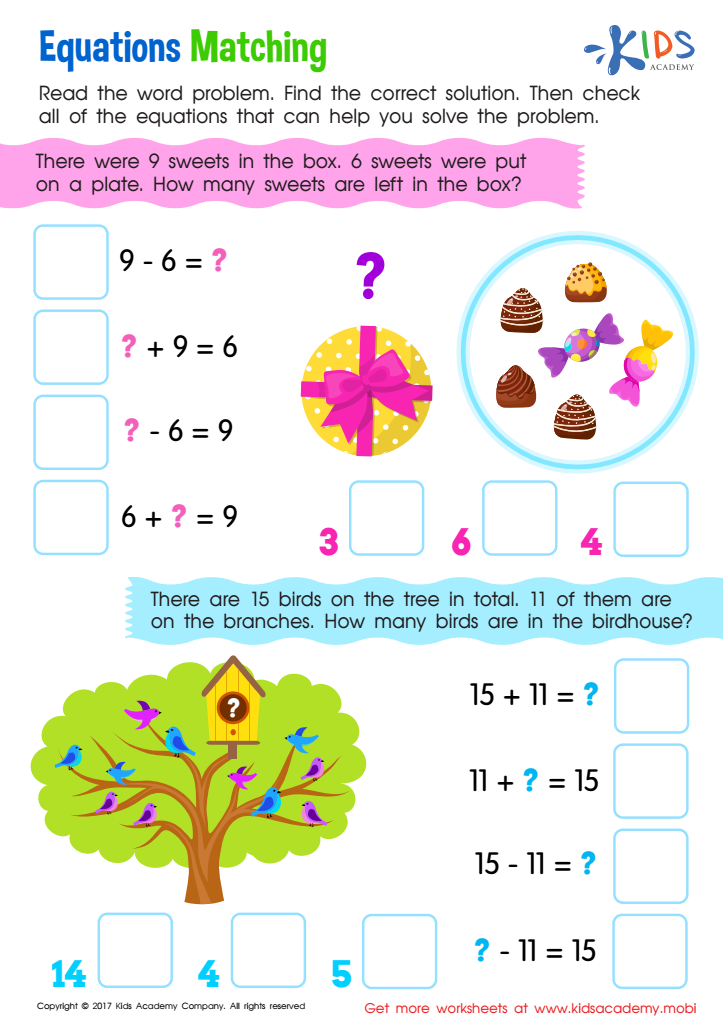
Equations Matching Word Problems Worksheet
 Assign to My Students
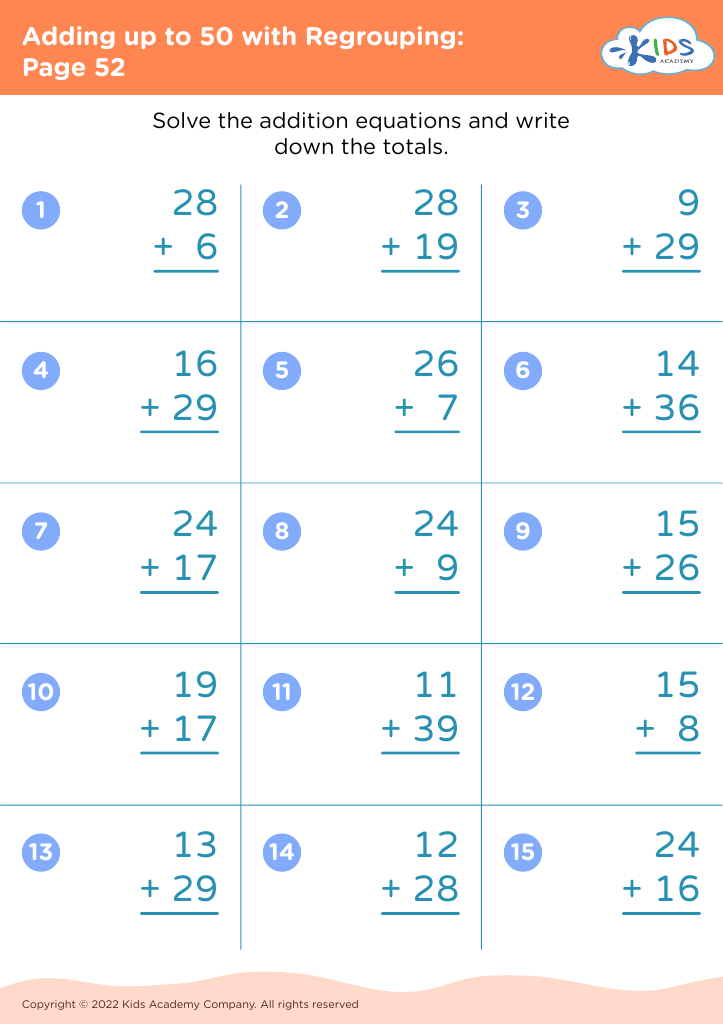
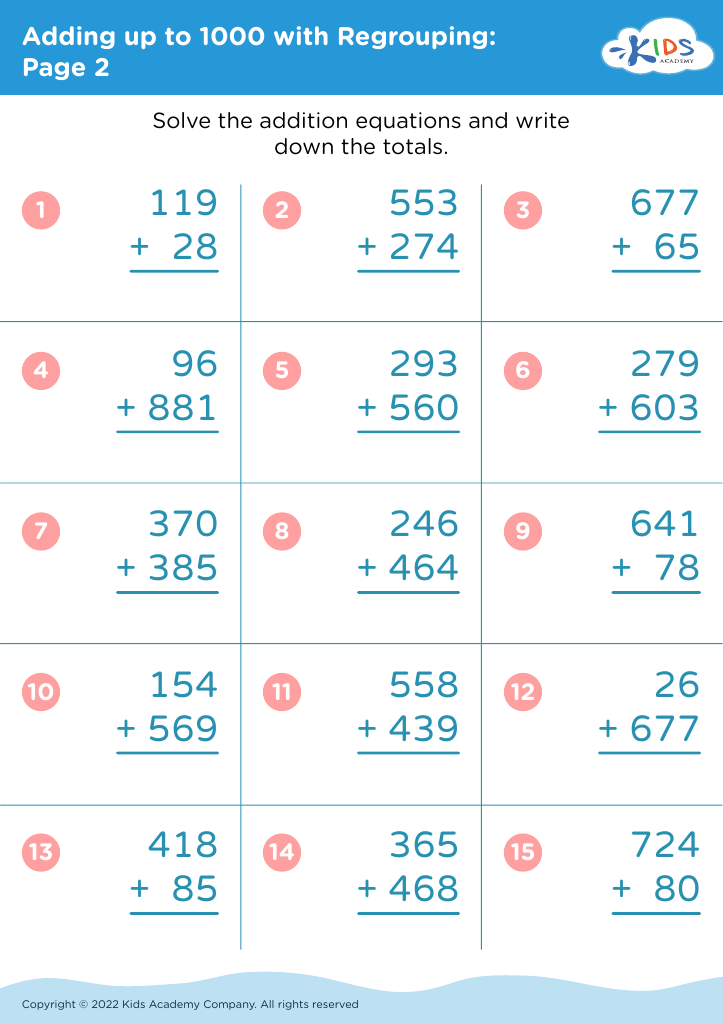
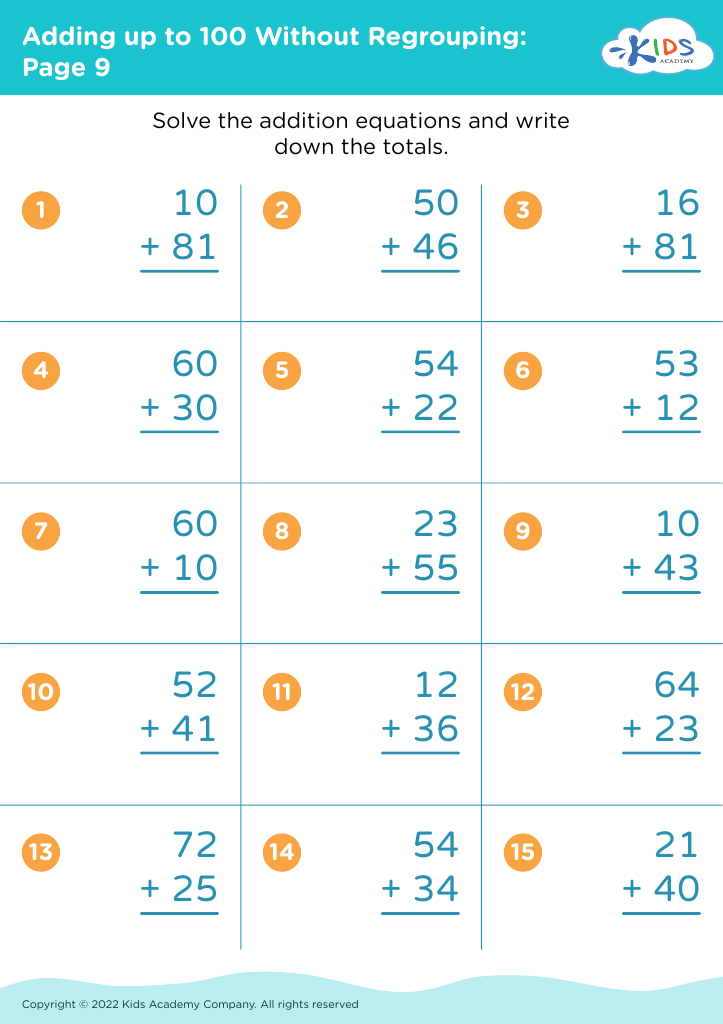






.jpg)

Understanding equations and addition for children aged 7-9 is crucial for their mathematical development and overall academic success. At this age, learners begin to grasp fundamental math concepts that form the foundation for higher-level problem-solving skills. By helping children understand equations, parents and teachers empower them to recognize relationships between numbers and how different components work together.
Equations introduce students to the idea of balance; learning that both sides represent the same value fosters logical thinking. This understanding is instrumental in building critical reasoning skills that are applicable beyond math, aiding in the development of analytical abilities essential for everyday decision-making.
Moreover, mastery of addition—not just as rote memorization but as a process involving various strategies—provides learners with the confidence to tackle complex problems. Collaborative learning sets the scene for engaging discussions, allowing students to verbalize their thought processes while learning from peers.
Finally, nurturing a solid math foundation now gives young learners a head start, ensuring they approach future mathematical concepts without fear. For parents and teachers, investing effort into strengthening these skills means fostering a love for mathematics that can last a lifetime. Thus, understanding equations and addition at this stage is essential for holistic development.








