Filters

157 filtered results

Clear all filters
Favorites
With answer key
Interactive

157 filtered results

Difficulty Level

Grade


Check out this FREE Trial Lesson on Addition for age 7-9!

H

Favorites
With answer key
Interactive
  • 7-9
  • Understanding fractions
  • Addition
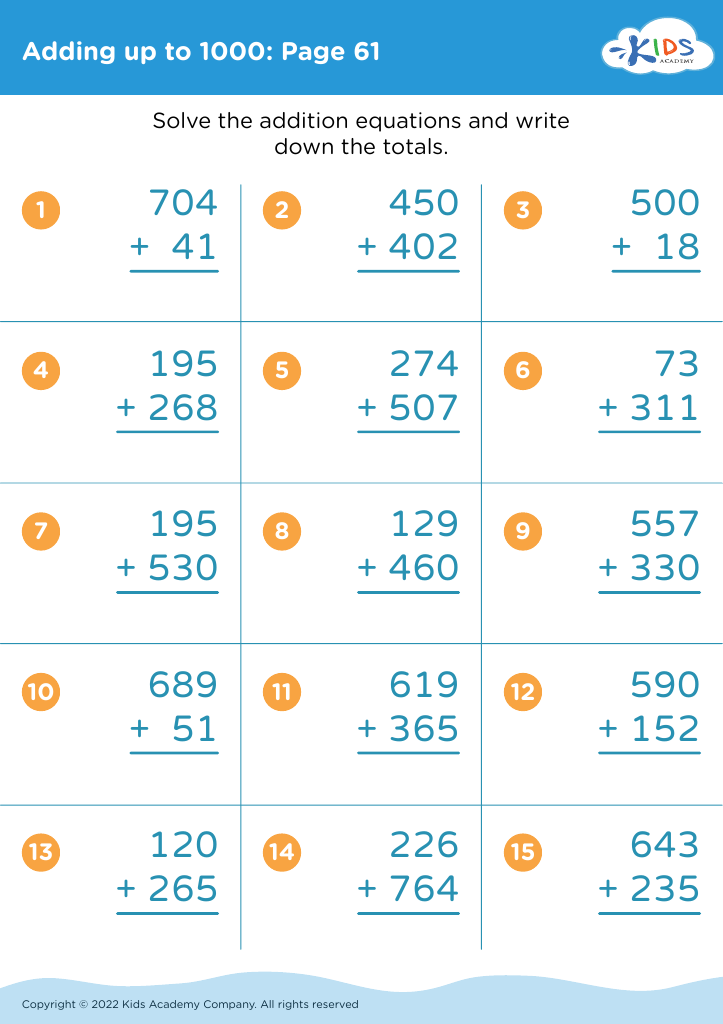
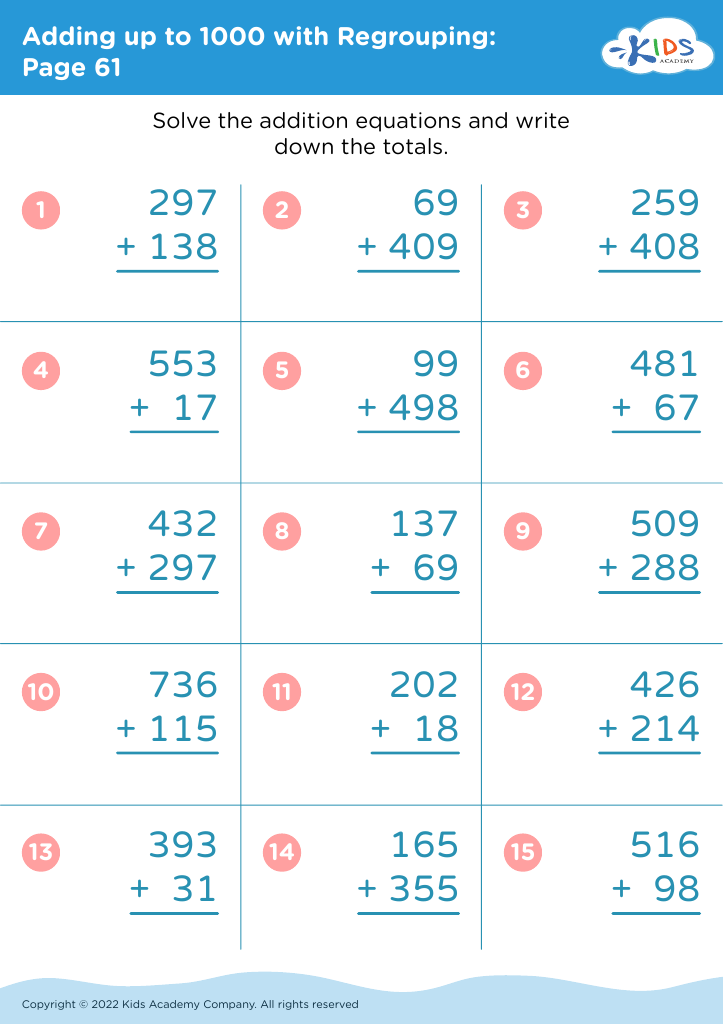
Adding up to 1000: Page 61

Adding up to 1000: Page 61

Adding up to 1000: Page 61
Worksheet
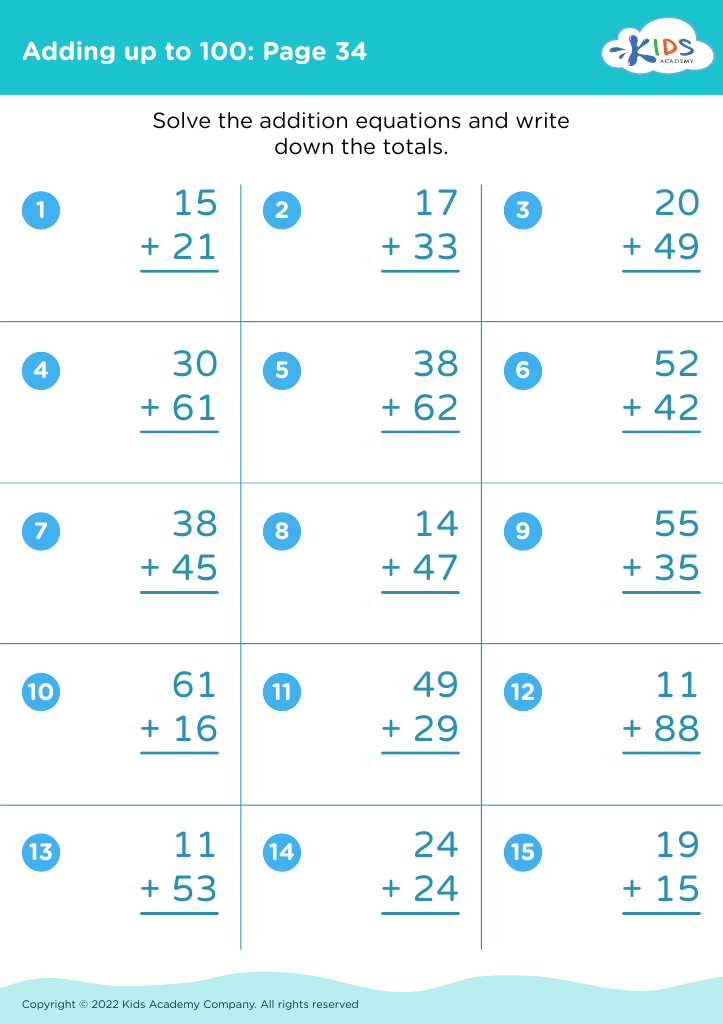
Adding up to 100: Page 34

Adding up to 100: Page 34

Adding up to 100: Page 34
Worksheet
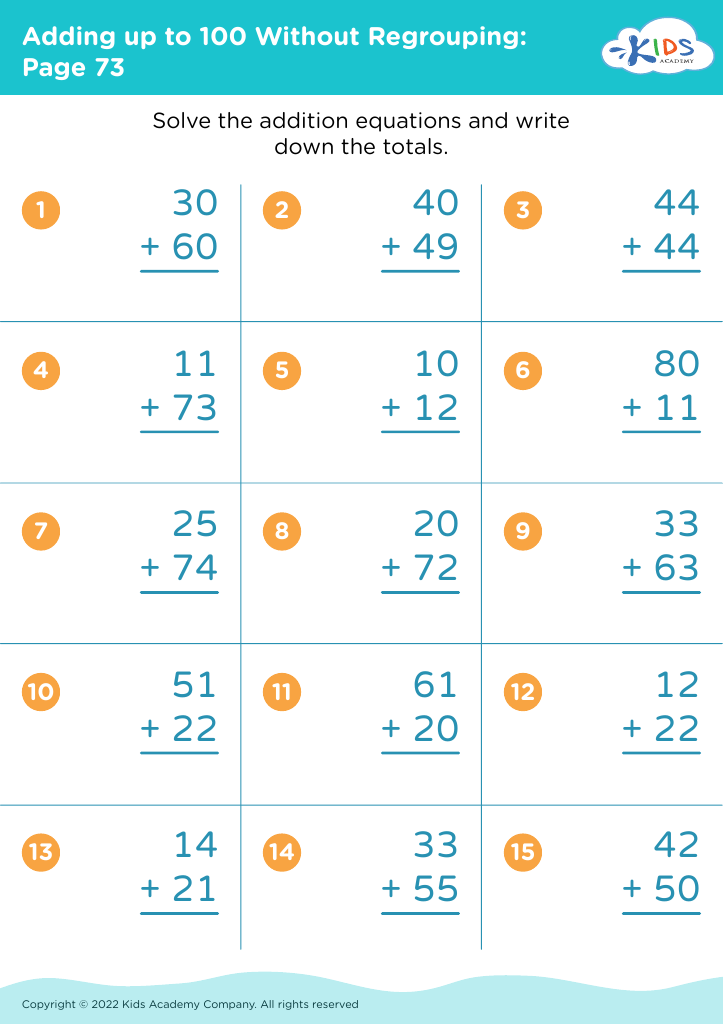
Adding up to 100 Without Regrouping: Page 73
Worksheet
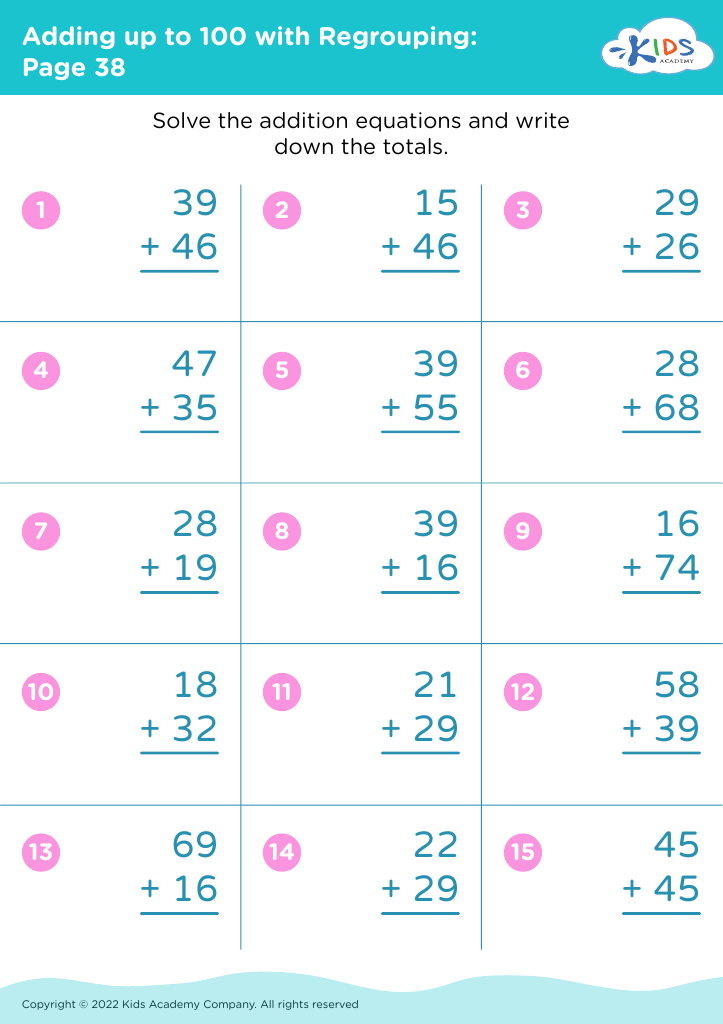
Adding up to 100 with Regrouping: Page 38
Worksheet
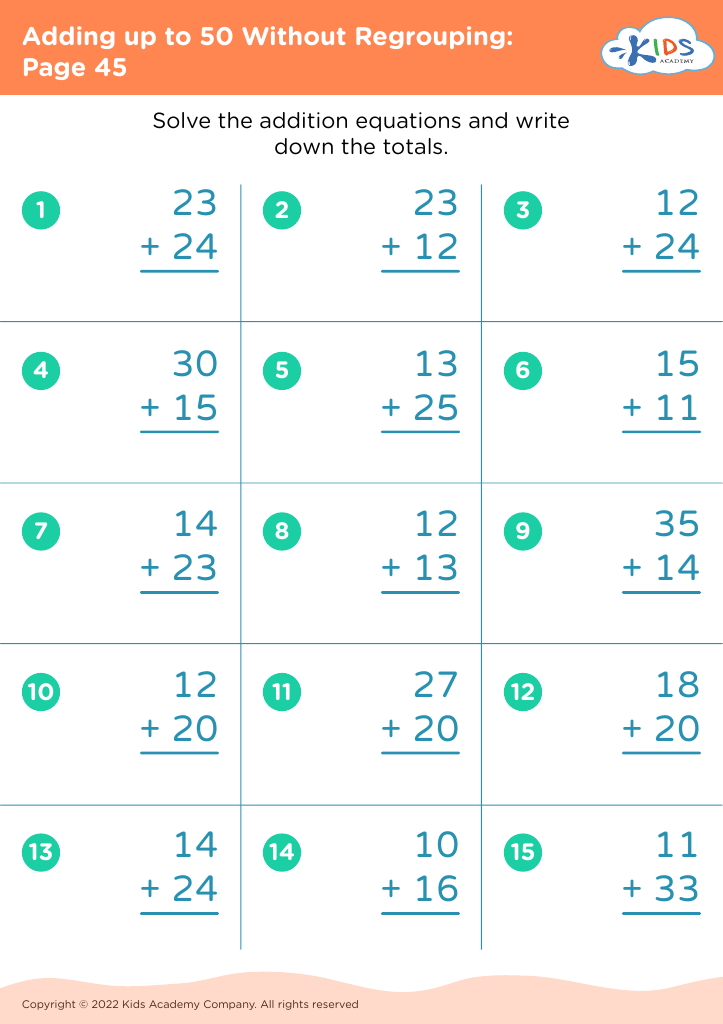
Adding up to 50 Without Regrouping: Page 45
Worksheet
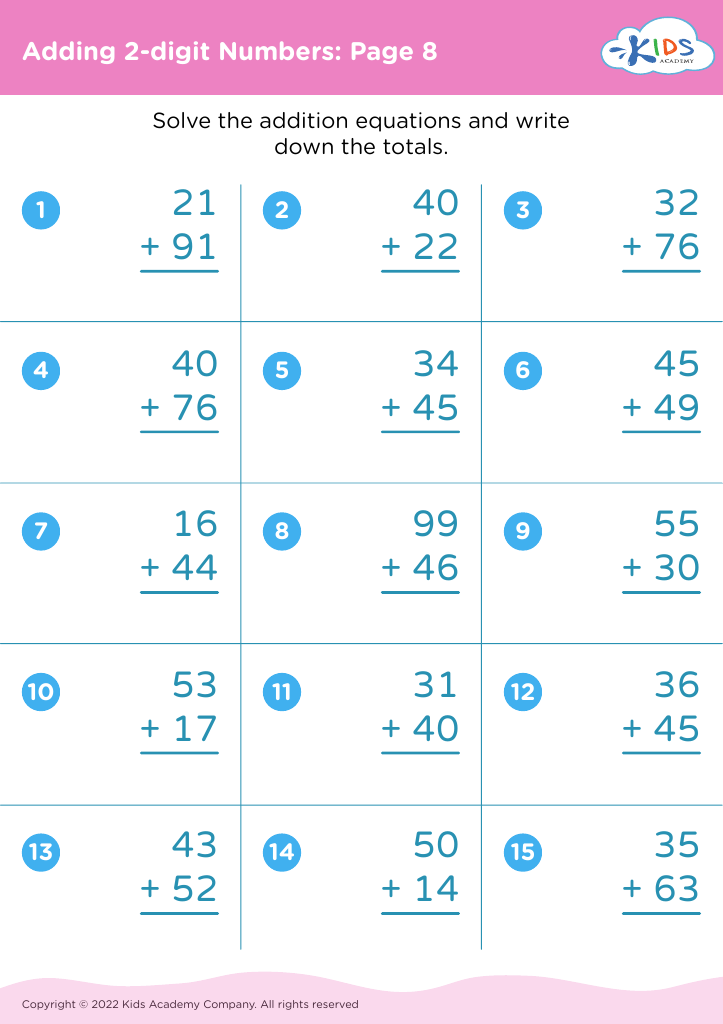
Adding 2-digit Numbers: Page 8

Adding 2-digit Numbers: Page 8

Adding 2-digit Numbers: Page 8
Worksheet
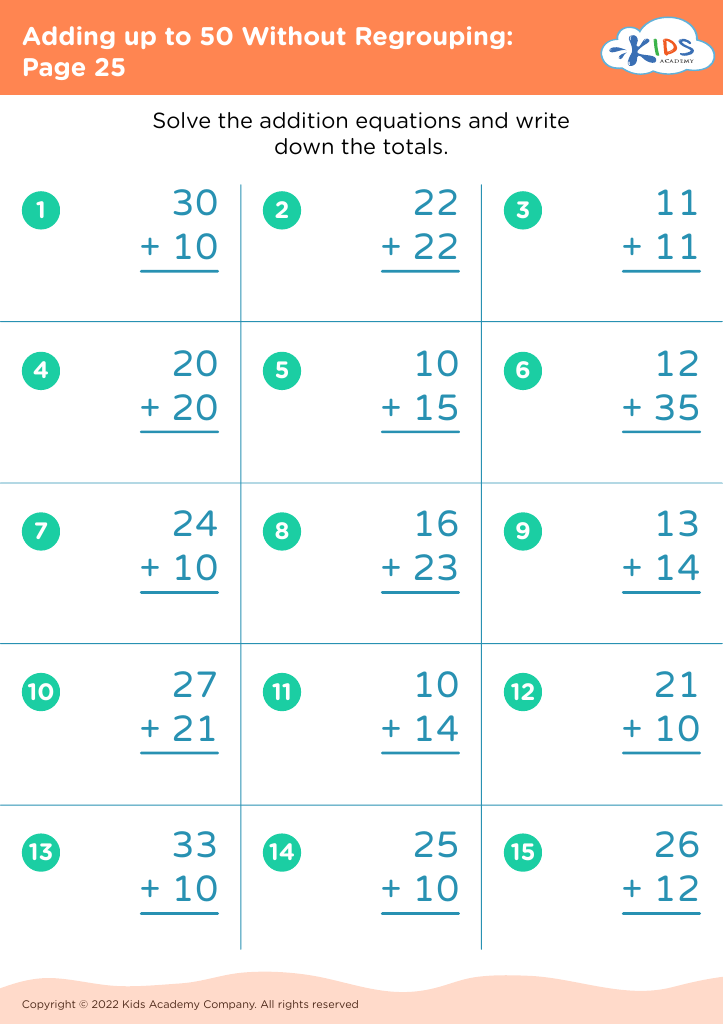
Adding up to 50 Without Regrouping: Page 25
Worksheet
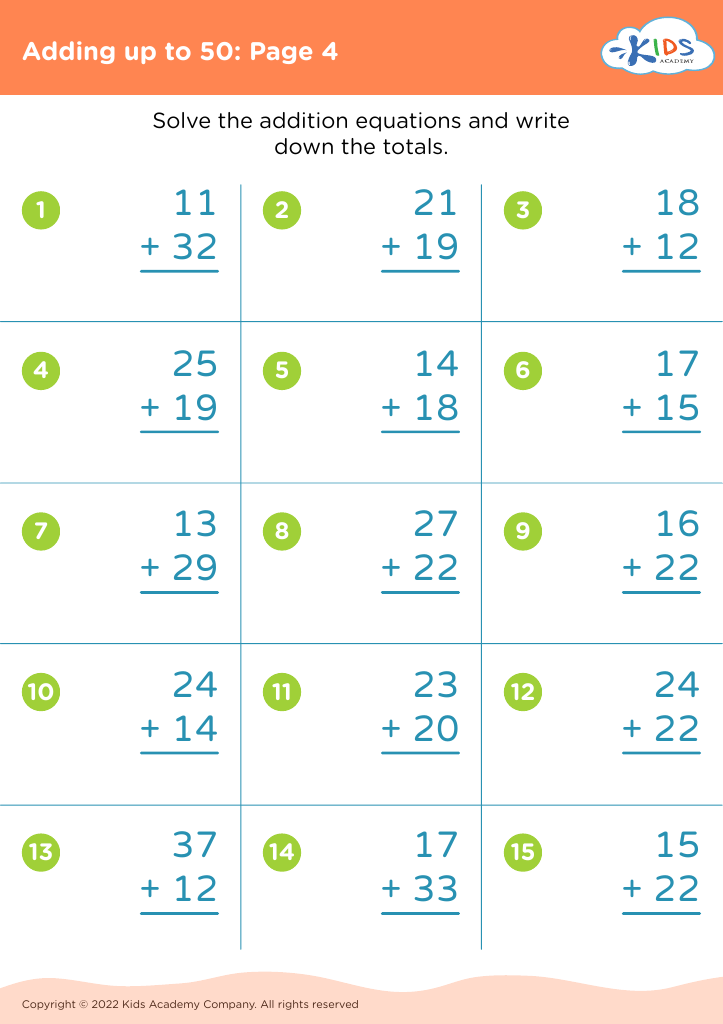
Adding up to 50: Page 4

Adding up to 50: Page 4

Adding up to 50: Page 4
Worksheet
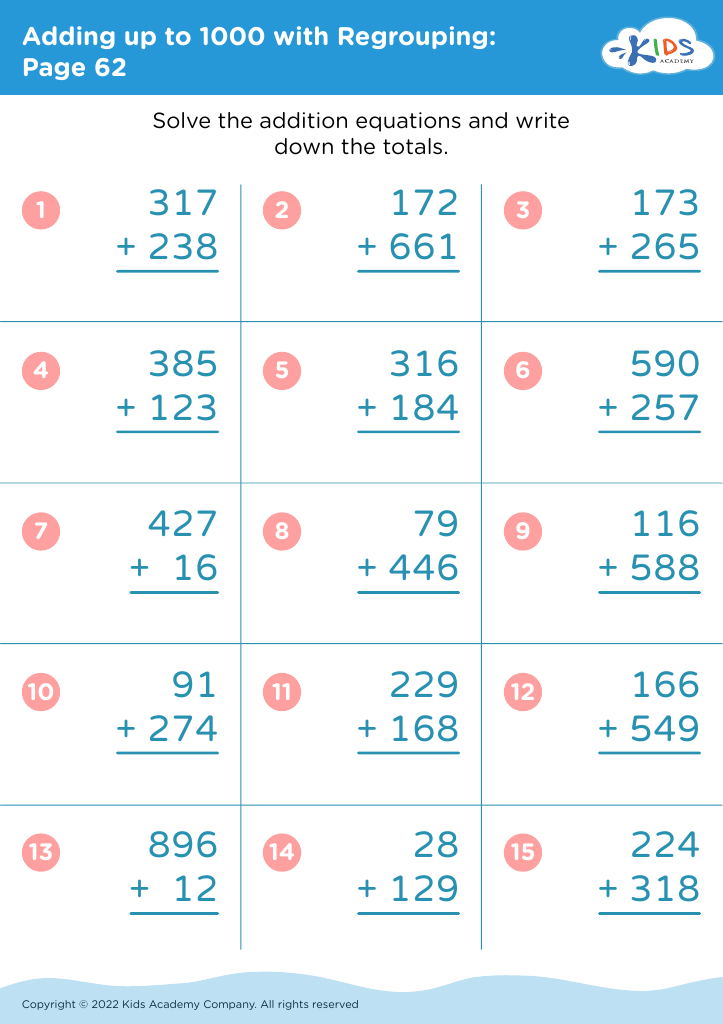
Adding up to 1000 with Regrouping: Page 62
Worksheet
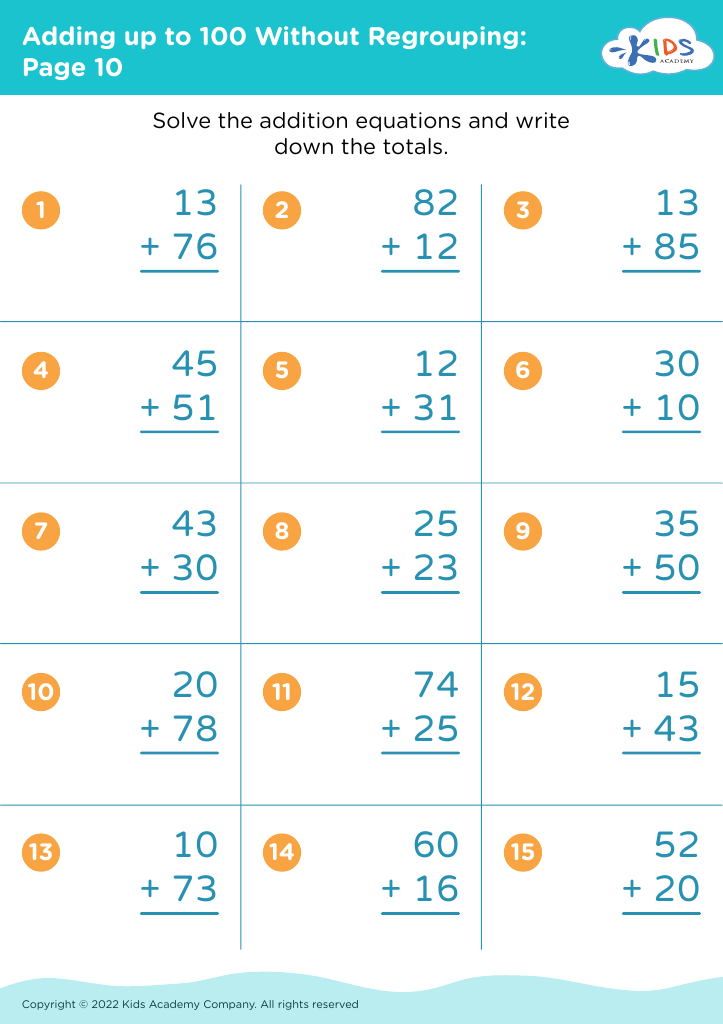
Adding up to 100 Without Regrouping: Page 10
Worksheet
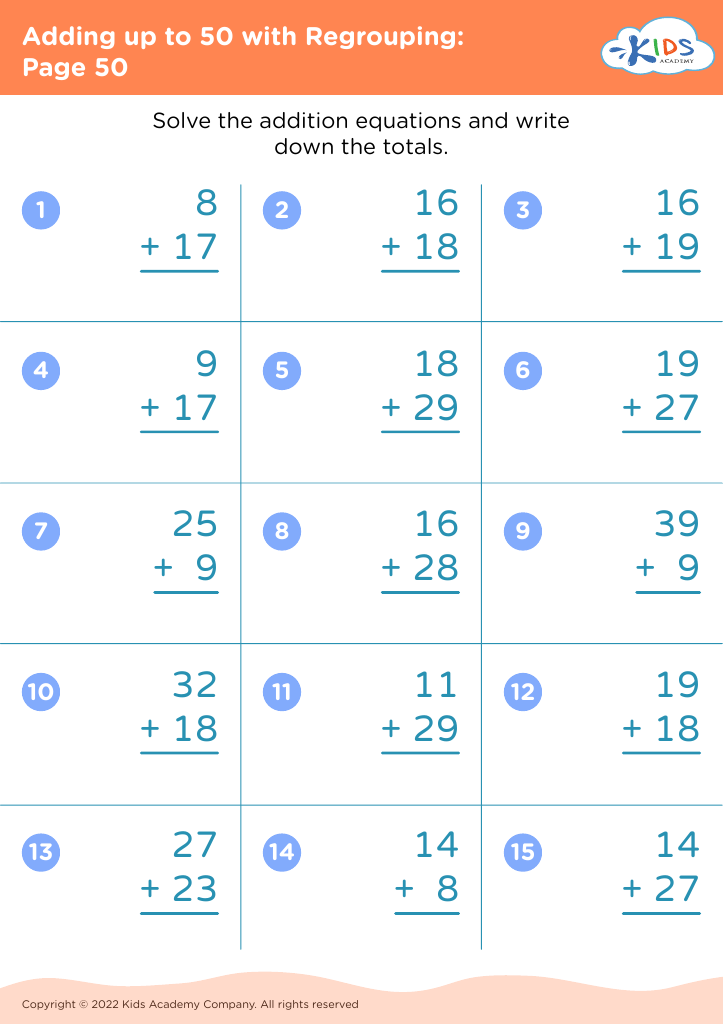
Adding up to 50 with Regrouping: Page 50
Worksheet
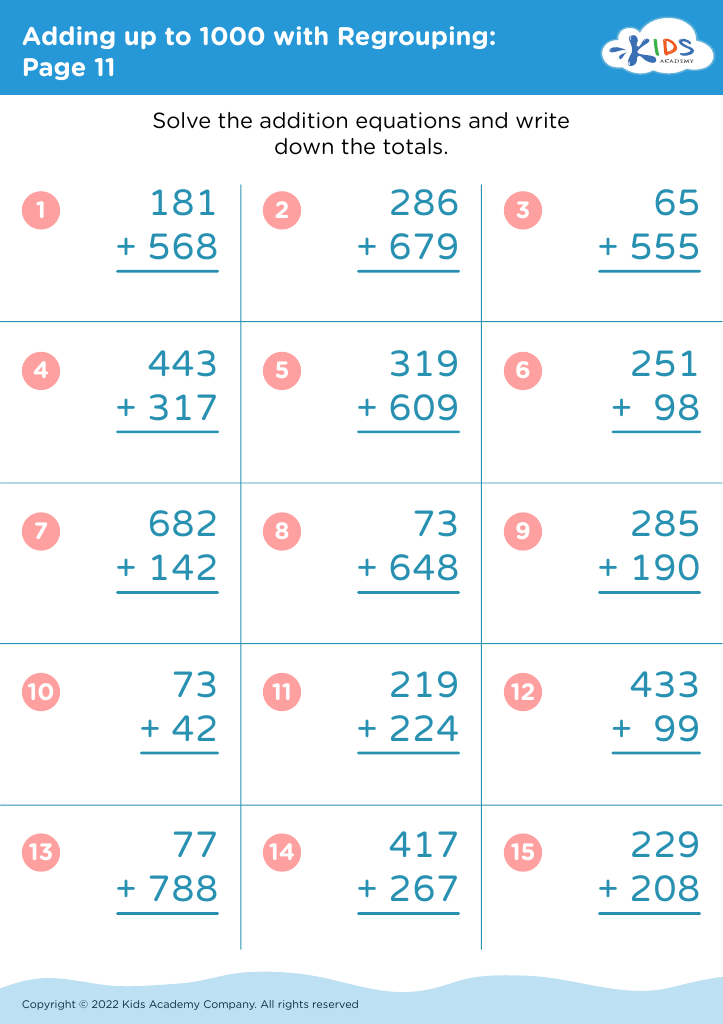
Adding up to 1000 with Regrouping: Page 11
Worksheet
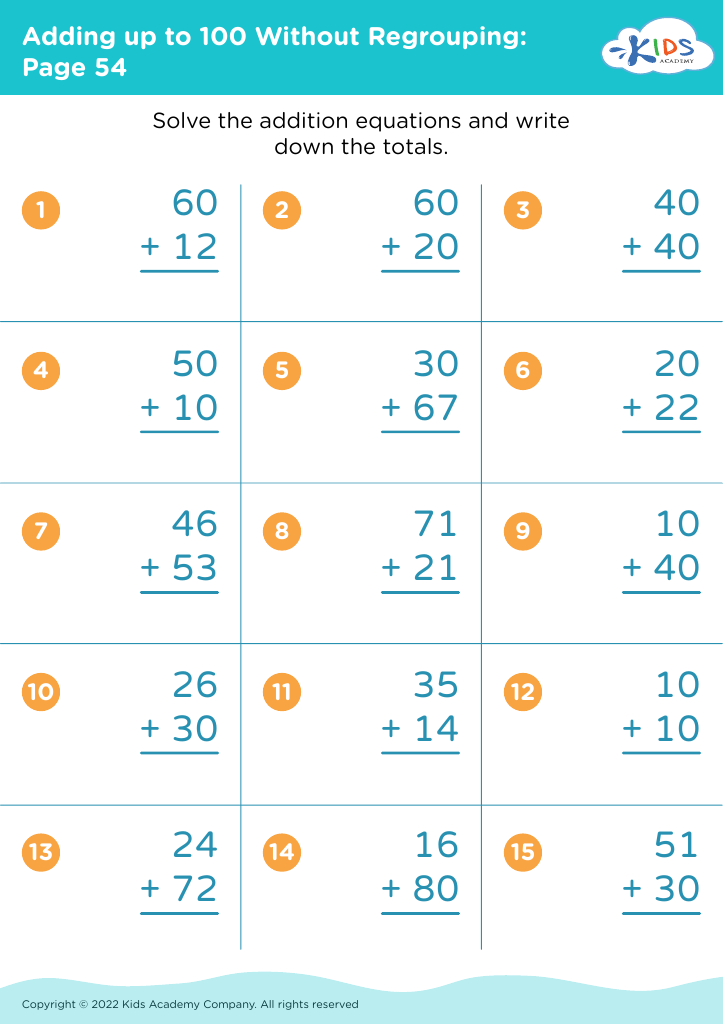
Adding up to 100 Without Regrouping: Page 54
Worksheet
Adding up to 1000 with Regrouping: Page 61
Worksheet
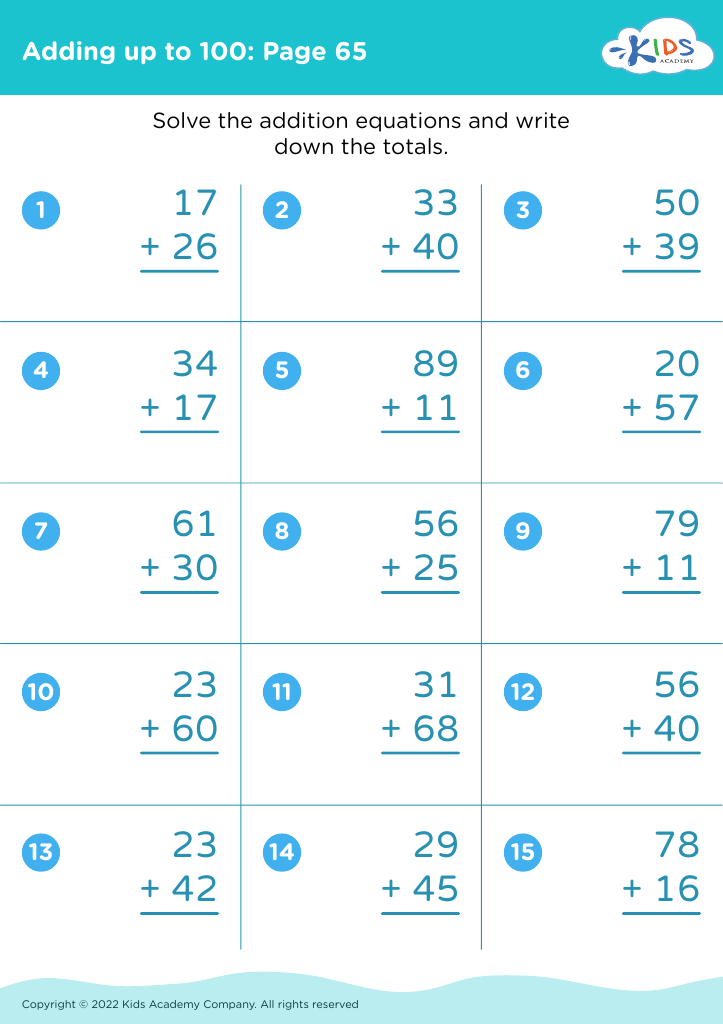
Adding up to 100: Page 65

Adding up to 100: Page 65

Adding up to 100: Page 65
Worksheet
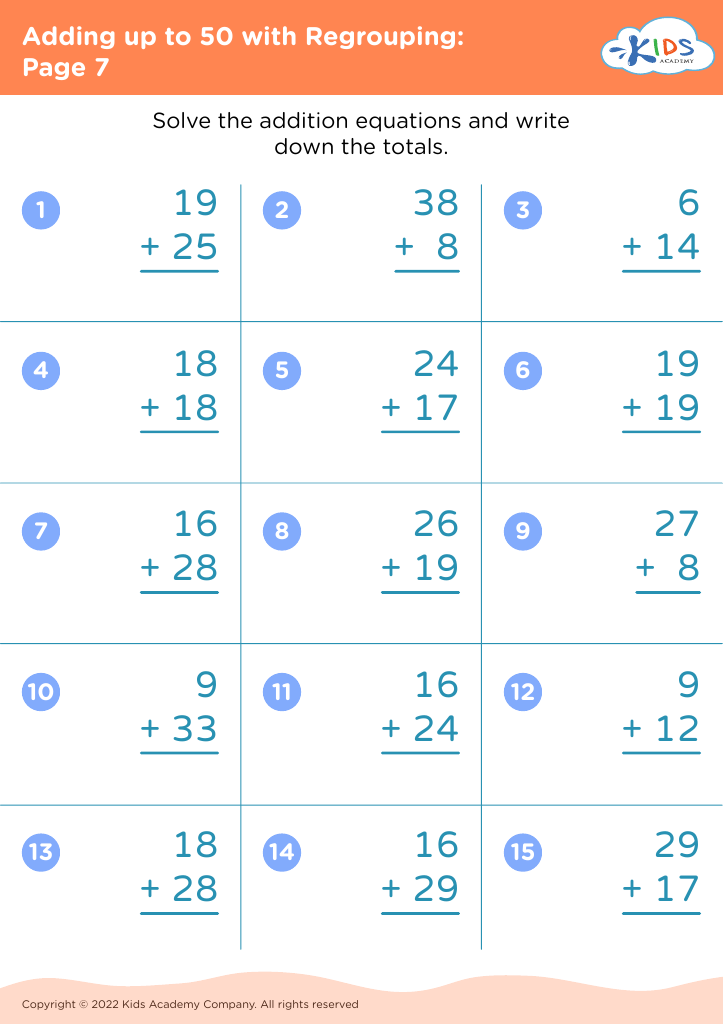
Adding up to 50 with Regrouping: Page 7
Worksheet
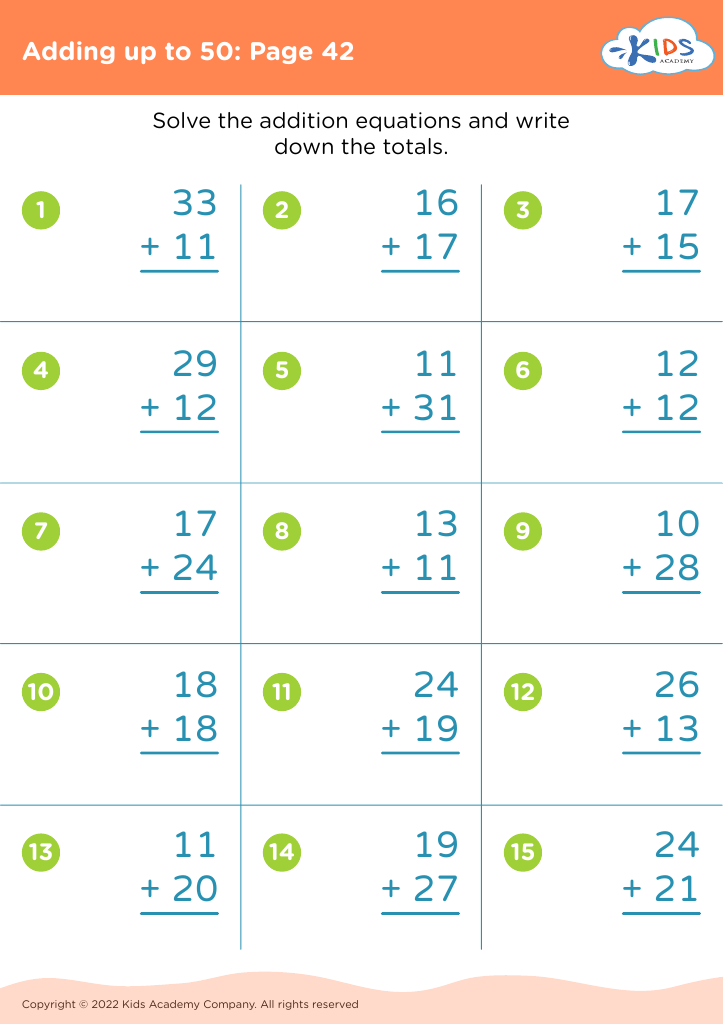
Adding up to 50: Page 42

Adding up to 50: Page 42

Adding up to 50: Page 42
Worksheet
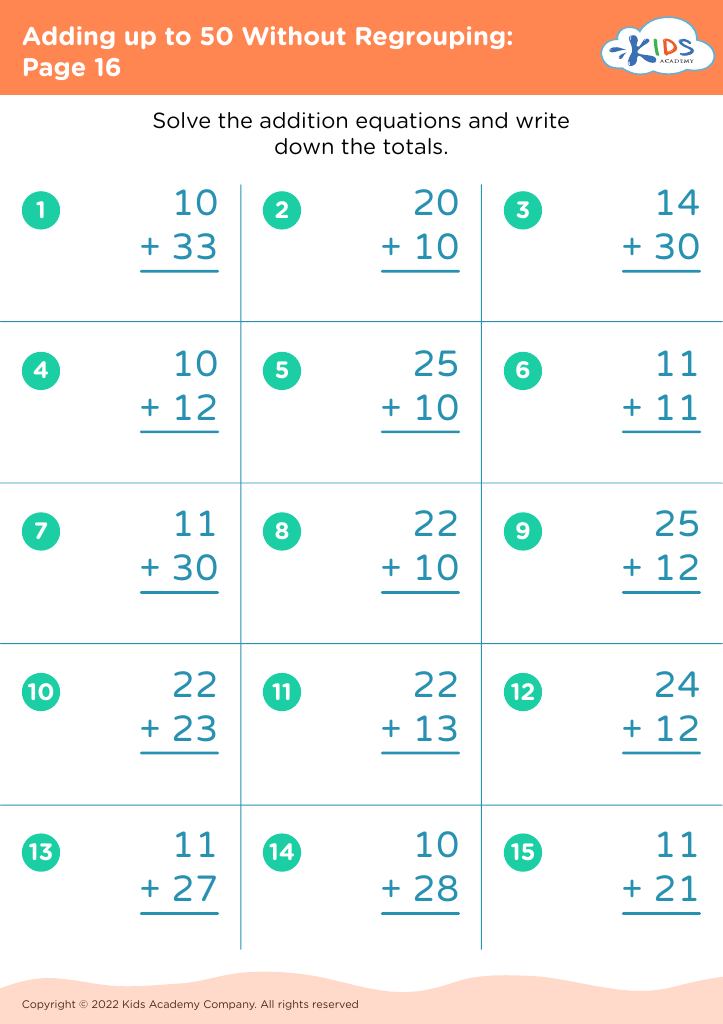
Adding up to 50 Without Regrouping: Page 16
Worksheet
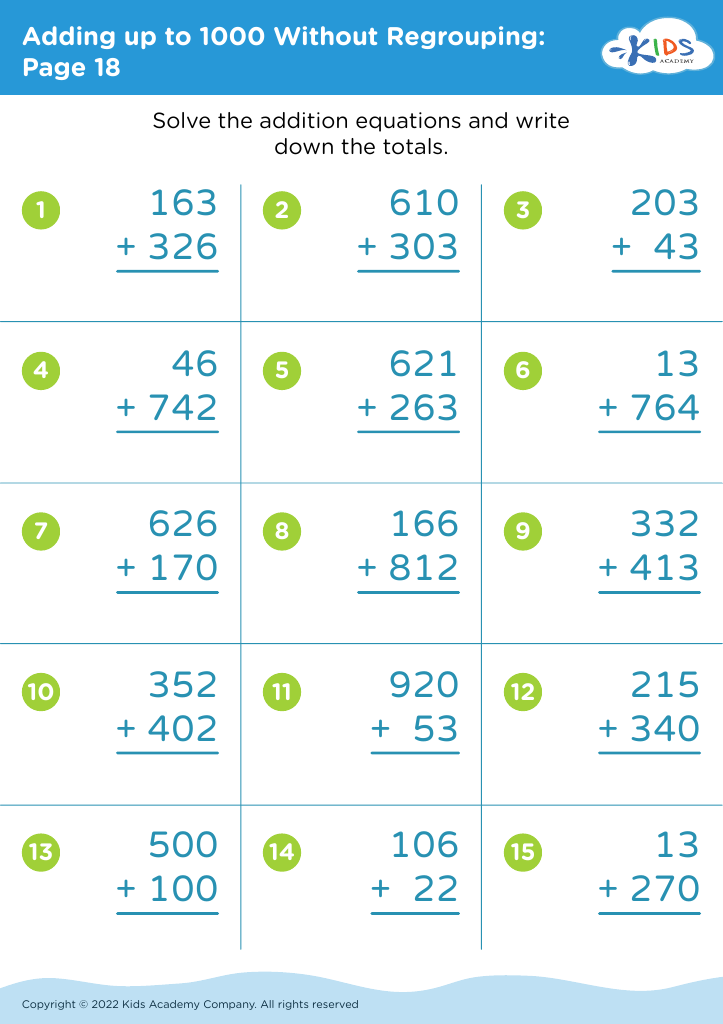
Adding up to 1000 Without Regrouping: Page 18
Worksheet
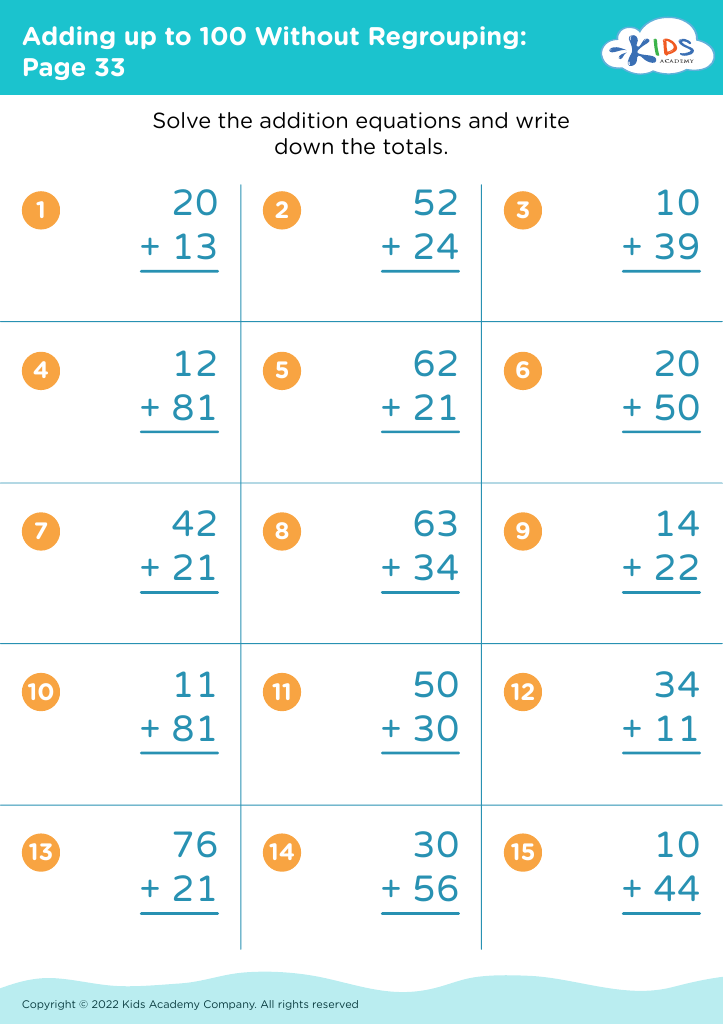
Adding up to 100 Without Regrouping: Page 33
Worksheet
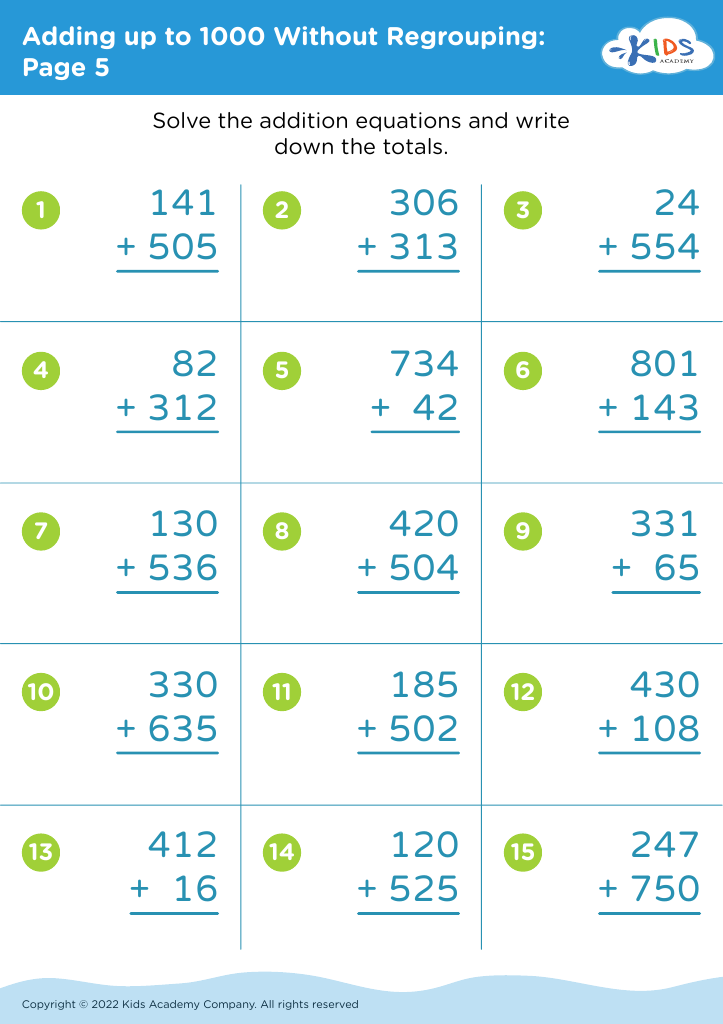
Adding up to 1000 Without Regrouping: Page 5
Worksheet
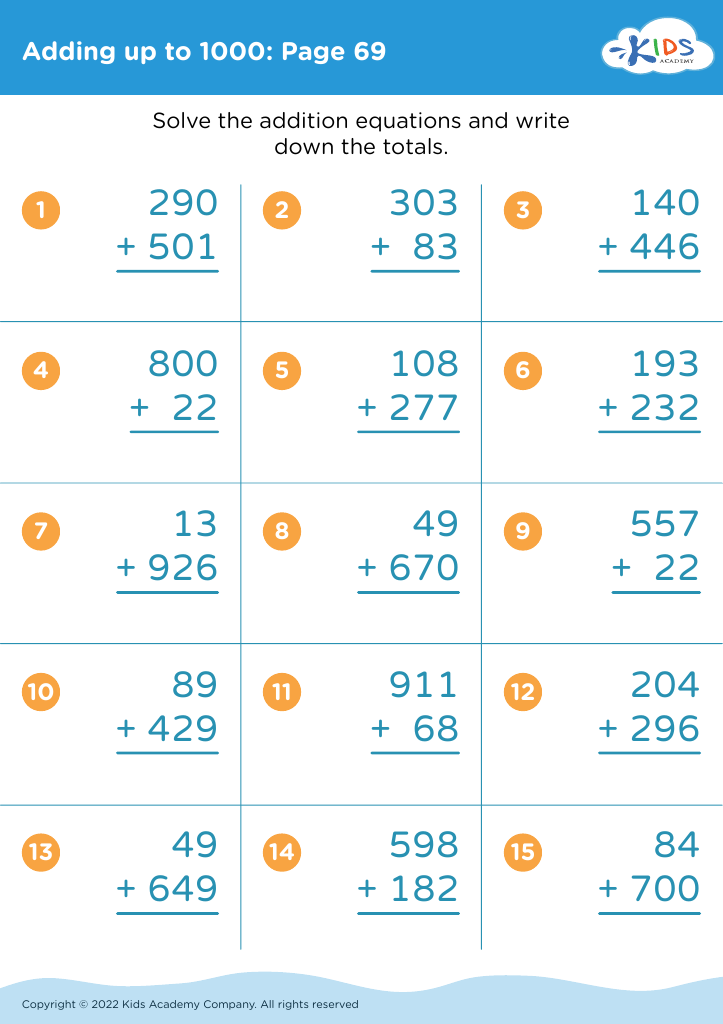
Adding up to 1000: Page 69

Adding up to 1000: Page 69

Adding up to 1000: Page 69
Worksheet
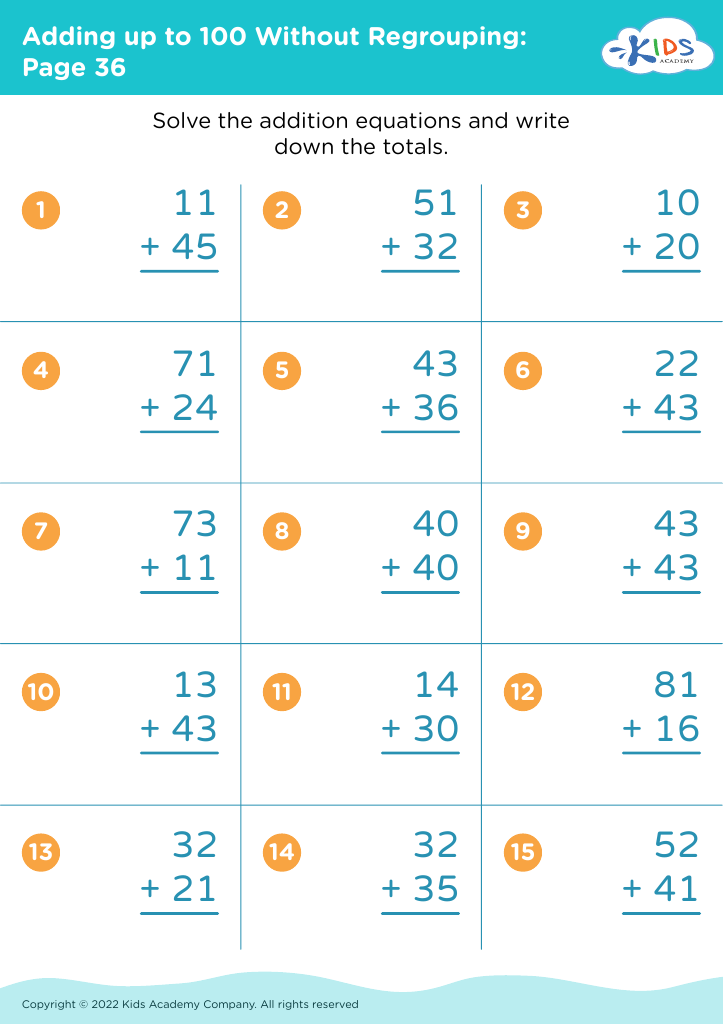
Adding up to 100 Without Regrouping: Page 36
Worksheet
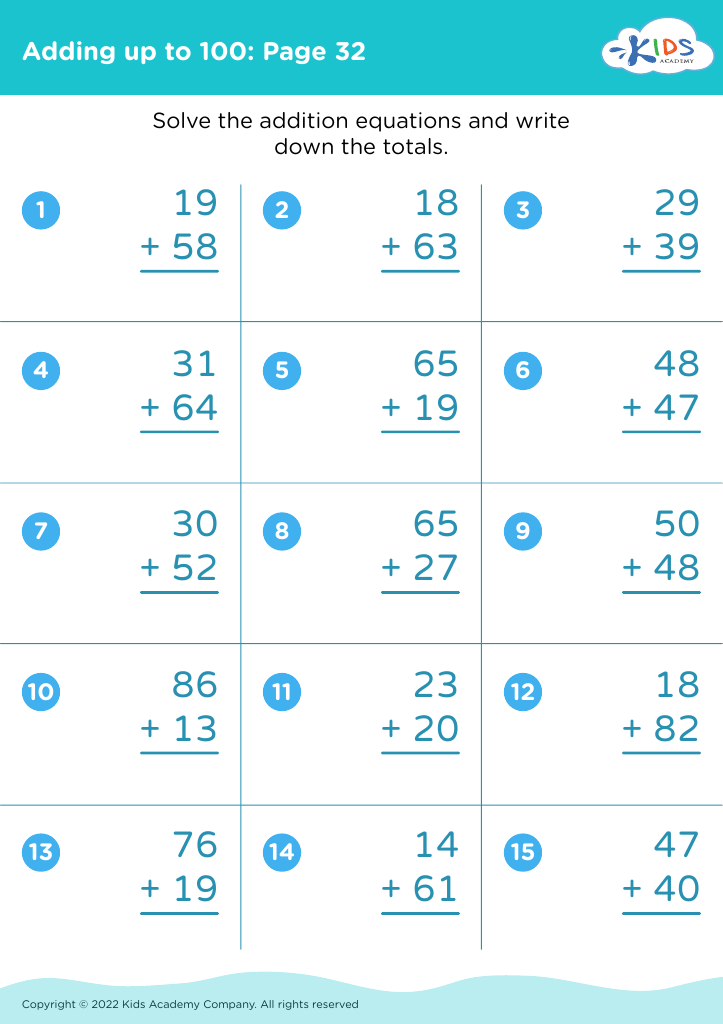
Adding up to 100: Page 32

Adding up to 100: Page 32

Adding up to 100: Page 32
Worksheet


Understanding fraction addition is vital for children aged 7-9 because it lays the foundation for their future mathematical learning and critical thinking skills. During these formative years, children begin to move from concrete operational thinking to more abstract reasoning. Grasping the concept of fractions helps them make sense of parts of a whole, fostering their ability to compare, add, and subtract different quantities, which are essential skills in everyday life.

When parents and teachers prioritize fraction addition, they're equipping children to handle real-world situations, such as cooking measurements or sharing food equitably among friends. This understanding also supports later math concepts, such as ratios, percentages, and algebra, ensuring a smoother transition in their education.

Additionally, a solid grasp of fractions encourages problem-solving and logical reasoning, essential qualities for all areas of learning. Encouraging exploration and discussion around fractions allows children to communicate effectively about their reasoning processes, enhancing their confidence and collaboration skills. Overall, supporting children in mastering fraction addition not only fosters their mathematical proficiency but also nurtures lifelong skills critical for academic success and everyday decision-making.