Financial literacy Coins Worksheets for Ages 7-9
4 filtered results
-
From - To
Discover our engaging Financial Literacy Coins Worksheets designed specifically for ages 7-9. Perfect for helping young learners understand money, these worksheets cover coin identification, counting, and making change. Through fun and interactive exercises, children develop vital math skills and a strong financial foundation. These expertly crafted resources align with educational standards, making learning both effective and enjoyable. Ideal for parents and educators looking to enhance financial literacy, our printable worksheets guide kids in mastering money management basics. Boost your child's confidence in handling coins today with Kids Academy's Financial Literacy Coins Worksheets.
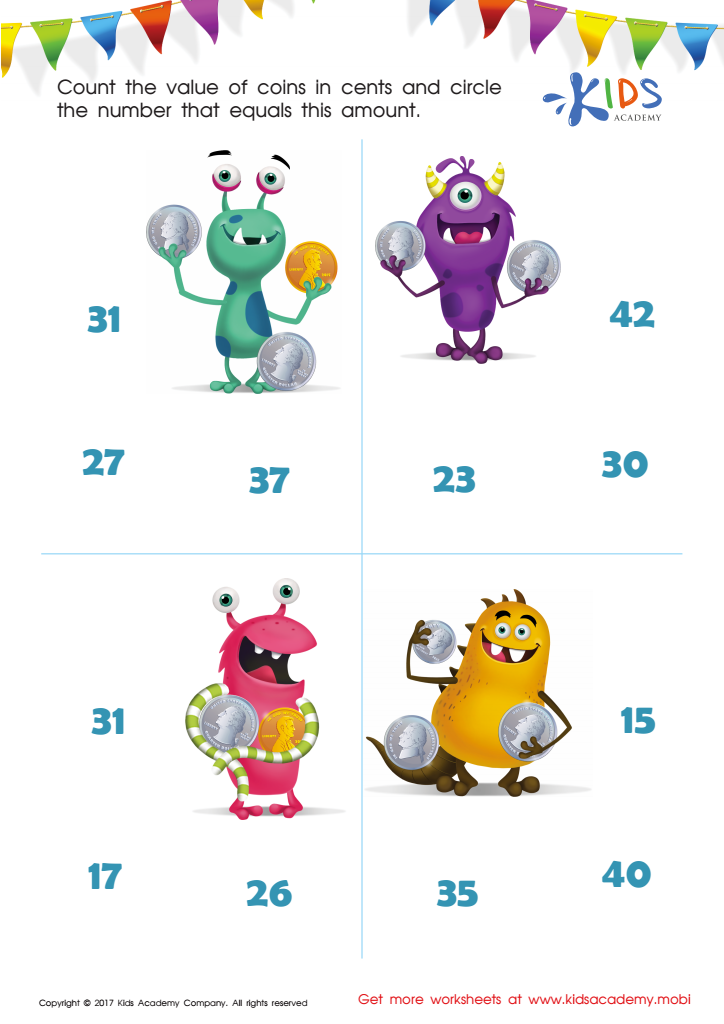
How Many Coins Money Worksheet
 Assign to My Students
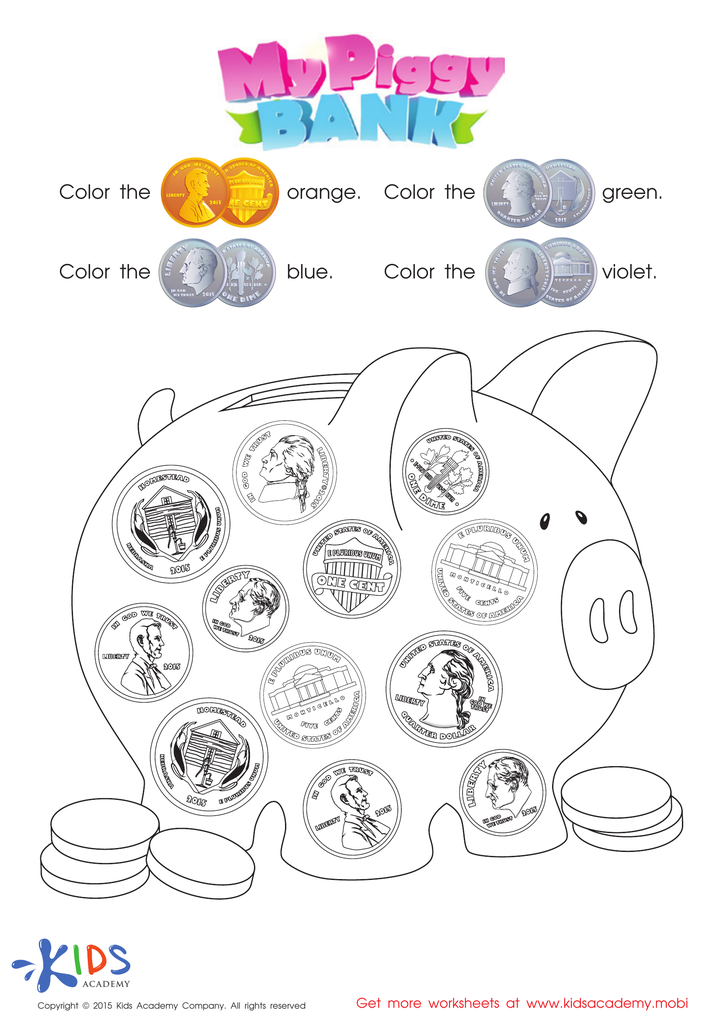
Recognizing Money Money Worksheet
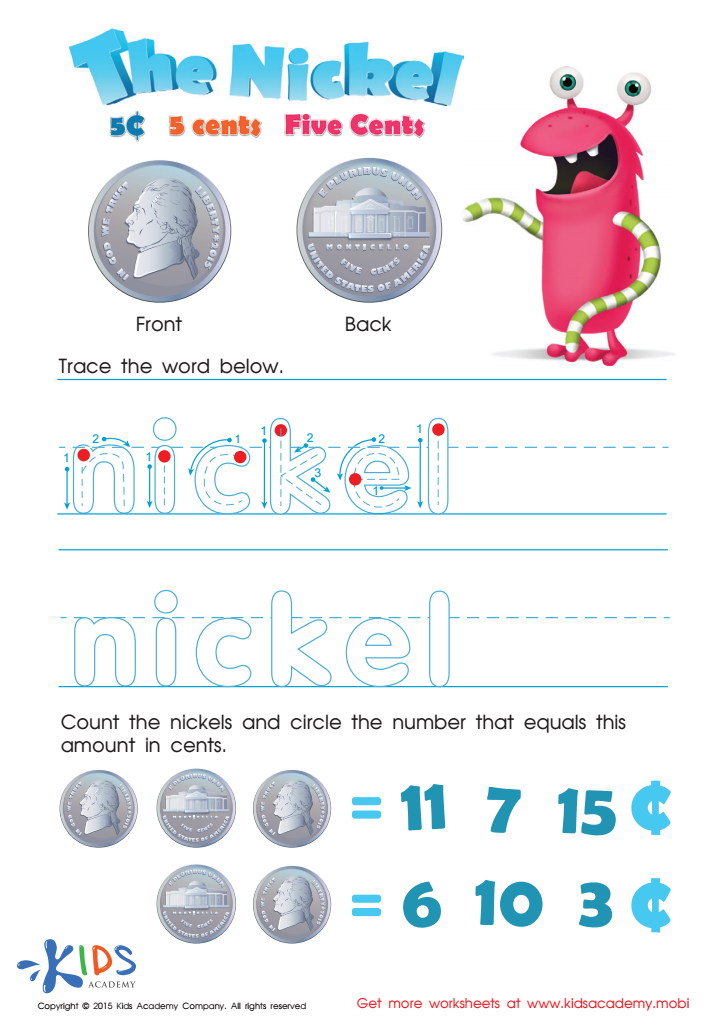
Five Cents or the Nickel Money Worksheet
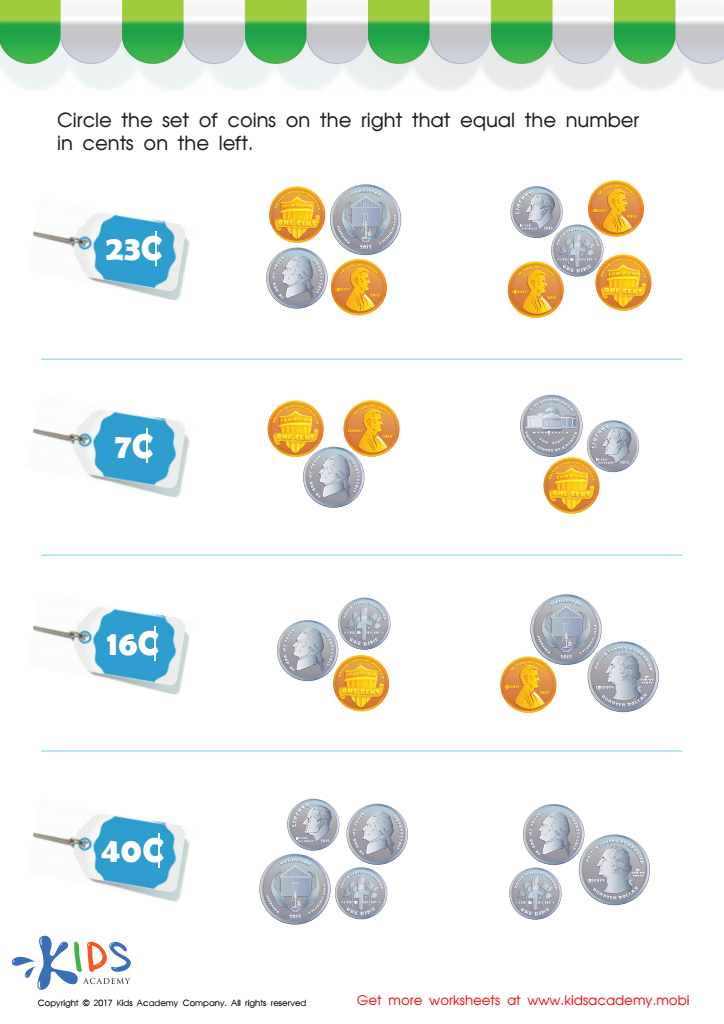
Picking the Coins You Need Money Worksheet








Introducing financial literacy to children aged 7-9 is incredibly important and offers numerous benefits that parents and teachers should care about. At this formative age, children are developing fundamental cognitive skills and are capable of grasping basic financial concepts such as saving, spending, and understanding the value of money. Teaching these concepts through coins can be a practical, hands-on approach that makes learning engaging and relevant.
Financial literacy at an early age helps children develop responsible money management habits that can persist throughout their lives. By understanding the value of coins, children learn about budgeting, saving for future goals, and making informed spending decisions. These skills can build a foundation for financial stability as they grow into adulthood.
Moreover, engaging with coins can enhance mathematical abilities. Counting coins and making transactions are practical applications of addition and subtraction, which can reinforce arithmetic skills in a tangible manner. This not only strengthens their mathematical understanding but also boosts their confidence in handling money.
Finally, early financial education fosters a sense of responsibility and independence. When children understand how to manage their money, they can feel more capable and empowered. Cultivating these skills early sets the stage for children to become financially responsible adults, making it imperative for parents and teachers to prioritize financial literacy.








