Basic Math Skills Money Worksheets for Ages 7-9
3 filtered results
-
From - To
Enhance your child's foundational math skills with our engaging Money Worksheets designed for ages 7-9. These expert-crafted resources help young learners understand the value of money, develop counting abilities, and practice essential arithmetic through fun, real-world scenarios. Perfect for classroom or home use, each worksheet combines visual aids and practical exercises to make learning enjoyable and effective. By working through a variety of tasks, your child will gain confidence in identifying coins, making change, and performing basic math operations, setting a strong groundwork for future financial literacy. Unlock your child's potential with our comprehensive money worksheets today!
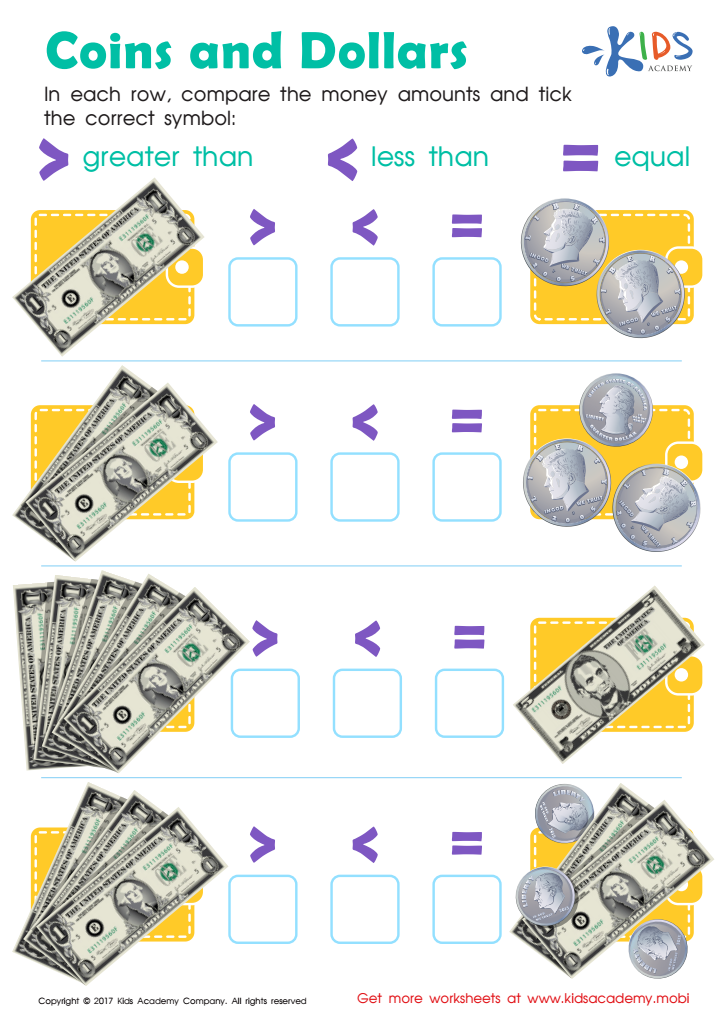
Money: Coins Dollars Printable
 Assign to My Students
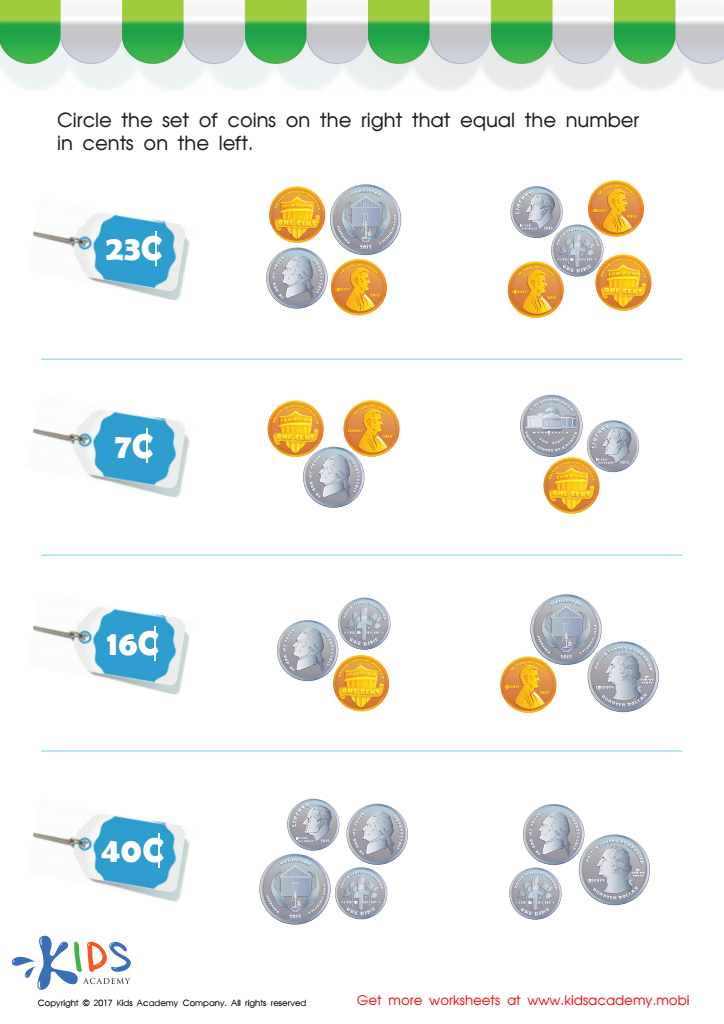
Picking the Coins You Need Money Worksheet
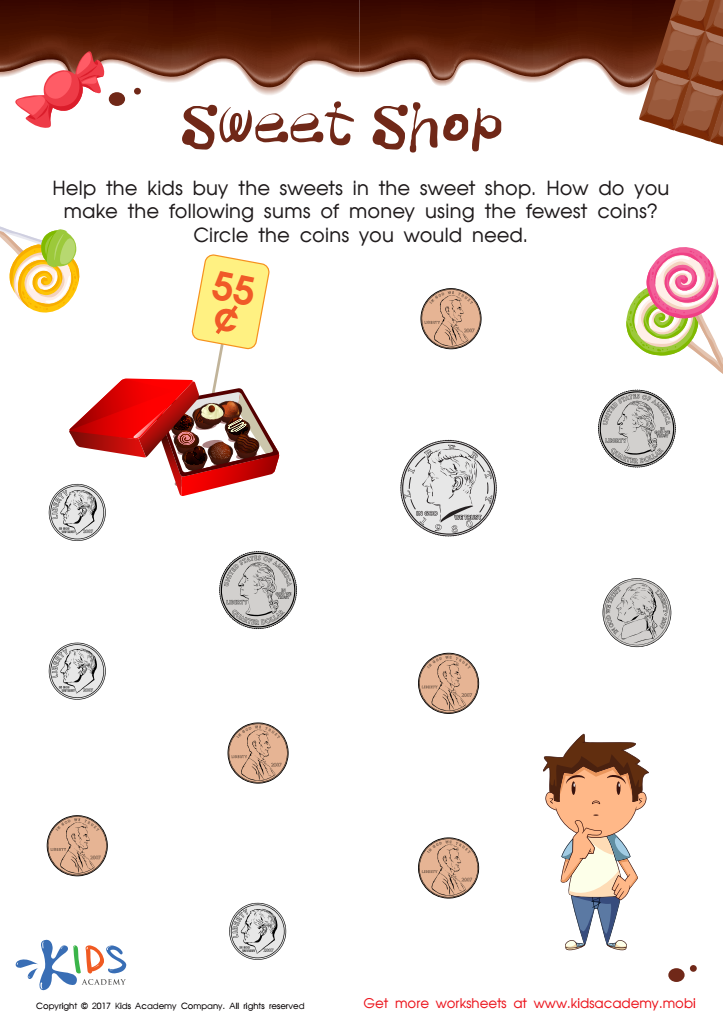
Sweet Shop – Counting Coins Worksheet








Understanding basic math skills, including knowledge about money, is essential for children aged 7-9 for several key reasons. First, it builds a strong foundation for advanced math topics. Using money in everyday situations helps children understand concepts like addition, subtraction, multiplication, and division in real-world contexts. This practical application reinforces their overall numerical fluency.
Second, learning about money management fosters important life skills. At a young age, children start to grasp the value of money, recognizing coins and bills, making simple transactions, and understanding the basic tenets of financial responsibility. These early lessons in budgeting, saving, and making wise spending choices can set the groundwork for sound financial habits later in life.
Third, integrating money into math lessons engages children. Tying abstract numbers to tangible objects makes learning more relatable and enjoyable, boosting memory retention and interest. For instance, using games and role-playing shopping scenarios can make learning interactive and fun.
Lastly, proficiency in basic math skills is crucial for academic success. As children master math fundamentals, their confidence levels soar. Teachers and parents who emphasize these skills equip children not just for higher math education, but for everyday situations requiring critical thinking and problem-solving.
Fostering these competencies assures that children are well-prepared for future endeavors, both in school and in their personal lives.








