Fraction visualization Fractions of Shapes Worksheets for Ages 7-9
5 filtered results
Difficulty Level
Grade
Age
-
From - To
Subject
Activity
Standards
Discover the perfect tool for young learners with our Fraction Visualization Fractions of Shapes Worksheets, designed specifically for ages 7-9. These engaging worksheets help children grasp the concept of fractions through colorful, interactive shape-based exercises. By breaking down shapes into fractions, kids develop essential math skills, improve their visualization abilities, and build a strong foundation for more advanced concepts. Ideal for both classroom and at-home learning, our worksheets make understanding fractions fun and intuitive. Spark your child's interest in math and transform their learning experience with these expertly crafted resources! Get started today and watch your child's confidence grow.
Favorites
With answer key
Interactive
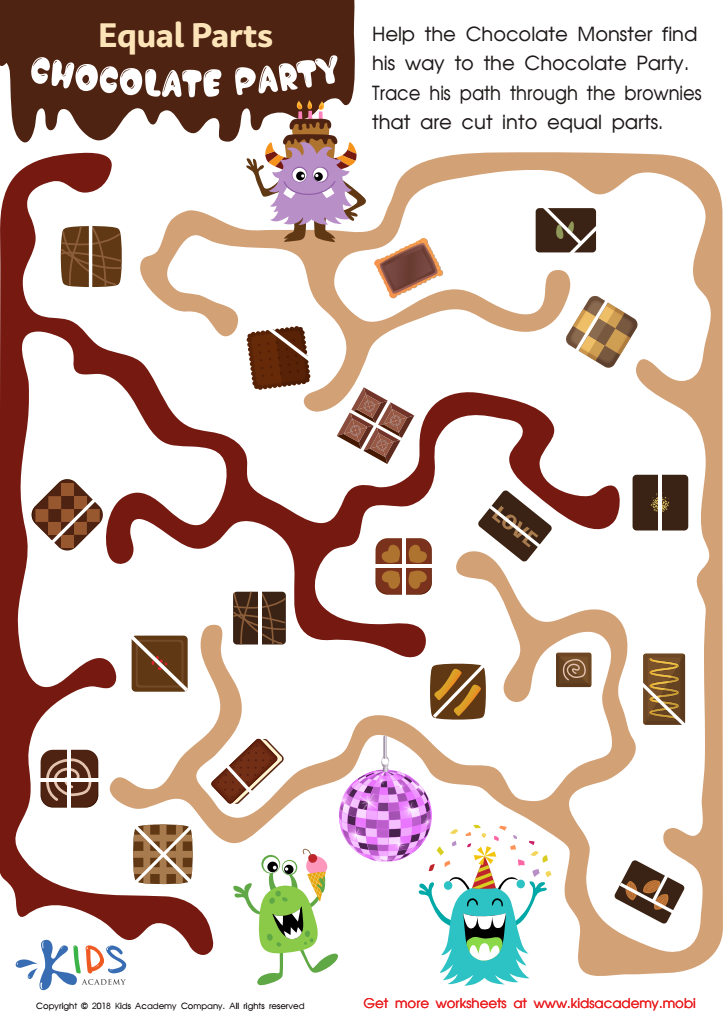
Equal Parts: Chocolate Party Worksheet
Mention "chocolate" and watch your kids' excitement soar! Learning can go hand-in-hand with that sugary treat. This worksheet helps kids guide the Chocolate Monster to the Chocolate Party, following a trail of brownie halves. It's an easy, tasty way to have fun!
 Assign to My Students
Equal Parts: Chocolate Party Worksheet
Worksheet
Tire Thirds and Fourths Worksheet
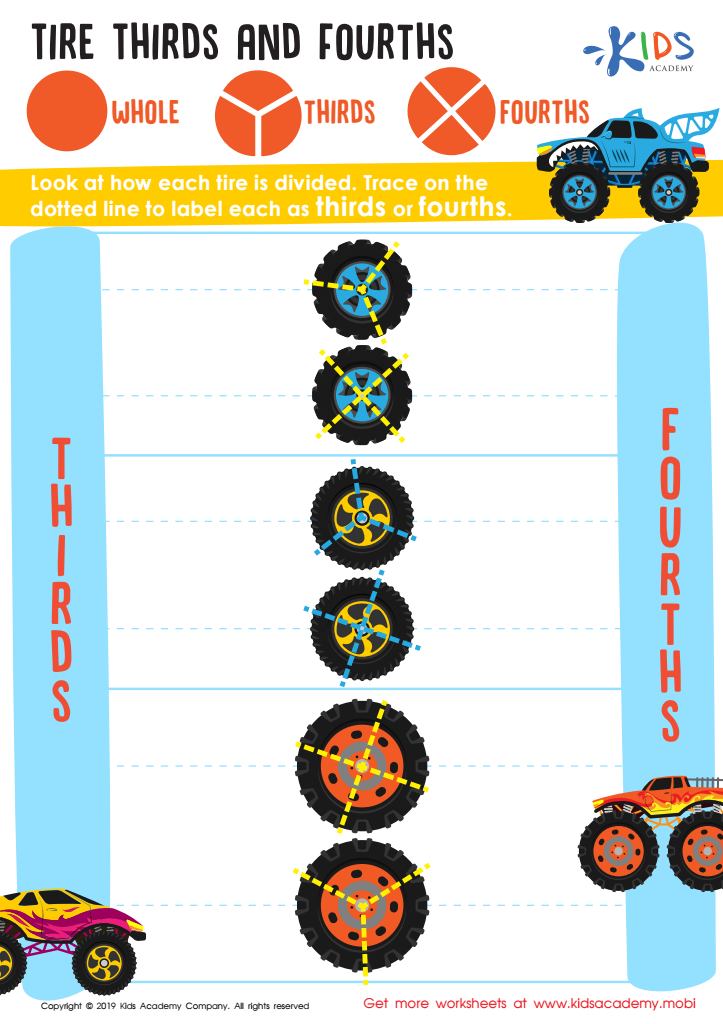
Learning geometry is key in your child's education. Have them identify and name shapes cut into 2, 3 and 4 parts. Test their knowledge with this worksheet - trace the dotted line to label each as third or fourth. Encourage them to keep learning!
Tire Thirds and Fourths Worksheet
Worksheet
Drawing Quarters Worksheet
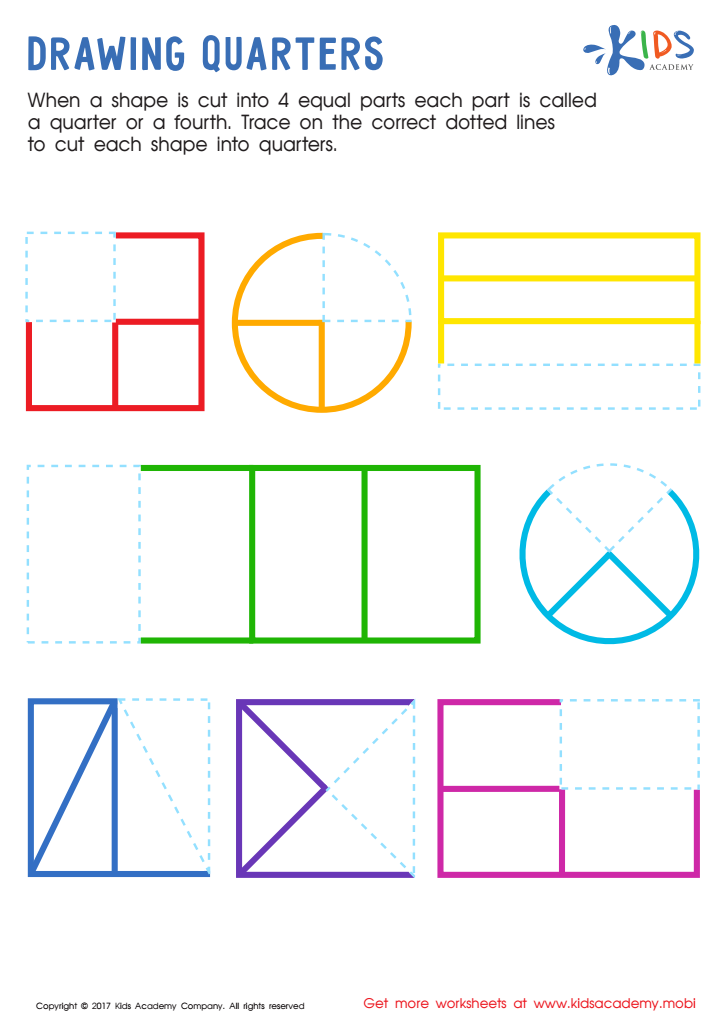
Help your kids divide shapes into quarters! Have them trace dotted lines to cut each shape into 4 equal parts. Each of the 4 parts is called a quarter or a fourth. This worksheet will help kids learn more about dividing shapes into four equal parts.
Drawing Quarters Worksheet
Worksheet
Slice It Up Worksheet
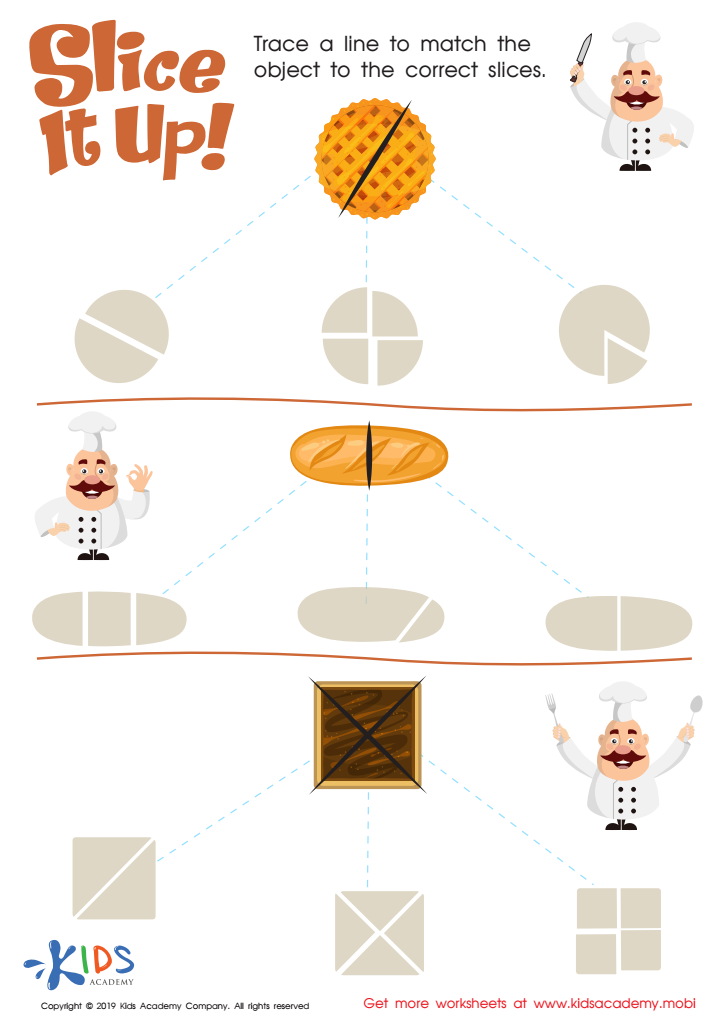
Try this fun math, reading and writing worksheet with your kids! They will love the colorful activities that perfect coordination and tracing. Engaging learning exercises help keep young minds sharp and boost skills. With these worksheets, your kids will be academically ahead of the curve!
Slice It Up Worksheet
Worksheet
Fractions of Shapes: Math Concept Worksheet
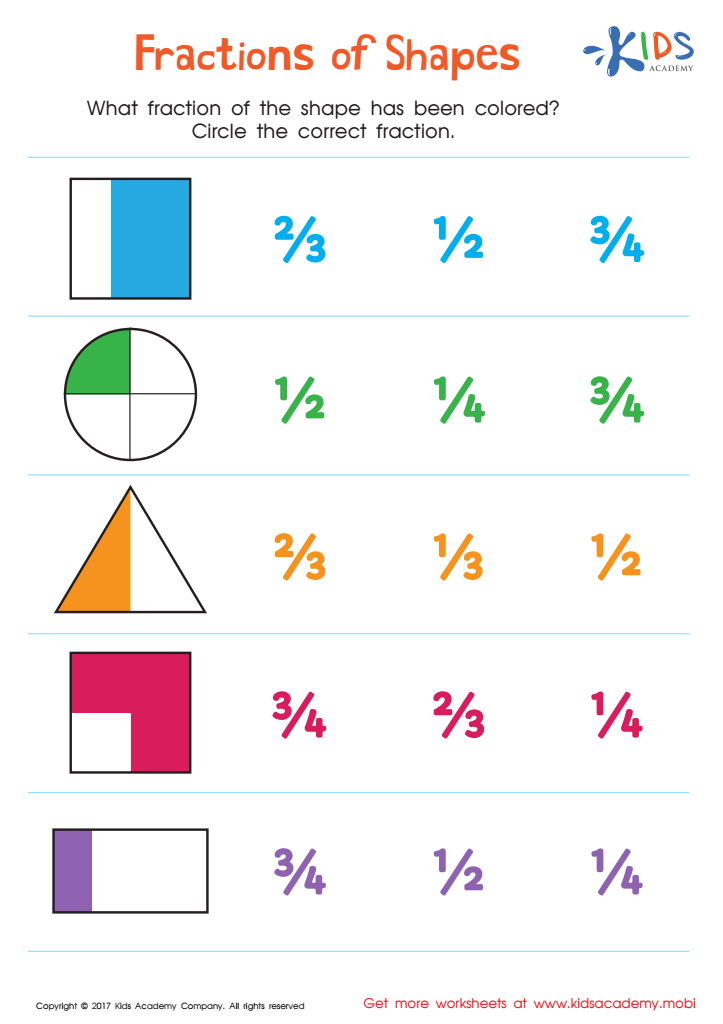
Fractions can be tricky, but with pictures to illustrate them, they become much easier to understand. Our fractions of shapes worksheet is a great way to help children visualize fractions and gain a better understanding of them.
Fractions of Shapes: Math Concept Worksheet
Worksheet
Join Kids Academy for Free
Who is primarily going to use this learning content?








Understanding fractions is fundamental for grasping various mathematical concepts, and introducing fraction visualization through shapes is an excellent strategy for teaching children aged 7-9. At this developmental stage, children are highly visual learners, and using shapes to demonstrate fractions helps them better comprehend the idea of parts and wholes.
When children see a shape divided into equal parts, with some parts highlighted, it becomes easier for them to relate numbers to real-world objects. This visual approach takes an abstract concept and makes it concrete. Learning fractions through shapes builds a stronger mathematical foundation that can aid future learning in percentages, ratios, and even algebra.
Engaging in such hands-on, visual activities can also enhance problem-solving and critical thinking skills. Shapes are everywhere in our daily environment, from a half-eaten sandwich to slices of pizza, providing relatable contexts for learning. Kids who understand fractions visually are more likely to associate these math concepts with everyday life, fostering practical application.
Moreover, mastering fractions early builds confidence and reduces math anxiety. Parents and teachers should care because fostering such an environment not only aligns with curriculum goals but also shapes a child's future attitude towards math and learning in general, laying down pathways to achieve long-term academic success.