Comparing Fractions Geometry Worksheets for Ages 7-9
5 filtered results
-
From - To
Explore our engaging Comparing Fractions Geometry Worksheets designed specifically for children aged 7-9! These interactive resources help young learners grasp the concept of comparing fractions through fun shapes and visual representations. With diverse activities, including matching, shading, and ordering fractions, students will develop essential skills in identifying larger and smaller fractions. Our worksheets promote critical thinking and geometric understanding, ensuring that learning is both effective and enjoyable. Perfect for classroom use or at-home practice, these worksheets build confidence in mathematics, setting the foundation for future success. Download now and watch your child's math skills soar!
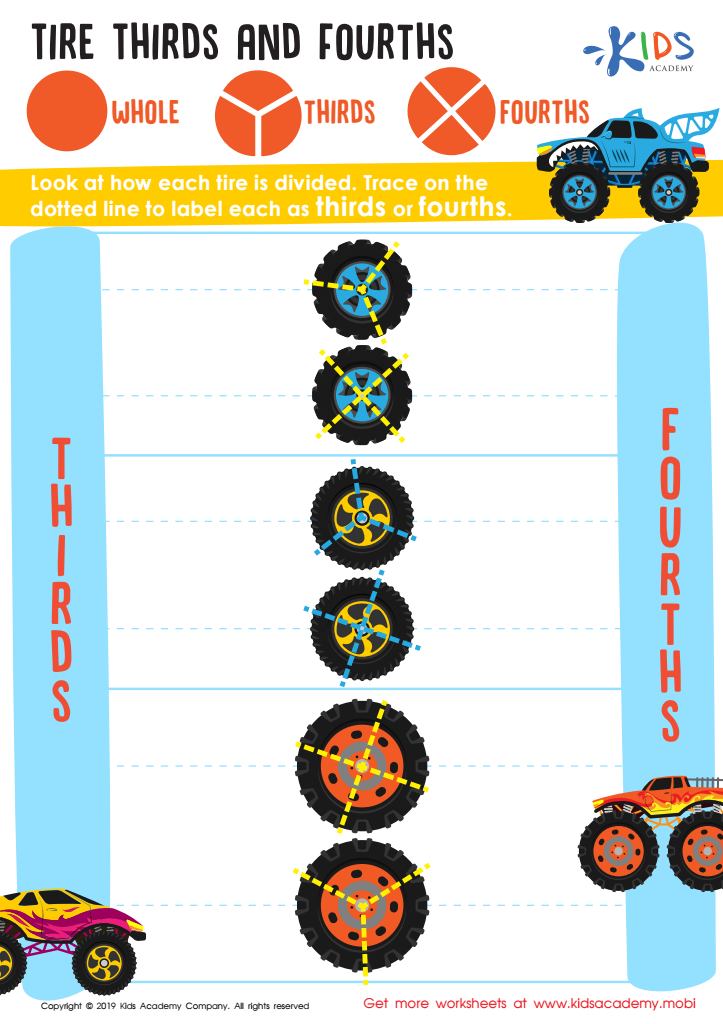
Tire Thirds and Fourths Worksheet
 Assign to My Students











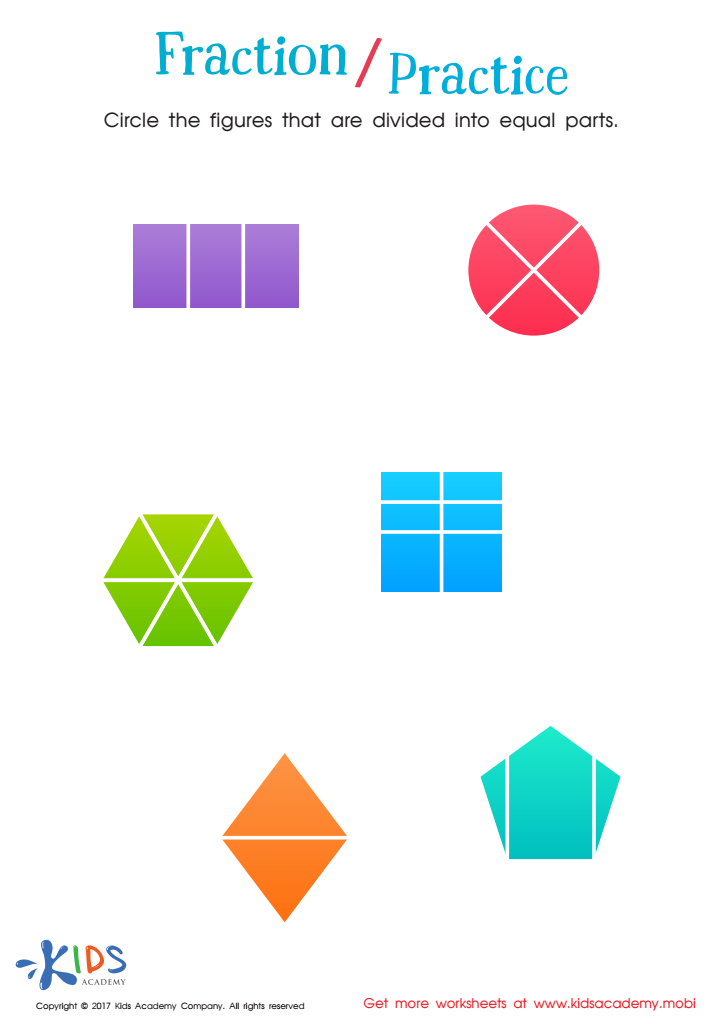
Fractions: Shapes Worksheet
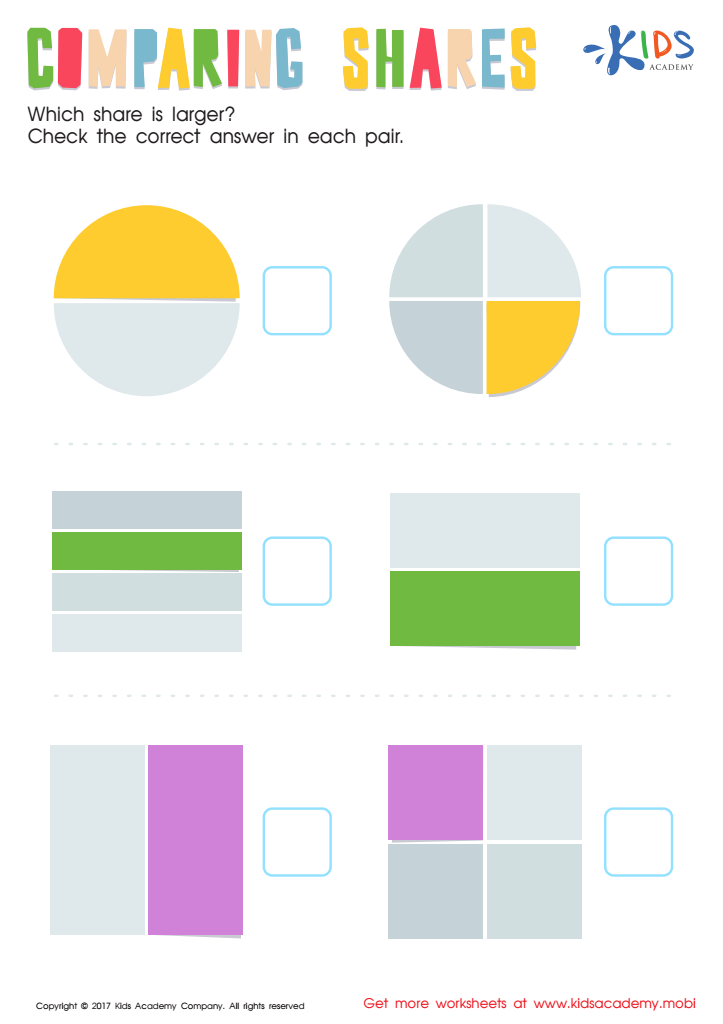
Comparing Shares Worksheet
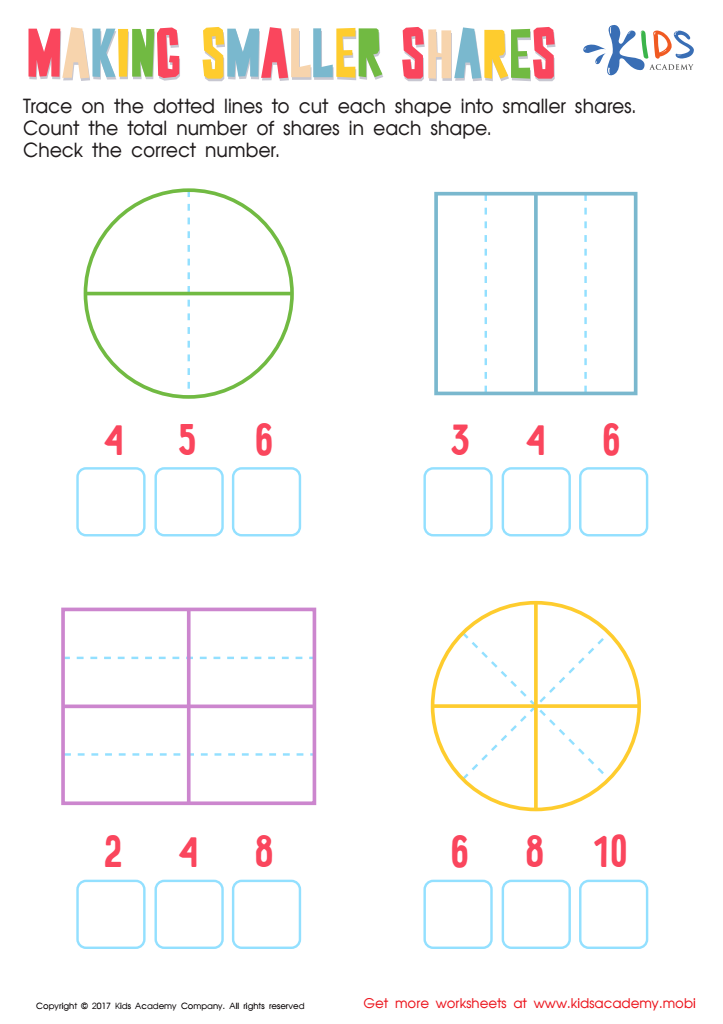
Making Smaller Shares Worksheet
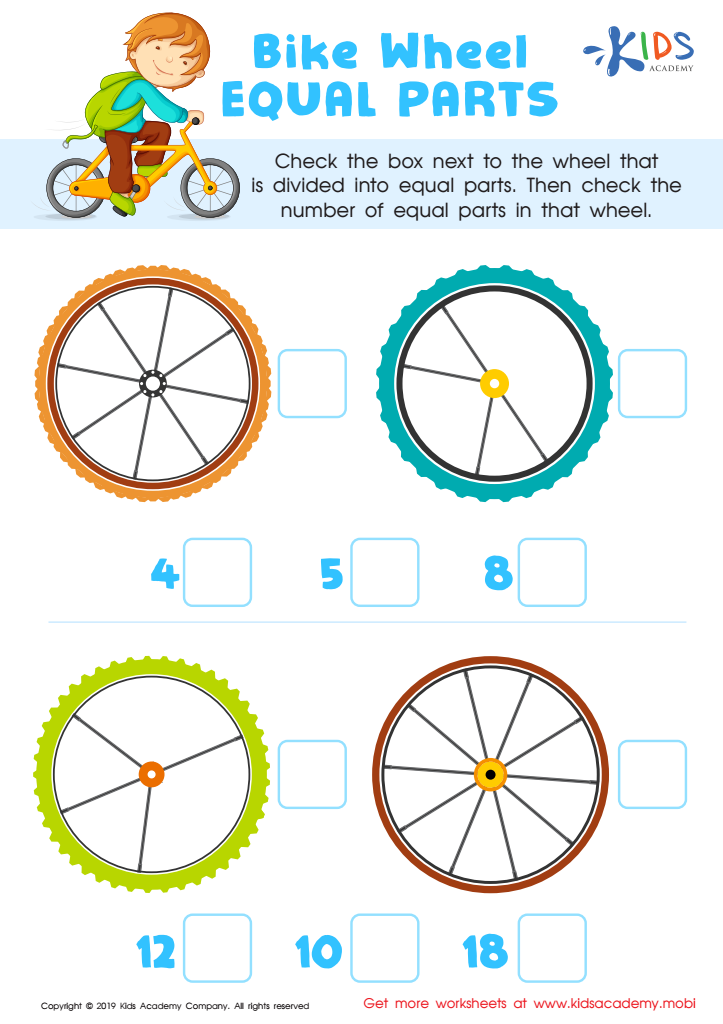
Bike Wheel Equal Parts Worksheet








Teaching students to compare fractions is a fundamental math skill that has significant implications for their future learning and everyday life. For children aged 7 to 9, learning to compare fractions deepens their understanding of numbers and enhances their critical thinking skills. When parents and teachers emphasize this concept, they help children recognize the relationships between parts and wholes, which is essential for grasping more complex mathematical concepts later on.
Comparing fractions also lays the groundwork for understanding percentages, ratios, and proportions, which are important not just in math but also in subjects like science and finance. These skills foster analytical abilities that students will use throughout their academic careers.
Geometry, intertwined with fractions, allows children to visualize these concepts. For instance, by using shapes like rectangles and circles, students can see how different fractions represent parts of a whole. This tactile and visual learning assists in retaining knowledge, making math more engaging.
Ultimately, investing time in understanding fractions enhances students' confidence in math. By nurturing these foundational skills, parents and teachers equip children with the tools they need for academic success and real-world problem-solving. This early emphasis on mathematical reasoning fosters a lifelong appreciation for learning and critical thinking.








