Counting skills Geometry Worksheets for Ages 7-9
8 filtered results
-
From - To
Explore our engaging Counting Skills Geometry Worksheets designed for children ages 7-9! Focused on enhancing both counting and geometric understanding, these math-free printable resources seamlessly blend fun with learning. Each worksheet features vibrant visuals and interactive activities that help young learners develop essential skills like recognizing shapes, calculating perimeter and area, and counting objects. Perfect for classroom or at-home use, these worksheets encourage independent practice and boost confidence in math. Unlock your child's full potential and make math an exciting adventure with our expertly crafted worksheets. Visit us today and start your journey to math mastery!
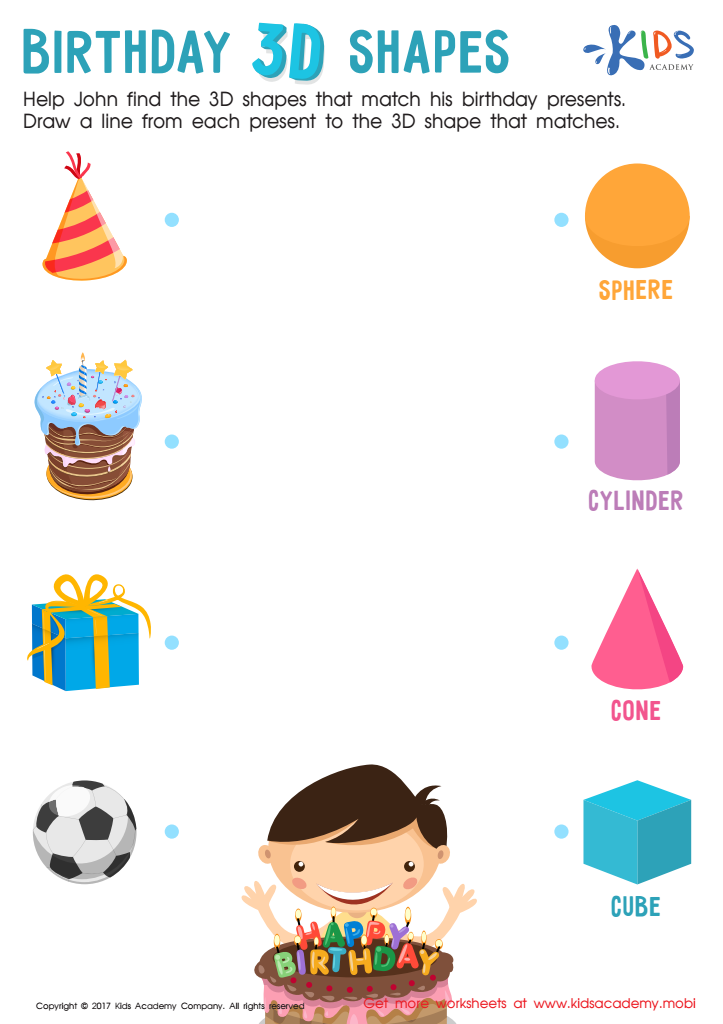
Birthday 3D Shapes Worksheet
 Assign to My Students











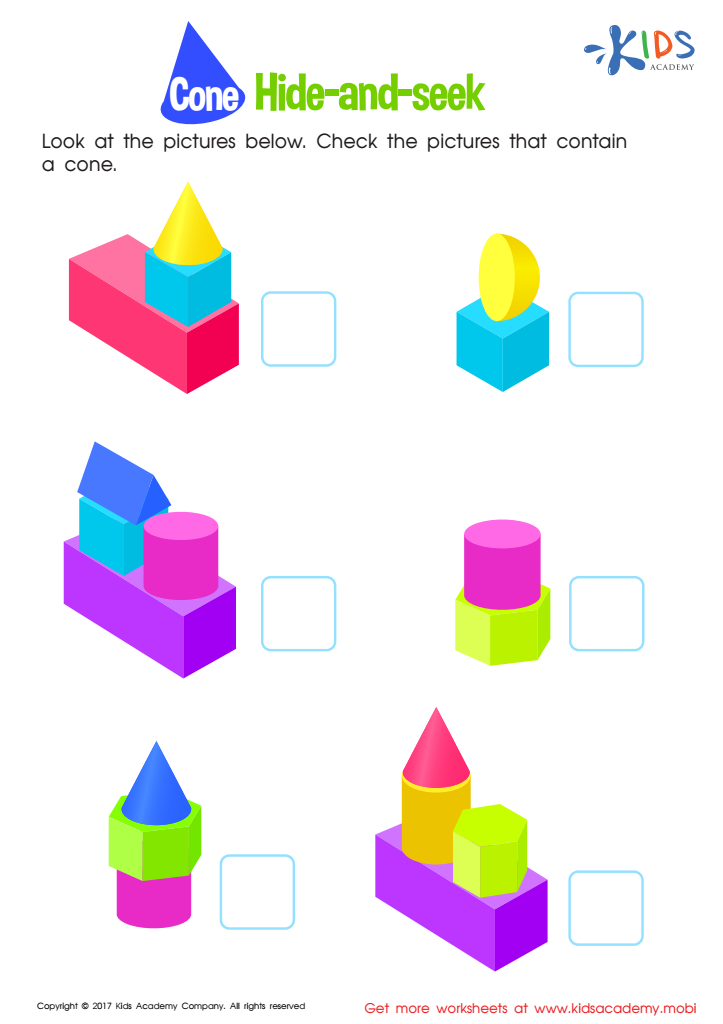
Cone Hide-and-Seek Worksheet
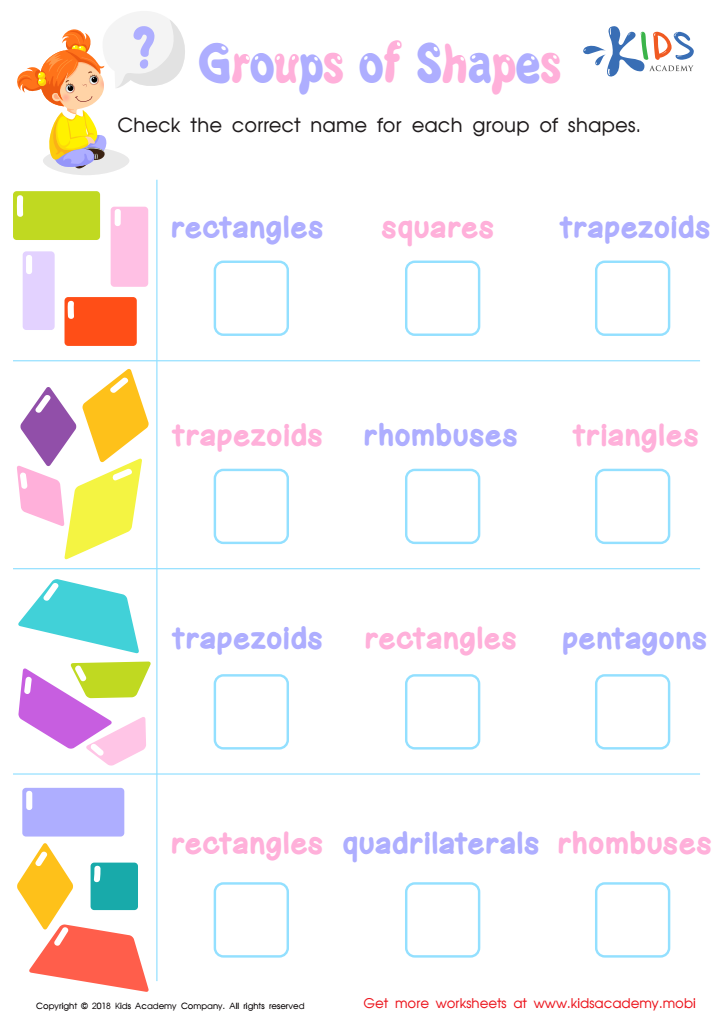
Groups of Shapes Worksheet
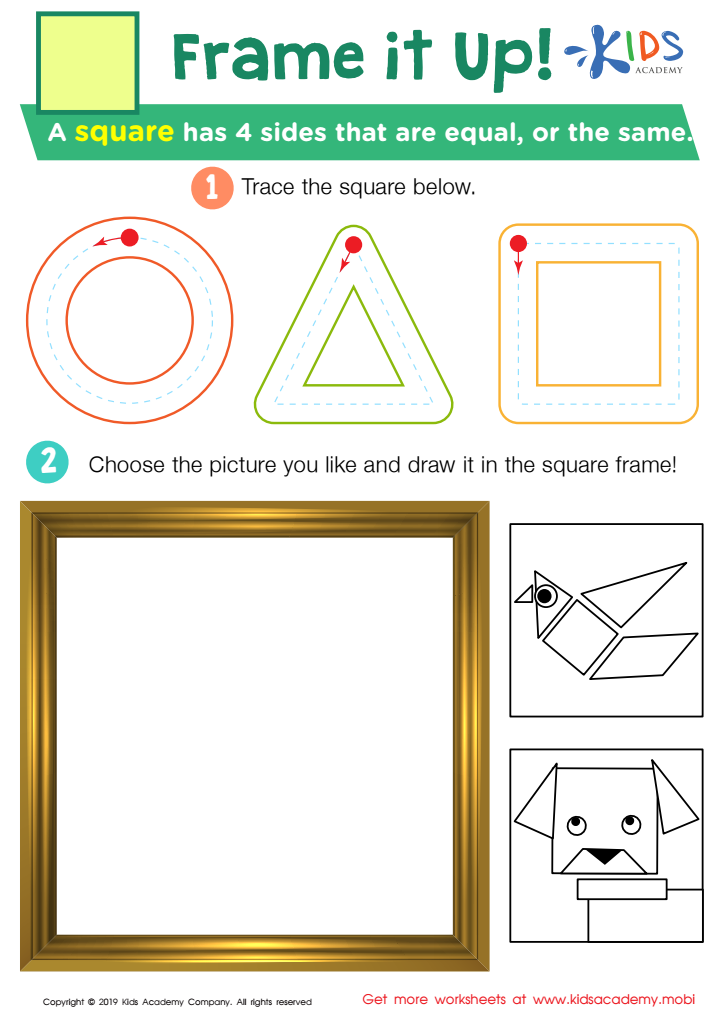
Frame it Up Worksheet
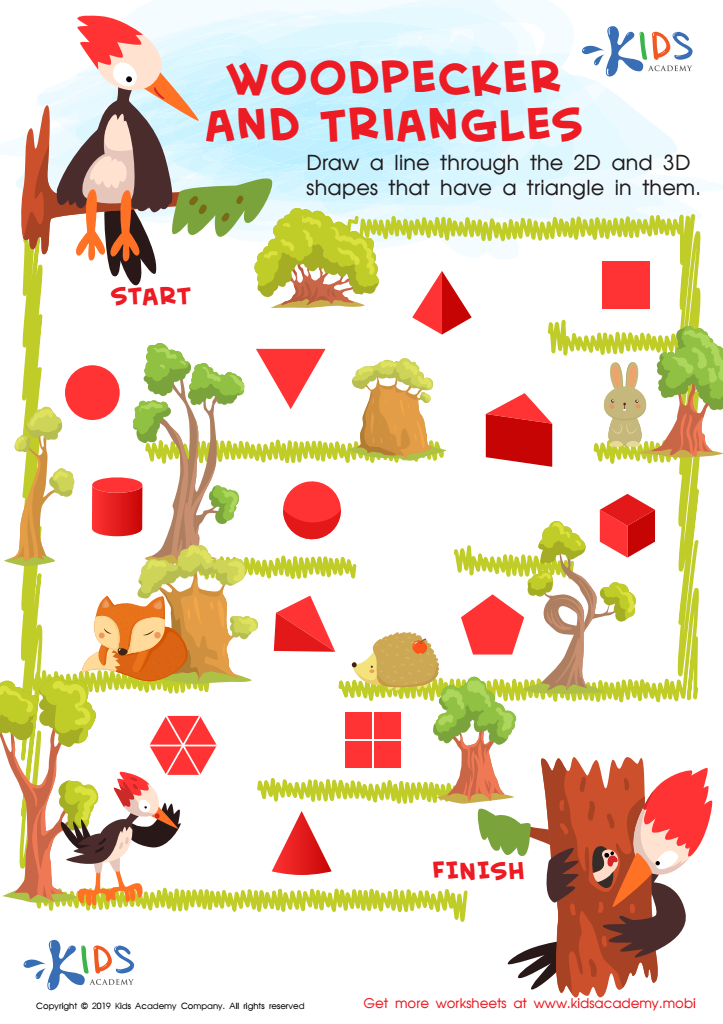
Woodpecker and Triangles Worksheet
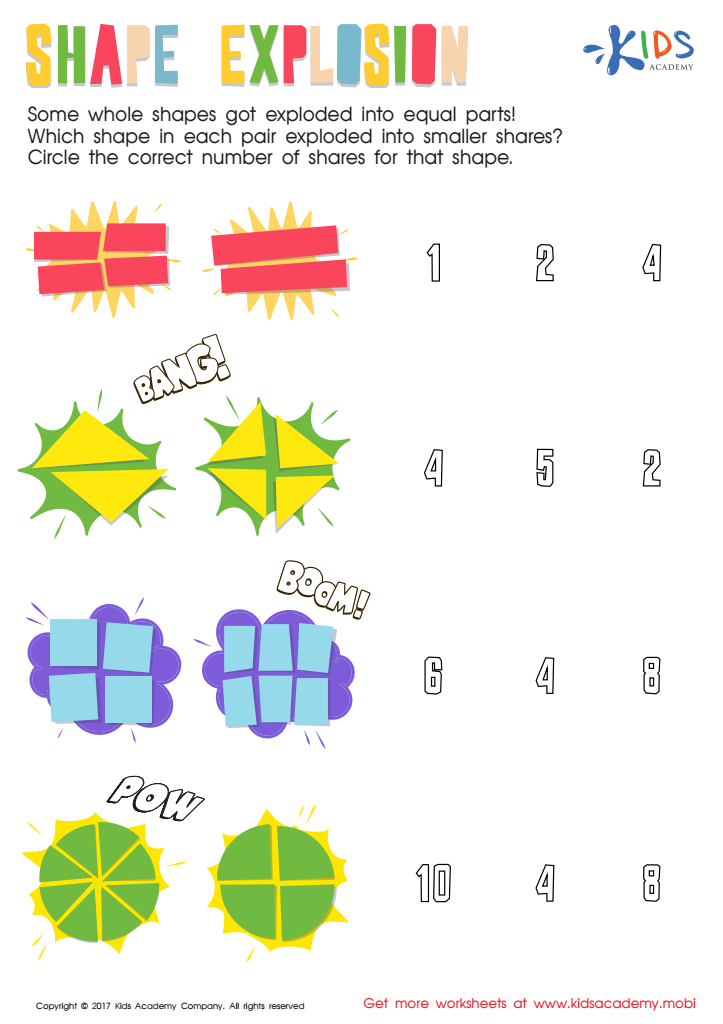
Shape Explosion Worksheet
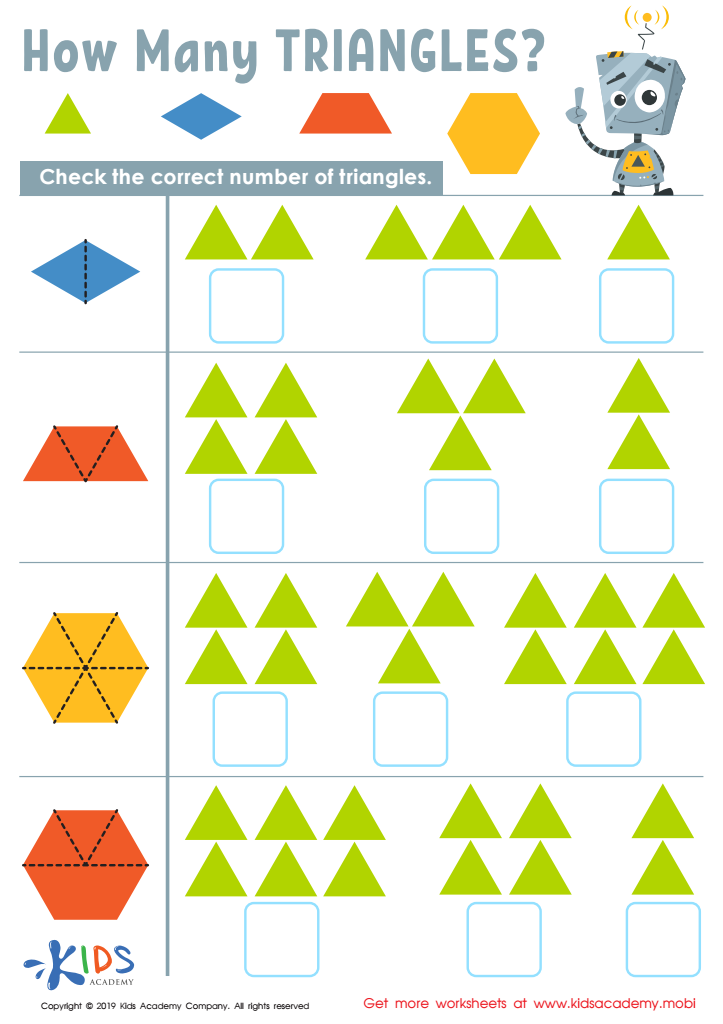
How Many Triangles Worksheet
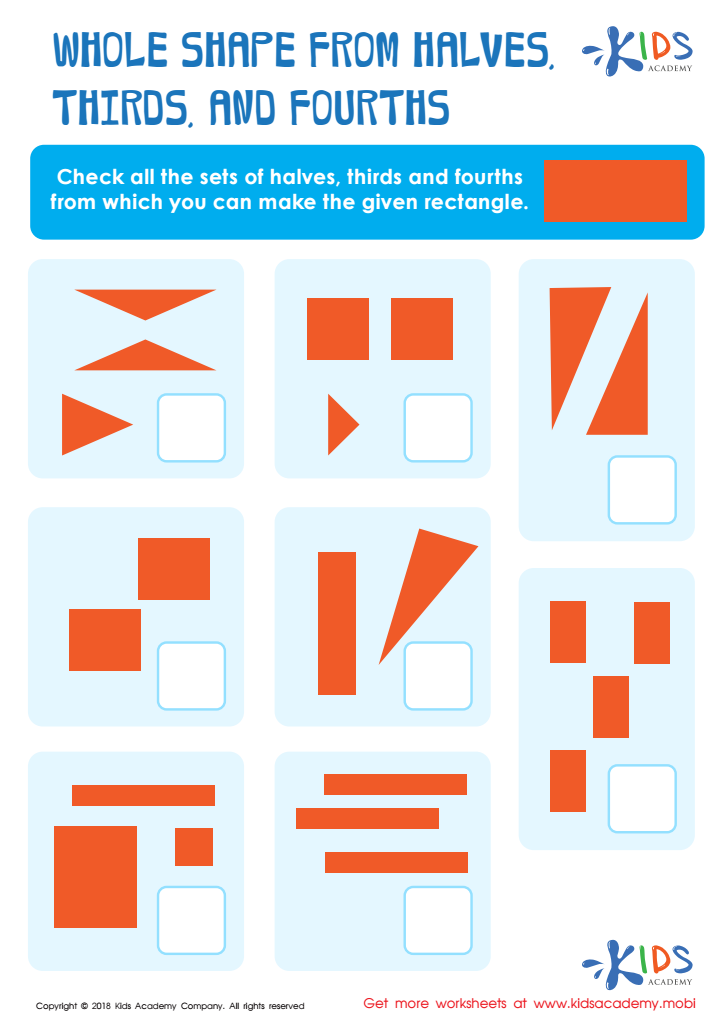
Whole Shape from Halves, Thirds and Fourths Worksheet








Parents and teachers should place significant importance on counting skills and geometry for children aged 7-9 because these foundational concepts are crucial for their cognitive development and future academic success. Counting skills are not merely about reciting numbers in sequence, but also about understanding the concepts of numerical order, quantity, and basic operations like addition and subtraction. These skills are essential for tackling more complex math problems and for everyday activities that require basic calculations, such as handling money or measuring ingredients in a recipe.
Geometry, on the other hand, introduces children to spatial awareness and shapes, which builds their logical and abstract thinking abilities. Understanding geometric principles lays the groundwork for more advanced topics in mathematics, like algebra and calculus, and even disciplines like engineering and art. Furthermore, geometry helps children in developing visualization skills, recognizing patterns, and employing problem-solving strategies which are applicable in a myriad of real-life situations.
By age 7-9, children are ready to connect these mathematical concepts to the world around them, fostering an early appreciation for math. Therefore, by focusing on counting and geometry at this stage, parents and teachers are setting the stage for their child’s future success, both in academic and everyday life contexts. This foundational knowledge serves as the building blocks for a lifetime of learning and practical applications.








