Hand-eye Coordination Geometry Worksheets for Ages 7-9
6 filtered results
-
From - To
Enhance your child's hand-eye coordination skills with our engaging Geometry Worksheets designed specifically for ages 7-9. These interactive activities combine learning about shapes, angles, and spatial relationships with fun exercises aimed at improving fine motor skills. Each worksheet is tailored to challenge young learners while keeping them entertained. Perfect for home or classroom use, our resources encourage the development of essential geometry concepts through hands-on activities, drawing, and problem-solving tasks. Foster your child's confidence in math and their physical dexterity with our carefully crafted worksheets that promote critical thinking and creativity. Download now and make learning geometry a hands-on adventure!
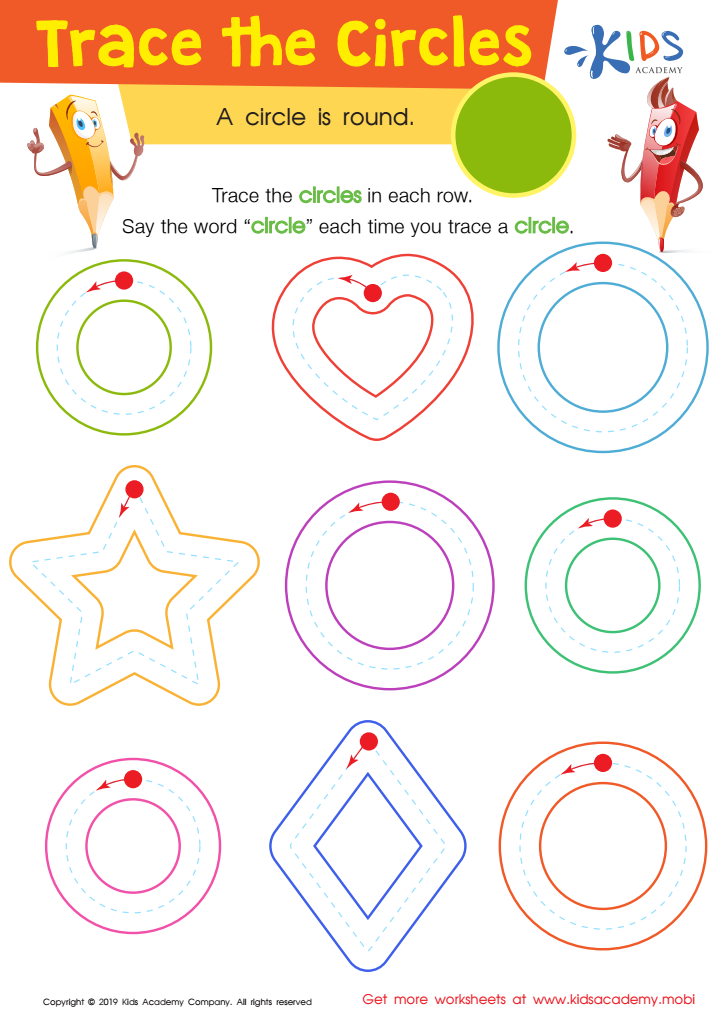
Trace The Circles Worksheet
 Assign to My Students











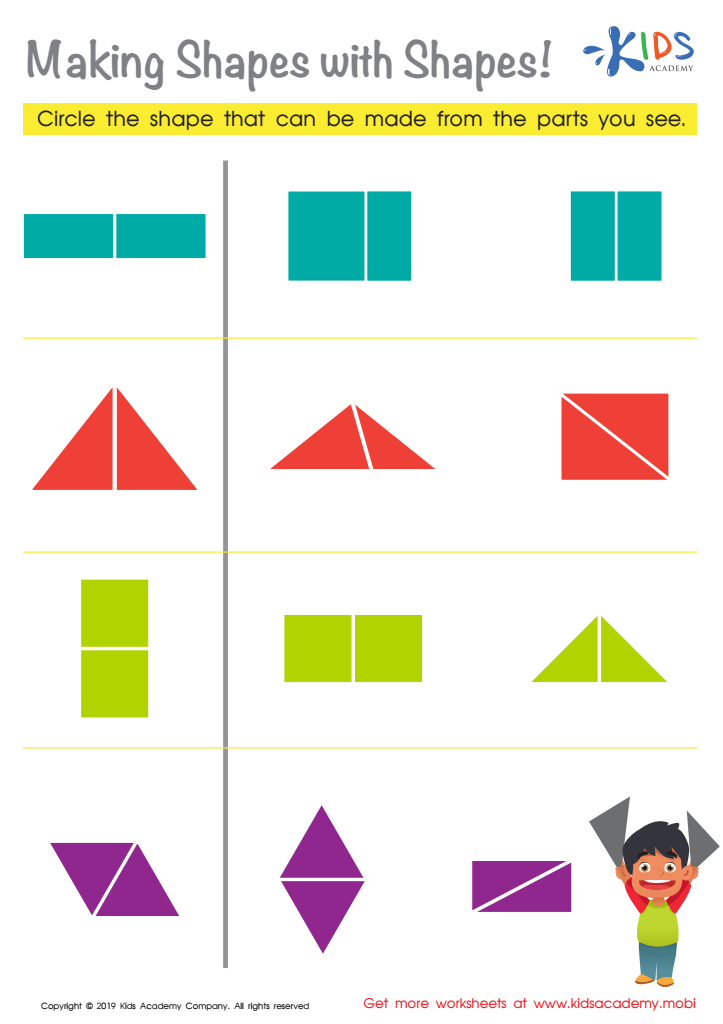
Making Shapes with Shapes Worksheet
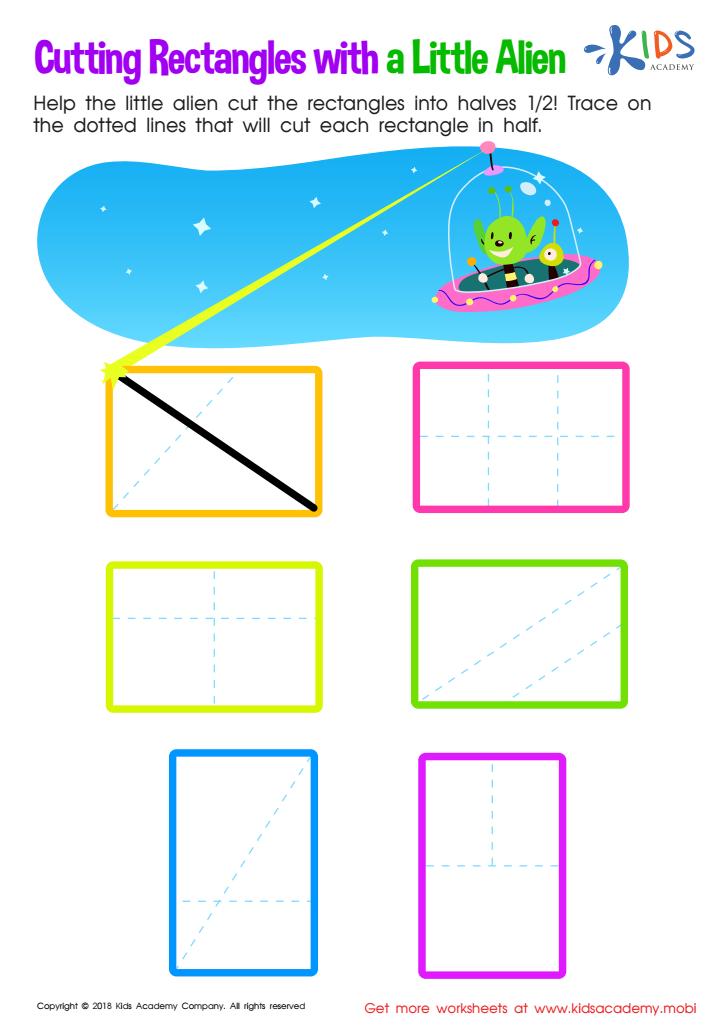
Cutting Rectangles with Alien Worksheet
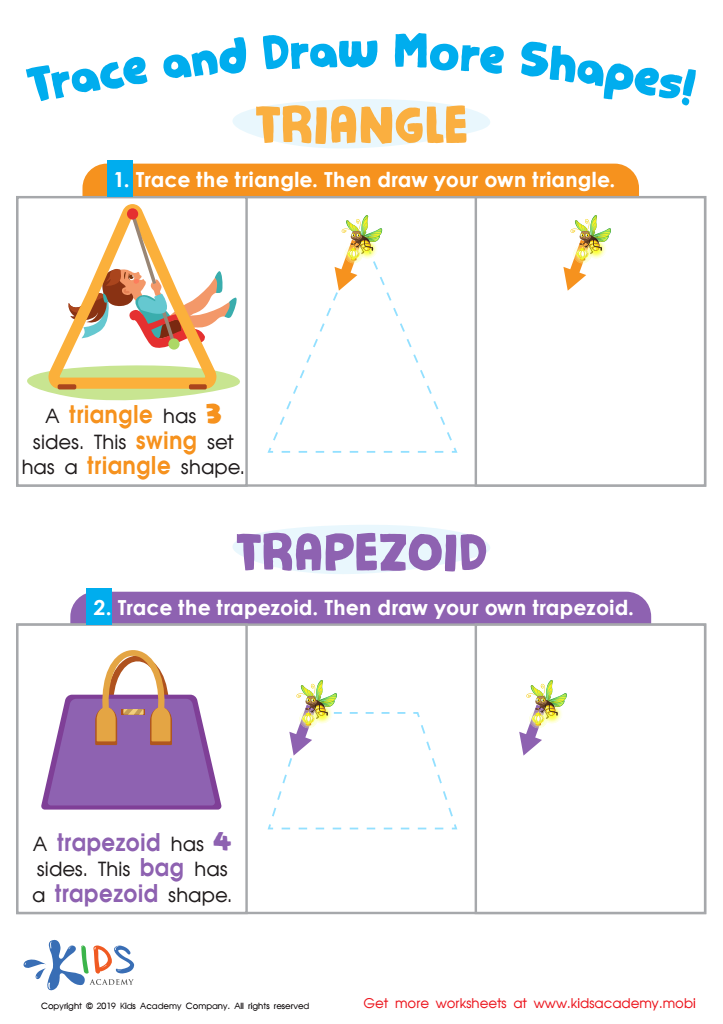
Trace and Draw More Shapes Worksheet
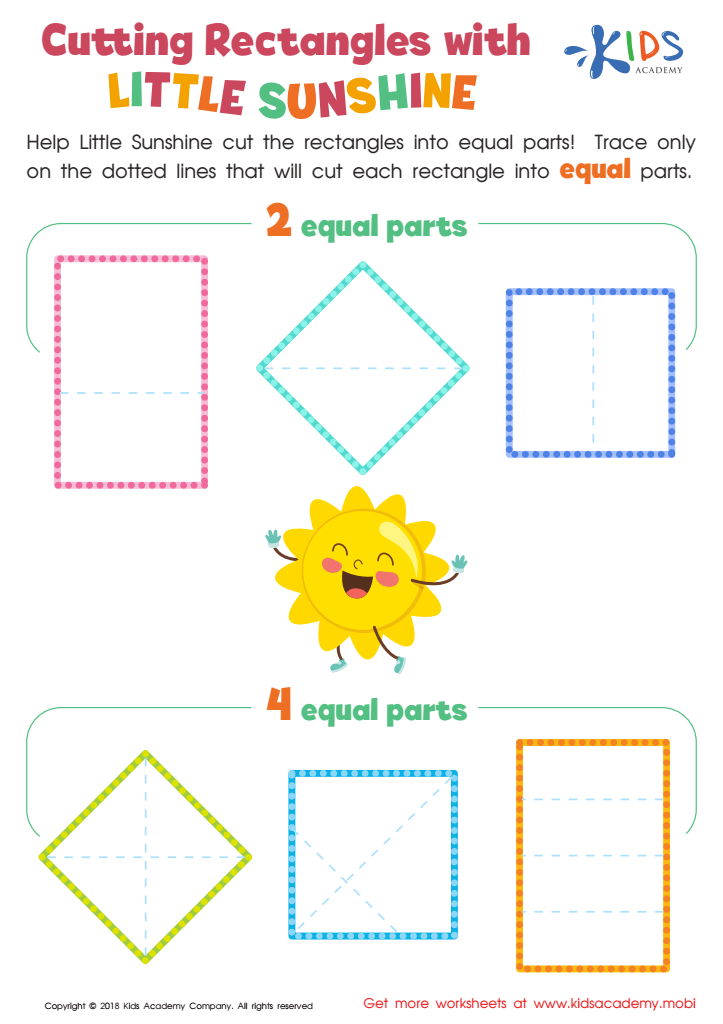
Cutting Rectangles with Little Sunshine Worksheet
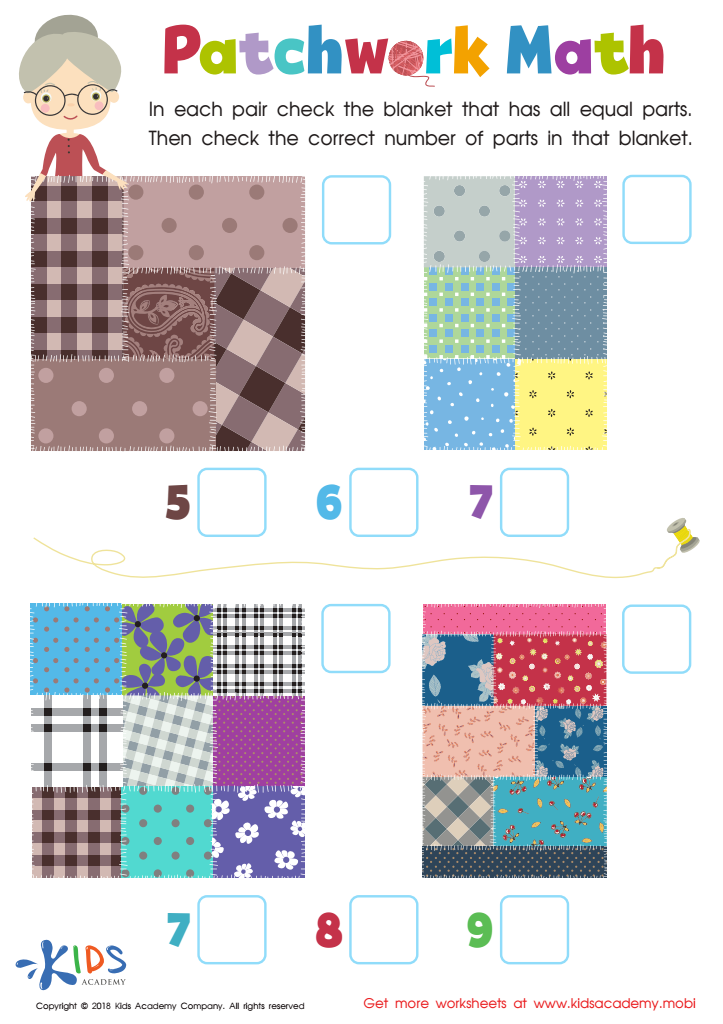
Patchwork Math Worksheet








Hand-eye coordination is a crucial skill that develops during the ages of 7 to 9, and understanding its geometric aspects fosters both physical and cognitive growth in children. This age group needs to engage in activities that improve their ability to align their visual observations with motor actions, which is essential not only for sports but also for everyday tasks like writing, drawing, and using tools.
Incorporating hand-eye coordination within geometric learning can make mathematics more engaging, allowing children to explore shapes, spatial awareness, and measurement through hands-on activities. For instance, using building blocks or puzzles encourages students to manipulate objects, fostering a deeper understanding of geometric concepts like symmetry, patterns, and angles.
Moreover, strong hand-eye coordination enhances concentration and decision-making skills, which are fundamental for academic success. Teachers and parents can facilitate activities that combine movement and reminders of geometric principles, like geometry scavenger hunts or art projects involving shapes.
Ultimately, focusing on hand-eye coordination through geometric activities not only supports children’s physical abilities but also lays a solid foundation for math learning, promotes creativity, and builds self-confidence in their skills, highlighting the interconnectedness of physical and intellectual development.








