Reading comprehension Geometry Worksheets for Ages 7-9
3 filtered results
-
From - To
Boost your child's reading and math skills with our engaging Reading Comprehension Geometry Worksheets for Ages 7-9! These activities seamlessly integrate literacy and geometry, helping young learners to understand and enjoy the basics of shapes, angles, and more. Through captivating stories and practical exercises, kids practise reading comprehension while exploring geometric concepts. Tailored to stimulate curiosity and enhance learning, these worksheets provide the perfect balance of fun and education. Great for both classroom settings and home practice, our worksheets ensure foundational skills in math and reading are strengthened. Elevate your child's learning journey with our expertly crafted geometry worksheets today!
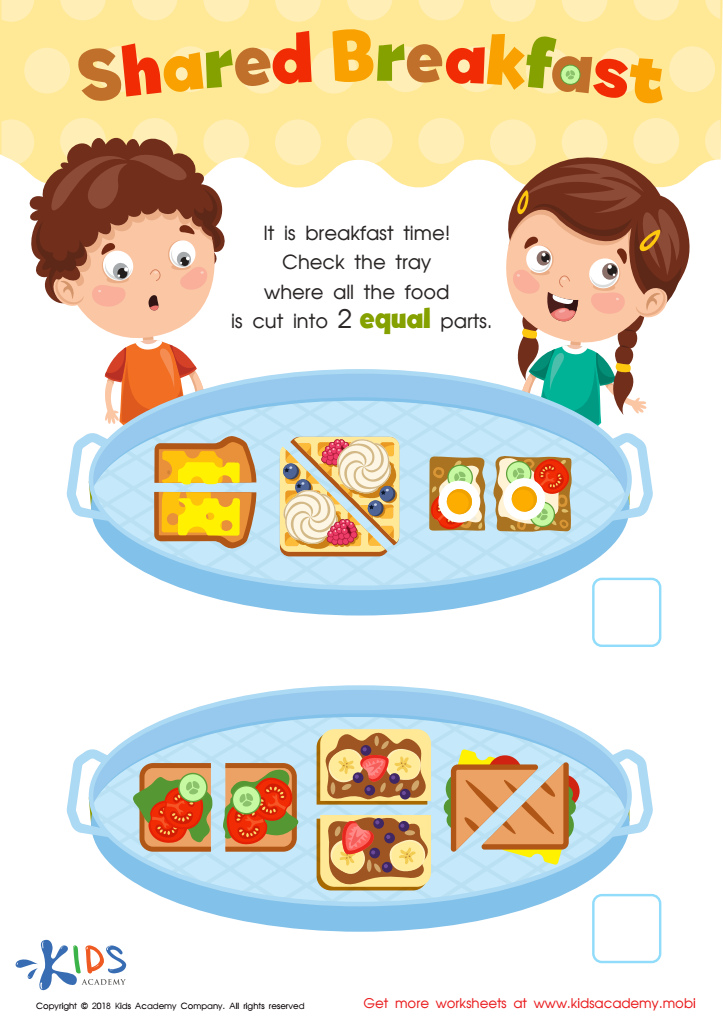
Shared Breakfast Worksheet
 Assign to My Students











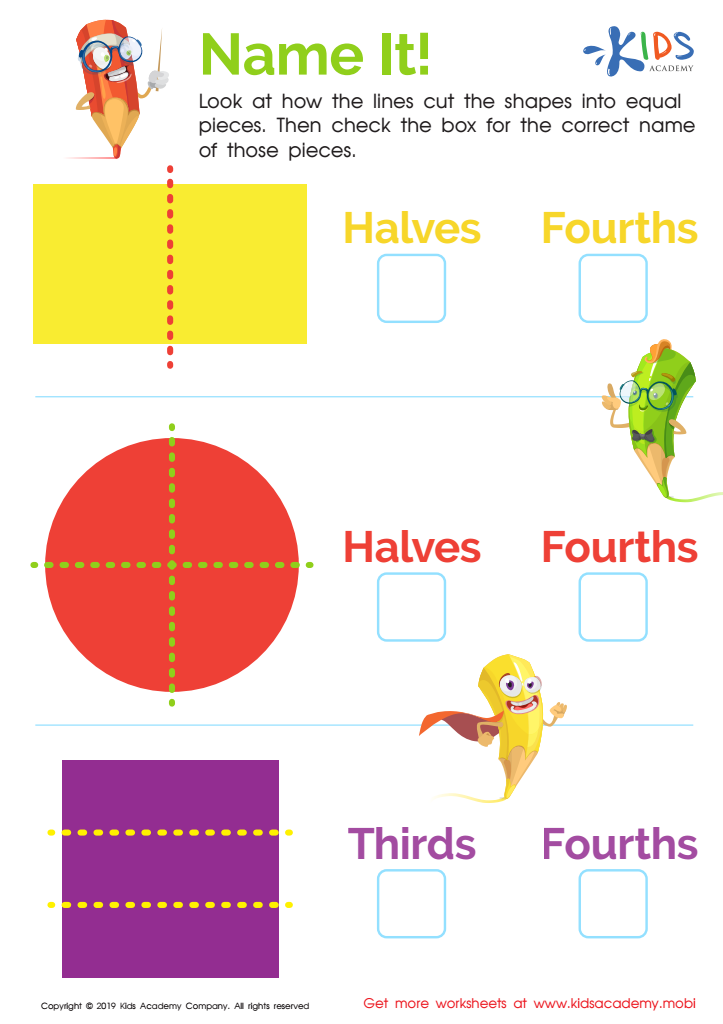
Name It! Worksheet
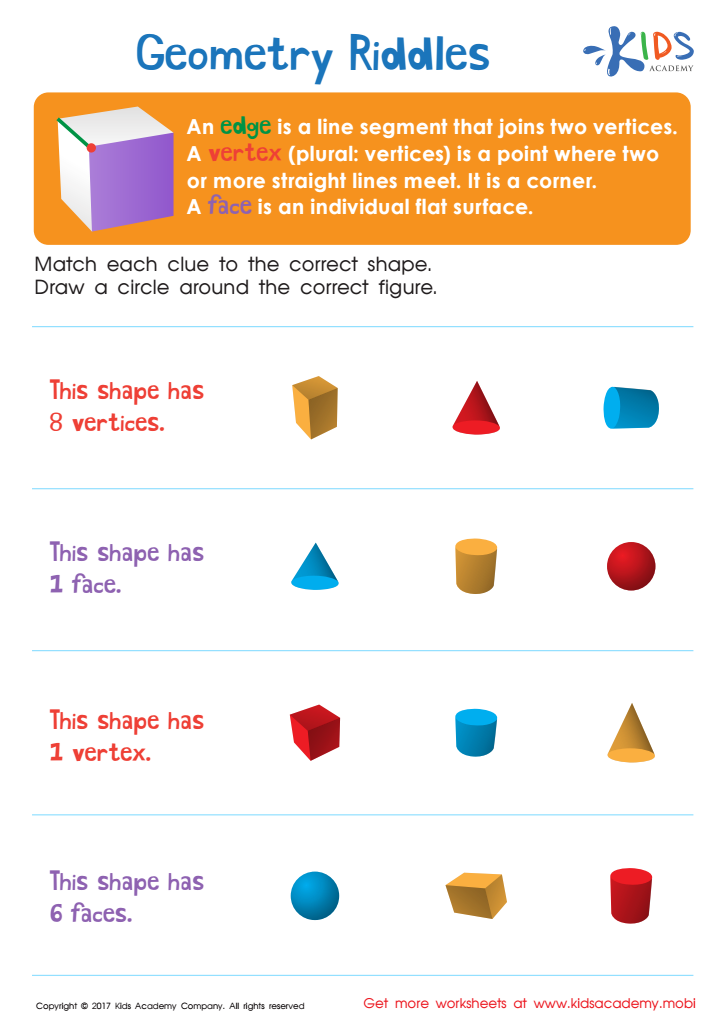
Geometry Riddles Printable








Reading comprehension and geometry are foundational skills that intertwine to build a child's cognitive development, especially between the ages of 7-9. Parents and teachers should prioritize these areas as they are critical for a child's academic and everyday life.
Firstly, reading comprehension goes beyond just understanding words. It fosters critical thinking, enhances vocabulary, and improves overall communication skills. When children can comprehend what they read, they perform better in all subjects, as reading is a gateway to learning. Improving reading comprehension at an early age sets the stage for future academic success and lifelong learning.
On the other hand, geometry instills logical reasoning, analytical thought, and problem-solving skills. By engaging with shapes, sizes, patterns, and spatial understanding, children develop a sense of reasoning that is beneficial for mathematics and science. Geometry nurtures visualization skills, which are crucial for disciplines like engineering, architecture, and even everyday tasks like reading maps.
When combined, reading comprehension and geometry enhance a child's capacity to interpret word problems and follow complex instructions, making learning multifaceted and engaging. Encouraging progress in these areas helps children develop into well-rounded individuals capable of critical thinking and problem-solving, essential for success both in school and in life. This holistic approach ensures that children understand concepts thoroughly, apply knowledge effectively, and enjoy the learning process.








