Color differentiation Math Worksheets for Ages 7-9
3 filtered results
-
From - To
Enhance your child's learning experience with our Color Differentiation Math Worksheets designed for ages 7-9! These engaging worksheets combine vibrant colors with essential math skills, making learning fun and effective. Kids will practice identifying and categorizing colors while solving addition, subtraction, and other math problems. Our carefully crafted activities promote critical thinking, improve attention to detail, and help young learners build a solid foundation in mathematics. Perfect for homeschooling or supplemental classroom use, each worksheet is designed to foster creativity and deepen understanding. Dive into a colorful world of math, sparking curiosity and enthusiasm in your child today!
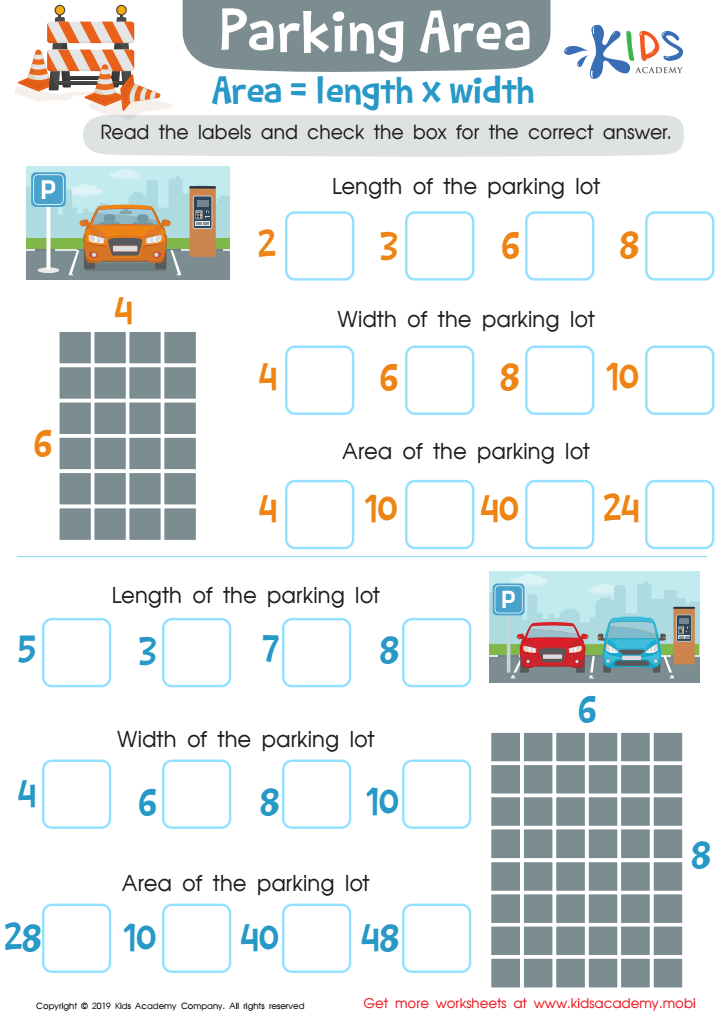
Parking Area Worksheet
 Assign to My Students







.jpg)
Color differentiation in math enables children ages 7-9 to enhance their understanding of mathematical concepts and improve problem-solving skills. At this developmental stage, children are increasingly able to conceptualize and differentiate between complex ideas. By incorporating color-coding into math activities, teachers and parents can create a more engaging and interactive learning environment.
Using different colors helps children to categorize and visually segregate various mathematical elements, such as numbers, shapes, and operators. For instance, color-coded manipulatives can aid in understanding fractions or addition by allowing children to visualize entries in a more appealing manner. This approach not only captures their interest but also reinforces their retention and recall of concepts.
Furthermore, color differentiation aids in building critical thinking skills as children learn to associate specific colors with particular mathematical ideas. This method caters to different learning styles, especially for visual learners, ensuring that each child can grasp essential math concepts.
Moreover, parents and teachers who apply color differentiation techniques foster a positive attitude towards math, helping to mitigate anxiety often associated with the subject. Therefore, embracing color differentiation in math instruction is beneficial for enhancing engagement, comprehension, and conversation around mathematical learning.








