
Counting money Math Worksheets for Ages 7-9
3 filtered results
Difficulty Level
Grade
Age
-
From - To
Subject
Activity
Standards
Introducing our engaging Counting Money Math Worksheets for children ages 7-9! Designed to enhance financial literacy, these worksheets make learning about money fun and interactive. Your child will practice counting coins and bills, making change, and understanding the value of money through colorful visuals and enjoyable activities. Each worksheet is tailored to encourage problem-solving skills and boost confidence in handling real-life money scenarios. Perfect for home or classroom use, these resources are ideal for reinforcing important math concepts while keeping kids motivated. Download our printable worksheets today and watch your child's counting skills flourish!
Favorites
With answer key
Interactive
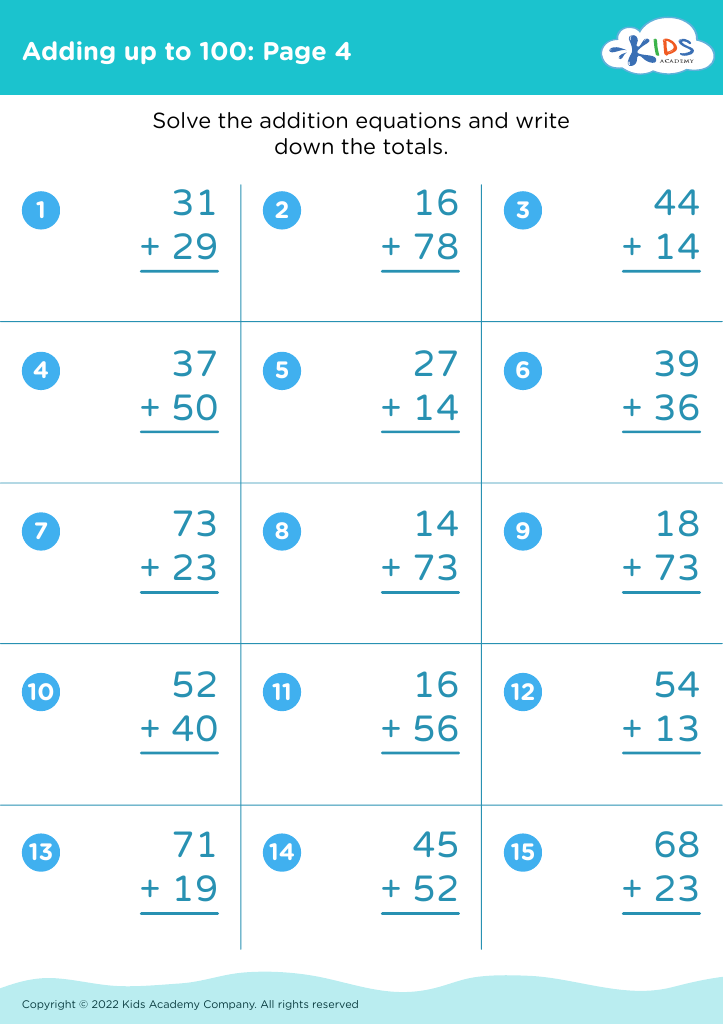
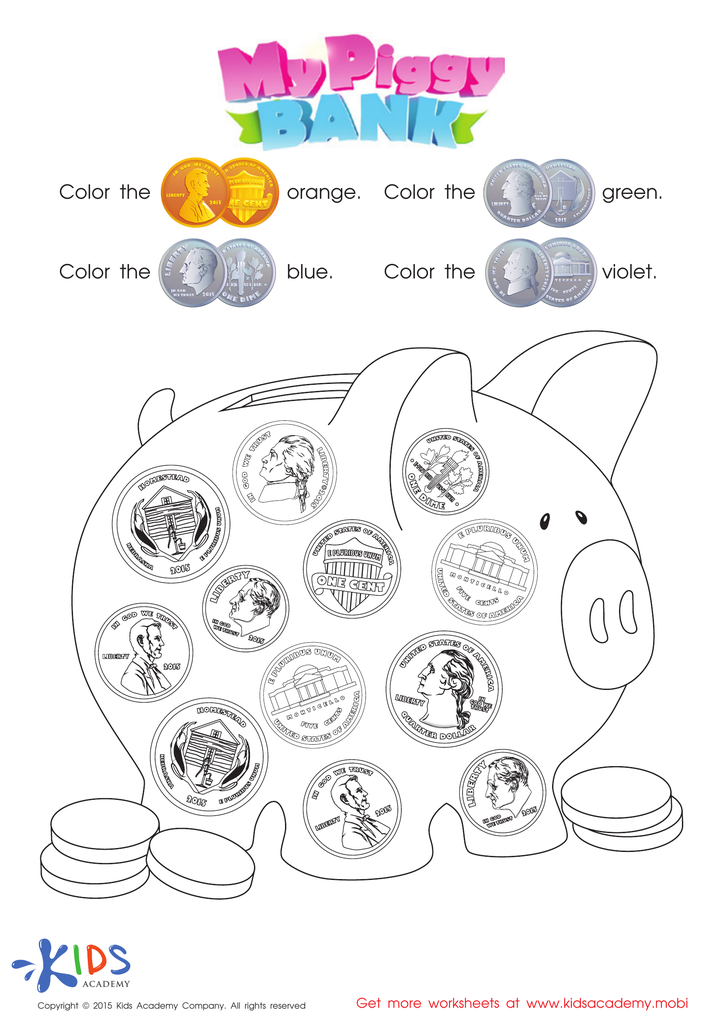
Recognizing Money Money Worksheet
Help the piggy bank by coloring its coins with Kids Academy's free money worksheets! Learn the different coins and their values with your kids. Printable worksheets are available to continue the lesson. Let's learn and have fun!
Recognizing Money Money Worksheet
Worksheet
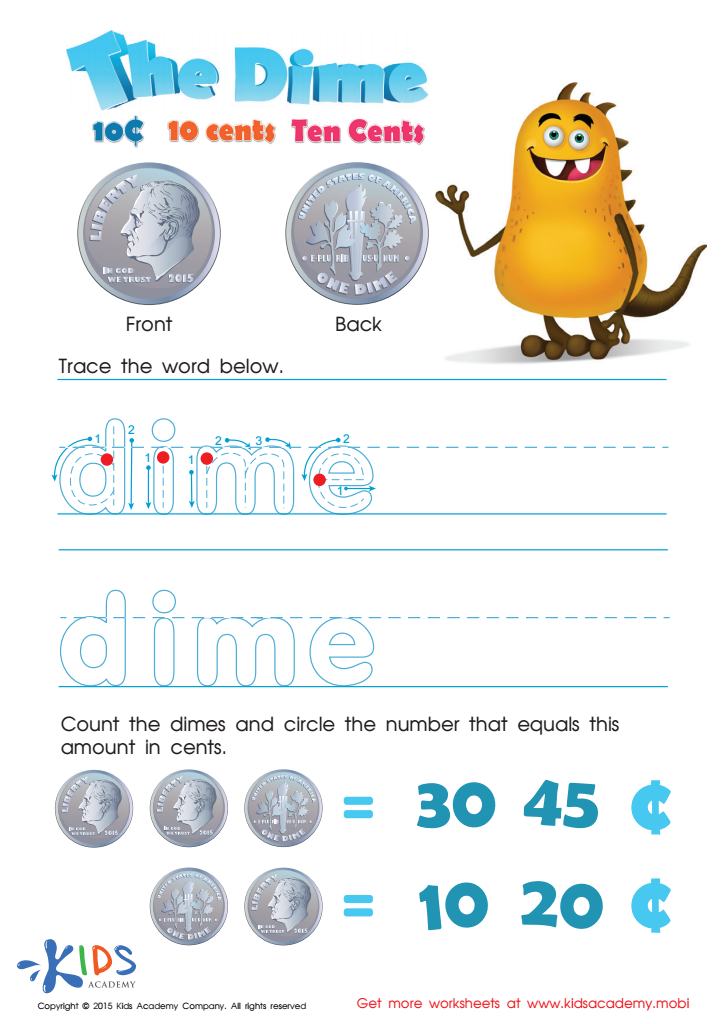
Ten Cents or the Dime Money Worksheet
Introduce your kids to coin games! Start with a dime: trace the word on both sides and count the dimes. Kids Academy has printable worksheets to help your kids learn how to count money.
 Assign to My Students
Ten Cents or the Dime Money Worksheet
Worksheet
Join Kids Academy for Free
Who is primarily going to use this learning content?






Counting money is a vital skill for children aged 7-9, merging mathematical concepts with real-world applications. For parents and teachers, nurturing this skill is essential for several reasons.
Firstly, it fosters financial literacy. At an early age, children learn to recognize and manage different denominations, helping them develop an understanding of the value of money and the importance of budgeting. This foundational knowledge builds confidence as they make buying decisions and understand prices.
Secondly, counting money enhances critical thinking and problem-solving abilities. When children encounter scenarios like making change or totaling up a purchase, they practice addition, subtraction, and even multiplication, which strengthens their overall math skills and cognitive development.
Furthermore, learning to count money encourages responsible habits. When children grasp how to handle money, they become more aware of saving, spending, and sharing. This lays the groundwork for making informed financial decisions in the future.
Lastly, incorporating money-related activities into learning can make math enjoyable. Engaging with real-life scenarios, like setting up a mini-store or playing board games involving transactions, promotes active learning while bonding with parents or classmates. All in all, the importance of teaching money counting extends far beyond basic math—it shapes well-rounded, financially savvy individuals.








