Developing critical thinking Math Worksheets for Ages 7-9
4 filtered results
-
From - To
Elevate your child's math skills with our Developing Critical Thinking Math Worksheets designed for ages 7-9. At Kids Academy, we understand the importance of nurturing young minds to think analytically and solve problems effectively. Our expertly crafted worksheets combine fun and challenging activities, encouraging logical reasoning, pattern recognition, and creative problem-solving. Through engaging tasks such as puzzles, word problems, and interactive exercises, children will develop a robust foundation in math, enhancing their critical thinking capabilities. Perfect for classroom use or at-home practice, these worksheets are an excellent resource to support your child's academic growth and cognitive development.
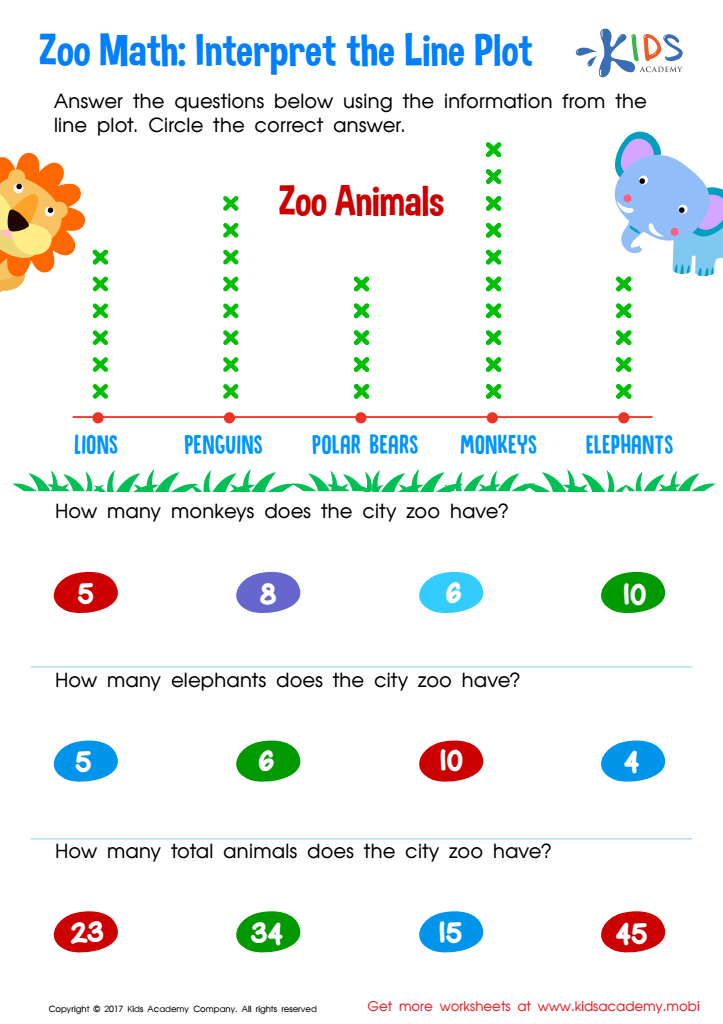
Interpret Line Plot Worksheet
 Assign to My Students
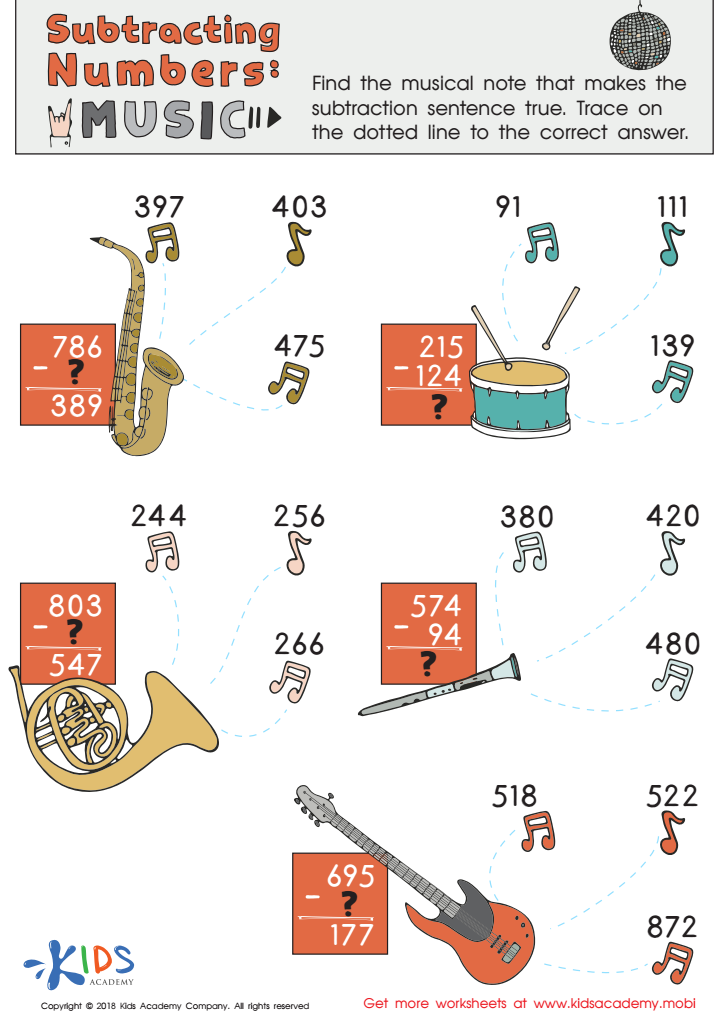
Subtracting Numbers: Music Worksheet








Developing critical thinking in math for children ages 7-9 is crucial as it lays the foundation for future success in a myriad of subjects. At this formative stage, young minds are exceptionally malleable and open to learning. Critical thinking in math helps children not just to solve problems but to understand the 'why' and 'how' behind them. This understanding promotes a deeper comprehension, which is essential for tackling more complex mathematical concepts in later grades.
Moreover, critical thinking builds resilience. Children learn to approach problems methodically, explore various solutions, and persist even when they encounter challenges. This perseverance fosters a growth mindset, enabling them to see errors as learning opportunities rather than failures. Such skills are transferable, aiding children in sciences, reading comprehension, and real-life situations.
In addition, cultivating these skills early on has significant social benefits. Interactive problem-solving encourages collaboration, communication, and respect for different perspectives, all of which are foundational for coexisting in diverse environments.
Finally, parents and teachers that emphasize critical thinking in math better prepare children for increasingly complex societal demands and a tech-driven future. Nurturing these skills ensures that children are not just passive receivers of information but active problem solvers prepared to innovate and excel in their academic and personal lives.








